You’ve probably seen it pop up in your feed or heard about it on a crypto forum. The name alone should give you a clue: Don't Buy Inu. It’s a cryptocurrency that literally tells you not to purchase it. But why would anyone create a token with such a self-defeating slogan? And more importantly, what is actually happening behind the scenes of this digital asset?
If you are looking for a quick answer, here is the reality check. Don't Buy Inu (DBI) is a speculative meme token on the Ethereum blockchain that functions as a social experiment and ironic commentary on crypto hype. It has no utility, minimal liquidity, and carries extreme financial risk. This article breaks down exactly what DBI is, how it works, and whether it belongs in your portfolio.
The Ironic Origin Story of DBI
To understand Don't Buy Inu, you have to look at the culture that created it. The crypto market exploded with "Inu"-themed tokens following the massive success of Dogecoin and Shiba Inu. By early 2023, thousands of copycat projects were launching daily, promising moonshots and life-changing returns. Most failed quickly.
DBI launched in early 2023 right in the middle of this frenzy. Unlike other projects that tried to hide their lack of substance behind complex roadmaps or fake partnerships, DBI leaned into the absurdity. The marketing strategy was built around an internet character known as "The Dev," who posted viral videos satirizing the greedy, speculative nature of crypto trading. The name itself is a piece of performance art-a warning label slapped directly onto a product.
This approach attracted a specific type of investor: those who enjoy the chaos of meme coins and see value in irony. However, irony doesn’t pay bills. The project has no whitepaper detailing technical innovation, no development team building software, and no clear roadmap beyond maintaining its online presence. It exists purely as a tradable symbol of skepticism toward the broader crypto industry.
Technical Specs and Market Reality
Let’s look at the hard numbers. Understanding the technical structure of Don't Buy Inu helps explain why it behaves the way it does. DBI operates on the Ethereum blockchain network, which means transactions require gas fees and are subject to Ethereum’s network congestion. Its contract address is verified on major trackers like CoinMarketCap, ensuring that when you buy DBI, you are interacting with the correct token and not a scam variant.
| Metric | Value / Status |
|---|---|
| Total Supply | 1.42 billion tokens |
| Max Supply | 2 billion tokens |
| All-Time High Price | $0.02472 (March 2023) |
| Current Market Cap | ~$186,540 |
| 24-Hour Volume | ~$300 |
| Exchange Listings | Limited (mostly DEXs) |
These figures tell a stark story. With a 24-hour trading volume of only around $300, liquidity is virtually nonexistent. Liquidity is crucial because it determines how easily you can sell your tokens without crashing the price. If you try to sell a large amount of DBI, there may simply be no buyers waiting on the other side. You could be left holding tokens that are impossible to offload.
The price history is equally dramatic. After hitting its peak of roughly $0.025 in March 2023, the token plummeted. As of late 2025, it trades at less than one ten-thousandth of a dollar. That represents a loss of over 99% from its high. For every person who bought near the top and sold before the crash, dozens likely entered later hoping for a rebound that never came.
Why Is DBI So Risky?
Investing in Don't Buy Inu isn’t just risky; it’s arguably one of the most dangerous moves you can make in crypto. Here is why experts consistently advise against it:
- Zero Utility: DBI does not solve any problems. It powers no applications, secures no networks, and offers no governance rights. Its only function is speculation.
- Extreme Volatility: The Relative Strength Index (RSI) often fluctuates wildly, and price swings of 10-20% in a single day are common. This makes timing entries and exits nearly impossible for average traders.
- Liquidity Traps: With such low trading volume, slippage becomes a major issue. Buying might push the price up significantly, while selling could crash it. You lose money just by moving the market.
- No Institutional Support: Major centralized exchanges like Phemex do not list DBI. You cannot buy it easily through standard brokerage accounts. You must use decentralized exchanges (DEXs), which adds complexity and security risks.
Regulatory bodies are also tightening the net. The SEC has increasingly classified tokens lacking utility as securities if they are marketed primarily for investment profit. While DBI’s ironic stance might offer some legal ambiguity, the trend is clear: pure meme coins face an uncertain future under stricter regulations.
How Do People Actually Trade DBI?
If you decide to ignore the warnings and proceed, the process is not straightforward. You won’t find DBI on Coinbase or Binance. Instead, you need to navigate the world of decentralized finance (DeFi).
- Set Up a Wallet: You’ll need a non-custodial wallet like MetaMask that supports Ethereum-based tokens.
- Buy ETH: Purchase Ethereum on a reputable exchange and transfer it to your wallet. You’ll need extra ETH to pay for gas fees during transactions.
- Connect to a DEX: Use platforms like Uniswap. Connect your wallet and paste the official DBI contract address. Never rely on search bars alone, as scammers often create fake tokens with similar names.
- Swap Tokens: Execute the swap. Be prepared for high slippage settings due to low liquidity.
Selling is even harder. Many users report being unable to sell their holdings because there are no active buyers. Trustpilot reviews for smaller exchanges listing DBI frequently mention issues with withdrawals and stuck funds. Always verify platform legitimacy before connecting your wallet.
Community Sentiment and Social Media
The community surrounding Don't Buy Inu is small but vocal. On platforms like Reddit and Telegram, discussions are dominated by two groups: early adopters who made profits during the initial pump and newer investors who are struggling to exit.
Sentiment analysis shows overwhelmingly negative feedback. Common complaints include "can't sell tokens" and accusations of rug pulls-where developers abandon the project after draining liquidity. While DBI hasn’t had a traditional rug pull where funds were stolen outright, the gradual disappearance of liquidity achieves a similar result for holders.
Positive sentiment is rare and usually comes from those who view the token as a joke rather than an investment. They appreciate the satire but acknowledge that participating financially is contradictory to the token’s message. This cognitive dissonance keeps engagement low but prevents total abandonment.
Comparison with Other Meme Coins
To put DBI in perspective, let’s compare it with established meme coins. Even within the chaotic meme sector, DBI stands out for its lack of survival traits.
| Feature | Don't Buy Inu (DBI) | Dogecoin (DOGE) | Shiba Inu (SHIB) |
|---|---|---|---|
| Utility/Ecosystem | None | Tips, Payments | Shibarium L2, NFTs |
| Market Rank | #7000+ | Top 15 | Top 25 |
| Liquidity | Very Low | High | High |
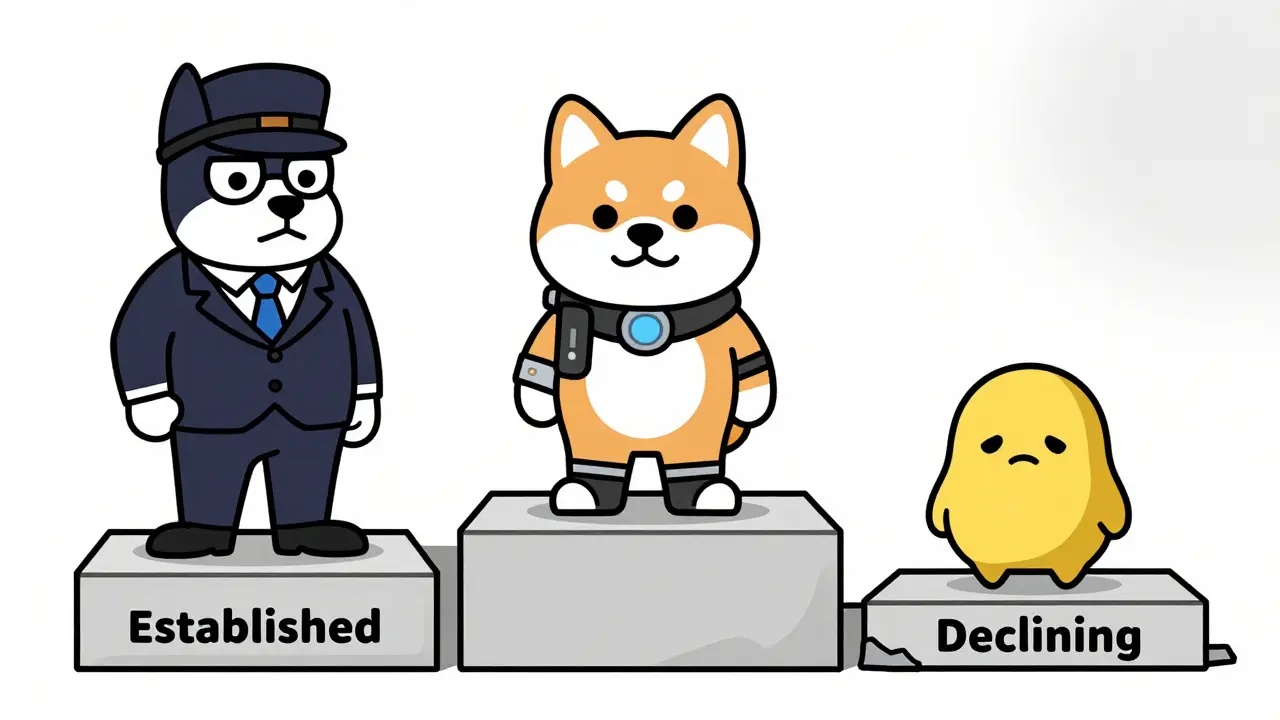
| Longevity | Declining | Established (2013) | Growing (2020) |
Dogecoin and Shiba Inu survived because they built communities, secured listings on major exchanges, and eventually developed ecosystems. DBI has done none of these things. It remains a marginal asset with no path to mainstream adoption.
Final Thoughts on DBI
So, what is Don't Buy Inu? It is a digital artifact of crypto mania-a token that serves as both a product and a critique of the market. It highlights the dangers of FOMO (fear of missing out) and the allure of quick riches.
For most people, the best course of action is to treat DBI as entertainment, not an investment. If you buy it, assume you will lose 100% of that money. Use only funds you can afford to burn. There are no hidden gems here, no secret utility waiting to be discovered. The name says it all. Take the advice seriously.
Is Don't Buy Inu (DBI) a scam?
While DBI may not be a traditional scam where developers steal funds directly, it exhibits many characteristics of high-risk assets. The lack of utility, extreme volatility, and near-zero liquidity make it dangerous for investors. Many users feel trapped because they cannot sell their tokens, leading to accusations of rug pulls.
Where can I buy Don't Buy Inu?
DBI is not available on major centralized exchanges like Coinbase or Binance. You must use decentralized exchanges (DEXs) like Uniswap on the Ethereum network. Ensure you have a compatible wallet like MetaMask and sufficient ETH for gas fees.
What is the future price prediction for DBI?
Most analysts predict a continued decline. With no utility and shrinking community interest, models forecast further drops in value. Historical data shows a 99% loss from its all-time high, and recovery prospects are extremely slim.
Why is the trading volume so low?
Low trading volume indicates a lack of interest and liquidity. Fewer buyers and sellers mean larger price swings for small trades. This makes it difficult to enter or exit positions without significant financial loss due to slippage.
Does DBI have any real-world use case?
No. DBI has no intrinsic utility. It is a pure meme token designed for speculation and social commentary. It does not power any technology, provide governance, or offer services.