
For nearly a decade, if you tried to trade Bitcoin in Vietnam, you were walking through a foggy maze. The government didn’t explicitly ban it, but they certainly didn’t welcome it either. Banks would freeze your accounts without warning, and exchanges operated in the shadows. That era of uncertainty ended abruptly on January 1, 2026.
Vietnam has officially exited the "gray area" and become the first country in the world to pass a comprehensive law recognizing virtual assets. With the enforcement of Law No. 71/2025/QH15, the rules of the game have changed completely. If you are an investor, a developer, or simply curious about how Southeast Asia’s most active crypto market is handling this shift, here is exactly what you need to know about the new reality.
The End of the Gray Area: What Changed on January 1, 2026?
To understand why today matters, we have to look at where we were just twelve months ago. Until early 2024, Vietnam’s stance was best described as "tolerated but unregulated." You could buy crypto, but you couldn’t use it to pay for coffee. You could hold it, but if your exchange vanished overnight, the courts had no clear laws to help you recover your funds.
That ambiguity vanished with the passage of Law No. 71/2025/QH15 on Digital Technology Industry. Passed by the National Assembly in June 2025 and effective from January 1, 2026, this legislation does something unprecedented: it grants full civil protection to crypto assets. This means cryptocurrencies, NFTs, and other digital tokens are now legally recognized as property that can be owned, traded, and inherited under Vietnamese civil law.
This isn't just paperwork. It signals a massive shift in national strategy. By formally defining these assets, the government has moved from ignoring the industry to actively managing it. For years, developers and investors lived with the constant risk of sudden crackdowns. Now, there is a rulebook. However, that rulebook comes with strict conditions that fundamentally alter how trading works.
Resolution 05/2025: The Five-Year Pilot Program
While the main law provides the legal definition, the actual mechanics of trading are governed by Resolution 05/2025/NQ-CP. Signed by Deputy Prime Minister Ho Duc Phoc in September 2025, this resolution launched a five-year pilot program for the crypto market. Think of this as a controlled experiment. The government wants to see how regulated crypto trading impacts financial stability before making permanent changes.
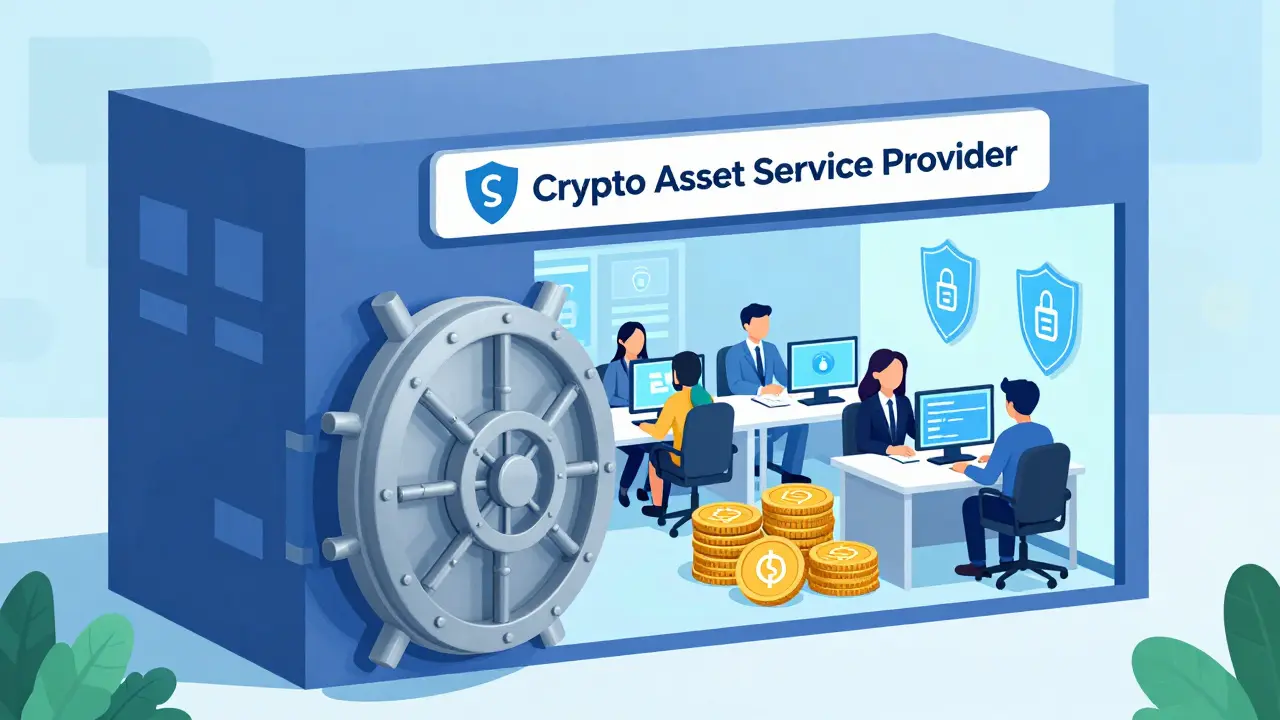
The most critical aspect of this resolution is the creation of Crypto Asset Service Providers (CASPs). These are the only entities allowed to facilitate crypto transactions in Vietnam. Here is how the system works:
- Licensed Operators Only: All crypto issuance, trading, and payment services must go through CASPs licensed by the Ministry of Finance.
- Vietnamese Dong Requirement: Every transaction must be conducted in Vietnamese dong (VND). You cannot trade crypto-to-crypto directly on these platforms; you must convert VND to crypto and vice versa.
- Entity Structure: Issuers must be Vietnamese enterprises, registered as limited liability companies or joint stock companies.
This structure effectively walls off the domestic market from international peer-to-peer trading apps like Binance or Coinbase, unless those global giants establish local subsidiaries that meet strict capital requirements. For the average Vietnamese user, the days of buying Bitcoin via Telegram bots or offshore sites are over. You now must use a local, licensed provider.
Who Can Trade? Domestic vs. Foreign Investors
The new framework draws a sharp line between domestic and foreign participants. This distinction is crucial for understanding who gets access to the market and when.
Domestic Investors For Vietnamese citizens and residents, the path to trading is narrow. After a six-month transition period following the licensing of the first CASP, all domestic crypto transactions must occur exclusively through these licensed organizations. Direct peer-to-peer transfers between individuals are heavily restricted and carry significant legal risks. The goal here is control. By funneling all domestic activity through licensed intermediaries, the state can monitor flows, enforce anti-money laundering (AML) rules, and collect taxes.
Foreign Investors International investors have slightly more flexibility but still face hurdles. They can participate in the market, but only through CASPs licensed by the Ministry of Finance. Crucially, crypto assets in Vietnam can only be offered to foreign investors through these specific channels. This means you cannot simply open an account with a Singaporean or US-based exchange and trade freely while living in Hanoi. You must engage with the local regulatory infrastructure.
Strict Capital Requirements and Asset Restrictions
If you are looking to enter the market as a service provider, the barriers to entry are high. Resolution 05/2025 sets the minimum capital requirement for CASPs at 10 trillion Vietnamese dong (approximately $380,000 USD as of mid-2025). This figure is designed to filter out small, potentially unstable operators and ensure that only well-capitalized firms can handle public funds.
Furthermore, the types of assets allowed are strictly defined. The law categorizes digital assets into three types:
- Virtual Assets: Used for exchange or investment in electronic environments.
- Crypto Assets: Utilizing encryption technology for authentication during creation and transfer.
- Other Digital Assets: Including NFTs and utility tokens.
What is notably absent? Stablecoins backed by fiat currencies and tokenized securities. The resolution explicitly prohibits the issuance of assets backed by fiat money or traditional securities. This eliminates many popular stablecoin models and security token offerings from the Vietnamese market. The government wants real assets backing these instruments, not promises tied to foreign bank accounts or stock markets.
| Feature | Pre-2026 (Gray Area) | Post-2026 (Regulated) |
|---|---|---|
| Legal Status | Unrecognized, ambiguous | Fully recognized civil property |
| Trading Platforms | Offshore exchanges (Binance, etc.) | Licensed local CASPs only |
| Currency | USD, USDT, direct swaps | Vietnamese Dong (VND) only |
| Stablecoins | Widely used | Fiat-backed prohibited |
| Inheritance Rights | Unclear legal standing | Protected under civil law |
Taxation and Compliance: The Cost of Legality
With legal recognition comes taxation. Currently, the tax policy for crypto asset transactions mirrors the taxation of securities. This means capital gains may be subject to withholding taxes similar to stock market profits. While separate regulations are expected, investors should assume that profits from trading will not be tax-free.
Compliance is non-negotiable. All CASPs must adhere to strict Anti-Money Laundering (AML) and Counter-Terrorism Financing (CTF) protocols. This includes rigorous Know Your Customer (KYC) checks. The government is also enforcing information security and cybersecurity standards to protect user data. Violations of these rules do not result in simple fines; they can lead to administrative sanctions or even penal liability, depending on the severity of the infraction.
Dr. Tran Quy, President of the Vietnam Institute for Digital Economy Development, noted that this approach opens a controlled "runway" for innovation. Instead of allowing digital asset flows to operate spontaneously and dangerously, the state is providing a structured environment. However, he also warned that the strict controls mean that any attempt to bypass the system-such as using unlicensed offshore platforms-will be met with swift legal action.

Impact on the Local Ecosystem
Vietnam has consistently ranked among the top countries globally for cryptocurrency adoption. The population is young, tech-savvy, and eager for alternative financial tools. The new framework aims to harness this energy while protecting the national economy.
For developers, the clarity is a double-edged sword. On one hand, smart contracts and digital transactions now have legal enforceability. This encourages enterprise adoption and blockchain development within Vietnam. On the other hand, the prohibition on certain asset types limits the variety of projects that can launch locally. Projects involving decentralized finance (DeFi) mechanisms that rely on anonymous pools or unregulated stablecoins will struggle to find compliance pathways.
The consolidation effect is already visible. Small, informal trading groups are dissolving as users migrate to larger, compliant platforms. This centralization reduces anonymity but increases security for the average user. In the past, scams were rampant because there was no recourse. Now, if a licensed CASP fails, there are legal avenues for recovery, albeit complex ones.
Looking Ahead: A Regional Model?
Vietnam’s move to regulate digital assets comprehensively positions it as a potential leader in Southeast Asia. Neighboring countries are watching closely. If the five-year pilot program succeeds in balancing innovation with financial stability, other nations may adopt similar frameworks. The key will be execution. Can the Ministry of Finance issue licenses efficiently? Can the banking sector integrate seamlessly with crypto providers without triggering systemic risks?
For now, the message is clear: the wild west days of Vietnamese crypto are over. Trading is legal, protected, and taxed-but it is also monitored, restricted, and controlled. If you want to participate, you must play by the new rules.
Is Bitcoin legal in Vietnam in 2026?
Yes, Bitcoin and other cryptocurrencies are legally recognized as virtual assets under Law No. 71/2025/QH15. They are treated as civil property that can be owned, traded, and inherited. However, trading must occur through licensed Crypto Asset Service Providers (CASPs) and cannot be used as a direct means of payment for goods and services.
Can I use Binance or Coinbase in Vietnam?
Directly using offshore platforms like Binance or Coinbase is not permitted for domestic trading under the new regulations. All transactions must go through locally licensed CASPs. Foreign investors can access the market through these licensed entities, but individual users cannot trade directly on unregistered international exchanges without violating compliance rules.
What happens if I trade crypto outside the licensed system?
Engaging in crypto transactions outside the licensed CASP framework carries significant legal risks. Violations can result in administrative sanctions, including fines, or penal liability depending on the nature and severity of the infraction. The government enforces strict monitoring to prevent unauthorized trading and money laundering.
Are stablecoins allowed in Vietnam?
Fiat-backed stablecoins are explicitly prohibited. Resolution 05/2025/NQ-CP bans the issuance of crypto assets backed by fiat currencies or securities. Only assets backed by real tangible assets are permitted, which significantly restricts the availability of popular stablecoins like USDT or USDC in the local market.
How are crypto profits taxed in Vietnam?
Currently, crypto asset transactions are taxed similarly to securities. This implies that capital gains may be subject to withholding taxes. Specific tax rates and regulations are expected to be detailed in future guidelines, but investors should anticipate that profits will not be tax-exempt.
When did the new crypto law take effect?
Law No. 71/2025/QH15 on Digital Technology Industry took effect on January 1, 2026. This date marks the official end of the regulatory gray area and the beginning of the comprehensive legal framework for digital assets in Vietnam.