
SMT Token Vesting Calculator
Calculate Your SMT Rewards
Swarm Markets (SMT) isn't just another crypto coin. It’s a regulated DeFi platform that lets you trade tokenized stocks, bonds, and other real-world assets on a blockchain-without giving up the transparency of decentralized finance. If you’ve ever wondered how you could buy a slice of Apple stock or a U.S. Treasury bill using crypto, and still keep your funds in your own wallet, Swarm Markets is one of the few platforms making that possible today.
What Makes SMT Different from Other Crypto Tokens
Most crypto tokens exist to power decentralized apps, reward liquidity providers, or serve as speculative assets. SMT, the native token of Swarm Markets, does all of that-but it’s also the key to accessing a legally compliant DeFi exchange that handles real-world assets. Unlike Uniswap or SushiSwap, which are open to anyone with a wallet, Swarm Markets requires you to pass a KYC check called Swarm Passport. That’s not a bug; it’s the whole point.
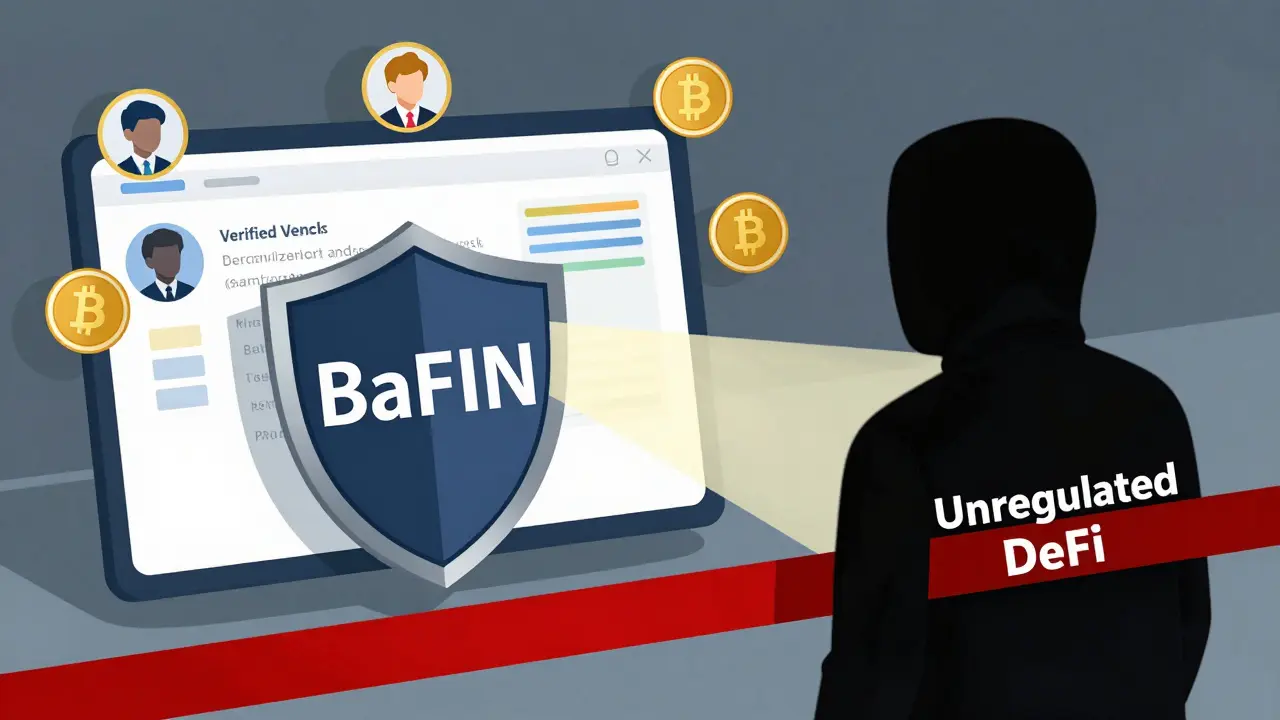
The platform is licensed and supervised by Germany’s Federal Financial Supervisory Authority (BaFIN), making it the first DeFi platform in the world to hold such a license. That means you can trade tokenized versions of Apple stock, Tesla shares, or U.S. Treasury bills without breaking any financial regulations. Other DeFi platforms can’t do that. If they tried, they’d get shut down. Swarm Markets built its entire system around compliance from day one.
The SMT token itself has a total supply of 250 million. As of mid-2024, around 84 million were in circulation. It’s not a high-volume coin-daily trading volume hovers around $50,000-but that’s because it’s not designed for retail speculation. It’s built for users who want to access regulated, on-chain financial products.
How Swarm Markets Works: DeFi With Rules
Swarm Markets runs on Ethereum and uses a modified version of the Balancer Protocol as its automated market maker (AMM). That means trades happen through liquidity pools, just like on Uniswap. But here’s the twist: only assets approved by the platform and users with verified Swarm Passports can interact with these pools.
To get started, you connect your MetaMask or Ledger wallet to the platform. Then you submit your ID for the Swarm Passport verification. This process takes 24 to 72 hours. Once approved, you can deposit either crypto assets like ETH or tokenized real-world assets like tokenized Apple stock. You can then trade them directly with other verified users.
There’s also a decentralized over-the-counter (dOTC) service for larger trades. Institutions can make private offers with custom terms-like setting expiration dates or partial fills-without revealing their order books to the public. This is something traditional exchanges do, but Swarm Markets does it on-chain, with full transparency and self-custody.
Every time someone swaps an asset on the platform, 25% of the swap fee-or 0.1% of the swapped amount, whichever is higher-is sent to the Swarm treasury. This funds platform development and rewards SMT holders. The rest goes to liquidity providers.
Tokenomics: Long-Term Rewards, Not Quick Gains
The SMT token isn’t designed to pump and dump. Half of the total supply-125 million tokens-is locked in a rewards pool that releases tokens gradually over 100 years. That’s not a typo. The first 90 days after launch saw 1.4% of the total supply released. After that, the weekly distribution drops slowly, ensuring long-term alignment between early supporters and the platform’s future.
When you earn SMT as a reward, it’s initially locked as vSMT (vested SMT). You can’t trade it until a quarterly vesting date unlocks it. This structure discourages short-term speculation and encourages users to stick around.
SMT holders can also vote on platform upgrades and fee structures. It’s a basic form of governance, but in a space where most DeFi projects are run by anonymous teams, having a regulated entity with a named CEO (Christian Hecker) and clear governance adds a layer of accountability rarely seen in crypto.
Why It’s Not for Everyone
Swarm Markets is brilliant-if you want regulated access to tokenized assets. But it’s not for crypto purists who believe DeFi should be permissionless. The KYC requirement kills the anonymity that many love about blockchain. If you’re using crypto to avoid banks, Swarm isn’t for you.
It’s also not for traders chasing quick profits. The token’s price has been volatile. In 2023, it swung from $0.05 to $1.40, then dropped over 90% in a year. Market cap hovered around $6.7 million in late 2023, tiny compared to Uniswap’s $4.8 billion. That’s not because the tech is bad-it’s because the market for tokenized real-world assets is still in its early days.
Most retail investors don’t even know this platform exists. Reddit threads about it are sparse. Trustpilot has almost no reviews. That’s because Swarm Markets targets institutions and serious investors, not meme coin hunters. Their documentation is solid but dry. There aren’t YouTube tutorials explaining how to use it. You’re expected to read the official docs at docs.swarm.com.
How It Compares to Other RWA Platforms
Swarm Markets isn’t the only player in tokenized assets. Ondo Finance focuses on tokenized U.S. Treasuries. Matrixdock offers tokenized stocks. But neither has a BaFIN license. That’s a big deal.
Europe’s MiCA regulation (Markets in Crypto-Assets) is coming into full effect in 2025. Platforms that are already compliant will have a major advantage. Swarm Markets is already operating under one of the strictest financial regulators in the world. That gives it a head start when institutions start moving assets on-chain.
Compare that to other DeFi platforms that ignore regulation entirely. They might have higher trading volumes, but they’re vulnerable to shutdowns, lawsuits, or being blocked by banks. Swarm Markets avoids that risk by design.

Who Should Care About SMT?
If you’re an investor who wants exposure to tokenized stocks or bonds without going through a traditional broker like Interactive Brokers or eToro, Swarm Markets could be a game-changer. You keep control of your assets. You avoid middlemen. You get on-chain transparency.
If you’re a developer or institution looking to tokenize real-world assets-like real estate, private equity, or art-Swarm Markets offers a compliant infrastructure to do it. Their platform is built for asset owners who need to issue digital securities under EU law.
And if you believe that the future of finance is a hybrid of traditional systems and blockchain, then SMT is one of the few tokens that actually represents that vision-not just as a promise, but as a working product.
The Big Picture: Why This Matters
The global market for tokenized real-world assets could hit $16 trillion by 2030, according to Boston Consulting Group. Right now, almost all of that is locked in traditional systems. Banks, custodians, and clearinghouses still control the process.
Swarm Markets is proving that blockchain can work within those systems-not by fighting them, but by meeting them halfway. It’s not about replacing banks. It’s about making them faster, cheaper, and more transparent.
Most crypto projects are trying to disrupt finance by ignoring regulation. Swarm Markets is trying to fix finance by working within it. That’s a harder path. But if it succeeds, it could be the blueprint for how finance evolves over the next decade.
SMT may not be the next Bitcoin. But if you’re looking for a crypto asset that’s actually solving a real problem-bridging the gap between Wall Street and blockchain-it’s one of the few that’s doing it right.
Is Swarm Markets (SMT) a good investment?
SMT isn’t designed as a speculative asset. Its value comes from utility-not price pumps. The token gives access to regulated DeFi trading, governance rights, and fee discounts. If you plan to use the platform regularly, holding SMT makes sense. If you’re hoping to flip it for a quick profit, you’re likely to be disappointed. The market cap is small, volume is low, and the tokenomics are built for long-term use, not short-term trading.
Can I buy SMT on Coinbase or Binance?
No, SMT is not listed on major centralized exchanges like Coinbase or Binance. You can buy it on decentralized exchanges like Uniswap or through Swarm Markets’ own platform, but only after completing the Swarm Passport KYC. This limits access, but it’s intentional-it keeps the platform compliant with EU financial rules.
Do I need a crypto wallet to use Swarm Markets?
Yes. You need a self-custodial wallet like MetaMask or Ledger to connect to the platform. Swarm Markets doesn’t hold your funds. You control your private keys. The platform just provides the trading infrastructure. This is a core part of its DeFi design-even with KYC, you still own your assets.
What assets can I trade on Swarm Markets?
You can trade tokenized versions of real-world assets like U.S. Treasury bills, Apple stock, and other securities. You can also trade standard crypto assets like ETH, USDC, and DAI. All assets are fully backed and verified. The platform doesn’t allow unbacked tokens or memecoins. This is a regulated financial service, not a crypto casino.
Is Swarm Markets safe?
Yes, in terms of regulation and operational security. It’s licensed by BaFIN, which is one of the toughest financial regulators in the world. Smart contracts have been audited and run on Ethereum, a proven network. But safety also depends on you: you must protect your wallet and complete KYC properly. If you lose your private key or fall for a phishing scam, you can’t get your assets back-just like with any DeFi platform.
Why hasn’t SMT price gone up despite the platform’s innovation?
Because innovation doesn’t always drive price right away. SMT’s user base is small and institutional. Retail traders don’t know about it, and most crypto investors still prefer high-volume, unregulated tokens. The token’s value is tied to platform adoption, not hype. If tokenized assets go mainstream and institutions start using Swarm Markets at scale, SMT’s price could rise significantly. But that’s a multi-year timeline, not a short-term event.