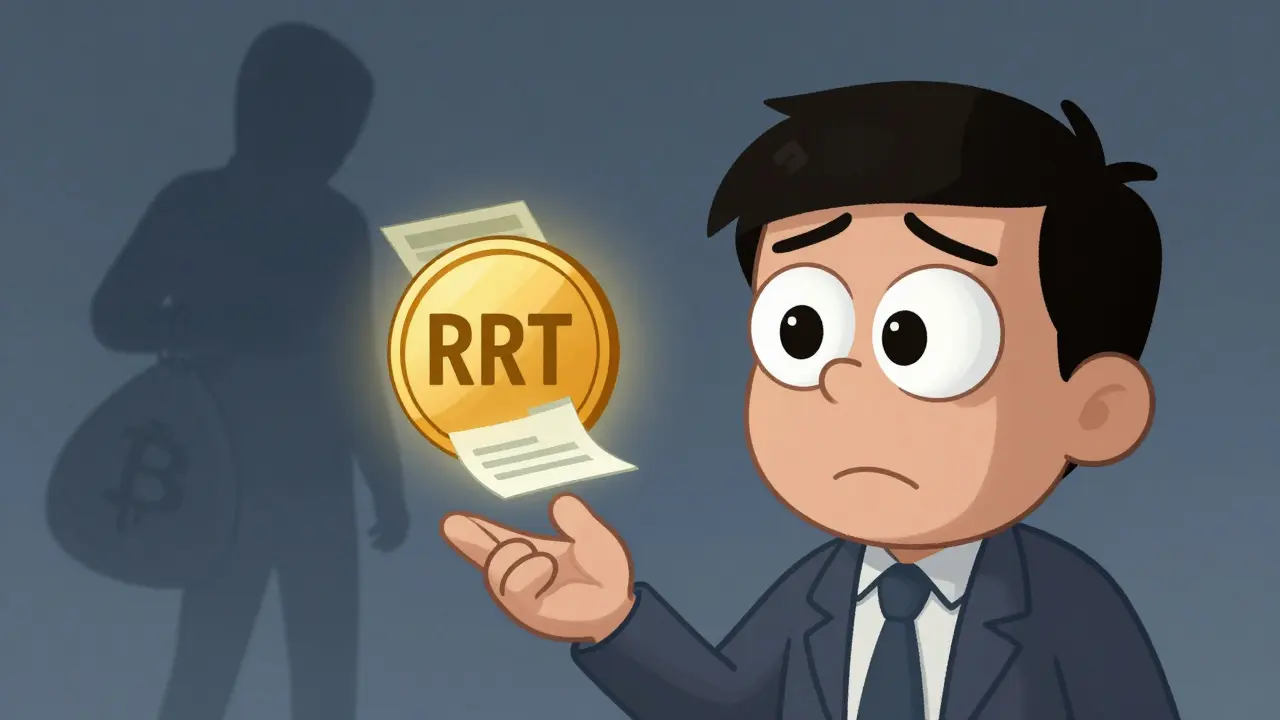
You see a ticker called RRT on your screen. The price looks low. You wonder if this is the next big opportunity or a trap. It is neither. It is a receipt. Specifically, it is a digital claim to money stolen from Bitfinex in 2016. If you are looking for a standard cryptocurrency that powers a network or offers staking rewards, you will not find it here. RRT is a unique financial artifact born out of one of the biggest hacks in crypto history.
To understand what RRT actually is, you have to look back at August 2016. That is when hackers stole roughly 119,756 Bitcoin from Bitfinex. At the time, that was worth about $72 million. Today, those coins would be worth billions. Bitfinex could not pay everyone back immediately. Instead, they did something radical: they socialized the loss and issued a debt token called BFX. But RRT came later, as a secondary layer of compensation. It is not a coin you buy to use; it is a token you hold hoping for a specific legal outcome.
The Origin Story: From Hack to Token
The story of RRT starts with the August 2016 Bitfinex Hack. When the theft happened, Bitfinex faced a crisis. They had lost user funds but still had to operate. To manage the debt, they created the BFX Token. For every dollar a user lost, Bitfinex credited their account with one BFX token. This was essentially an IOU. Users could wait for Bitfinex to redeem these tokens for cash over time, or they could trade them.
Then came the twist. Bitfinex wanted to reduce its debt burden. They offered BFX holders a choice: keep waiting for cash redemption, or convert your BFX into equity in iFinex Inc., the parent company of Bitfinex. To make the equity conversion more attractive, they introduced the Recovery Right Token (RRT).
Here is how the deal worked. If you converted your BFX to equity, you got RRTs. These RRTs represented a "limited-recourse, contingent obligation." In plain English, this means RRT holders only get paid if Bitfinex recovers the stolen Bitcoin from the 2016 hack. And even then, they are last in line. First, any remaining BFX claims must be settled. Only after that does RRT come into play. By April 2017, all BFX tokens were either redeemed or converted, leaving RRT as the sole outstanding claim tied to the hack recovery.
How RRT Actually Works
RRT is not like Bitcoin or Ethereum. It does not run on its own blockchain. It does not have miners validating transactions. Historically, it was issued on the Omni Layer protocol, which sits on top of the Bitcoin blockchain. However, most people do not interact with the blockchain directly. Instead, RRT trades primarily on the Bitfinex exchange itself.
Think of RRT as a lottery ticket. The prize is the recovered Bitcoin. The cost is whatever you pay for the token on the market. The odds depend entirely on two things:
- Legal Success: Can authorities return the stolen coins to Bitfinex?
- Corporate Willingness: Will Bitfinex honor its promise to redeem RRTs at $1 each?
Bitfinex has stated in multiple documents, including the whitepaper for their utility token UNUS SED LEO, that they intend to use recovered funds to buy back and burn LEO tokens and to redeem RRTs. The target redemption price for RRT has often been cited as $1 per token. However, this is a promise, not a guarantee. There is no smart contract forcing this redemption. It relies on Bitfinex’s solvency and integrity.
The 2022 Seizure: A Turning Point
For years, RRT traded at very low prices because the chance of recovery seemed slim. Then, on February 8, 2022, the U.S. Department of Justice announced a major development. They seized 94,636 Bitcoin believed to be proceeds from the 2016 Bitfinex hack. This was a huge chunk of the original stolen amount.
This news sent shockwaves through the RRT community. Speculators rushed to buy RRT, driving the price up temporarily. The logic was simple: if the government has the coins, maybe Bitfinex can get them back. Bitfinex responded by saying they would work with the DOJ to establish their rights to the return of the stolen bitcoin.
However, possession by the government does not mean immediate return to the victim. Legal processes are slow. As of mid-2026, there has been no formal transfer of these coins back to Bitfinex. The coins remain in government custody, subject to ongoing legal proceedings involving the alleged launderers. Until those coins change hands, RRT remains a speculative asset based on hope rather than realized value.
| Token | Purpose | Status | Priority |
|---|---|---|---|
| BFX | Direct debt IOU for lost funds | Fully redeemed or converted by 2017 | High (Primary Creditor) |
| RRT | Incentive for converting BFX to equity | Outstanding, contingent on recovery | Low (Subordinated Claim) |
| LEO | Utility token for fee discounts | Active, widely traded | N/A (Not a debt instrument) |

Trading RRT: Risks and Realities
If you decide to buy RRT, you need to understand the market conditions. Liquidity is extremely thin. Daily trading volume is often in the hundreds or low thousands of dollars. This means that buying even a small amount of RRT can move the price significantly. You might see the price jump 20% because one person bought $500 worth, or drop just as fast if someone sells.
Most data aggregators show contradictory information for RRT. Some list the circulating supply as zero. Others show a maximum supply around 30 million tokens. The price varies wildly between exchanges, with some showing $0.60 and others higher, depending on where the data feed comes from. Bitfinex is the primary venue for actual trading. Other platforms often just mirror this price without having real order books.
Here are the key risks you face:
- Counterparty Risk: RRT is a claim against Bitfinex. If Bitfinex goes bankrupt or decides not to honor the redemption, the token becomes worthless. Unlike Bitcoin, you cannot "self-custody" RRT easily. Most holders leave it on the exchange.
- Liquidity Risk: You might not be able to sell your RRT when you want to. The spread between buy and sell orders can be wide.
- Regulatory Risk: Experts have debated whether RRT constitutes a security under laws like the U.S. Howey Test. Since it represents an investment in a common enterprise with profits derived from the efforts of others (Bitfinex), it carries legal ambiguity.
- Time Risk: We are nearly a decade past the hack. The longer the recovery takes, the less valuable the future payout becomes due to inflation and opportunity cost.
Is RRT Worth Buying in 2026?
Let’s be direct. RRT is not an investment for most people. It is a speculative bet on a legal outcome. If you believe the U.S. government will return the seized Bitcoin to Bitfinex within the next few years, and you believe Bitfinex will redeem RRT at $1, then buying RRT at $0.60 or lower offers a potential upside. It is akin to buying distressed debt.
However, consider the alternatives. The crypto market has matured since 2016. Exchanges now have better insurance, cold storage, and regulatory compliance. The model of issuing subordinated recovery tokens is rare and largely obsolete. Newer incidents, like the FTX collapse, resulted in traditional bankruptcy proceedings, not tokenized claims.
If you are curious, treat RRT as entertainment money. Allocate no more than 1-2% of your portfolio. Do not expect regular income. Do not expect technological innovation. You are betting on a court case and a corporate promise. If the coins are never returned, or if Bitfinex prioritizes other liabilities, your RRTs go to zero. There is no middle ground.
Understanding the Hierarchy of Claims
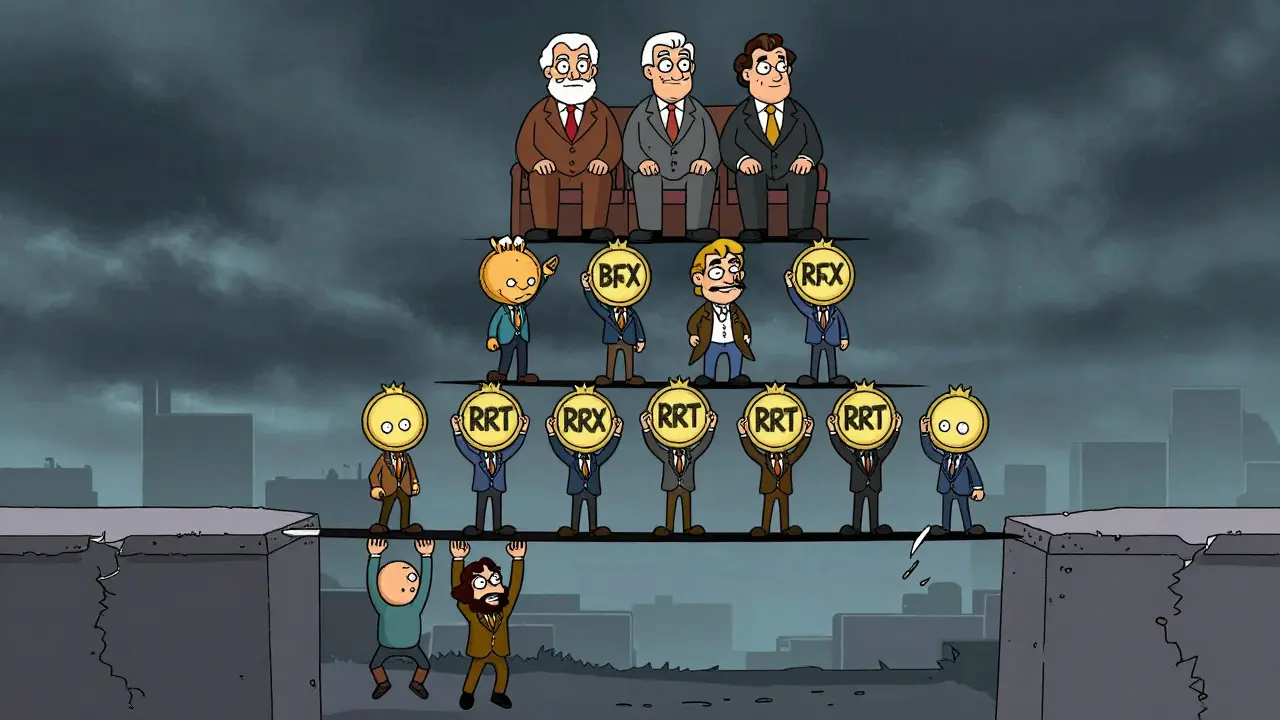
To truly grasp RRT, you must understand where it sits in the capital structure. Imagine a pie representing the recovered Bitcoin. Who gets a slice first?
- Operational Costs & Senior Debt: Any legitimate senior creditors of Bitfinex/iFinex get paid first. This includes bank loans or high-priority operational debts.
- Remaining BFX Claims: Although mostly resolved, any residual obligations from the original hack victims who did not convert to equity take precedence.
- RRT Holders: Only after the above groups are satisfied do RRT holders receive a share. Bitfinex has indicated a target of $1 per RRT, but this is capped by the available surplus.
- Equity Holders: Shareholders of iFinex Inc. are last in line. They only benefit if there is money left over after all debts and claims are settled.
This subordination is crucial. It means RRT is riskier than standard debt but potentially more rewarding than equity if a large recovery occurs. It is a hybrid instrument that exists in a gray area between finance and crypto speculation.
Conclusion: A Niche Artifact
Recovery Right Token is a fascinating piece of crypto history. It shows how decentralized ideas collided with traditional financial crises. It is not a currency. It is not a platform. It is a claim check. Whether it pays out depends on lawyers, judges, and the honesty of a single exchange. For most investors, it is too risky and too obscure. For specialists in distressed assets, it might offer a tiny edge. Just remember: you are not buying technology. You are buying hope.
What is the current price of RRT?
The price of RRT fluctuates and is often illiquid. As of recent data, it has traded in the range of $0.60 to $0.80 on various trackers, but these prices may not reflect true market depth. Always check live order books on Bitfinex for the most accurate bid-ask spread.
Can I store RRT in a hardware wallet?
Technically, RRT was issued on the Omni Layer, which is compatible with some Bitcoin wallets that support Omni assets. However, support is limited, and most users keep RRT on the Bitfinex exchange because liquidity is concentrated there. Always verify wallet compatibility before attempting off-exchange storage.
Will RRT ever reach $1?
Bitfinex has stated an intention to redeem RRT at $1 per token if sufficient funds are recovered from the 2016 hack. However, this is not guaranteed. It depends on the return of seized Bitcoin by authorities and Bitfinex honoring its commitment. There is no set date for this redemption.
What happens if Bitfinex goes bankrupt?
If Bitfinex or iFinex Inc. becomes insolvent, RRT holders are subordinated creditors. This means they would likely recover little to nothing, especially compared to senior debt holders and employees. RRT is considered a high-risk, speculative asset precisely because of this counterparty risk.
Is RRT related to UNUS SED LEO?
Yes, indirectly. Both tokens are part of Bitfinex's ecosystem. Bitfinex has stated that recovered hack funds would be used to buy back and burn LEO tokens and to redeem RRTs. While LEO is a utility token for fee discounts, RRT is a contingent claim on recovered assets. They serve different purposes but share the same underlying source of potential value: the recovered Bitcoin.