You’ve seen the ads. You’ve heard the buzz about "play-to-earn" games that promise to turn your downtime into income. But when you dig into a specific project like Galaxy Fight Club, things get complicated fast. Prices jump around on different exchanges, supply numbers don’t match up, and it’s hard to tell if this is a legitimate gaming ecosystem or just another speculative micro-cap token.
This guide cuts through the noise. We’ll break down what Galaxy Fight Club actually is, how the GCOIN token works in practice, and whether the risks outweigh the rewards for a casual player or an investor looking for the next big thing in blockchain gaming.
What Is Galaxy Fight Club?
At its core, Galaxy Fight Club is not just a cryptocurrency; it is a video game first. Specifically, it markets itself as the first cross-IP, cross-platform Player-versus-Player (PvP) fighting game built entirely around Non-Fungible Tokens (NFTs).
Think of it as a digital arena where avatars from completely different NFT collections can battle each other. If you own a character from Collection A and I own one from Collection B, we can fight in the same ring. This interoperability is the project’s main selling point. Most blockchain games lock you into their own proprietary characters. Galaxy Fight Club tries to bridge that gap, creating a unified competitive environment for the broader NFT universe.
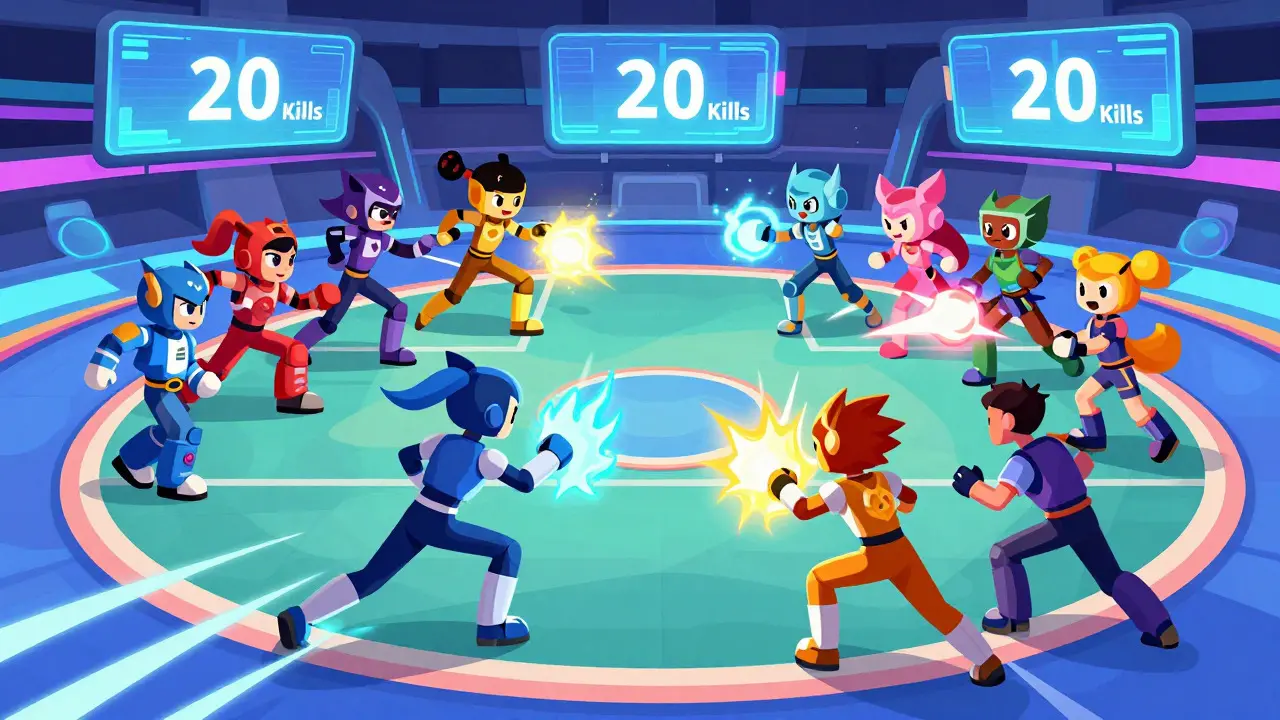
The gameplay is designed to be accessible and fast-paced. It follows a Multiplayer Online Battle Arena (MOBA) style similar to mainstream hits like Brawl Stars. Matches are short-typically lasting around five minutes-and played in 3-versus-3 teams. The goal is simple: your team needs to achieve 20 kills before the opponents do. Because it is mobile-native but also supports PC, it aims to capture players who want quick, competitive sessions on the go.
How Does GCOIN Work? The Tokenomics Breakdown
GCOIN is the fuel that keeps this engine running. It serves as the primary medium of exchange within the Galaxy Fight Club ecosystem. You use it to buy in-game items, pay for transactions, and access platform-specific functions. But beyond utility, it is also the reward mechanism for the play-to-earn model.
Here are the hard numbers you need to know about the token supply:
- Total Supply: 150,000,000 GCOIN (Capped)
- Maximum Supply: 150,000,000 GCOIN
- Circulating Supply: Highly disputed (see below)
The project claims the token is designed to be deflationary. This means there are mechanisms intended to remove tokens from circulation over time, even if no one is actively trading them on the market. However, the most concrete emission source comes from the Genesis Galaxy Fighters NFT collection.
There are only 10,129 Genesis Galaxy Fighters in existence. Each of these NFTs generates between 5 and 15 GCOIN per day. To put that in perspective, if every single Genesis fighter produced the maximum amount, the daily emission would be roughly 151,935 GCOIN. At the minimum rate, it would be about 50,645 GCOIN daily. This predictable income stream is a key feature for long-term holders of these specific NFTs.
The Data Problem: Why Supply Numbers Don't Match
If you look at GCOIN across different tracking platforms, you will notice something unsettling: the data doesn’t align. This is a major red flag for any investor trying to calculate the true market capitalization.
| Platform | Reported Circulating Supply | Implied Market Cap Range |
|---|---|---|
| CoinMarketCap / Bitget | ~14.38 Million | $17K - $30K |
| CoinGecko / CryptoRank | ~80 Million | $115K - $456K |
Why the huge difference? Some aggregators might be excluding locked tokens, vesting schedules, or unverified wallets, while others count the full issued amount. When one site says the circulating supply is 14 million and another says 80 million, your calculation of the project's value changes by a factor of five or six. Until the project publishes a clear, audited token allocation chart, you have to take these figures with a grain of salt.
Price Volatility and Liquidity Risks
GCOIN is a micro-cap asset. In crypto terms, this means it has a very small market share-effectively 0.00% of the total cryptocurrency market. While that sounds tiny, it explains why the price behaves the way it does.
Prices for GCOIN vary wildly depending on where you look and when you check. One snapshot might show a price of $0.000581 on Binance, while another shows $0.00578 on Investing.com. That is a tenfold difference based on timing and liquidity pools.
Liquidity is the ability to buy or sell an asset without causing its price to move drastically. For GCOIN, liquidity is low. On decentralized exchanges like SushiSwap (Polygon POS), the 24-hour trading volume for the GCOIN/WETH pair has been reported as low as $919. On centralized platforms like Coinbase, daily volumes hover around $2,800 to $3,600.
What does this mean for you? If you try to sell a large amount of GCOIN, you could crash the price because there aren’t enough buyers waiting in the order book. Conversely, a single large buy order can spike the price artificially. This makes GCOIN a high-risk asset prone to significant slippage-the difference between the expected price of a trade and the price at which the trade is executed.
Where Can You Trade GCOIN?
Despite the low liquidity, GCOIN is listed on a mix of centralized and decentralized exchanges. This gives users several entry points, though availability may depend on your region.
Centralized Exchanges (CEX): You can find GCOIN on major platforms including:
- Binance
- Kraken
- Bybit
- Bitget
- Crypto.com
- Coinbase
Decentralized Exchanges (DEX): For those comfortable with Web3 wallets, GCOIN is traded on SushiSwap via the Polygon network. This allows for peer-to-peer swapping without going through a centralized intermediary, but it requires understanding gas fees, slippage tolerance, and wallet security.
Is Galaxy Fight Club Worth Your Time?
The answer depends entirely on your goals. Are you a gamer looking for a new competitive title, or an investor hunting for early-stage gems?
The Case For: The cross-IP concept is genuinely innovative. Allowing NFTs from different projects to interact in a single PvP arena solves a fragmentation problem that plagues much of the NFT space. If the game is fun and retains players, the demand for GCOIN and the Genesis NFTs could rise organically. The deflationary design also suggests that the team is thinking about long-term value retention rather than just infinite inflation.
The Case Against: The transparency issues are concerning. Discrepancies in circulating supply and the lack of detailed developer information or audited financials make it hard to trust the metrics. Furthermore, as a micro-cap token, GCOIN is highly susceptible to market manipulation and extreme volatility. There is also no clear data on active player counts or user retention rates, which are the ultimate drivers of value in a play-to-earn economy.
If you decide to engage with Galaxy Fight Club, start small. Treat any money spent on GCOIN or Genesis NFTs as entertainment expenses, not guaranteed investments. Verify the current supply data yourself on multiple sources before making any moves, and always prioritize securing your assets in a reputable hardware wallet if you plan to hold long-term.
What is the total supply of GCOIN?
The total and maximum supply of GCOIN is capped at 150,000,000 tokens. This limit is consistent across all major data aggregators.
How do I earn GCOIN in Galaxy Fight Club?
Players can earn GCOIN through the play-to-earn mechanics of the game. Additionally, holders of the limited-edition Genesis Galaxy Fighter NFTs generate between 5 and 15 GCOIN per day automatically.
Is GCOIN a safe investment?
GCOIN is considered a high-risk, micro-cap asset. It suffers from low liquidity, high volatility, and discrepancies in reported circulating supply data. Investors should exercise extreme caution and only allocate funds they can afford to lose.
Which exchanges list GCOIN?
GCOIN is available on several centralized exchanges including Binance, Kraken, Bybit, Bitget, Crypto.com, and Coinbase. It is also traded on decentralized exchanges like SushiSwap on the Polygon network.
What makes Galaxy Fight Club different from other NFT games?
Its primary differentiator is the "cross-IP" design. Unlike most games that use only their own proprietary characters, Galaxy Fight Club allows NFTs from various different collections to battle each other in the same PvP arena.
Why do GCOIN prices vary so much between sites?
The variation is due to low liquidity and thin trading volumes. Small trades can significantly impact the price on different exchanges, leading to wide spreads. Additionally, differences in update times and data aggregation methods contribute to the discrepancy.