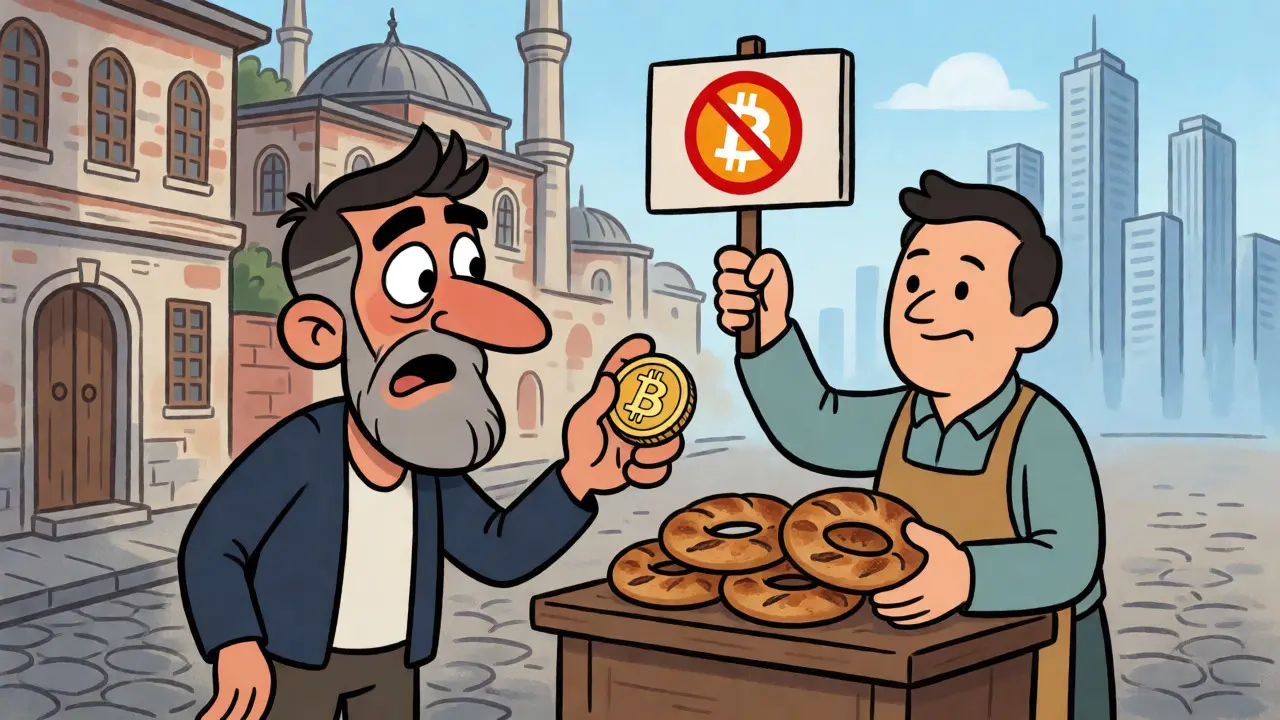
You can buy Bitcoin in Istanbul, but you cannot buy a simit with it. That sounds like a riddle, but it is the reality of Turkey's crypto regulation as of 2026. The country has executed one of the sharpest policy pivots in the global digital asset space. It moved from a loose, almost invisible oversight model to a rigid, high-barrier framework that aims to protect the Turkish lira while keeping trading alive. If you are a trader, an investor, or just curious about why your exchange suddenly asked for five different documents, this shift explains everything.
The End of the Wild West Era
For years, Turkey was a crypto haven. High inflation made the local currency volatile, so people turned to digital assets as a store of value. There were few rules. You could trade on unlicensed platforms, use crypto for small purchases, and generally operate without much government interference. That era ended abruptly. The turning point wasn't a single event but a series of legislative moves culminating in Law No. 7518, which came into force in mid-2024. This law didn't just tweak existing rules; it rebuilt the entire legal foundation for how crypto works in the country.
The core philosophy behind this change is monetary sovereignty. The Central Bank of Turkey (TCMB) decided that while owning crypto is fine, letting it replace the lira for everyday payments threatens national economic stability. So, they banned crypto payments for goods and services back in 2021, and they have stuck to that gun. But they realized banning trading would drive activity underground. Instead, they chose regulation over prohibition. They created a system where you can trade, but only through licensed entities that answer to strict authorities.
Who Is Actually In Charge?
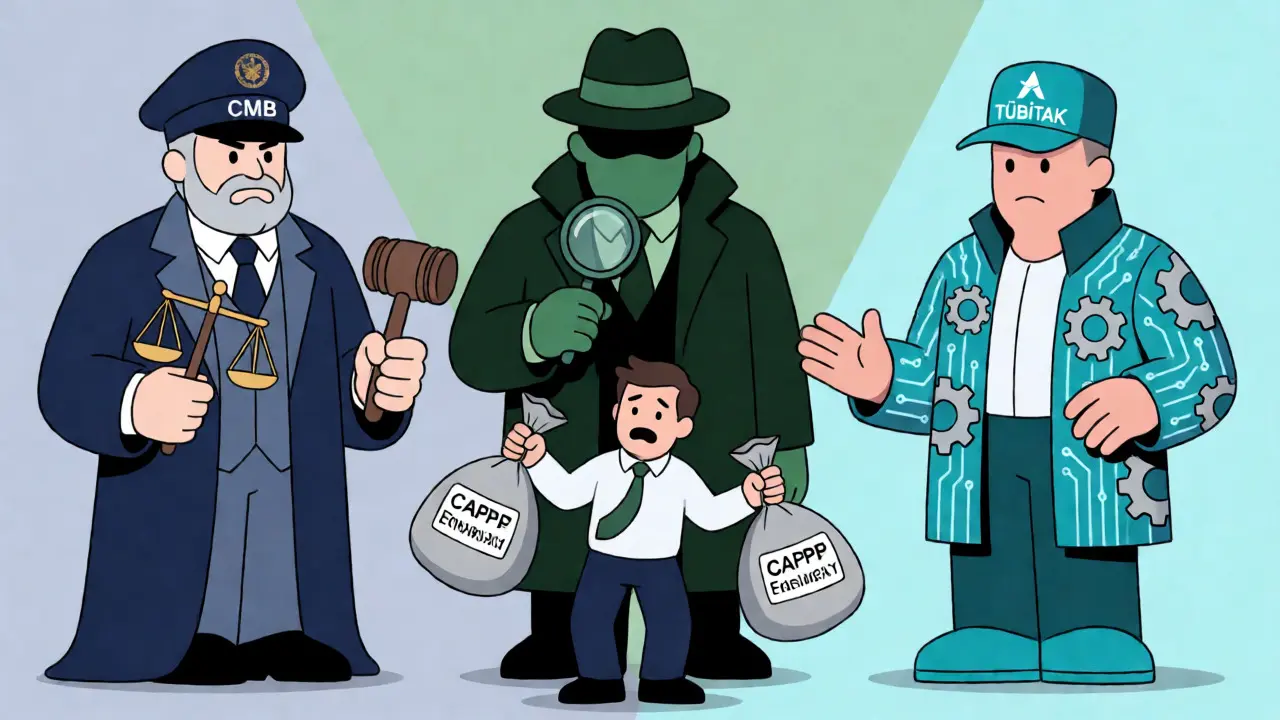
If you think there is one regulator, you are wrong. Turkey uses a tri-party structure that covers legal, financial, and technical angles. Understanding who does what helps you know who to worry about.
- The Capital Markets Board (CMB): This is the main boss. The CMB issues licenses, sets capital requirements, and monitors market conduct. If you want to run an exchange, you need their stamp of approval.
- The Financial Crimes Investigation Board (MASAK): MASAK handles anti-money laundering (AML). They watch for suspicious flows of money. Recently, they gained expanded powers to freeze accounts linked to illicit activities without always needing prior court approval.
- TÜBİTAK: The Scientific and Technological Research Council of Türkiye focuses on the tech side. They ensure that the infrastructure used by exchanges meets specific security and compliance standards.
This division of labor means compliance isn't just about filing paperwork. It involves meeting technical audits from TÜBİTAK, satisfying AML checks from MASAK, and maintaining capital reserves for the CMB. For a new entrant, this is a steep hill to climb.
The Price of Entry: Licensing and Capital
Here is where things get expensive. Law No. 7518 set minimum capital requirements that effectively wiped out smaller, underfunded players. To operate as a Crypto Asset Service Provider (CASP), specifically an exchange, you need at least TRY 150 million (roughly $4.1 million) in capital. If you want to offer custody services-holding other people's coins-you need TRY 500 million ($13.7 million).
| Requirement Type | Exchange License | Custodian License |
|---|---|---|
| Minimum Capital | TRY 150 Million (~$4.1M) | TRY 500 Million (~$13.7M) |
| Primary Regulator | Capital Markets Board (CMB) | Capital Markets Board (CMB) |
| AML Compliance | Mandatory (MASAK oversight) | Mandatory (MASAK oversight) |
| KYC Threshold | Transactions > 15,000 TRY | Transactions > 15,000 TRY |
These numbers aren't arbitrary. They are designed to ensure that if an exchange fails, it doesn't leave thousands of retail investors holding the bag. By forcing companies to hold significant cash reserves, the government reduces the risk of insolvency. However, critics argue this creates a monopoly effect, favoring big, well-funded domestic players like ICRYPEX or Binance TR while shutting out smaller innovators.
Enforcement: The Crackdown of 2025
Writing laws is easy; enforcing them is hard. Turkey proved its seriousness in 2025. In July, authorities blocked access to 46 unlicensed exchanges. This list included major decentralized exchange (DEX) interfaces like PancakeSwap. If you tried to connect your wallet to these platforms from a Turkish IP address, you likely hit a wall.
The enforcement went beyond blocking websites. In late July 2025, the founder of ICRYPEX, one of Turkey's largest exchanges, was detained. The allegations linked crypto funding to political opposition groups. While the legal case continues, the message was clear: being licensed doesn't make you immune to scrutiny. The government is willing to use regulatory tools to monitor not just financial crimes, but potentially political influence within the crypto sector.
Users reported significant disruptions during this period. Many had to migrate funds to licensed platforms quickly. Some faced delays in withdrawals as exchanges conducted emergency compliance audits. It was a chaotic time, but it signaled that the "wait and see" approach for regulators was over.
How Turkey Compares Globally
Turkey's approach sits in a unique middle ground. It is stricter than Switzerland, which remains very open to crypto businesses. It is less severe than China, which banned trading entirely. It shares similarities with South Korea, which also requires licensed exchanges and strict KYC, but Turkey adds the layer of centralized capital markets oversight via the CMB.
Compared to the European Union's MiCA regulation, Turkey is more restrictive on utility. MiCA allows for various forms of electronic money tokens and stablecoins under certain conditions. Turkey explicitly bans using crypto for payments. This distinction matters for merchants. In Europe, a shop might accept a stablecoin payment. In Turkey, that same transaction is technically illegal if processed directly in crypto. This forces users to convert to lira first, adding friction and fees.
What This Means for You
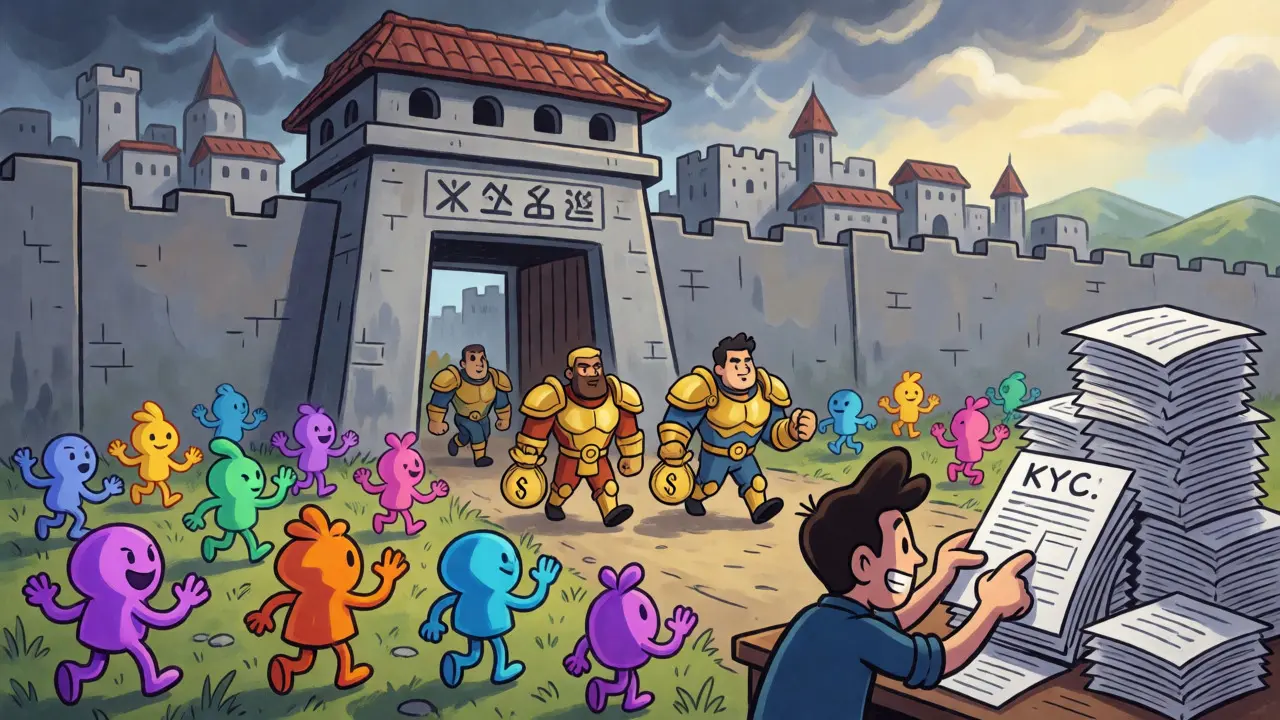
If you are a regular user in Turkey, your experience has changed. You now face rigorous KYC (Know Your Customer) checks. Any transaction over 15,000 TRY (~$425) triggers mandatory identity verification. You need to provide detailed documentation, including proof of income and source of funds. This isn't just a one-time check; exchanges must report suspicious activity regularly.
Expect slower account verifications. New users often report waiting days or even weeks for approval. Existing users may be asked to re-verify their details. The good news? Security has improved. Licensed exchanges undergo regular audits. Your funds are held in segregated accounts, reducing the risk of theft or misuse by the platform itself.
For international investors looking at Turkey, the barrier to entry is high. Foreign exchanges serving Turkish clients must either obtain a local license or stop serving the market. Many have chosen to exit rather than navigate the complex compliance landscape. This consolidation means fewer choices for traders, but potentially more stability.
Future Outlook: Tightening Screws
Don't expect regulations to loosen. Current drafts suggest further tightening. The government is considering expanding MASAK's power to freeze crypto accounts instantly. There are proposals to restrict stablecoin transfers to prevent capital flight during periods of lira volatility. Enhanced reporting requirements are also on the table, with heavier penalties for non-compliance.
Turkey is positioning itself as a model for emerging markets. It wants to harness the innovation of blockchain without losing control of its monetary policy. Whether this balance holds depends on enforcement consistency and whether the high barriers stifle innovation too much. For now, the pivot is complete. The wild west days are gone, replaced by a structured, albeit expensive, regulated environment.
Can I still buy Bitcoin in Turkey?
Yes, buying and selling cryptocurrencies is fully legal. However, you must do so through exchanges licensed by the Capital Markets Board (CMB). Unlicensed foreign exchanges may block access to Turkish users or require them to close accounts.
Why can't I pay for groceries with crypto in Turkey?
The Central Bank of Turkey banned cryptocurrency payments for goods and services in April 2021. This rule remains in effect to protect the Turkish lira's status as the sole legal tender. You must convert crypto to lira before making a purchase.
What is the KYC threshold for Turkish crypto exchanges?
Transactions exceeding 15,000 Turkish Lira (approximately $425-$450) trigger mandatory Know Your Customer (KYC) checks. You will need to provide identity documents and potentially proof of income or source of funds.
Are decentralized exchanges (DEXs) allowed in Turkey?
While using DEXs is not explicitly illegal, many popular DEX interfaces have been blocked by Turkish authorities because they lack local licensing. Access may be restricted via IP blocking, requiring users to rely on licensed centralized exchanges.
How much capital is required to start a crypto exchange in Turkey?
Under Law No. 7518, a standard crypto exchange requires a minimum capital of TRY 150 million (approx. $4.1 million). Custody service providers need TRY 500 million (approx. $13.7 million).