
Imagine a country where the lights go out for hours during a sweltering summer heatwave, factories shut down because there is no power, and hospitals struggle to keep equipment running. Meanwhile, miles away, massive underground facilities hum with thousands of computers mining Bitcoin 24/7, consuming electricity at subsidized rates that are virtually free. This is not a dystopian novel; it is the reality of state-controlled crypto mining in Iran.
In recent years, Iran has transformed from a passive observer of digital assets into one of the world’s largest Bitcoin mining hubs. But this isn’t your typical private-sector boom. Here, the game is rigged by the state itself. The Islamic Revolutionary Guard Corps (IRGC) and entities linked to Supreme Leader Ali Khamenei have turned cryptocurrency mining into a sophisticated tool for evading international sanctions and generating hard currency. While ordinary citizens suffer through blackouts, these powerful groups operate with impunity, creating a "crypto cartel" that exploits national resources for private profit.
The Rise of the State-Backed Crypto Cartel
To understand why Iran’s mining sector is unique, you have to look at who controls the levers of power. Unlike China, which banned mining in 2021, or Kazakhstan, which became a hub for displaced miners, Iran actively protects its own mining operations-specifically those run by the state security apparatus.
The journey began around 2018 when President Hassan Rouhani’s administration legalized mining. The goal was twofold: monitor existing operations and create a backdoor to bypass U.S. sanctions that had cut Iran off from the global banking system. By 2020, the strategy shifted from mere tolerance to aggressive expansion. The IRGC partnered with Chinese companies to build massive mining farms. A prime example is the 175-megawatt facility in Rafsanjan, Kerman province. This joint venture between an IRGC-linked enterprise and Chinese investors took advantage of Iran’s heavily subsidized electricity tariffs, paying as little as 0.004 cents per kWh. To put that in perspective, that is roughly 1/50th of the commercial rate elsewhere in the world.
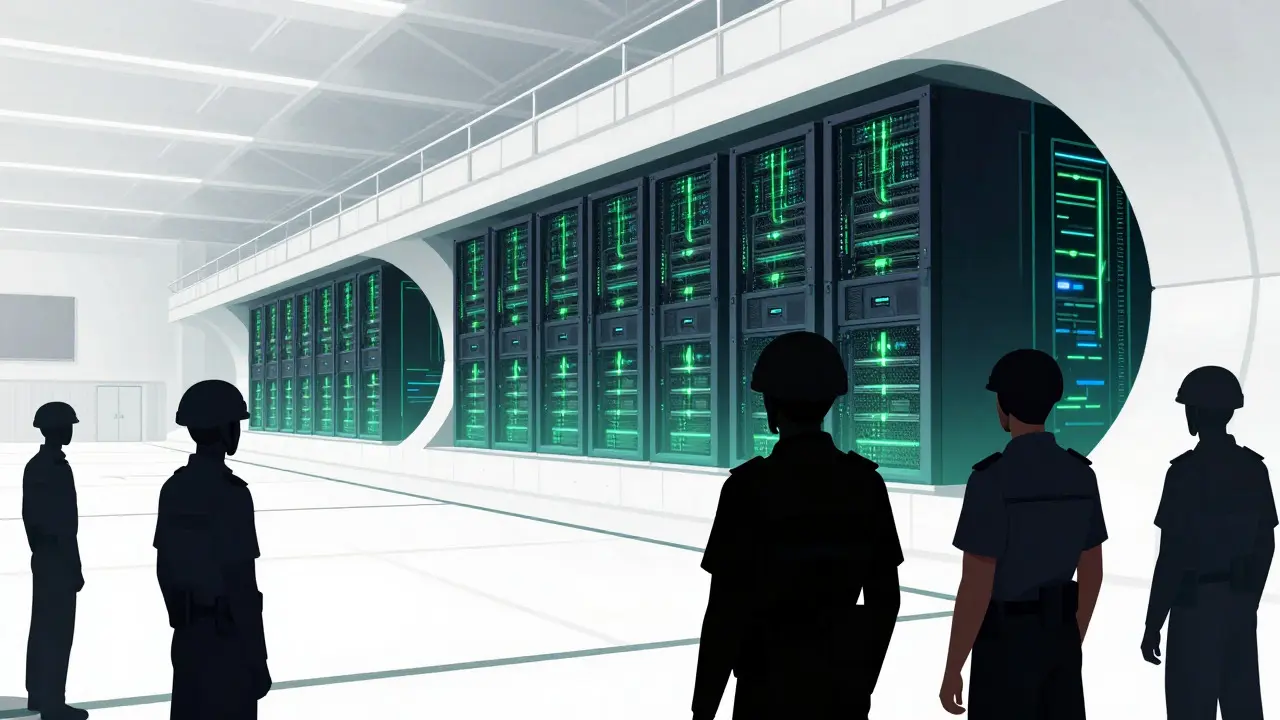
These operations don’t just sit in industrial parks. They hide in plain sight. In May 2025, investigators discovered a large-scale mining operation concealed within the Shahid Ghorbani Sports Complex in Ahvaz. Miners were hidden in tunnels beneath the cycling track and in service rooms housing electrical systems. They operated undetected for over two years, protected by their political connections and armed guards. This concealment highlights a key feature of state-controlled mining: it operates outside normal regulatory scrutiny, often on military bases or in special economic zones where oversight is minimal.
| Feature | Iran (State-Controlled) | Global Average (Private) |
|---|---|---|
| Electricity Cost | ~0.004 - 0.07 cents/kWh (subsidized) | $0.05 - $0.15/kWh (market rate) |
| Primary Operator | IRGC & State Entities | Private Companies & Individuals |
| Regulatory Status | Protected if state-affiliated; cracked down on others | Varies by jurisdiction (taxed, regulated, or banned) |
| Strategic Goal | Sanctions evasion & foreign currency generation | Profit maximization |
The Energy Crisis: Who Pays the Price?
The cost of this lucrative industry is paid by the Iranian people. Iran’s power grid is already strained due to aging infrastructure and rising demand. Adding over 1,000 megawatts of mining capacity-a figure estimated by early 2023-has pushed the system to the brink. The result? Debilitating power outages.
During the summer of 2024, as temperatures soared to 45°C (113°F), Tehran’s District 3 experienced a 14-hour blackout. Social media erupted with outrage. Hashtags like #IranEnergyCrisis trended as citizens connected the dots between their suffering and the uninterrupted hum of IRGC mining farms. On Reddit, users in the r/Iran community shared stories of factory shutdowns and halted production while nearby state-owned mining operations continued to draw power without interruption.
This disparity fuels public anger. The government claims to regulate mining to protect the grid, yet enforcement is selective. Legal miners face strict rules, including mandatory use of government-approved hardware that reportedly reduces efficiency by 15-20%. They also face power cuts during peak demand. Meanwhile, state-affiliated operators enjoy "free" energy and protection from enforcement actions. It is a classic case of plundering national resources for elite profit.
Navigating the Regulatory Maze
If you are trying to mine legally in Iran today, you are navigating a shifting landscape of contradictions. As of 2025, mining is technically legal but tightly controlled by the Ministry of Industry, Mine and Trade. You need a license, which takes 6-8 weeks to process. You must pay specific tariffs (reportedly 7 cents per kWh for licensed ops, though much less for insiders) and use approved hardware.
But the rules change overnight. In February 2025, the government banned all cryptocurrency advertising. In August 2025, they enacted the "Law on Taxation of Speculation and Profiteering," imposing capital gains tax on crypto trading. This move signaled Tehran’s intent to capture revenue from a previously untaxed sector. However, the Central Bank of Iran (CBI) remains skeptical. In early 2025, the CBI blocked rial payment gateways for exchanges, citing lack of transparency and unpaid taxes. Later, they allowed partial access but required API integration that gave authorities full visibility into user data.
This surveillance state approach creates a dilemma for regular Iranians. They want to participate in the crypto economy to hedge against inflation, but doing so means handing over their financial privacy to a government that may freeze assets or impose heavy taxes. The CBI’s development of "Rial Currency," a state-backed digital token, further illustrates the desire to control the narrative rather than embrace decentralization.

Sanctions Evasion and International Pressure
Why does the state care so much about Bitcoin? Because it is a lifeline. With traditional banking channels closed, mining provides a way to generate hard currency (USDT, BTC) that can be used for imports or moved abroad. The IRGC uses these funds to finance its activities globally, effectively turning electricity into geopolitical leverage.
However, the world is catching on. In July 2025, Tether executed its largest-ever freeze of Iranian-linked funds, blocking 42 addresses associated with Nobitex (Iran’s largest exchange) and IRGC wallets. This wasn’t just a slap on the wrist; it disrupted entrenched transaction patterns. In response, the Iranian government urged users to switch from USDT to DAI via the Polygon network to maintain liquidity. This rapid adaptation shows how sophisticated Iran’s financial engineers have become in navigating sanctions.
TRM Labs, a blockchain analytics firm, noted that these freezes mirror the adaptations seen after the loss of traditional cross-border banking. Iran is learning to live outside the formal financial system, using crypto as a shadow banking network. But each freeze tightens the noose, forcing operators to diversify settlement methods and increasing the risk of total isolation.
The Future of Iran’s Crypto Sector
So, where does this leave Iran? The trajectory points toward increased state control and surveillance. The government wants three things: access to foreign currency, prevention of capital flight by citizens, and tax revenue from crypto trades. These goals often conflict. To stop capital flight, they restrict outflows. To get tax revenue, they require transparency. To evade sanctions, they need secrecy.
Experts like Silvia Boltuc from SpecialEurasia argue that tensions persist between regulatory ambitions, economic necessity, and energy crises. The long-term viability of this model is questionable. If the power grid collapses under the weight of mining, the economic benefits vanish. If international pressure mounts too high, the ability to convert mined coins into usable cash diminishes.
For now, however, the machines keep humming. The IRGC continues to expand its footprint, leveraging cheap energy and political protection. For the average Iranian, crypto remains a double-edged sword: a tool for financial survival in a sanctioned economy, but one that comes with significant risks, from blackouts to government surveillance.
Is cryptocurrency mining legal in Iran?
Yes, but with strict conditions. As of 2025, mining is legal if you obtain a license from the Ministry of Industry, Mine and Trade. Licensed miners must pay specific electricity tariffs and use government-approved hardware. However, unlicensed mining is illegal and frequently raided, although state-affiliated operations often operate with impunity.
How does the IRGC benefit from crypto mining?
The IRGC benefits by generating hard currency (like Bitcoin and USDT) to circumvent U.S. sanctions. They operate large-scale mining farms with access to heavily subsidized electricity, allowing them to produce crypto at a fraction of the global cost. These assets can then be sold internationally to fund operations or import goods, bypassing traditional banking restrictions.
What impact does crypto mining have on Iran's power grid?
Crypto mining exacerbates Iran's energy crisis. With over 1,000 megawatts dedicated to mining, the strain on the national grid leads to frequent and prolonged power outages, especially during summer heatwaves. While legal miners face power cuts, state-controlled operations often continue uninterrupted, leading to public outrage over unequal resource distribution.
Did Tether freeze Iranian crypto assets?
Yes. In July 2025, Tether froze 42 Iranian-linked addresses, marking its largest action against Iran. This targeted wallets connected to the domestic exchange Nobitex and IRGC-affiliated accounts. The move aimed to disrupt sanctions evasion networks and forced Iranian users to adapt by switching to other stablecoins like DAI.
Are there taxes on cryptocurrency in Iran?
Yes. In August 2025, Iran enacted the "Law on Taxation of Speculation and Profiteering," which imposed capital gains tax on cryptocurrency trading. This law treats crypto similarly to gold, real estate, and forex, signaling the government's intent to integrate digital assets into the formal taxed economy and capture revenue from the sector.