
Imagine trying to buy a coffee in Moscow with Bitcoin today. You can’t. Not because the barista doesn’t like it, but because the Russian Central Bank has effectively banned domestic crypto payments while simultaneously opening a narrow door for international trade. This paradox defines the current state of digital assets in Russia. As we stand in October 2026, the regulatory landscape has shifted from outright hostility to a tightly controlled, dual-track system designed to keep money flowing across borders without destabilizing the ruble at home.
If you are an investor, a business owner dealing with cross-border payments, or just someone curious about why your crypto exchange account looks different than it did three years ago, you need to understand the specific mechanics of these rules. The Central Bank of Russia (CBR) is no longer just saying "no"; they are saying "yes, but only if you jump through very specific hoops." This article breaks down exactly what those hoops are, who gets to use them, and what the new capital requirements mean for banks and traders in 2026.
The Dual-Track Strategy: Domestic Ban vs. International Loophole
The core of the CBR’s policy rests on a clear distinction between using crypto inside Russia and using it outside. For residents, using cryptocurrencies as a means of payment for goods and services within the country remains prohibited. The logic here is monetary sovereignty. The CBR views the ruble as the sole legal tender, and allowing Bitcoin or Ethereum to circulate domestically could undermine this status and complicate monetary policy.
However, sanctions have forced a pragmatic shift. In summer 2024, legislation changed to permit digital currency payments in international trade. This created what experts call a "critical loophole." If you are an exporter selling grain or metals abroad, you can now receive payment in stablecoins or other digital assets, provided you follow strict reporting guidelines. This exception is not a free-for-all; it is a sanctioned channel specifically designed to bypass SWIFT restrictions and maintain economic ties with non-Western partners.
| Use Case | Status | Key Constraint |
|---|---|---|
| Domestic Payments (Coffee, Rent) | Prohibited | Must use Rubles; fines apply for violations. |
| International Trade Settlements | Permitted | Restricted to authorized participants; strict AML checks. |
| Investment by Qualified Investors | Allowed (ELR) | High financial thresholds; mandatory KYC. |
| Bank Holdings of Crypto | Limited | Capped at 1% of bank capital. |
The Experimental Legal Regime (ELR): Who Can Actually Invest?
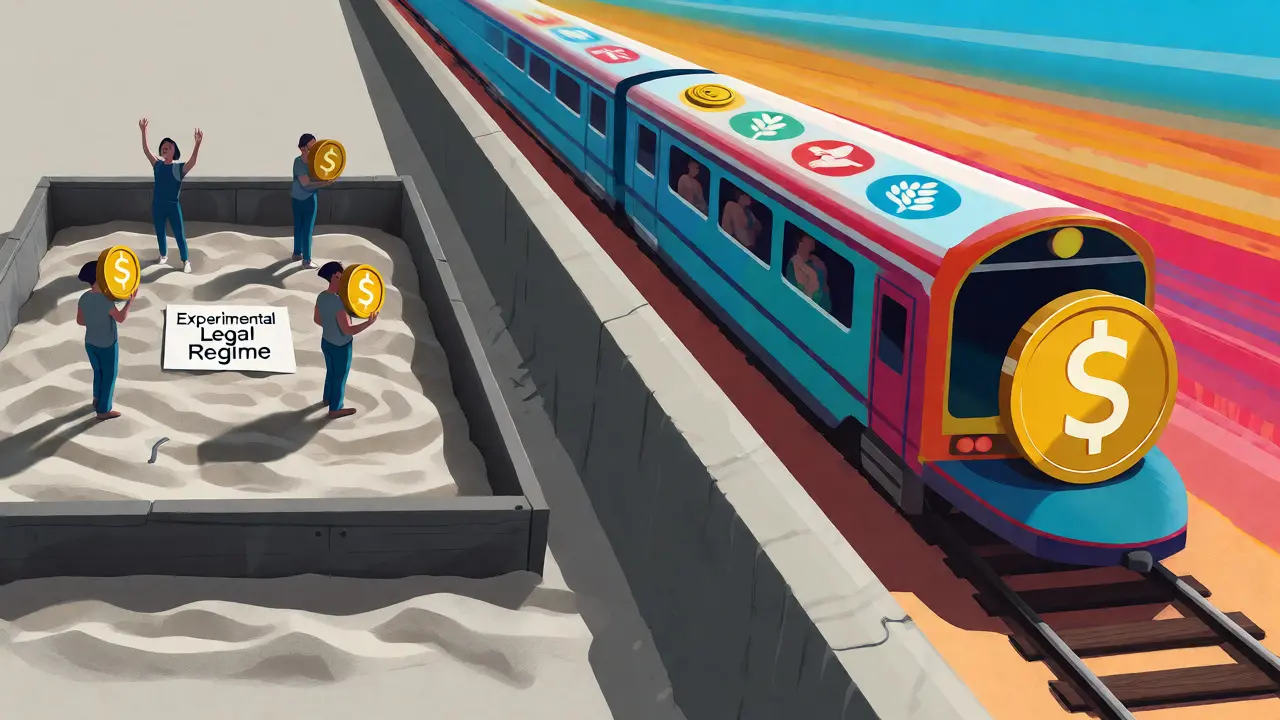
You might wonder, "If I can't pay with crypto, can I still buy it?" The answer is yes, but with heavy restrictions. The primary vehicle for legal crypto activity is the Experimental Legal Regime (ELR). Think of the ELR as a sandbox with high walls. It allows limited trading and holding of digital assets, but participation is restricted to "especially qualified" investors.
These are not casual traders buying $50 worth of Dogecoin. To qualify, individuals must meet stringent financial criteria set by the CBR. This vetting process ensures that only those with significant capital and risk tolerance enter the market. The goal is to protect ordinary citizens from the volatility of digital assets while allowing sophisticated players to operate within a regulated framework.
Crucially, the CBR has proposed banning cryptocurrency settlements between residents outside the ELR. If you try to send Bitcoin to your neighbor for a car repair without going through the approved channels, you face liability. This rule prevents the underground economy from fully adopting crypto as a parallel currency system.
2026 Capital Requirements: The 'CryptoBasel' Rules
For banks, 2026 marks a turning point. New regulations, often dubbed "CryptoBasel" by industry lawyers like Andrey Tugarin of GMT Legal, impose stricter capital requirements on financial institutions dealing with crypto. The headline number to remember is 1%.
A Russian bank cannot hold digital assets exceeding 1% of its total capital. Furthermore, loans extended to cryptocurrency firms are heavily restricted. This aligns with the CBR’s informational letter IN 03-23/87 from May 2025, which recommended that banks cover any crypto investments entirely with their own funds. Essentially, if a bank wants to touch crypto, it needs deep pockets and a conservative balance sheet.
Why so strict? The CBR classifies cryptocurrencies as highly risky assets. By capping exposure, they ensure that a crash in the global crypto market does not trigger a liquidity crisis in the Russian banking sector. Most analysts believe these rules formalize existing practices rather than introducing revolutionary changes, as most banks were already avoiding large crypto holdings due to internal risk policies.
Stablecoins and the Push for Standardization
While Bitcoin gets the headlines, stablecoins are the workhorses of the new trade regime. Deputy Finance Minister Ivan Chebeskov confirmed that rules for stablecoins were finalized by the end of 2025, bringing them under joint oversight by the Ministry of Finance and the Central Bank.
The focus here is on transparency and backing. Stablecoins used in international trade must adhere to standards that ensure their value is reliably pegged to fiat currencies or gold. This reduces the risk of de-pegging events disrupting supply chains. The government aims to create a framework that benefits businesses by providing certainty, though tensions remain between the Finance Ministry’s desire for growth and the CBR’s instinct for control.
Surveillance, AML, and the Death of Anonymity
If you think crypto offers anonymity in Russia, think again. The CBR, in collaboration with the Ministry of Digital Development, has launched a digital platform for the de-anonymization of cryptocurrency users. Every transaction over 600,000 rubles must be reported to tax authorities. That’s roughly $6,500 USD, meaning even mid-sized trades are visible to the state.
Rosfinmonitoring, the federal financial monitoring service, plays a key role here. They have established clear regulations for Virtual Asset Service Providers (VASPs), including exchanges and brokers. The message to the market is binary: integrate into the state-regulated system or get blocked.
- Mandatory KYC: Know Your Customer procedures are non-negotiable for all qualified investors.
- P2P Monitoring: Peer-to-peer transactions are scrutinized closely to prevent money laundering.
- Gray Market Crackdown: Intermediaries operating outside the ELR face blocking measures.
This level of surveillance positions Russia among the most restrictive major economies regarding privacy in crypto. There is no room for "trustless" interactions when the state requires trust to be verified by a central authority.

Practical Implications for Businesses and Individuals
So, what does this mean for you in late 2026? Here is a quick checklist to navigate the landscape:
- Check Your Status: Are you a "qualified investor" under the ELR? If not, your ability to trade actively is severely limited.
- Monitor Transaction Limits: Keep track of your trades. Anything approaching 600,000 rubles triggers automatic reporting.
- Use Approved Channels for Trade: If you are importing or exporting, ensure your counterparties use VASPs registered with Rosfinmonitoring.
- Beware of Domestic Payments: Do not attempt to pay local services in crypto unless explicitly permitted under a specific experimental contract.
For banks, the strategy is caution. With the 1% cap in effect, institutional involvement remains minimal. Most banks prefer to offer custody services or advisory roles rather than taking direct market risk.
Can I legally mine Bitcoin in Russia?
Yes, mining is legal, but it is subject to regulation. Miners must register and comply with energy usage regulations. However, selling mined coins usually requires going through authorized exchanges or OTC desks that adhere to AML/KYC rules, especially for larger volumes.
What happens if I pay for groceries with Bitcoin?
Technically, you are violating the ban on domestic payments. While enforcement against small individual transactions has been inconsistent, the law prohibits it. Merchants are more likely to be fined than individuals, but repeated violations can lead to scrutiny from tax authorities.
Are stablecoins treated differently than Bitcoin?
Yes. Stablecoins are viewed as tools for settlement and investment rather than speculative assets. They have clearer regulatory pathways for international trade, thanks to the rules finalized in late 2025, whereas Bitcoin faces stricter capital constraints for banks.
Who qualifies as an 'especially qualified' investor?
The CBR sets high financial thresholds, typically requiring significant portfolio value or annual income levels. These investors undergo rigorous KYC checks and are allowed to trade on licensed platforms within the Experimental Legal Regime.
Will the 1% bank capital cap change soon?
As of 2026, the cap is firmly in place. Experts suggest it will remain until the CBR develops new approaches, potentially after further assessment of systemic risks. Significant relaxation is unlikely given the regulator's conservative stance.
Final Thoughts on Navigating the Restrictive Landscape
The Russian Central Bank’s approach to crypto is neither fully open nor completely closed. It is a calculated containment strategy. By allowing international trade settlements, they acknowledge the geopolitical reality of sanctions. By restricting domestic use and imposing harsh capital rules on banks, they protect the ruble and the banking system.
For the average user, the era of easy, anonymous crypto adoption is over. The future belongs to compliant, documented, and qualified participants. If you plan to engage with digital assets in Russia, treat it less like a wild west frontier and more like a regulated bond market: precise, monitored, and strictly bound by the rules.