You’ve heard the name TEMBTC a term often mistaken for a cryptocurrency exchange platform, maybe in a quick chat or a spammy email. You’re probably wondering if it’s the next big thing in digital finance or just another risky venture. Here is the hard truth right out of the gate: TEMBTC is not a recognized cryptocurrency exchange. In fact, as of August 2026, there is zero evidence that such a platform exists in any legitimate financial registry.
If you are looking to buy Bitcoin or trade altcoins, searching for "TEMBTC" might lead you down a rabbit hole of confusion-or worse, into a scam. This article cuts through the noise to explain what TEMBTC actually is (spoiler: it’s likely a typo or a misunderstanding), why it doesn’t appear on any reputable lists, and where you should actually look to trade safely.
Why Can’t You Find Any Information on TEMBTC?
When a crypto exchange is real, it leaves a footprint. It has regulatory filings, user reviews on Trustpilot, technical documentation, and mentions in industry reports from firms like CoinDesk or The Block. We looked everywhere for TEMBTC. We checked market cap data, security audits, and community forums like Reddit. The result? Silence.
In the world of cryptocurrency digital assets secured by cryptography and operating on blockchain technology, silence is usually a red flag. Established platforms like Coinbase one of the largest regulated cryptocurrency exchanges in the United States or Kraken a secure online cryptocurrency exchange founded in 2011 dominate the conversation because they handle billions in volume. According to industry reports from late 2025, Coinbase held an 11.5% market share in the U.S., while Kraken sat at 8.3%. TEMBTC wasn’t even mentioned in the footnotes.
The absence of data isn’t just an oversight; it’s a definitive indicator. If TEMBTC were processing trades, it would need liquidity providers, banking partners, and KYC (Know Your Customer) compliance systems. None of these entities have ever been linked to a brand named TEMBTC. For a trader, this means there is no price history, no order book depth, and no customer support team to call if things go wrong.
The Likely Confusion: Trading Pairs vs. Exchanges
So, where did the name come from? The most logical explanation lies in how we read ticker symbols. In crypto, assets are traded in pairs. A common format is [Asset]/[Base Currency]. For example, BTC/USD means you are trading Bitcoin for US Dollars.
It is highly probable that "TEMBTC" is a misinterpretation of a specific trading pair, perhaps involving a lesser-known token with the ticker "TEM" being traded against Bitcoin (BTC). However, even this theory hits a wall. There is no widely recognized major token with the ticker "TEM" listed on top-tier exchanges like Binance, Kraken, or Coinbase.
This distinction matters. An exchange is the marketplace-the building where the trade happens. A trading pair is the transaction itself. Searching for an exchange called "TEMBTC" is like searching for a restaurant called "BurgerFries." You might find a menu item, but you won’t find the place itself. If you saw "TEMBTC" on a screen, it was likely a display error, a niche DeFi pool on a decentralized platform, or a fabricated name used in phishing attempts.
Red Flags: How to Spot Fake Exchanges
If someone pitched you TEMBTC as a high-yield opportunity, pay attention. Scammers often create fake platforms with names that sound vaguely familiar or technical to trick new investors. Here are the signs that a platform is not legitimate:
- No Regulatory Presence: Legitimate exchanges register with bodies like the SEC (in the U.S.) or FCA (in the UK). TEMBTC appears in none of these registries.
- Zero Community Feedback: Real exchanges have thousands of reviews. Good or bad, people talk about them. TEMBTC has no presence on consumer protection sites.
- Vague Fee Structures: Established players like Crypto.com a global cryptocurrency exchange and fintech company publish clear fee schedules (e.g., 0%-2.99%). Fake platforms often hide fees until after you deposit funds.
- Pressure to Act Fast: If you were told TEMBTC is launching soon or has limited spots, that is a classic urgency tactic used by fraudsters.
In October 2025, regulatory scrutiny intensified globally. The SEC settled cases with several major players, forcing greater transparency. In this environment, a non-compliant entity like TEMBTC would struggle to survive, let alone thrive. The lack of any legal paperwork suggests it operates in the shadows, if it operates at all.
Safe Alternatives: Where You Should Trade Instead
Since TEMBTC is a ghost, you need a reliable place to park your capital. The crypto market is competitive, which is good for you. Major exchanges compete on fees, security, and asset variety. Here is a breakdown of verified platforms that dominate the landscape in 2026.
| Exchange | Supported Assets | Trading Fees | Key Security Feature |
|---|---|---|---|
| Coinbase | 235+ | 0% - 3.99% | EAL6+ Certified Secure Element Chips |
| Kraken | 350+ | 0% - 0.4% | Seedless Backup Systems & Military-Grade Security |
| Binance US | 158+ | 0% - 0.6% | SAFU Fund (Secure Asset Fund for Users) |
| Gemini | 100+ | 0.03% - 3.49% | Regulatory Compliance & Cold Storage |
| Crypto.com | 313+ | 0% - 2.99% | Multi-Signature Wallets & Insurance Coverage |
These platforms are not just names; they are institutions. They undergo regular third-party audits. For instance, Kraken’s settlement with the SEC in March 2025 highlighted its commitment to resolving regulatory issues transparently rather than disappearing. Coinbase, being publicly traded, must adhere to strict financial reporting standards. When you use these services, your money is backed by companies that have something to lose if they fail.
Understanding Market Share and Liquidity
Why does it matter that TEMBTC doesn’t exist? Because liquidity is king. Liquidity refers to how easily you can buy or sell an asset without affecting its price. On a major exchange, you can sell $10,000 worth of Bitcoin instantly at the current market rate. On a fake or micro-platform, you might get stuck, unable to withdraw your funds because there is no one else buying.
The global cryptocurrency exchange market is valued at approximately $7.3 billion, with a projected growth rate of 12.4% through 2030. This money flows through established channels. Platforms like OKX and Bitstamp also hold significant shares, offering deep order books and advanced trading tools. By avoiding unknown entities like TEMBTC, you ensure your capital remains liquid and accessible.
Furthermore, large exchanges offer more than just trading. They provide staking services, educational resources, and insurance on fiat holdings. Kraken, for example, offers a Plus tier with zero-fee trading up to $10,000 monthly for a small subscription fee. These features require infrastructure that non-existent platforms simply do not have.
Steps to Verify Any Crypto Platform
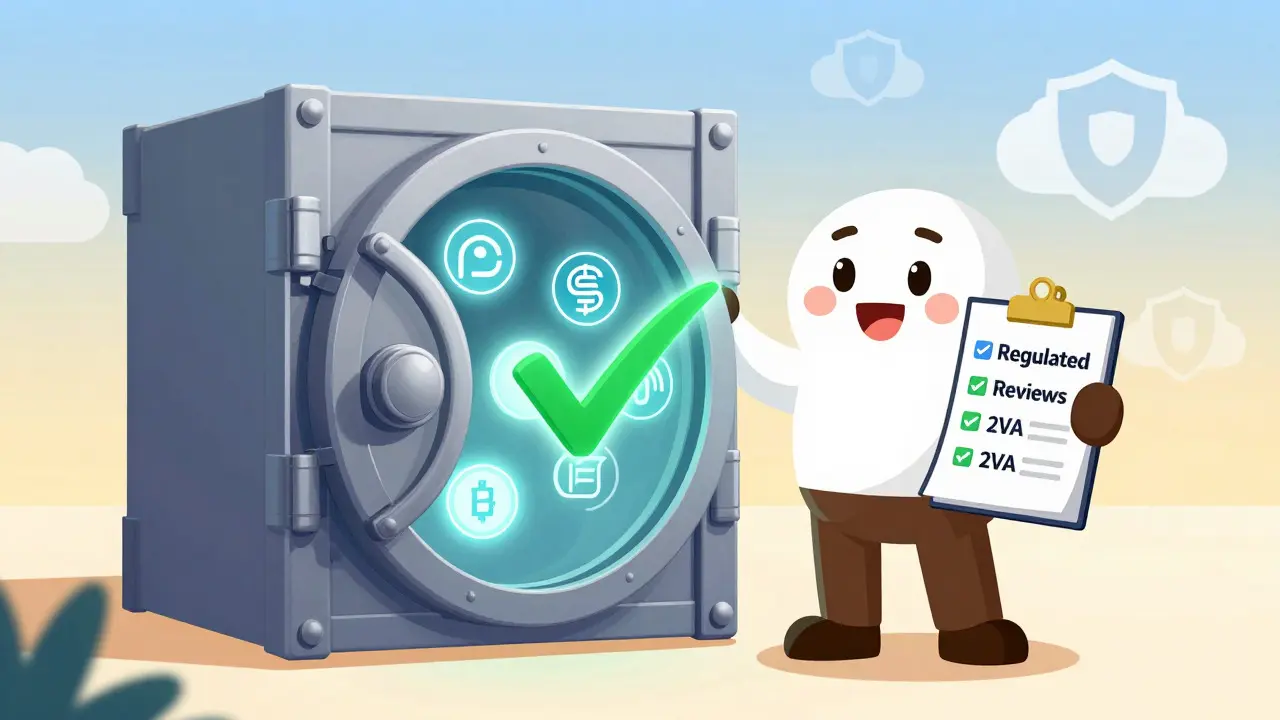
To protect yourself from future confusion or scams, follow this checklist before depositing a single dollar into any new service:
- Check Regulatory Status: Search for the exchange name on government regulator websites (SEC, FCA, ASIC). If they aren’t listed, proceed with extreme caution.
- Look for Independent Reviews: Go beyond the exchange’s own website. Check NerdWallet, Money.com, and Reddit. Look for detailed pros and cons, not just glowing testimonials.
- Verify Contact Information: Does the site have a physical address? A working phone number? Support emails that respond within 24 hours? Uphold, for instance, has been criticized for lacking live phone support, but at least their digital channels are active. TEMBTC has neither.
- Test with Small Amounts: Never move your life savings to a new platform immediately. Send $10, wait for it to arrive, then try to withdraw it. If withdrawal is difficult, deposit elsewhere.
- Enable Two-Factor Authentication (2FA): Once on a verified platform, secure your account immediately using an authenticator app, not just SMS.
These steps take five minutes but can save you thousands. The crypto space moves fast, and new projects launch daily. But true value is built on trust and transparency, both of which are missing from the TEMBTC narrative.
The Bottom Line on TEMBTC
There is no mystery here. TEMBTC is not a crypto exchange. It is either a misunderstood trading pair notation or a non-entity entirely. Don’t waste time trying to sign up for a platform that doesn’t serve users. Instead, direct your energy toward learning the markets and using tools that are proven to work.
The cryptocurrency ecosystem is robust, with options ranging from beginner-friendly apps like Coinbase Pro to advanced trading terminals like Kraken Pro. These platforms have survived bear markets, regulatory crackdowns, and technological shifts. They are the bedrock of the industry. Stick to the knowns. Avoid the ghosts. Your portfolio will thank you.
Is TEMBTC a legitimate cryptocurrency exchange?
No, TEMBTC is not a recognized or legitimate cryptocurrency exchange. As of 2026, there are no regulatory filings, user reviews, or market data associated with a platform by this name. It is likely a misunderstanding of a trading pair symbol or a potential scam.
What does TEMBTC stand for?
TEMBTC likely refers to a hypothetical trading pair where 'TEM' is a token ticker and 'BTC' is Bitcoin. However, there is no major, widely-traded token with the ticker 'TEM' on leading exchanges, suggesting the term may be erroneous or fabricated.
Where can I safely trade cryptocurrencies instead?
You should use established, regulated exchanges such as Coinbase, Kraken, Binance US, Gemini, or Crypto.com. These platforms have verified security measures, transparent fee structures, and significant market liquidity.
How do I know if a crypto exchange is a scam?
Signs of a scam include a lack of regulatory registration, no independent user reviews, vague fee structures, pressure to deposit quickly, and poor or non-existent customer support. Always verify the platform on government regulator websites before investing.
What is the safest way to store my crypto?
For long-term storage, hardware wallets (cold storage) are the safest option. For active trading, keep only what you need on a reputable exchange like Kraken or Coinbase, ensuring two-factor authentication (2FA) is enabled on your account.