
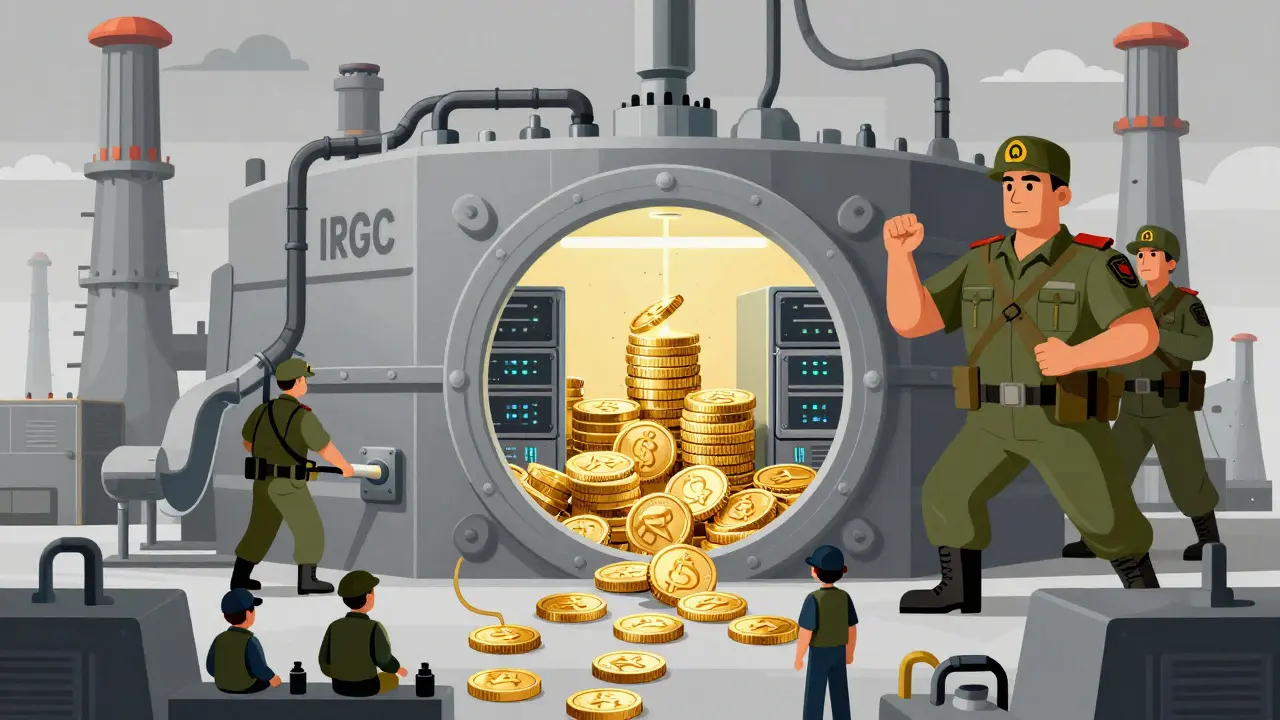
Imagine living in a city where the lights go out for hours every day. Your factory shuts down because the power grid is overloaded. Meanwhile, just miles away, massive warehouses hum with thousands of computers mining Bitcoin 24/7. These machines don't belong to private entrepreneurs taking a risk. They belong to the military.
This isn't a dystopian novel. It is the reality of unlicensed crypto mining in Iran. The Islamic Revolutionary Guard Corps (IRGC) has turned cryptocurrency into a state-sponsored tool to bypass international sanctions, effectively creating a cartel that drains the national electricity grid while ordinary citizens suffer blackouts. Understanding this dynamic requires looking past the blockchain code and into the political machinery of Tehran.
The Rise of the Crypto Cartel
To understand how the IRGC took over mining, you have to look at the pressure cooker created by sanctions. By the late 2010s, Iran was cut off from the global financial system. Traditional dollar channels were frozen or blocked. The regime needed a way to generate hard currency without using banks that would comply with U.S. Treasury orders.
Cryptocurrency offered a loophole. Blockchain transactions are direct, peer-to-peer, and relatively anonymous compared to traditional banking. There are no intermediaries to freeze assets. For the IRGC, this wasn't just an investment opportunity; it was a survival strategy.
| Entity Type | Role in Mining | Access to Resources |
|---|---|---|
| IRGC | Operates large-scale farms via affiliates | Unlimited subsidized/free electricity |
| Licensed Private Miners | Small-scale operations | High tariffs, must sell to Central Bank |
| Unlicensed Citizens | Rogue home miners | Stolen electricity, high risk of seizure |
By 2019-2020, reports confirmed that the IRGC had made significant inroads into the sector under direct orders from Supreme Leader Ali Khamenei. They didn't do it alone. They partnered with foreign companies, particularly Chinese firms, to build industrial-grade mining farms. A prime example is the 175-megawatt facility in Rafsanjan, Kerman Province. On paper, it looked like a joint venture. In practice, it was a state-sanctioned extraction machine fueled by cheap national energy.
Who Really Owns the Hash Rate?
If you walk through the streets of Tehran, you might see small shops with loud fans running-these are individual miners trying to make ends meet. But they are the minority. Current estimates suggest there are about 180,000 mining devices active across Iran. Of these, only around 80,000 are in private hands.
That leaves roughly 100,000 units under the control of state or quasi-state organizations. This includes entities directly linked to the IRGC and massive religious foundations like Astan Quds Razavi, which operates under the supervision of the Supreme Leader. Together, they form what investigators call a "cryptocurrency monopoly group."
Why does this matter? Because these entities operate differently than private businesses. They don't pay market rates for electricity. In many cases, they don't pay at all. They simply take what they need from the grid. This creates a two-tiered system: one tier for the powerful, who mine crypto with near-zero costs, and another for the public, who pay high prices for unreliable power.
The Energy Crisis Connection
You can't talk about crypto mining in Iran without talking about the blackout. The connection is direct and devastating. Bitcoin mining requires ASIC miners-specialized computer servers that consume electricity on an industrial scale. When the IRGC expands its operations, it pulls more power from the grid.
In 2022, the Iranian parliament passed legislation allowing the military to establish private power plants and transmission lines. This sounded like infrastructure improvement. In reality, it enabled the IRGC to redirect public electricity resources originally intended for cities and industries toward their secret mining farms.
The result? Homes and factories experience power outages for hours or days. Energy Minister Ali Abadi, a former IRGC commander himself, acknowledged the severity of the issue. He described unauthorized crypto mining as "putting a hand in others' pockets" and called it "an ugly and unpleasant theft." His words highlight the moral contradiction: the government condemns the theft of electricity while its own military wing engages in exactly that behavior on a massive scale.
Legal vs. Unlicensed: A Gray Area
Technically, cryptocurrency mining became legal in Iran in 2019. The Ministry of Industry, Mines, and Trade manages licenses. But the rules are designed to crush competition. Licensed miners face high energy tariffs and are required to sell their mined digital assets directly to the Central Bank of Iran (CBI).
For most private operators, these conditions make mining financially unsustainable. So, they go underground. They become "unlicensed." But here is the twist: the biggest players-the IRGC affiliates-operate in a gray area. They have the political protection to ignore regulations while maintaining a semblance of legitimacy. They aren't technically "illegal" in the same way a rogue home miner is, but they exploit state resources without following the commercial rules imposed on everyone else.
Bypassing Sanctions Through Blockchain
Why go to such lengths? The answer is sanctions evasion. International sanctions restrict Iran's ability to trade oil and access foreign reserves. Cryptocurrency offers a workaround. Blockchain analytics firms have identified Iran as one of the world's major Bitcoin producers in recent years.
The U.S. Treasury Department and Israeli intelligence have specifically targeted Bitcoin wallets tied to IRGC operations. Why? Because these funds are reportedly used to fund proxy groups involved in regional conflicts. Unlike bank transfers, which leave clear audit trails and require multiple verifications, crypto exchanges happen directly between digital wallets. Two-way encryption keeps participants largely anonymous.
This capability transforms mining from a profit center into a geopolitical weapon. The IRGC doesn't just want Bitcoin; it wants a payment rail that Washington cannot shut down.
Government Control vs. Citizen Circumvention
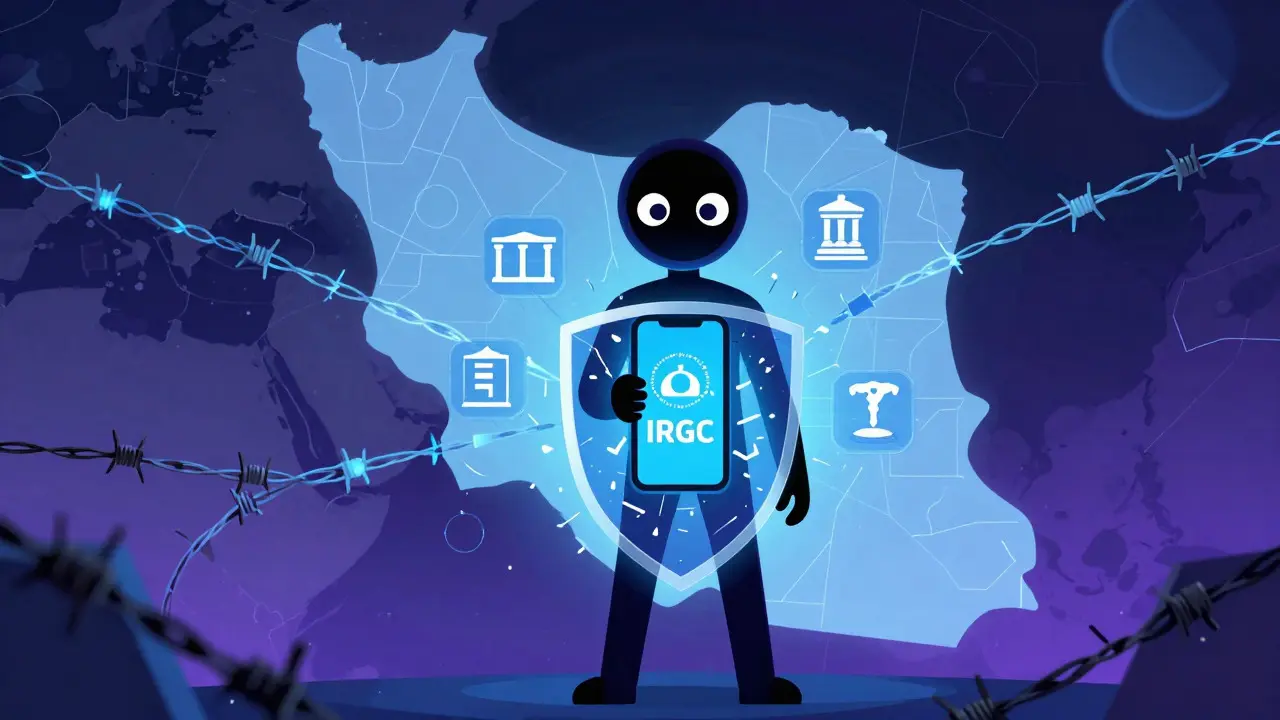
The Iranian government wants to control the narrative and the flow of money. On December 27, 2024, the Central Bank implemented programs that blocked all Iranian cryptocurrency-to-rial payments through internet websites within Iran. It seemed like a total ban.
But by January 2025, the central bank began selectively unblocking exchanges using a government API system. This system provides full access to user data. The goal isn't to eliminate crypto; it's to monitor it. The state wants to ensure that only approved entities benefit from the asset class.
Ordinary Iranians, however, are resourceful. Many use Virtual Private Networks (VPNs) to access foreign exchanges like Nobitex or Binance, avoiding local scrutiny. They want to preserve value against inflation, not fund military operations. This cat-and-mouse game continues, with the regime tightening controls while citizens find new ways to access the global market.
What Comes Next?
The situation is unlikely to change soon. The IRGC's grip on the energy sector and the crypto industry is too strong. As long as sanctions remain, the incentive to mine crypto for hard currency will grow. The environmental and social costs-blackouts, strained infrastructure, economic inequality-will continue to fall on the civilian population.
For investors watching the space, Iran represents a unique case study in state-controlled crypto adoption. It shows how quickly a technology can be co-opted by authoritarian structures. For Iranians, it remains a daily struggle for basic utilities, overshadowed by the humming servers of the state's hidden cartel.
Is crypto mining legal in Iran?
Yes, but with strict limitations. Since 2019, mining is legal if licensed by the Ministry of Industry, Mines, and Trade. However, licensed miners must pay high energy tariffs and sell their output to the Central Bank. Most large-scale operations run by the IRGC operate in a gray area, enjoying state privileges without adhering to standard commercial regulations.
How much of Iran's crypto mining is controlled by the state?
Estimates suggest that well over half of all mining hardware in Iran is operated by state-related entities. Out of approximately 180,000 active devices, around 100,000 are believed to be under the control of the IRGC and affiliated organizations, leaving only about 80,000 in private hands.
Why does the IRGC mine cryptocurrency?
The primary motive is sanctions evasion. By mining Bitcoin and other cryptocurrencies, the IRGC generates hard currency without relying on the traditional banking system, which is heavily restricted by international sanctions. These funds are also reportedly used to finance proxy groups in regional conflicts.
How does crypto mining affect Iran's electricity supply?
It exacerbates the energy crisis. Large-scale mining farms consume vast amounts of electricity, often subsidized or free. This demand strains the national grid, leading to frequent and prolonged power outages for residential areas and industries, particularly during peak usage seasons.
Can ordinary Iranians buy and sell crypto?
Yes, but it is difficult. The Central Bank has periodically blocked domestic crypto-to-fiat transactions. Many Iranians use VPNs to access international exchanges or local platforms like Nobitex to trade. The government monitors these activities closely through APIs to maintain control over capital flows.