
Imagine a country that went from having almost zero cryptocurrency users to ranking 20th globally in adoption within twelve months. Then, overnight, the government declared it all illegal. That is exactly what happened in Afghanistan. In August 2022, just one year after the Taliban regained control of Kabul, authorities issued a blanket ban on all cryptocurrency activities. They didn't just regulate it; they outlawed trading, mining, and holding digital assets entirely.
This move wasn't just another regulatory tweak. It was a hard pivot driven by religious interpretation and political isolation. While most of the world spent 2022 figuring out how to tax or integrate crypto, Afghanistan slammed the door shut. But here’s the twist: you can’t kill money when people are starving. Despite the ban, an underground market thrived, proving that economic necessity often beats legal prohibition.
From Boom to Bust in Twelve Months
To understand the shock of the ban, you have to look at what came before it. Before the Taliban takeover in August 2021, Afghanistan had virtually no cryptocurrency infrastructure. There were few exchanges, little internet penetration, and limited awareness. Then, chaos hit. International sanctions froze billions in Afghan foreign reserves. Banks stopped functioning normally. The local currency, the Afghani, began to lose value rapidly.
People needed a way to save money that wouldn't evaporate. They found it in Bitcoin and stablecoins like USDT. By mid-2021, Afghanistan surged up the Chainalysis Global Crypto Adoption Index, jumping from obscurity to rank 20th out of 154 countries. This wasn't speculation for profit; it was survival. Families used crypto to receive remittances from relatives abroad because traditional banking channels were broken or too expensive.
| Period | Status | Key Driver |
|---|---|---|
| Pre-August 2021 | Unregulated/Negligible | Limited infrastructure |
| Aug 2021 - July 2022 | Rapid Growth (Rank 20) | Banking crisis, inflation, remittances |
| August 2022 | Total Ban | Taliban decree citing Sharia law |
| 2023 - Present | Illegal but Active Underground | Economic necessity vs. enforcement |
The Religious Justification Behind the Ban
The Taliban didn't issue this ban based on financial stability metrics or anti-money laundering concerns, which are common reasons other nations restrict crypto. Instead, they cited Sharia law. Their argument rests on the concept of gharar, which translates roughly to excessive uncertainty or risk. In their view, because cryptocurrencies lack physical backing-like gold or silver-and their prices swing wildly, they resemble gambling more than legitimate trade.
Officials declared digital assets haram (forbidden). This theological stance provided a quick, authoritative way to stop the trend without needing complex economic policy debates. It also aligned with the Taliban's broader goal of asserting strict moral and social control over daily life. By labeling crypto as un-Islamic, they delegitimized it not just legally, but socially.
Enforcement Reality vs. Decentralized Nature
So, did the ban work? Technically, yes. Licensed exchanges closed. Public advertising for crypto disappeared. But practically? Not really. You cannot easily enforce a ban on a decentralized network. If two neighbors swap cash for Bitcoin via a WhatsApp group or Telegram chat, there is no central server for the Taliban to shut down.
Enforcement has been inconsistent. Authorities have conducted occasional crackdowns, arresting traders and seizing devices. However, these actions are sporadic rather than systematic. The sheer volume of peer-to-peer (P2P) transactions makes total eradication impossible. Reports suggest that while official transaction volumes plummeted-dropping to around $80,000 monthly in late 2022 compared to millions previously-the actual flow of value continued through informal channels.
The infrastructure challenges further complicate enforcement. Only about 8.64 million of Afghanistan’s estimated 40 million people have reliable internet access. Power supply is unreliable in many regions. These limitations mean that even if the Taliban wanted to monitor every digital transaction, they lack the technological capacity to do so effectively.
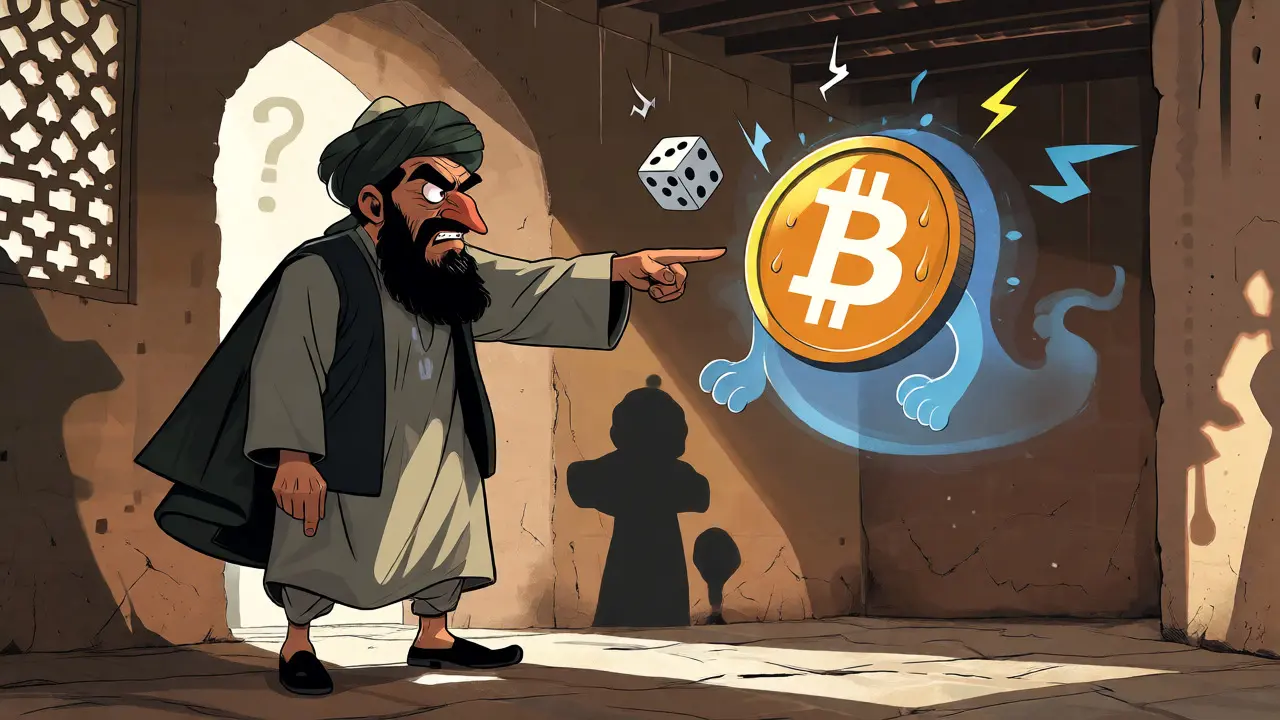
Crypto as a Lifeline for Women
One of the most profound impacts of the ban falls on Afghan women. Under Taliban rule, women face severe restrictions on employment, education, and movement. Many lost their jobs and their ability to travel freely. Traditional banking often requires male guardianship or specific identification documents that women may not possess or find difficult to renew.
Roya Mahboob, founder of the Digital Citizen Fund, highlighted how cryptocurrency became a tool for female empowerment despite the ban. Her organization teaches women how to use Bitcoin and stablecoins to maintain financial independence. For many women, owning crypto privately means they can store wealth away from family members who might control their cash income. It offers a degree of anonymity and autonomy that traditional banks simply cannot provide in this restrictive environment.
This dynamic creates a paradox. The government bans crypto to enforce religious and social norms, yet women use it to navigate those very constraints. The underground nature of the market actually benefits them, as it operates outside the formal structures where gender discrimination is most rigidly enforced.
Afghanistan in the Global Regulatory Landscape
As of 2026, Afghanistan remains an outlier. According to data from platforms like Binance, only nine countries worldwide still prohibit cryptocurrency usage. Most nations that once banned Bitcoin, such as Morocco and Algeria, have lifted those restrictions to attract investment and modernize their financial systems.
Afghanistan’s position contrasts sharply with global trends. Countries like El Salvador adopted Bitcoin as legal tender. The European Union implemented MiCA (Markets in Crypto-Assets) regulations to create clarity. Even China, which banned crypto trading and mining, continues to develop its own digital yuan. Afghanistan stands alone in combining a total ban with extreme economic isolation.
| Country | Status | Primary Reason | Current Trend |
|---|---|---|---|
| Afghanistan | Total Ban | Sharia Law (Gharar) | Stagnant/Underground |
| China | Trading/Mining Ban | Financial Stability/Capital Control | Developing CBDC (Digital Yuan) |
| Iraq | Prohibited | Consumer Protection/Fraud | Informal Market Persists |
| Morocco | Lifted Ban (2024) | Previously Unregulated | Moving toward Regulation |

The Humanitarian Cost of Prohibition
The ban occurred during a catastrophic humanitarian crisis. United Nations warnings stated that nearly 97% of Afghans fell below the poverty line in 2022. Aid agencies reported widespread food insecurity, not due to a lack of food, but due to a lack of purchasing power.
In this context, banning cryptocurrency removed one of the few remaining lifelines for receiving international aid and remittances. Western NGOs struggled to send funds through blocked banking channels. Crypto offered a workaround, allowing donors to send stablecoins directly to recipients. By making this illegal, the Taliban inadvertently increased friction in the delivery of essential support.
The result is a resilient but risky underground economy. Traders charge higher premiums to compensate for the legal risk. Transactions are slower and less transparent. Yet, for a family trying to buy bread or medicine, the premium is worth paying to avoid the total collapse of their savings.
Future Outlook: Can the Ban Last?
Experts generally agree that long-term prohibitions on decentralized technologies are difficult to sustain. As internet connectivity improves and younger generations become more digitally literate, pressure to lift the ban will likely grow. The Taliban faces a dilemma: stick to ideological purity and isolate the economy further, or pragmatically accept digital assets to facilitate trade and remittances.
Currently, there are no signs of imminent policy reversal. The Taliban prioritizes religious legitimacy and control over economic efficiency. However, history shows that black markets thrive under strict prohibitions. Unless the Taliban can provide a robust, accessible alternative financial system-which they currently cannot-they will continue to struggle against the tide of digital adoption.
Is cryptocurrency completely illegal in Afghanistan?
Yes, since August 2022, the Taliban government has prohibited all cryptocurrency activities, including trading, mining, and using digital assets for payments. Violations can lead to arrest and confiscation of assets, though enforcement varies by region.
Why did the Taliban ban Bitcoin?
The primary reason cited is religious interpretation under Sharia law. Taliban officials argue that cryptocurrencies involve excessive uncertainty (gharar) and speculation, resembling gambling, and therefore are forbidden (haram). Lack of physical asset backing was also a key factor.
Do people still use crypto in Afghanistan?
Yes, despite the ban, an active underground market exists. Peer-to-peer (P2P) trading continues via social media apps and word-of-mouth networks. Many Afghans use stablecoins like USDT for savings and remittances due to the instability of the local currency and the dysfunction of the banking sector.
How does the ban affect Afghan women?
Paradoxically, crypto serves as a vital tool for financial independence for many women. Since women face restrictions on employment and movement, private ownership of digital assets allows them to store and transfer wealth without relying on male guardians or visible bank accounts, offering a layer of privacy and autonomy.
Which other countries ban cryptocurrency?
As of recent years, Afghanistan is one of approximately nine countries with significant prohibitions. Others include China (bans trading/mining), Iraq, and Egypt. However, the global trend is moving toward regulation rather than outright bans, with countries like Morocco lifting previous restrictions.