
You’ve probably seen the ticker RINO is a highly speculative memecoin featuring a hamster mascot and part of the Gagaverse ecosystem. pop up on your feed or heard whispers about its wild price swings. But what exactly is this coin, and why does it exist in the first place? Unlike established cryptocurrencies with complex utility, RINO falls squarely into the category of entertainment-driven tokens. It’s built for community engagement rather than solving technical problems.
If you are looking at RINO right now, you need to understand one thing immediately: this is not an investment vehicle in the traditional sense. It is a high-risk asset with extreme volatility and very low liquidity. Before you think about buying even a single satoshi worth of RINO, let’s break down what you are actually getting into.
The Origin Story: What Is RINO?
RINO isn’t just a random token; it belongs to a specific project known as Gagaverse is a multi-token cryptocurrency ecosystem focused on meme culture and community-driven assets.. The team behind Gagaverse has positioned itself in the crowded memecoin market by using humor and relatable mascots to attract users. For RINO, that mascot is a heroic hamster. This branding strategy is common in the crypto world, where projects like Dogecoin or Shiba Inu gained traction through internet culture rather than technological innovation.
The goal here is simple: build a community around a shared joke or theme. RINO combines basic decentralized finance (DeFi) functionality with this lighthearted approach. However, "DeFi functionality" in this context usually means standard transfer capabilities rather than sophisticated lending or borrowing protocols. You should view RINO primarily as a social experiment wrapped in blockchain technology.
Supply Shock: Understanding the 420.69T Figure
One of the most striking features of RINO is its supply structure. When you look at the numbers, they can be confusing if you aren’t used to memecoin economics. RINO launched with a maximum and circulating supply of 420.69 trillion tokens. Yes, trillion. This massive number is typical for speculative memecoins, which often use large supplies to keep the price per token extremely low, giving traders the psychological feeling of owning millions of units.
This huge supply creates a specific dynamic in the market. Because there are so many tokens available, the value of each individual token remains microscopic. Even significant capital inflows might only move the price by fractions of a cent. This makes the token susceptible to manipulation and rapid dilution if new tokens are ever minted or released from locked reserves, though current data suggests the entire supply is already circulating.
| Attribute | Value |
|---|---|
| Ticker Symbol | RINO |
| Total Supply | 420.69 Trillion |
| Parent Project | Gagaverse |
| Mascot | Heroic Hamster |
| Market Cap Rank | #8365 (Approx.) |
Price Volatility and Market Reality
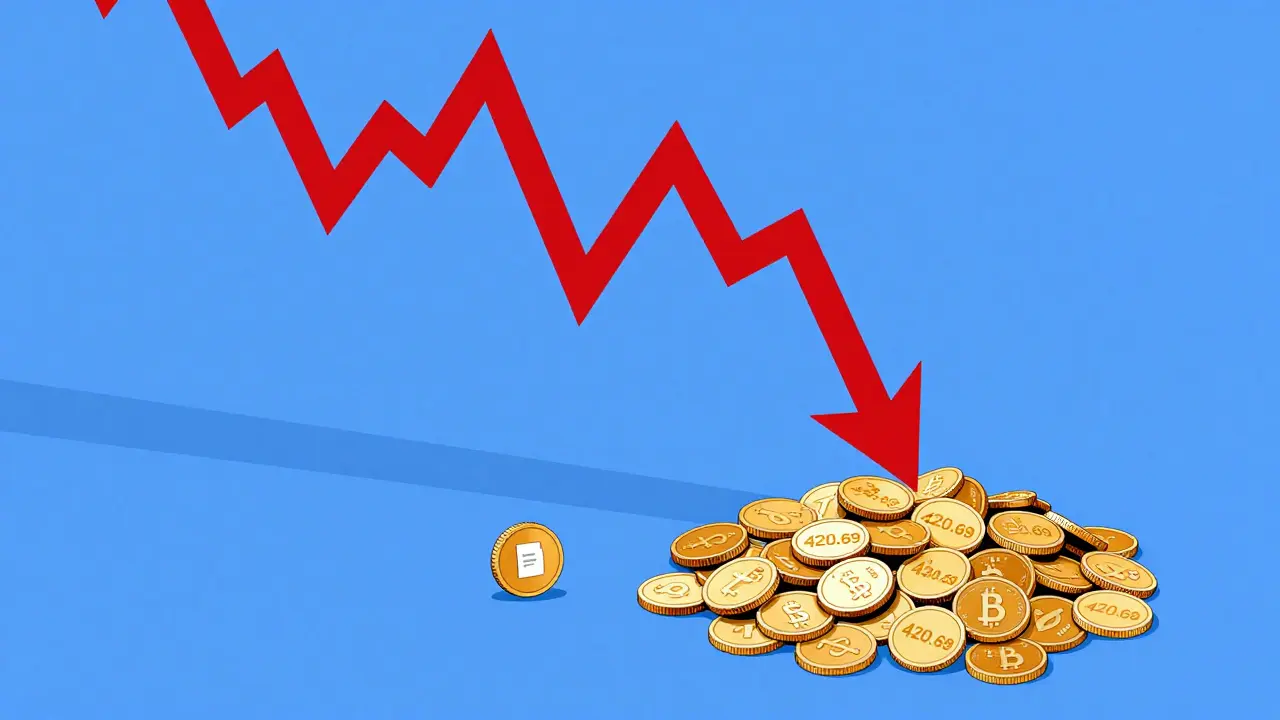
Let’s talk about the money side of things, because this is where most people get hurt. RINO’s price history is a textbook example of memecoin instability. Data shows an all-time high of $20.35 recorded in April 2025. Since then, the price has crashed nearly 100%. As of mid-2026, trading prices hover around $0.000000000008518 USD. That is eight zeros after the decimal point before you see any digits.
Why such a discrepancy? The initial spike was likely driven by hype and low liquidity, allowing a small amount of money to push the price up artificially. Once the hype faded, the lack of real utility caused the price to collapse. Currently, RINO has a market capitalization of roughly $5,560 USD. To put that in perspective, many major altcoins have market caps in the billions. A $5k market cap means the entire project is worth less than a used car.
Trading volume is another red flag. Recent data shows near-zero trading volume on major platforms. If you decide to buy RINO, you might find it difficult to sell later because there simply aren’t enough buyers in the market. This illiquidity traps investors who cannot exit their positions without crashing the price further.
Where Can You Buy RINO?
If you still want to proceed despite the risks, you need to know where to find this token. RINO is not listed on every exchange. In fact, major platforms like Crypto.com explicitly state that RINO is not tradable on their system. Your primary option appears to be Bybit is a centralized cryptocurrency exchange offering trading services for various digital assets including speculative tokens..
To buy RINO on Bybit, you would typically follow these steps:
- Create an account and complete identity verification (Level 1).
- Deposit funds using fiat currency or another cryptocurrency.
- Navigate to the spot trading section and search for the RINO pair.
- Place a limit order to set your desired price or a market order to buy at the current rate.
Alternatively, you might find RINO on decentralized exchanges (DEXs). These platforms allow you to swap base currencies like BNB for RINO directly from your wallet. However, DEX trading carries higher risks due to potential smart contract vulnerabilities and slippage fees, especially with low-liquidity tokens like RINO.
Community and Holder Concentration
In the world of memecoins, the community is everything. Without active engagement, the token dies. RINO currently has approximately 1,080 holders. While this sounds like a decent number, in the context of global cryptocurrency adoption, it is tiny. More importantly, this number doesn’t tell us how many of those holders are active.
A holder count of 1,000 addresses also raises concerns about concentration risk. If a few large wallets hold a significant portion of the 420 trillion supply, they could manipulate the price by selling off their holdings. This is known as a "whale attack." Given the low market cap, a single large sell order could wipe out the remaining value for retail investors. Always check blockchain explorers to see the distribution of tokens before investing.

Risks You Cannot Ignore
I cannot stress this enough: investing in RINO is gambling, not investing. Here are the specific risks you face:
- Extreme Volatility: Prices can swing hundreds of percent in minutes based on social media trends.
- Liquidity Crisis: You may buy tokens but find no one willing to buy them back.
- Lack of Utility: RINO serves no functional purpose outside of speculation and community fun.
- Project Abandonment: With minimal documentation and no clear roadmap beyond releasing more meme tokens like $GAGA, there is no guarantee the developers will continue supporting the project.
The distinction between RINO and other similarly named tokens is also crucial. Do not confuse RINO with Rhino Token (RHINO), which is a separate project. Mixing up these two could lead to purchasing the wrong asset entirely.
Is There Any Future for RINO?
The Gagaverse team has hinted at future developments, including the release of additional tokens like $GAGA. This suggests a strategy of building a brand ecosystem rather than focusing on the success of a single token. However, there is no concrete evidence of technical development or partnerships that would drive sustainable value.
As of May 2026, RINO remains largely dormant from a market activity perspective. The absence of listings on prominent exchanges and the decline in daily trading volumes indicate waning interest. Unless a viral marketing campaign reignites hype, the token is likely to remain a niche curiosity with negligible financial value.
What is the current price of RINO coin?
As of mid-2026, the price of RINO is extremely low, hovering around $0.000000000008518 USD. Prices vary significantly across different exchanges due to low liquidity and high volatility.
Can I buy RINO on Binance?
No, RINO is not currently listed on Binance. The primary exchange where RINO is traded is Bybit. Other major platforms like Crypto.com do not support RINO trading.
What is the total supply of RINO tokens?
The total and circulating supply of RINO is 420.69 trillion tokens. This massive supply is characteristic of memecoins designed to have a very low price per unit.
Is RINO a good investment?
RINO is considered a high-risk speculative asset rather than a traditional investment. It lacks fundamental utility, has a very low market capitalization, and exhibits extreme price volatility. Only invest money you can afford to lose entirely.
What is Gagaverse?
Gagaverse is the parent project behind the RINO token. It is a multi-token ecosystem focused on meme culture, featuring characters like the heroic hamster. The team plans to release additional tokens such as $GAGA.