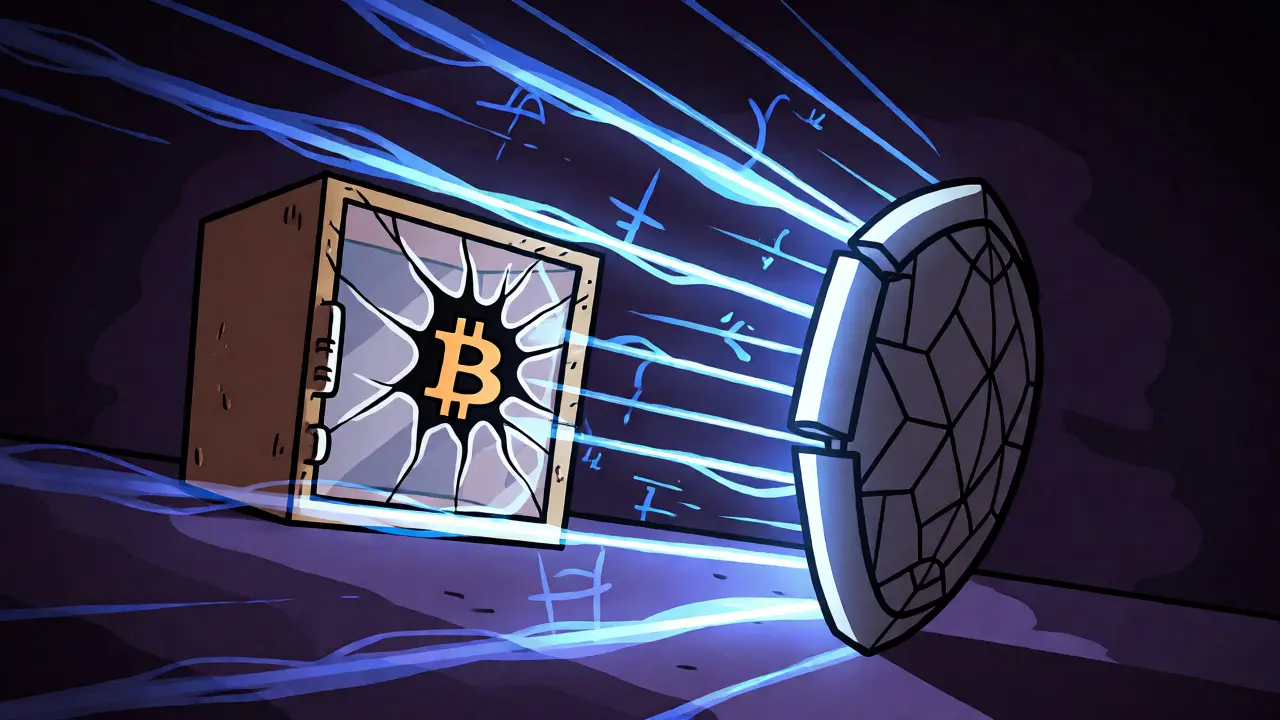
You might think your Bitcoin is safe forever. But what happens when a computer becomes so powerful it can crack the encryption protecting your wallet in seconds? That is not science fiction; it is a looming threat known as the quantum computing crisis. Most blockchains today rely on cryptographic signatures that future quantum computers could easily break. Enter QANplatform, a layer 1 hybrid blockchain designed specifically to be quantum-resistant from day one. If you have heard about QANX and wondered if it is just another hype coin or a serious technological leap, you are in the right place. We will cut through the jargon to explain exactly what this platform does, why its technology matters, and whether it has real staying power.
The Core Problem: Why Blockchains Need Quantum Resistance
Traditional blockchains like Bitcoin and Ethereum use algorithms such as ECDSA for security. These work great against current computers. However, a sufficiently advanced quantum computer running Shor’s algorithm could theoretically derive private keys from public keys. This means anyone with such a machine could steal funds from older addresses. While full-scale quantum computers capable of this attack are likely years away, the migration path for existing blockchains is slow and risky. QANplatform takes a different approach. Instead of trying to patch old systems, it was built from scratch using post-quantum cryptographic algorithms. These new math-based protections are designed to remain secure even against attacks from powerful quantum machines. It is essentially building a house with fireproof materials rather than trying to retrofit an old wooden structure with sprinklers later.
How QANplatform Works: Proof-of-Randomness and Hybrid Design
Most people know Proof-of-Work (Bitcoin) or Proof-of-Stake (Ethereum). QANplatform uses a unique consensus mechanism called Proof-of-Randomness (PoR). Unlike mining, which burns massive amounts of electricity, PoR allows validators to participate using low-powered hardware. You could technically run a node on a Raspberry Pi or even a smartphone. This makes the network incredibly energy-efficient-reportedly using 99.98% less energy than Bitcoin.
Beyond consensus, the architecture is hybrid. This means it supports both public transactions (like Bitcoin) and private configurations (like enterprise ledgers). For businesses, this is huge. A bank can keep sensitive customer data on a private chain while still leveraging the security of the public network for settlement. The transaction speed is also impressive, hitting around 4,500 transactions per second with finality under three seconds. Compare that to Bitcoin’s seven TPS, and you see why developers are interested.
The QANX Token: Utility and Economics
QANX is the native utility token of the ecosystem. It isn’t just there for speculation. Developers need QANX to pay for gas fees when deploying smart contracts. Users need it to interact with decentralized applications (DApps) on the platform. Because the network charges predictable fees regardless of congestion, QANX holders don’t face the wild fee spikes seen on Ethereum during NFT mints.
As of early 2026, the market cap places QANX as a niche player, ranked around #559 on major trackers. The circulating supply sits near 1.7 billion tokens, with a maximum cap of over 3.3 billion. This fixed supply model helps prevent inflationary dilution. While the price has hovered around $0.015 USD recently, the value proposition relies more on utility growth than pure trading volume. Trading volume remains modest at roughly $300,000 daily, indicating it is still a speculative asset for many, but with growing institutional interest.

Developer Experience: Coding in Java, Python, and Rust
This is where QANplatform truly stands out. On Ethereum, you must learn Solidity. It is a specific language with a steep learning curve. QANplatform removes that barrier. Developers can write smart contracts in languages they already know: Java, Rust, or Python.
Why does this matter? Think about the global workforce. Millions of engineers know Java. Very few know Solidity. By allowing familiar languages, QANplatform drastically reduces the time needed to onboard talent. Reports suggest enterprises can deploy applications up to 80% faster because their existing teams don’t need retraining. If you are a developer wondering if you should switch ecosystems, ask yourself: do I want to spend months learning a new syntax, or do I want to build immediately with tools I already master?
| Feature | QANplatform (QANX) | Bitcoin | Ethereum |
|---|---|---|---|
| Consensus Mechanism | Proof-of-Randomness (PoR) | Proof-of-Work (PoW) | Proof-of-Stake (PoS) |
| Quantum Resistance | Native (Post-Quantum Crypto) | Vulnerable (ECDSA) | Planned Migration (Not Native) |
| Smart Contract Languages | Java, Rust, Python | Script (Limited) | Solidity, Vyper |
| Node Hardware Req. | Low (e.g., Raspberry Pi) | High (Specialized ASICs) | Medium-High (SSD/RAM heavy) |
| Transaction Speed (TPS) | ~4,500 | ~7 | ~15-45 (Pre-scaling) |
Real-World Adoption and Challenges
No technology succeeds without users. Currently, QANplatform has about 237 active enterprise entities. Most of these are in European financial services and government identity systems. They like the privacy features and the long-term security promise. However, it is not all smooth sailing. The developer community is small compared to giants like Ethereum. There are only about 120 active developers versus Ethereum’s thousands. This means fewer DApps, fewer audits, and less community support.
Users often complain about limited wallet options. Only three major wallets fully support QANX, which creates friction for everyday users. Documentation, while improving, has been criticized for lacking deep enterprise case studies. If you are an investor, you need to weigh the innovative tech against these adoption hurdles. Is the tech good enough to overcome the network effect disadvantage? That is the big question.

Is QANplatform a Good Investment?
Investing in QANX is a bet on two things: the rise of quantum computing threats and the success of multi-language blockchain development. If quantum computers arrive sooner than expected, QANplatform’s value could surge as institutions rush to migrate critical data. Conversely, if quantum threats remain theoretical for decades, QANX may struggle to compete with established chains that have massive liquidity and user bases.
Gartner placed QANplatform in the "Niche Players" category. This means it has promising technology but limited current impact. It is not a blue-chip crypto like Bitcoin. It is a high-risk, high-reward play for those who believe in specialized infrastructure. Diversification is key here. Don’t put your entire portfolio into a niche project. Treat QANX as a satellite holding in a broader crypto strategy.
Frequently Asked Questions
What makes QANplatform different from other blockchains?
QANplatform is distinct because it is natively quantum-resistant. Unlike Bitcoin or Ethereum, which rely on cryptography vulnerable to future quantum computers, QANplatform uses post-quantum algorithms from the start. Additionally, it allows developers to code smart contracts in popular languages like Java, Python, and Rust, rather than requiring specialized blockchain languages like Solidity.
Is QANX a good investment for beginners?
QANX is generally considered a higher-risk investment suitable for experienced crypto investors. Its lower market cap and niche focus mean it is more volatile than major coins like Bitcoin or Ethereum. Beginners should research thoroughly and consider it a small part of a diversified portfolio, keeping in mind the uncertainty surrounding the timeline of quantum computing threats.
Can I mine QANX on my home computer?
Yes, QANplatform uses a Proof-of-Randomness consensus mechanism that is highly energy-efficient. You do not need expensive mining rigs. Validators can run nodes on low-power devices, including Raspberry Pi units or standard laptops, making it accessible for home participants without high electricity costs.
What programming languages does QANplatform support?
The platform supports multiple mainstream programming languages for smart contract development, primarily Java, Rust, and Python. This flexibility allows existing software engineers to enter the blockchain space without learning a new proprietary language, significantly lowering the barrier to entry for developers.
How fast is the QANplatform network?
QANplatform boasts high throughput capabilities, processing approximately 4,500 transactions per second. Transaction finality-the time it takes for a transaction to be confirmed and irreversible-is typically under three seconds, which is significantly faster than traditional blockchains like Bitcoin.