
Imagine you have a token on Ethereum, but the community you want to trade with lives on Avalanche. You need to move that asset without losing its value or identity. This is where ChainPort comes in. It’s not just another bridge; it’s a service designed to make tokens "blockchain agnostic." But what about the coin that powers it? Enter PORTX, the utility token that acts as the key to discounted fees and protocol rewards.
If you’re wondering whether PORTX is a good investment or just a niche tool for developers, you’re in the right place. We’re going to cut through the jargon. We’ll look at how ChainPort actually works, why it chose a custodial model over a trustless one, and what the current market data really says about PORTX’s health. Spoiler alert: the numbers tell a story of high risk and specific utility, not broad adoption.
The Core Problem: Why Do We Need ChainPort?
Blockchain fragmentation is real. There are dozens of popular networks-Ethereum, BNB Chain, Polygon, Arbitrum-and each has its own ecosystem. Tokens often get stuck on one chain while users want them on another. Traditional bridges exist, but they can be complex, expensive, or risky if not properly secured.
ChainPort is a cross-chain token-porting service founded in 2021 by DcentraLab. Its goal is simple: let token issuers and users move supported assets between different blockchain networks while keeping the token’s economic identity intact. Think of it like an international currency exchange, but for digital assets. Unlike some bridges that try to be completely decentralized, ChainPort describes itself as permissionless in access but fully custodial in execution. This distinction matters for security and speed.
How ChainPort Works: Custody vs. Trustlessness
Most modern bridges rely on decentralized validator sets to verify transactions. ChainPort takes a different route. It operates as a custodian-backed bridge. Here is the typical flow:
- You deposit or lock your asset on the source chain (e.g., Ethereum).
- ChainPort verifies the transaction and authorizes the release or minting of the corresponding representation on the destination chain (e.g., Avalanche).
- You receive your ported asset on the new network.
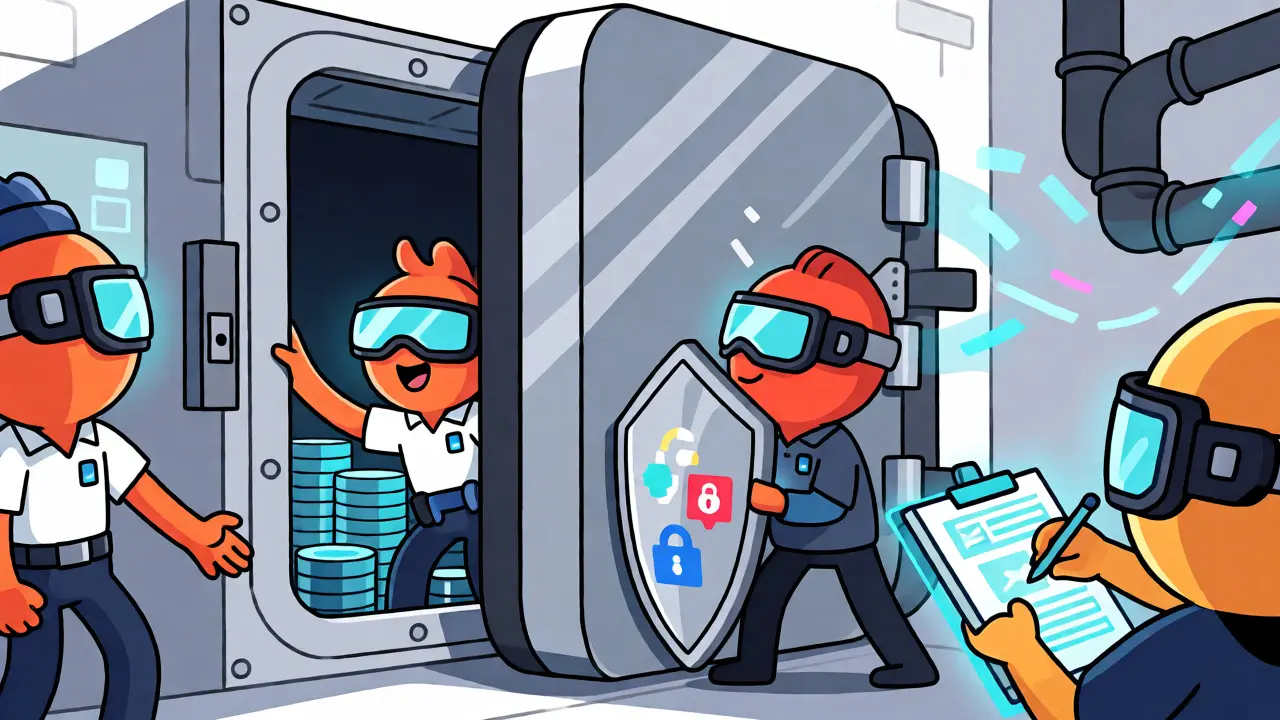
This model relies heavily on controlled custody. ChainPort claims that up to 98% of funds are kept in segregated multi-signature cold storage using tools like Gnosis Safe and Fireblocks Multi-Party Computation (MPC). Transactions require approval from multiple members of their internal "Congress." This reduces the risk of a single compromised key but introduces centralization risks. You are trusting the operator and their approval process, not just code.
What Is PORTX Used For?
Many people confuse the bridged asset with the utility token. When you bridge USDC via ChainPort, you don’t necessarily use PORTX to represent that USDC. Instead, PORTX is the ecosystem token used for three main things:
- Discounted Fees: The standard porting fee is 0.2%-0.3%. If you pay this fee in PORTX, you get a discount. The exact rate can change based on protocol updates.
- Staking Rewards: You can stake PORTX to earn a portion of the fees collected by the protocol. This creates a yield mechanism for holders.
- Governance and Participation: While not a full DAO yet, holding and staking PORTX aligns you with the protocol’s economic success.
It’s important to note that official documentation states these utilities may change over time. Always check the latest terms before committing capital.
Tokenomics: Supply, Distribution, and Inflation
Understanding the supply schedule is critical for any crypto investor. According to data from Tokenomics.com and CoinGecko, the total maximum supply of PORTX is approximately 680 million tokens. As of late 2025/early 2026, the circulating supply was reported around 171 million tokens.
| Category | Allocation % | Notes |
|---|---|---|
| Community | 46.00% | Includes participation incentives, marketing, and liquidity. |
| Private Investors | 24.50% | Venture capital and early backers. |
| Team & Advisors | ~15-20% | Vested over time; varies by source methodology. |
| Ecosystem Fund | Remaining | Used for partnerships and future growth. |
The emission schedule spans five years. Only about 30% of the supply was released in the first year, with the remaining 70% unlocking gradually. This slow unlock helps prevent immediate dumping but means long-term holders face ongoing inflationary pressure until emissions taper off. Note that data providers sometimes disagree on exact percentages due to different categorization methods, so treat these figures as estimates rather than absolute truths.
Security Audits and Risks
No bridge is perfect. ChainPort has undergone audits by reputable firms like CertiK and CyberUnit. CertiK Skynet provides continuous monitoring, which is a positive sign. However, recent audit reports highlight certain characteristics that require attention, such as proxy-contract usage and external-call indicators. These aren’t vulnerabilities per se, but they indicate areas where the contract logic is complex.
The biggest risk isn’t necessarily a hack-it’s centralization. Because ChainPort controls the custody of assets during the transfer, a failure in their operational security or governance could impact users. Additionally, smart-contract bugs, oracle failures, or liquidity issues remain potential threats. Audits reduce risk; they don’t eliminate it.
Market Performance and Liquidity Concerns
Let’s look at the hard numbers. PORTX launched in early 2022 with an ICO price of $0.12. Since then, the market has been brutal. By October 2026, data from CoinGecko showed a market capitalization hovering around $17,000 to $20,000. That’s incredibly low for a project claiming to support over 25 chains.
Liquidity is thin. Some aggregators report zero 24-hour trading volume on certain days. This means selling a large position might significantly impact the price. Furthermore, holder concentration is high. Data suggests that a few addresses hold nearly half of the total supply, including a large "dead" address. This concentration can distort market analysis and create volatility when those large holders decide to move their tokens.
Is ChainPort Right for You?
Who benefits most from ChainPort? It’s ideal for token issuers who need controlled deployment across EVM-compatible chains. If you’re launching a token and want to ensure it appears correctly on Polygon, Avalanche, and Arbitrum simultaneously, ChainPort’s issuer-level controls are useful. You can restrict port directions, set minimum amounts, and manage liquidity pools centrally.
For retail traders, PORTX is a speculative play. It’s not a store of value like Bitcoin. It’s a micro-cap utility token tied to the success of a specific service. If ChainPort gains massive adoption, PORTX could see renewed interest. But given the current low volume and competition from larger bridges like LayerZero or Wormhole, the path to significant upside is steep.
Frequently Asked Questions
Is ChainPort a decentralized bridge?
No, ChainPort is primarily a custodial bridge. While it allows permissionless access for users, the underlying security model relies on centralized custody mechanisms, multi-signature wallets, and MPC technology managed by the ChainPort team, rather than a fully decentralized validator network.
How do I get a discount on porting fees?
You must stake PORTX tokens. When you pay porting fees using your staked PORTX balance, you receive a discount compared to paying in the native gas token or the ported asset itself. The discount rate is determined by the protocol and can change.
Which blockchains does ChainPort support?
ChainPort supports over 25 networks, including major EVM chains like Ethereum, BNB Chain, Polygon, Avalanche, Fantom, Arbitrum, and Optimism. Support for specific tokens and paths can vary, so always check the official interface for the latest availability.
Why is the PORTX market cap so low?
The low market cap reflects low trading volume and limited retail adoption compared to top-tier bridge protocols. Additionally, significant portions of the supply are locked or held in concentrated addresses, which affects liquidity metrics and perceived market depth.
Can I lose my money using ChainPort?
Yes, risks include smart contract bugs, operational errors by the custodian, or extreme market illiquidity preventing you from exiting a position. While audits by CertiK provide assurance, no system is entirely risk-free. Always verify contract addresses and start with small amounts.