
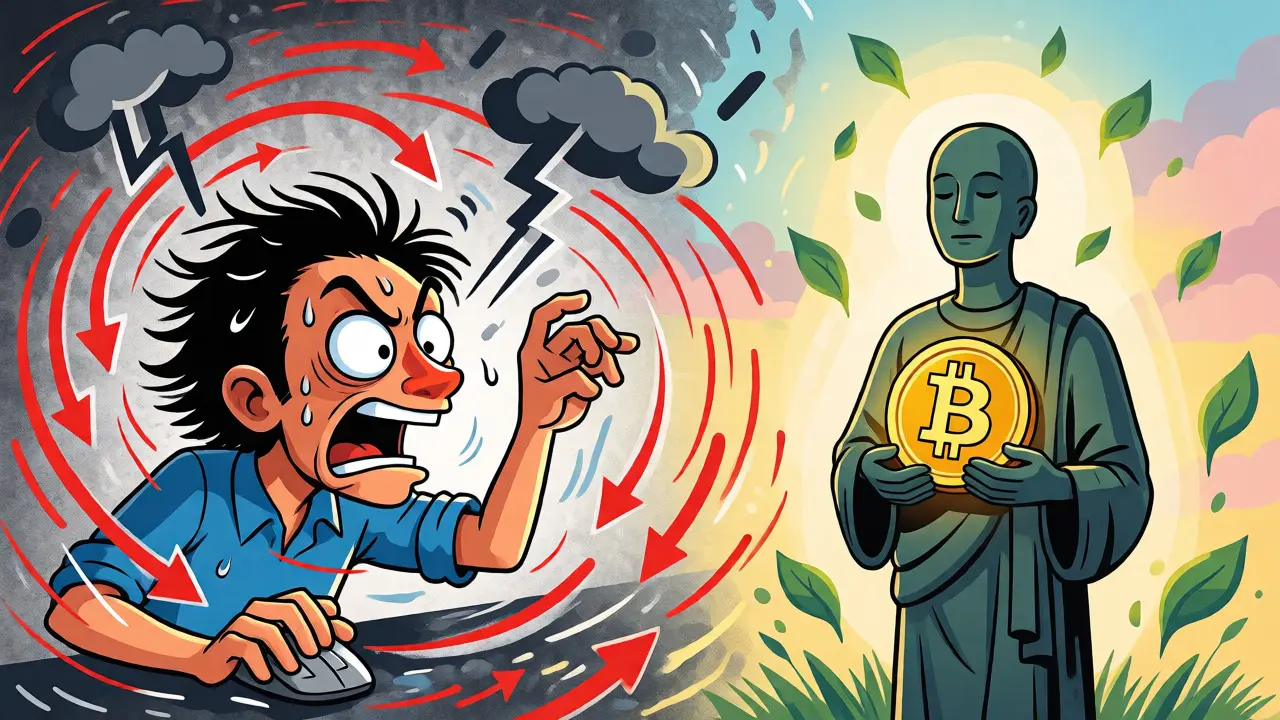
You’re staring at your screen. It’s 3 AM. Bitcoin just dropped 15% in an hour. Your portfolio looks like a crime scene. Do you sell everything to stop the bleeding? Or do you close the laptop, pour a coffee, and wait? If you chose the second option, you’re already practicing HODL a cryptocurrency slang term referring to the long-term holding of digital assets rather than actively trading them. But what does it actually mean beyond the meme? Is it a strategy or just stubbornness? Let’s break down where this weird word came from, why it dominates crypto culture, and whether it’s actually smart for your wallet.
The Accidental Birth of a Movement
Here’s the thing: HODL wasn’t invented by a Wall Street analyst or a tech guru. It was born out of drunken typo on December 18, 2013. A user named GameKyuubi posted on BitcoinTalk a popular cryptocurrency discussion forum founded by Satoshi Nakamoto titled "I AM HODLING." He was drunk, frustrated by market volatility, and meant to type "holding" but hit the wrong keys. Instead of correcting it, he leaned into it. He declared he wouldn’t sell his Bitcoin despite the crash, arguing that selling would only confirm the drop.
That typo stuck. It quickly evolved from a joke into a badge of honor. By 2014, "Hold On for Dear Life" became the backronym people used to explain it when asked by their confused parents. But the core message remained the same: ignore the noise, trust the asset, and wait. Today, HODLing the practice of maintaining cryptocurrency positions through market fluctuations based on belief in long-term value appreciation is one of the most recognized strategies in digital finance.
Why People HODL: The Psychology Behind the Strategy
Let’s be real. Trading crypto is hard. You need technical analysis skills, constant monitoring, and nerves of steel. Most day traders fail. A 2021 study published in the Journal of Finance found that nearly 90% of day traders lose money consistently. Why? Because they react emotionally. They buy high because of FOMO (Fear Of Missing Out) and sell low because of panic.
HODLers investors who maintain their cryptocurrency holdings in personal wallets rather than exchanges, avoiding short-term trading decisions skip this trap. They don’t watch the charts every five minutes. They set a thesis-usually that Bitcoin’s fixed supply of 21 million coins will drive up its price over time-and then they sit tight. This requires something called "diamond hands," a community term for the psychological fortitude to hold through brutal drawdowns.
| Feature | HODL Strategy | Active Trading |
|---|---|---|
| Time Commitment | Low (Check prices weekly/monthly) | High (Daily monitoring required) |
| Skill Required | Basic wallet management & discipline | Technical analysis, chart reading |
| Tax Implications (US) | Long-term capital gains (lower rate) | Short-term capital gains (higher rate) |
| Stress Level | Moderate (Anxiety during crashes) | Very High (Constant decision fatigue) |
The Risks: When HODLing Goes Wrong
It’s not all sunshine and moonshots. Blindly holding anything can bankrupt you. Remember Ethereum a decentralized platform that runs smart contracts holders in 2018? Many bought at $1,400 and watched it crash to $85. That took 22 months to recover. If you needed that cash in month three, you were wrecked.
The biggest risk isn’t just price drops; it’s permanent loss. According to a 2022 report by Chainalysis a blockchain analytics firm, about 20% of all Bitcoin ever mined is lost forever due to forgotten passwords or misplaced private keys. If you HODL on an exchange and the exchange goes bust (looking at you, FTX), your "long-term hold" becomes zero. True HODLers move their assets to hardware wallets like Ledger or Trezor immediately after buying.
Also, consider the opportunity cost. While you’re waiting for Bitcoin to hit $100k, other sectors might boom. In 2021, DeFi (Decentralized Finance) protocols offered yields of 10-20%. Pure HODLers missed out on that yield farming unless they staked their coins. Staking is essentially HODLing with interest, where you lock up your coins to support a network (like Ethereum’s proof-of-stake) and earn rewards. It’s a smarter version of passive holding for many altcoins.
Who Should HODL? And Who Shouldn’t?
If you believe in the fundamental technology of blockchain and have money you won’t need for at least 3-5 years, HODLing makes sense. It’s historically been the best-performing strategy for Bitcoin the first and largest cryptocurrency by market cap. During the 2017 bull run, long-term holders saw returns of nearly 1,900%, while many active traders got shaken out early.
However, if you’re looking to pay rent next month, don’t HODL crypto. Volatility is too high. Daily swings of 5-10% are normal. If seeing your net worth drop by half causes you severe anxiety, this strategy isn’t for you. A survey by CryptoCompare found that 63% of long-term holders experienced significant stress during major drawdowns. Can you handle that emotional toll?
Institutional investors are increasingly adopting this mindset too. MicroStrategy CEO Michael Saylor famously stated that holding Bitcoin is the "highest-return, lowest-risk asset for corporate treasury." His company has bought billions in BTC and hasn’t sold. BlackRock’s push for a spot Bitcoin ETF further validates the idea that big money is here to stay, not just trade around.

How to Start HODLing Properly
Ready to join the club? Here’s the simple playbook:
- Buy on a reputable exchange: Use platforms like Coinbase, Kraken, or Binance. Verify your identity (KYC).
- Move off the exchange: Don’t leave your coins there. Buy a hardware wallet. Write down your seed phrase on paper-not on a screenshot in your phone gallery.
- Set a plan: Decide how much you’ll invest. Dollar-Cost Averaging (DCA)-buying a fixed amount weekly regardless of price-is the easiest way to start without timing the market.
- Ignore the news: Unfollow crypto Twitter if it stresses you out. Check your balance once a month, not once an hour.
- Secure your keys: If you lose your seed phrase, no customer support can help you. You own your coins, which means you also own the responsibility.
The Future of HODL
Is HODL dead? Not yet. As markets mature, the strategy is evolving. We’re seeing more "strategic HODLing," where investors keep a core position untouched but trade smaller portions to capture gains. With only about 2.4 million Bitcoin left to be mined, scarcity drives the narrative. Analysts at Standard Chartered predict Bitcoin could reach $120,000 as institutional adoption grows, reinforcing the long-term case.
But beware of altcoin traps. Just because a coin says "HODL" doesn’t mean it’s good. Thousands of tokens have died since 2017. Always check the fundamentals: Is there actual usage? Is the team active? For Bitcoin, the network effect is strong. For random memecoins, HODLing might just mean holding a bag of dust.
Is HODLing safer than trading?
Generally, yes, for beginners. Trading requires skill and time, and most day traders lose money. HODLing removes the temptation to make emotional errors, though it exposes you to market volatility risks over the long term.
Do I pay taxes when I HODL?
In most jurisdictions, including the US, you do not pay tax simply by holding. Taxes are triggered when you sell, swap, or spend the crypto. However, if you stake your coins and earn rewards, those rewards may be taxed as income upon receipt.
Can I lose all my money while HODLing?
Yes. If the project fails completely (like many altcoins), the value can go to zero. Additionally, if you store coins on an exchange that goes bankrupt, you could lose access to your funds. Self-custody mitigates the latter risk.
What is the difference between HODL and DCA?
HODL is the act of holding. DCA (Dollar-Cost Averaging) is a method of buying. You can use DCA to build a position, then switch to a pure HODL strategy once you’ve accumulated enough. They often work together.
Does HODL apply to all cryptocurrencies?
Not necessarily. It works best for established assets with strong networks like Bitcoin and Ethereum. For newer or speculative altcoins, blind HODLing can lead to permanent losses if the project lacks utility or development activity.