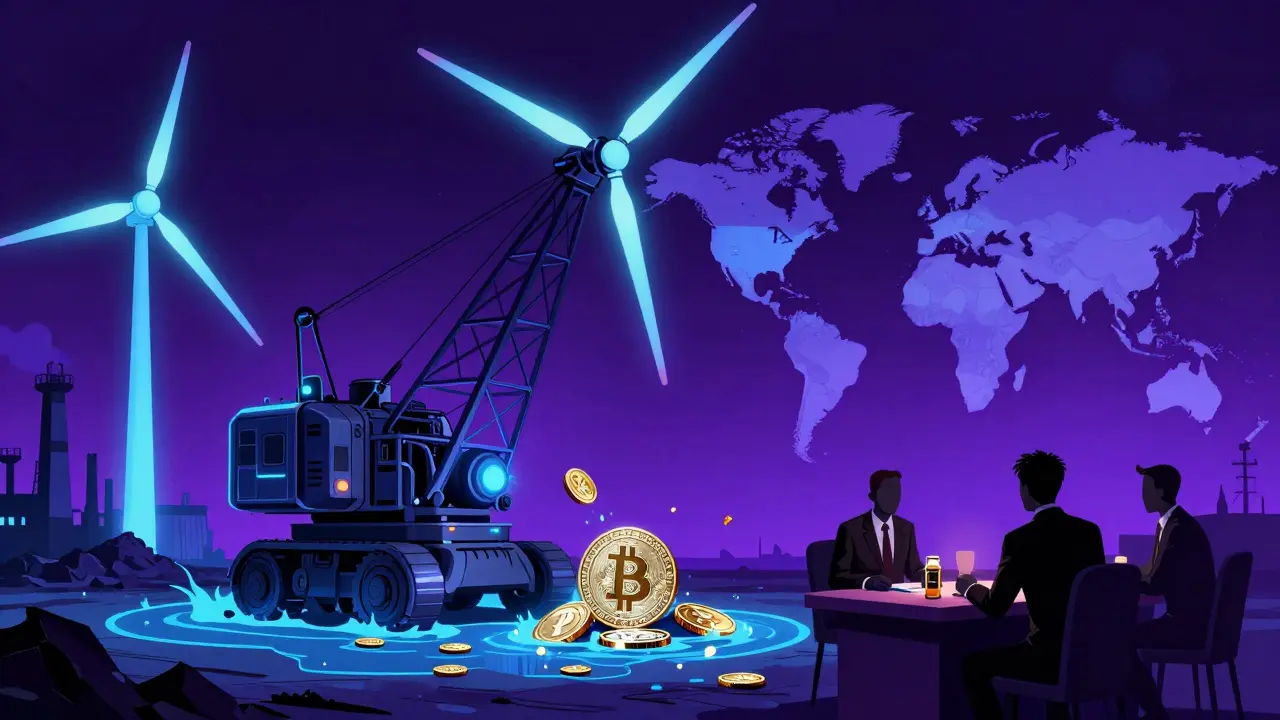
Russia crypto mining: Regulations, energy use, and what's really allowed
When you hear Russia crypto mining, the practice of using computing power to validate blockchain transactions within Russia’s legal and energy framework. Also known as Russian Bitcoin mining, it’s not about legality—it’s about access, electricity, and who gets to play. Unlike countries that ban mining outright, Russia plays a different game. It doesn’t say "no"—it says "only if you meet our rules." And those rules change depending on who you are, where you’re located, and what power grid you’re tapping into.
At the heart of this is energy policy, how Russia manages its electricity supply to balance industrial needs, household demands, and crypto operations. Some regions, like Siberia and the Far East, have cheap, underused power. Miners flock there because electricity costs as low as $0.01 per kWh. But in places like Moscow or St. Petersburg, mining is quietly discouraged—or outright blocked—because the grid can’t handle it. Then there’s Russian crypto regulation, the patchwork of laws from Roskomnadzor, the Central Bank, and regional authorities that decide which mining operations stay open and which get shut down. It’s not a national ban. It’s a selective permit system. Garantex? Gone. Binance? Not allowed. But private mining farms using solar or excess hydro power? Still running.
What’s surprising is how cryptocurrency energy use, the amount of electricity consumed by mining hardware in Russia ties into bigger economic pressures. While the government talks about reducing carbon emissions and stabilizing the grid, it also turns a blind eye to mining that helps bypass Western sanctions. Bitcoin mined in Russia often ends up on foreign exchanges, traded for hard currency. It’s a quiet lifeline for the economy—and a major headache for regulators trying to control capital flight. This isn’t just about hardware and hashes. It’s about power, politics, and survival.
What you’ll find in the posts below isn’t just a list of news articles. It’s a real look at how mining survives under pressure. You’ll see how Iran’s subsidies mirror Russia’s approach, how Kosovo’s ban backfired, and why some Russian miners quietly moved operations to Kazakhstan or Belarus. You’ll learn which exchanges are still accessible, how miners avoid detection, and what happens when the lights go out. No fluff. No hype. Just the facts on how Russia crypto mining works when the rules are unclear, the power is unreliable, and the stakes are high.