RUNE Token: What It Is, How It Works, and Why It Matters in Crypto
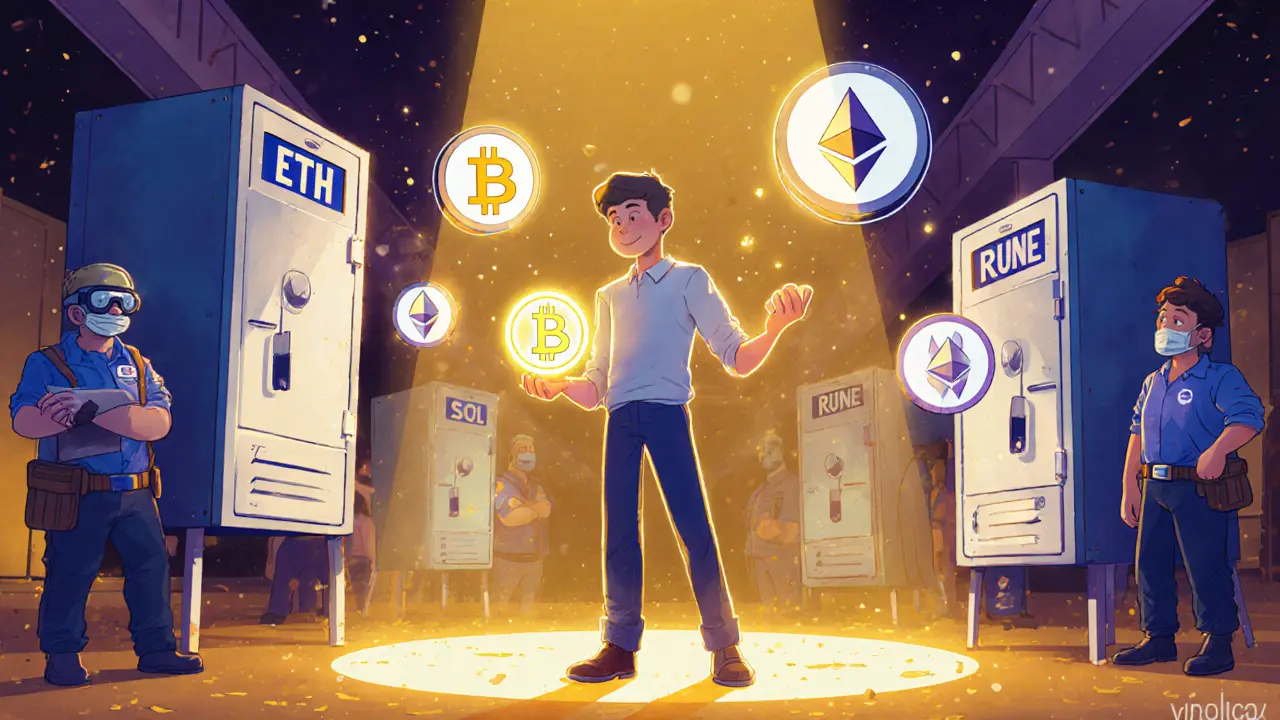
When you trade Bitcoin for Ethereum without using a centralized exchange, you’re likely relying on RUNE token, the native asset of THORChain, a decentralized network built for trustless cross-chain swaps. Also known as the backbone of non-custodial liquidity, RUNE enables users to swap assets like BTC, ETH, LTC, and more directly—no wrapped tokens, no intermediaries, no KYC. Unlike most DeFi protocols that lock assets in smart contracts on a single chain, THORChain runs on its own blockchain and uses RUNE as the common denominator to connect every major network.
Think of RUNE like the universal translator for crypto. If you want to swap Bitcoin for Solana tokens, most platforms make you convert BTC to a wrapped version first—like wBTC or renBTC. That adds risk, complexity, and centralization. With THORChain, your BTC stays on Bitcoin’s chain. RUNE acts as the middleman, holding liquidity in pooled nodes and facilitating the swap in real time. The whole system is secured by over 100 independent node operators who stake RUNE to validate transactions. If they misbehave, they lose their stake. It’s incentive-driven security, not corporate oversight.
What makes RUNE different isn’t just the tech—it’s the economics. Every swap on THORChain pays a fee in RUNE. That fee gets distributed to liquidity providers and node operators, creating a self-sustaining loop. As more people use it, more RUNE is earned, which attracts more stakers, which makes the network safer and faster. This isn’t theoretical. THORChain has processed over $30 billion in swaps since launch, mostly from users tired of centralized exchanges freezing funds or getting hacked.
But RUNE isn’t just a utility token. It’s also a governance token. Holders vote on protocol upgrades, fee structures, and new chain integrations. That means if you hold RUNE, you’re not just a user—you’re a stakeholder in the future of cross-chain finance. And unlike many tokens that are just speculative bets, RUNE’s value is tied directly to real activity: the more swaps happen, the more demand for RUNE grows.
It’s not perfect. The network has faced challenges—like a $150 million exploit in 2022 that forced a hard fork and a temporary pause. But the community responded quickly. Node operators slashed their stakes to absorb losses, and the protocol was restored within days. That kind of resilience is rare in crypto. Most projects vanish after a breach. THORChain didn’t just survive—it learned.
Today, RUNE powers one of the most secure and decentralized ways to move crypto between chains. If you care about true ownership, avoiding custodial risks, or just want to swap assets without trusting a company, RUNE and THORChain are worth understanding. Below, you’ll find real-world breakdowns, technical deep dives, and honest takes on how this system works—and where it’s headed next.