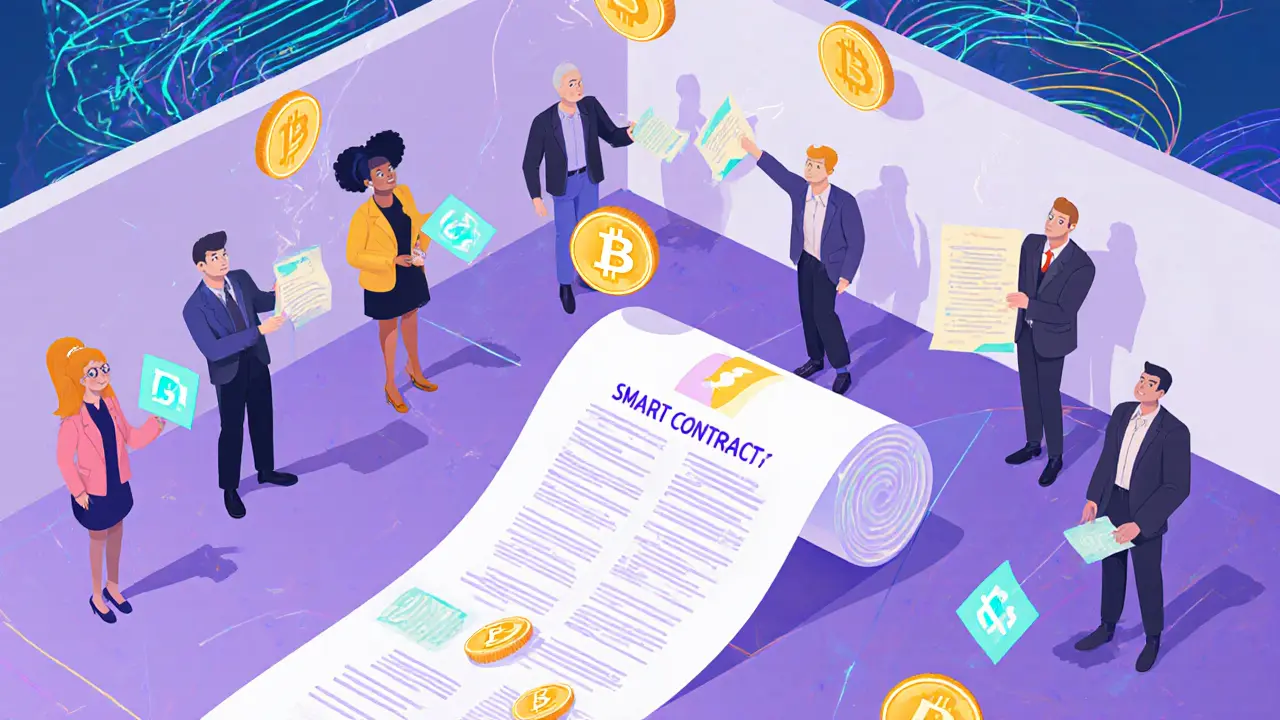
New Hampshire DAO Act: What It Means for Crypto Governance and Decentralized Organizations
When you hear New Hampshire DAO Act, a 2021 state law that legally recognizes decentralized autonomous organizations as valid business entities. Also known as NH DAO Law, it was the first in the U.S. to give DAOs the same legal standing as LLCs—no court order, no gray area. This isn’t just about tech—it’s about who owns the rules when there’s no CEO, no office, and no central authority. Before this law, running a DAO in the U.S. was like driving without a license: technically possible, but risky if anyone looked too closely. The New Hampshire DAO Act changed that by letting DAOs register as legal entities, file taxes, open bank accounts, and sign contracts—all under their blockchain name.
This law didn’t just appear out of nowhere. It was shaped by real-world needs: creators using social tokens, digital assets that let fans own a piece of a project to build communities, and teams building DeFi platforms, blockchain-based financial systems that operate without banks that needed legal protection. The act gives these groups a way to operate without risking personal liability. If a DAO gets sued, it’s the DAO that’s on the hook—not every member. That’s huge. It also lets DAOs hire contractors, pay contributors in crypto, and even hold property—all legally. This isn’t theoretical. It’s already being used by teams building NFT projects, investment collectives, and community-run protocols.
But the New Hampshire DAO Act isn’t perfect. It doesn’t cover every type of DAO. If your group is raising money like a stock offering, you’re still in securities law territory. And while New Hampshire leads, most states still treat DAOs like legal ghosts. That’s why you’ll see posts here about crypto regulation, how governments track and control digital assets in places like Singapore, Russia, and India—places where the rules are either brutal or nonexistent. The New Hampshire DAO Act is a blueprint. Other states are watching. So are regulators at FinCEN and the SEC. What works in New Hampshire might become the model for the whole country—or get shut down as a loophole.
Below, you’ll find real examples of how this law affects people. From creators using social tokens to build fan economies, to DeFi platforms navigating compliance, to scams that try to ride the wave of legal confusion—this collection shows what happens when blockchain meets the courtroom. You’ll learn what’s real, what’s risky, and what’s coming next. No fluff. Just what you need to know if you’re building, investing in, or just following DAOs in 2025.