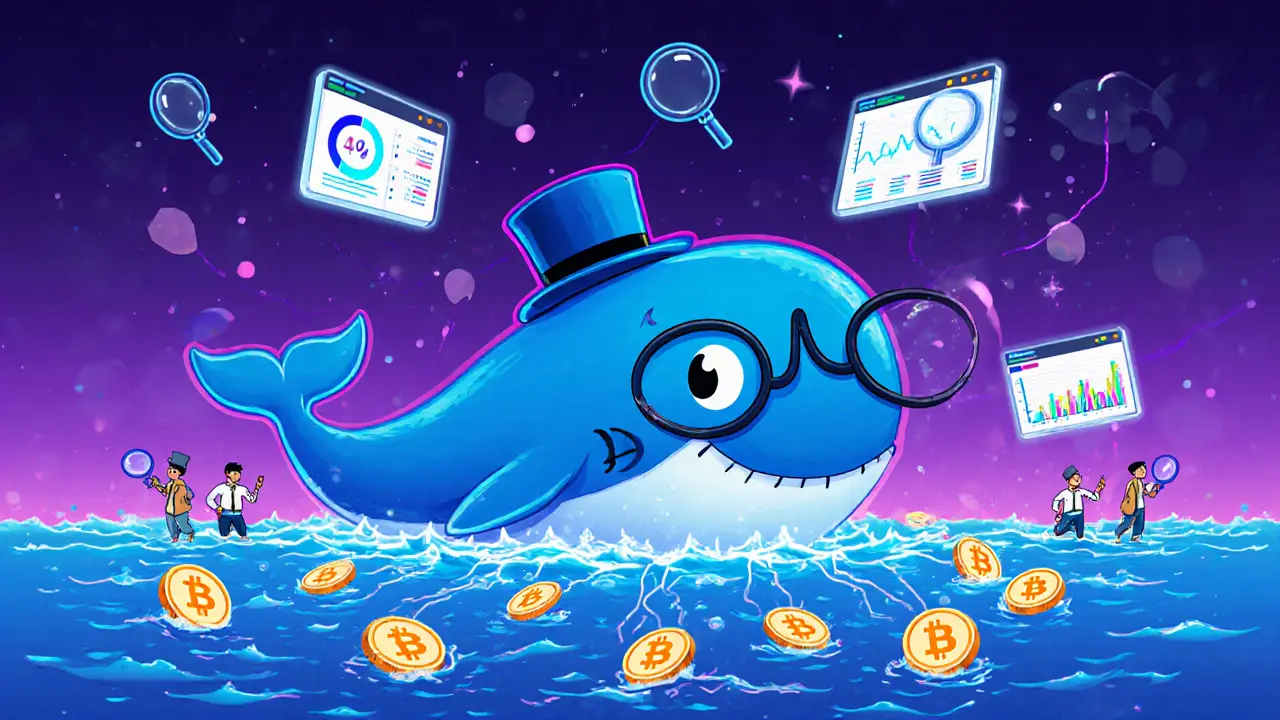
Crypto Whale Tracking: Follow the Big Players and Understand Market Moves
When you hear about crypto whale tracking, the practice of monitoring large cryptocurrency transactions to predict market behavior. Also known as on-chain monitoring, it’s not about spying—it’s about seeing what the biggest players are doing before they move the market. These aren’t just rich people with wallets full of Bitcoin. They’re institutions, early adopters, and sometimes even exchanges themselves, moving millions in a single transaction. And when they do, prices react—fast.
Every time a crypto whale, an entity holding a massive amount of cryptocurrency that can influence market prices. Often defined as wallets with over $10 million in assets buys or sells, it sends ripples through the network. Some whales buy quietly, accumulating over weeks. Others dump in seconds, triggering panic sells. Tools like blockchain analytics, software that examines public ledger data to trace wallet activity and transaction patterns let you see these moves in real time. You don’t need to be a coder—just know where to look. Sites that track whale activity show you when a wallet moves 500 BTC or sells 10,000 ETH. That’s not noise. That’s a signal.
But here’s the catch: not all big moves mean what they seem. A whale might be moving coins between exchanges for security, not selling. Or they could be swapping tokens as part of a DeFi strategy. That’s why large crypto transactions, unusually sized transfers on public blockchains that often indicate strategic activity by major holders need context. A single transaction doesn’t tell the whole story. You need to watch patterns over days, see if wallets are accumulating or distributing, and compare it to what’s happening in the broader market. The best trackers combine on-chain data with news, exchange flows, and wallet history.
What you’ll find in these posts isn’t guesswork. It’s real examples: how a whale’s move triggered a 15% drop in a meme coin, how a single wallet accumulated Bitcoin before the 2024 ETF surge, and why some so-called "whale alerts" are just scams trying to pump a low-cap token. You’ll see how regulators use the same tools to track illicit funds, how exchanges monitor for wash trading, and why some wallets stay silent for months before making a move.
Whether you’re holding a few coins or managing a portfolio, knowing what the whales are doing gives you an edge. You won’t predict every crash or rally—but you’ll stop reacting to noise and start seeing the real currents beneath the surface. The posts below show you exactly how it’s done, with real data, real cases, and no fluff.