Blockchain Environmental Impact: Energy Use, Solutions, and Real-World Consequences
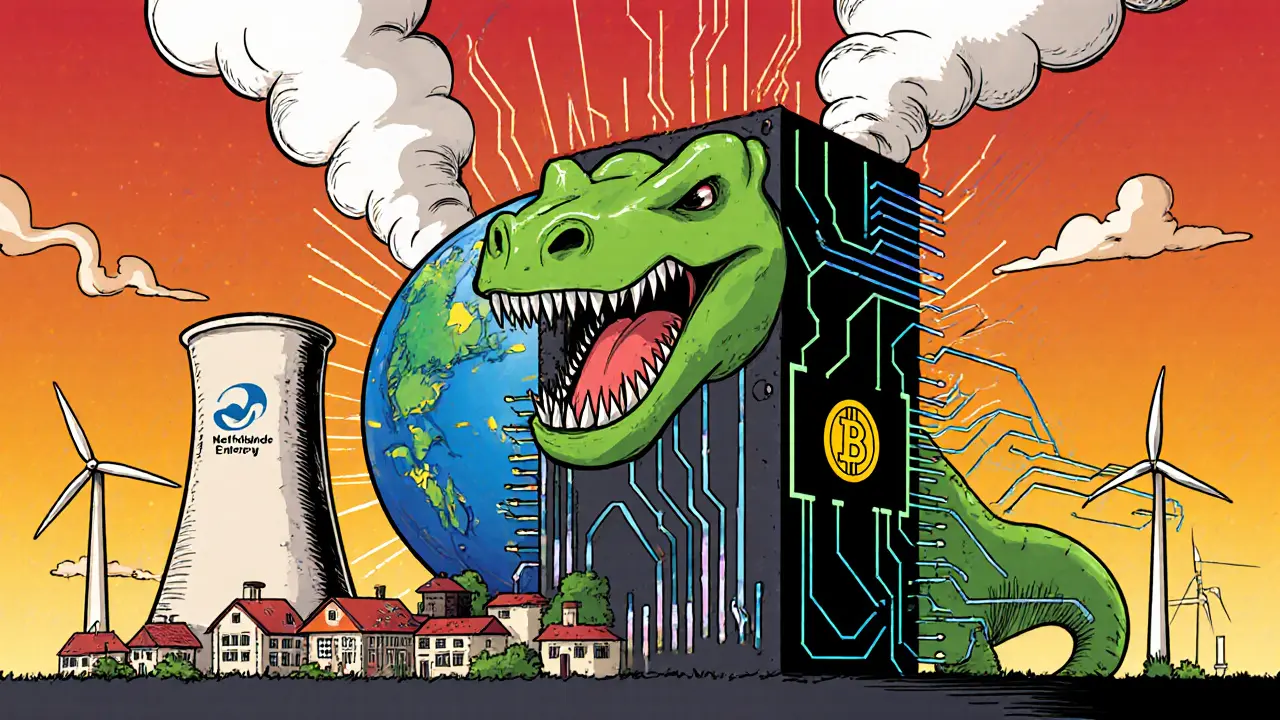
When you hear about blockchain environmental impact, the total energy and carbon footprint caused by running decentralized networks like Bitcoin and Ethereum. Also known as crypto carbon footprint, it's not theoretical—it's measured in terawatt-hours and tons of CO2, with real effects on power grids, climate goals, and local communities. The most talked-about example is Bitcoin mining, which uses more electricity annually than entire countries like Argentina or the Netherlands. That’s not a guess—it’s based on the Cambridge Centre for Alternative Finance’s real-time tracking. This energy doesn’t come from wind or solar alone. In places like Iran and Kazakhstan, miners rely on subsidized fossil fuels, often while civilians face blackouts. The system isn’t broken—it’s designed to be power-hungry, because security in proof-of-work blockchains depends on massive computational competition.
But not all blockchains are the same. proof of stake, a consensus method that replaces energy-intensive mining with token-based validation. Also known as PoS, it’s the reason Ethereum’s energy use dropped by 99.95% after its 2022 upgrade. Networks like Solana, Cardano, and Polkadot were built this way from the start. They don’t need thousands of mining rigs—they use validators who lock up coins as collateral. That’s not magic—it’s math. And it’s why regulators in the EU and Singapore now treat proof-of-stake chains differently than Bitcoin. The shift isn’t just technical; it’s political, economic, and environmental. Then there’s the hidden side: the hardware waste. Mining rigs become obsolete in 18 months, and most end up in landfills. Companies like Bitfury and Marathon have started recycling programs, but adoption is patchy. Meanwhile, startups are testing solar-powered mining in Texas and geothermal setups in Iceland, trying to turn the problem into a solution. These aren’t marketing gimmicks—they’re real experiments with measurable results.
What you’ll find in the posts below isn’t just noise about green crypto. It’s hard data on where mining happens, who profits, and how governments are responding. You’ll see how Iran’s electricity subsidies turn blackouts into Bitcoin factories, how Singapore bans high-energy operations outright, and why some tokens are dying not because they’re scams—but because they’re too heavy on power. This isn’t about being anti-blockchain. It’s about knowing what you’re supporting when you hold a coin. The future of blockchain won’t be decided by price charts. It’ll be decided by how much energy it uses, and who pays the cost.