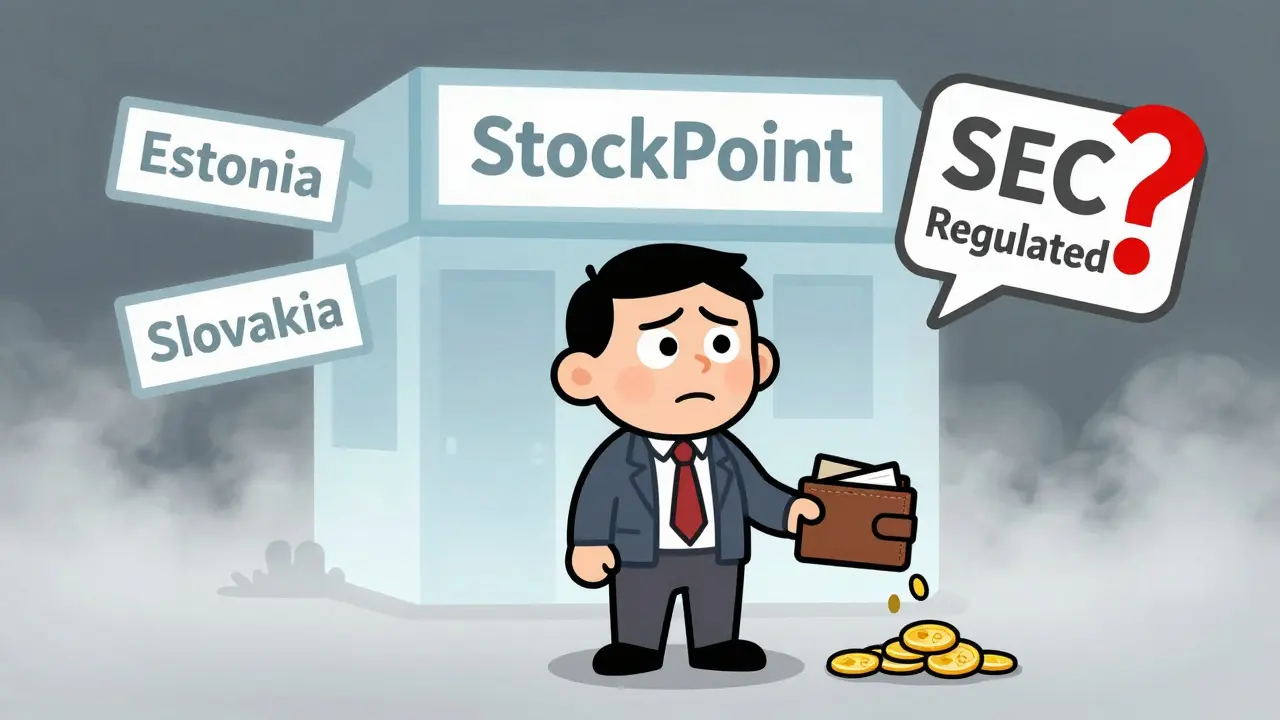
When you see a crypto exchange claiming ultra-low fees but struggling to pin down its own location, your first instinct should be caution. That is exactly the situation with Stockpoint OÜ, a platform that promises simplicity for beginners yet hides behind contradictory information about its regulatory status and costs. Founded in 2014, this exchange claims to support over 100 cryptocurrencies, including Bitcoin (BTC) and Ethereum (ETH). However, digging deeper reveals a confusing mix of fee structures, jurisdictional claims, and missing features that make it a risky choice for most traders in 2026.
If you are looking for a reliable place to trade digital assets, transparency is non-negotiable. Stockpoint fails this basic test. Sources conflict wildly on whether their trading fees are a competitive 0.01% or an exorbitant 0.50%. This isn't just a minor discrepancy; it changes the entire value proposition of the platform. In this review, we will break down what we know about Stockpoint, where the red flags lie, and why you might want to look elsewhere.
The Core Problem: Conflicting Data and Trust Issues
The biggest issue with Stockpoint is not necessarily its technology, but its communication-or lack thereof. A trustworthy exchange has consistent information across all platforms. Stockpoint does not. Some sources claim it is regulated by the SEC in the United States, while others explicitly state that US investors are banned from using the platform. You cannot be both regulated by the US Securities and Exchange Commission and inaccessible to US citizens simultaneously.
This confusion extends to its headquarters. The company name "Stockpoint OÜ" suggests registration in Estonia, as "OÜ" is the abbreviation for a private limited liability company under Estonian law. Estonia is known for its clear e-residency program and crypto regulations. Yet, other reviews describe Stockpoint as Slovakia-based. If an exchange cannot clearly state where it operates and who regulates it, how can you trust them with your funds?
- Jurisdiction Confusion: Claims of being Estonian, Slovakian, and US-regulated appear interchangeably.
- Fee Discrepancies: Trading fees range from 0.01% to 0.50% depending on the source.
- Lack of Mobile App: No dedicated iOS or Android application exists, forcing users to rely on browser access.
These inconsistencies are major red flags. In the world of cryptocurrency, where scams and rug pulls are common, ambiguity is often a precursor to trouble. Always verify the official registration details through government databases before depositing money.
Fee Structure: The Hidden Cost Trap
Let’s talk about money, because this is where Stockpoint becomes particularly problematic. The fee structure varies dramatically between what the website claims and what independent reviewers report. On their site, Stockpoint advertises trading fees of just 0.05%, with some third-party aggregators even citing 0.01%. If true, these would be among the lowest fees in the industry, beating giants like Binance and Coinbase Pro.
However, independent analysis platforms like CoinCodeCap and Cryptowisser report trading fees closer to 0.50%. This is five times higher than the advertised rate and significantly above the global average for spot trading, which typically hovers around 0.10% to 0.15% for active traders. Why would there be such a huge difference? It could mean that the low rates apply only to specific high-volume tiers or promotional periods that have ended, while standard users pay much more.
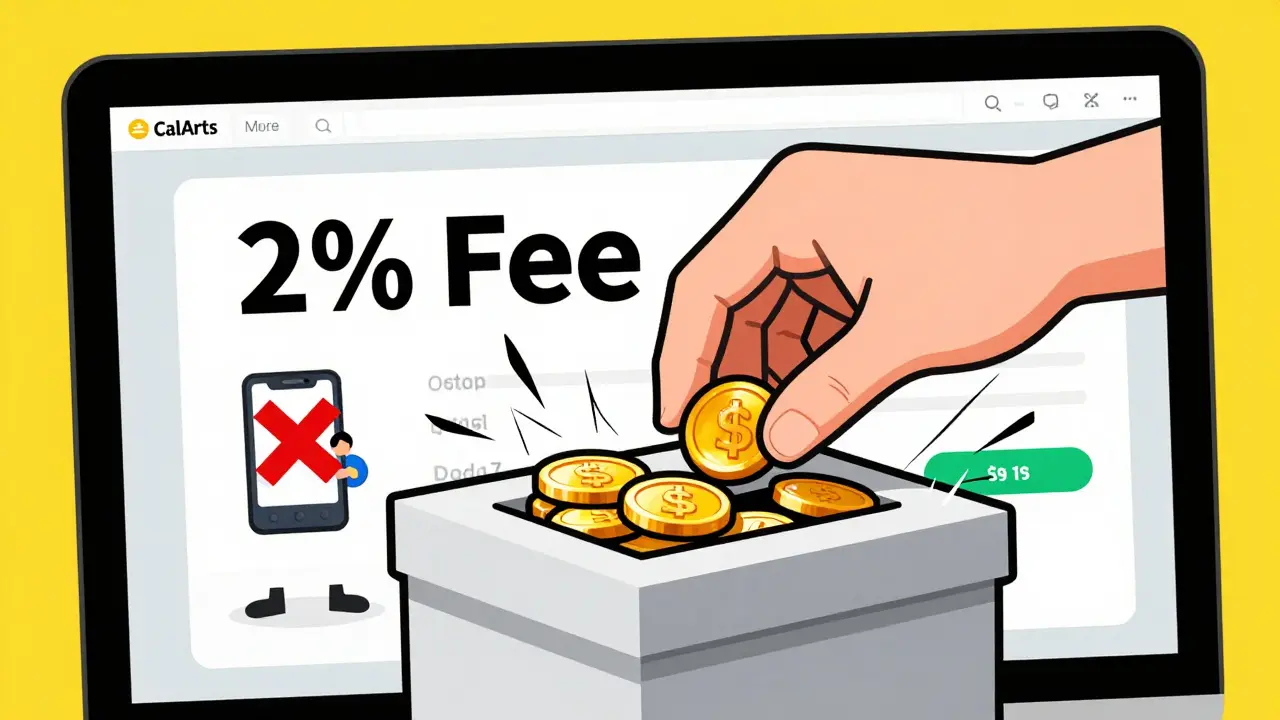
Even worse is the withdrawal fee model. Instead of flat fees (e.g., $5 per withdrawal), Stockpoint uses a percentage-based model, reportedly charging 2% on all withdrawals. Let’s look at the math:
| Withdrawal Amount | Standard Flat Fee (Example) | Stockpoint 2% Fee |
|---|---|---|
| $100 | $5 (5%) | $2 (2%) |
| $1,000 | $5 (0.5%) | $20 (2%) |
| $10,000 | $5 (0.05%) | $200 (2%) |
As you can see, small withdrawals might seem cheap, but if you are moving significant capital, the 2% fee destroys your profits. For a $10,000 withdrawal, you lose $200 instantly. Most reputable exchanges charge flat network fees or very low percentages for large volumes. This structure punishes successful traders who want to cash out.
Trading Features and User Experience
Despite the fee concerns, Stockpoint does offer a straightforward interface designed for two types of users. They split their platform into "Exchange Mode" and "Trading Mode."
Exchange Mode is aimed at beginners who just want to buy Bitcoin or Ethereum without dealing with charts or order books. It functions similarly to a simple buy/sell button found on apps like Cash App or PayPal. If you believe crypto will grow in value over years and don’t care about daily price swings, this mode reduces complexity.
Trading Mode caters to experienced users who need real-time market data, interactive price charts, and technical indicators. This allows for limit orders, stop-losses, and more granular control. While having both modes is a nice feature for accessibility, the lack of a mobile app ruins the experience. In 2026, the majority of crypto trading happens on smartphones. Relying solely on a desktop browser or mobile web version is inconvenient and less secure than a dedicated app with biometric login and push notifications.
The platform supports fiat deposits directly, claiming no input commissions. This is a positive feature, allowing users to fund accounts via bank transfers or cards without hidden intermediary costs. However, the KYC (Know Your Customer) verification is mandatory. You must provide identification documents before trading. While KYC is standard for compliant exchanges, the lack of clarity on where that data is stored (Estonia? Slovakia?) raises privacy questions.
Security and Regulatory Status
Security is paramount when choosing a crypto exchange. Stockpoint claims to constantly improve its security system, but vague promises are not enough. We need concrete details: Do they use cold storage for user funds? Is there multi-signature authentication for withdrawals? Are there regular third-party audits?
The regulatory picture is murky. Being registered as an OÜ in Estonia implies compliance with the Financial Intelligence Unit (FIU) of Estonia, which requires strict anti-money laundering (AML) procedures. However, if the platform is actually operating from Slovakia or another unregulated jurisdiction, those protections may not apply. The claim of SEC regulation is highly suspicious given the exclusion of US users. The SEC does not regulate exchanges that ban US customers; instead, it enforces rules against them.
Furthermore, the lack of a public audit trail or proof of reserves makes it difficult to verify if the exchange holds user assets 1:1. In an era where collapses like FTX have taught us that solvency matters, an exchange that doesn’t prove its reserves is a gamble.

How Stockpoint Compares to Major Exchanges
To put Stockpoint in perspective, let’s compare it to established players like Binance, Kraken, and Coinbase. These platforms have clear fee schedules, known regulatory statuses, and robust mobile apps.
| Feature | Stockpoint | Binance | Kraken | Coinbase |
|---|---|---|---|---|
| Trading Fees | 0.01% - 0.50% (Unclear) | 0.10% (Standard) | 0.16% - 0.26% | 0.40% - 1.49% |
| Withdrawal Fees | 2% (Percentage) | Flat Network Fee | Flat Network Fee | Flat + Spread |
| Mobile App | No | Yes | Yes | Yes |
| US Access | No | Limited | Yes | Yes |
| Regulatory Clarity | Low | High | High | Very High |
While Stockpoint might appeal to users in specific regions like Slovakia due to perceived local availability, the disadvantages are steep. The absence of a mobile app alone disqualifies it for many modern traders. Combined with the potential for high fees and regulatory uncertainty, it falls short compared to industry leaders.
Verdict: Should You Use Stockpoint?
Based on the available evidence, I do not recommend using Stockpoint OÜ for serious trading. The conflicting information regarding fees and jurisdiction creates too much risk. In crypto, if you have to guess whether you are paying 0.05% or 0.50% in fees, you are already losing. The percentage-based withdrawal fee is punitive for larger amounts, and the lack of a mobile app limits convenience.
If you are in Europe and seeking a regulated exchange, consider platforms like Kraken, Bitstamp, or Binance Europe, which have clear licensing in EU member states. If you are in the US, stick to SEC-registered entities like Coinbase or Kraken. Stockpoint’s promise of simplicity is undermined by its opacity. Until they provide transparent, verifiable fee schedules and clear regulatory documentation, keep your funds elsewhere.
Is Stockpoint safe to use?
Safety is questionable due to inconsistent regulatory claims and lack of transparent security audits. The conflicting information about jurisdiction (Estonia vs. Slovakia) and US regulation raises concerns about legal recourse if issues arise.
What are the actual trading fees on Stockpoint?
There is no single confirmed rate. The website claims 0.05%, while independent reviewers report up to 0.50%. This discrepancy suggests fees may vary by user tier or region, making it unpredictable for new users.
Can US residents use Stockpoint?
No. Multiple sources indicate that Stockpoint does not allow US investors to trade, despite some confusing claims about SEC regulation.
Does Stockpoint have a mobile app?
No. Stockpoint does not offer a dedicated iOS or Android application. Users must access the platform via a web browser, which is less convenient and potentially less secure than native apps.
Why is the withdrawal fee 2%?
Stockpoint uses a percentage-based withdrawal model rather than flat fees. This means you pay 2% of the total amount withdrawn. This is unusually high for large transactions compared to industry standards.