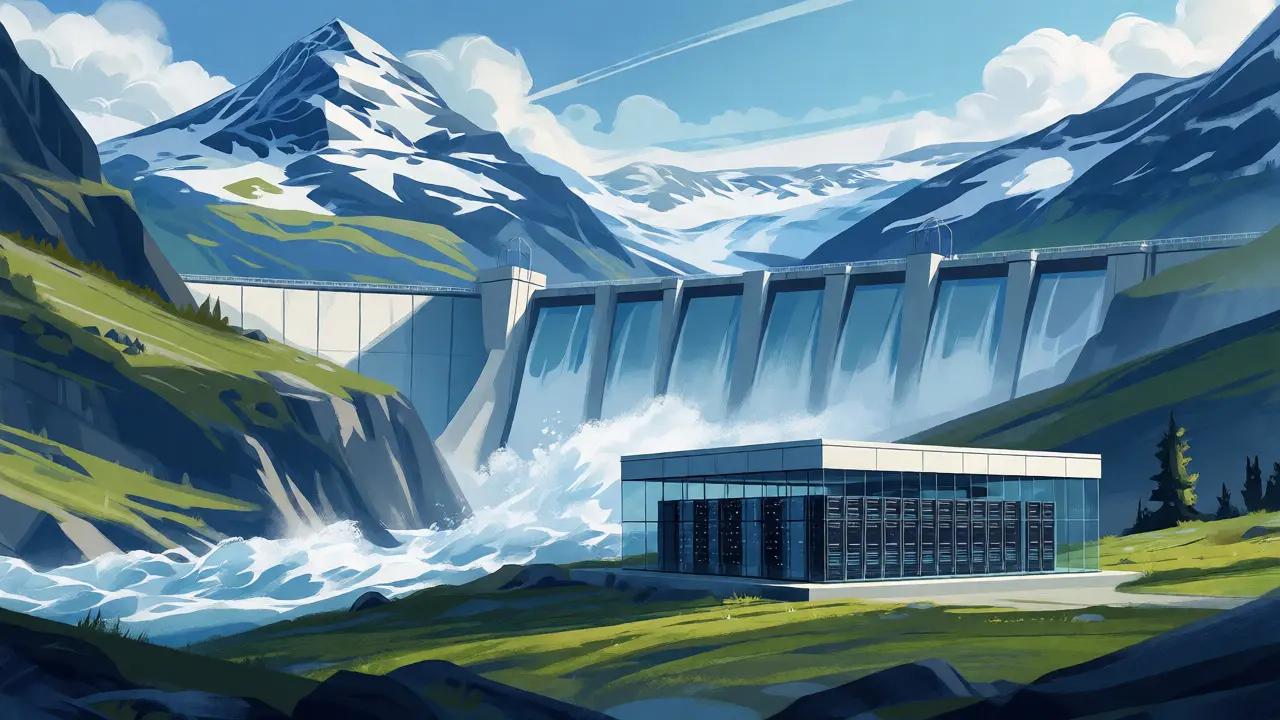
Imagine having one of the cheapest and cleanest sources of electricity in the world, yet your government decides you can't use it for a specific industry. That is exactly what happened in Norway. In June 2025, the Labour Party government announced plans to temporarily ban new cryptocurrency mining data centers. The move wasn't about hating technology or blocking innovation. It was a cold, hard calculation about where every kilowatt-hour should go. For miners hoping to set up shop in Scandinavia, the door just slammed shut.
The Core Reason: Opportunity Cost Over Ideology
Norway isn't banning crypto because it thinks digital assets are scams. The country has some of the most progressive financial regulations in Europe. The issue is purely about resource allocation. Minister for Digitalization and Public Administration Karianne Tung made the stance clear: the government intends to limit crypto mining as much as possible. Why? Because mining is incredibly power-intensive but generates very few local jobs.
Think of it this way. If you have a limited amount of high-quality hydroelectric power, do you send it to a factory that employs 500 people and pays taxes locally? Or do you send it to a server farm that employs five people, mostly remote engineers, while shipping profits offshore? The Norwegian government chose the former. They argued that mining offers little economic benefit to the communities hosting these massive facilities. This isn't an anti-crypto stance; it's a pro-community energy strategy.
How the Ban Works: New vs. Existing Operations
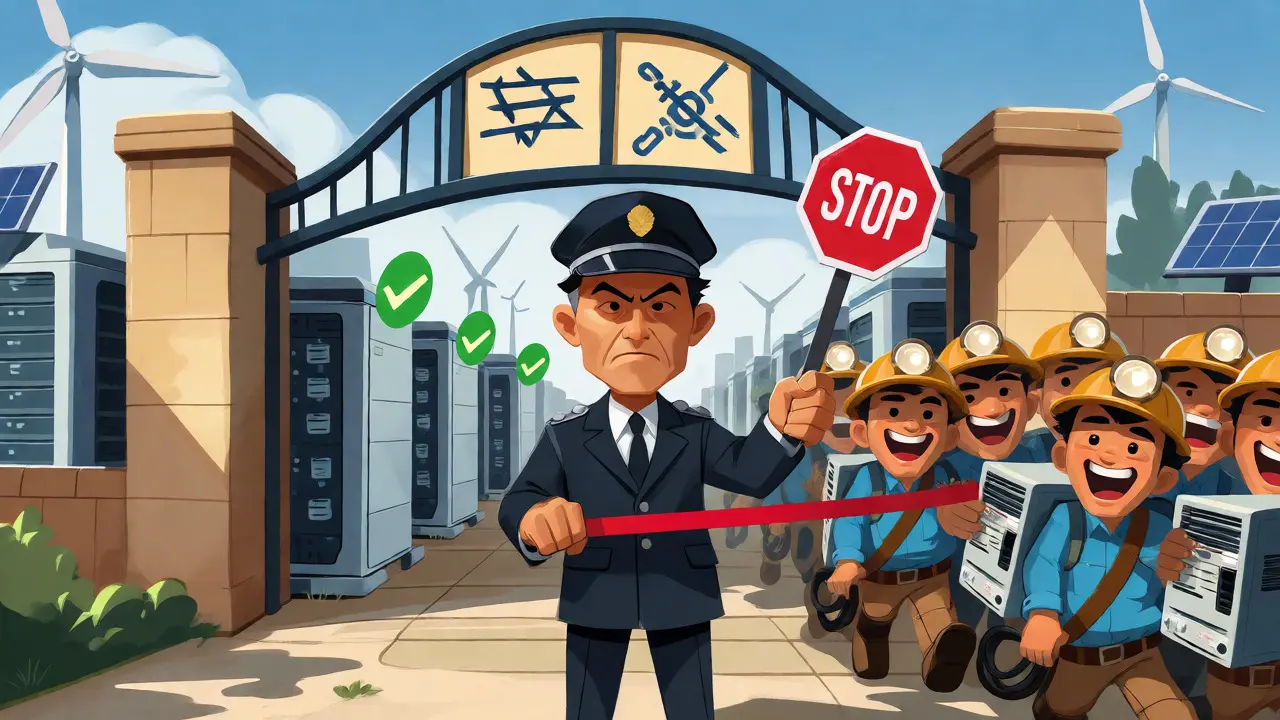
A crucial detail often missed in headlines is the scope of the restriction. Norway didn't outlaw all crypto activity overnight. The proposed legislation targets new mining data centers. Existing operations were largely allowed to continue their contracts, though they faced increased scrutiny. This distinction matters because it prevents immediate chaos for current miners while stopping the expansion of the industry.
The legal basis for this move rests on Norway's Planning and Building Act. This law gives authorities significant control over land use and energy distribution. By classifying new mining facilities under strict planning permissions, the government effectively froze new construction. You couldn't just buy land and plug in thousands of ASICs anymore. You needed permission, and the answer was increasingly likely to be "no."
| Country | Status (2025-2026) | Primary Driver | Scope |
|---|---|---|---|
| Norway | Temporary Ban on New Centers | Energy Allocation & Local Jobs | New Installations Only |
| Russia | Ban in 10 Regions | Grid Stability & Blackouts | Regional Prohibition |
| China | Total Ban (Since 2021) | Financial Control & Environment | All Mining Operations |
| New York State | Moratorium on Fossil Fuel Mining | Carbon Emissions | Non-Renewable Powered Only |
| Kosovo | Ban Implemented | Energy Crisis | All Mining Operations |
The European Energy Context
You can't understand Norway's decision without looking at the broader map. Russia's war in Ukraine sent shockwaves through Europe's energy markets. Even countries with abundant renewables like Norway felt the pressure. Electricity prices for residents rose, creating political friction. When regular households see their bills climb, governments look for places to cut consumption. Crypto mining, being a non-essential luxury load in the eyes of policymakers, became an easy target.
This aligns with actions taken elsewhere. Russia banned mining in ten regions in January 2025 to prevent blackouts. Kosovo did something similar earlier due to rolling blackouts. The pattern is consistent: when grid stability is threatened, miners are the first to get switched off. Norway’s approach was more preemptive, aiming to conserve capacity before a crisis hit rather than reacting after the lights flickered.

Why Hydroelectric Power Didn't Save the Miners
For years, Norway attracted miners because its grid runs almost entirely on hydropower. In theory, this makes Bitcoin mining carbon-neutral. Critics might argue, "If the power is green, why not use it?" The counter-argument from Oslo was nuanced. Yes, the energy is renewable, but it is finite. Diverting surplus hydro power to mining means that same surplus cannot be used for other potential industries-like green hydrogen production, electric vehicle charging infrastructure, or heavy manufacturing-that offer higher long-term economic multipliers.
Furthermore, "surplus" is a tricky concept. As electrification increases across Norway-more EVs, heat pumps, and industrial shifts-the definition of surplus shrinks. What looked like extra water in the reservoirs in 2021 might be essential baseline supply in 2026. The government decided not to gamble on future abundance.
Registration Requirements and Data Gaps
Before enforcing the ban, Norway introduced mandatory registration for data centers. Officials admitted they didn't fully know how big the problem would become. This lack of data drove caution. By requiring registration, the Ministry gained visibility into exactly how many megawatts were being consumed by anonymous server farms. This step highlights a common regulatory theme: if you don't know who is consuming your resources, you can't manage them.
This transparency measure also served as a deterrent. Many smaller, opportunistic miners operate in gray areas. Knowing they had to register and potentially disclose energy usage scared off casual entrants. It signaled that the era of "fly-in, plug-in, mine-out" was ending.
Global Implications for Renewable Energy Hubs
Norway’s move sends a chill down the spine of other renewable-rich jurisdictions. Countries like Iceland, Canada (specifically Quebec and Manitoba), and parts of the Pacific Northwest rely on attracting energy-intensive industries. If Norway, with its stable democracy and perfect hydro setup, says no to new miners, what message does that send to others?
It suggests that cheap, clean energy is no longer a guaranteed ticket to entry. Governments are increasingly viewing their energy grids as strategic national assets, not just commodities to be sold to the highest bidder. For miners, this means the hunt for jurisdiction is shifting from purely cost-based to policy-stability based. A place with slightly higher rates but predictable rules may now be safer than a place with dirt-cheap rates and a hostile regulator.
What Happens Next for Existing Miners?
If you already had a facility running in Norway, you weren't immediately evicted. However, the environment became tense. Contracts were scrutinized, and tax implications were reviewed. The temporary nature of the ban implies a review period. The government stated they wanted to reassess based on technological developments. If mining efficiency doubles, or if the economic model changes to include more local services, the ban could theoretically lift.
But for now, the signal is clear: Norway wants its electrons working for Norwegians. The focus is on industries that sustain local economies, provide tangible jobs, and contribute to the national GDP in visible ways. Crypto mining, despite its global utility, failed this local value test.
Frequently Asked Questions
Is Bitcoin mining illegal in Norway?
No, owning and trading Bitcoin remains legal in Norway. The ban specifically targeted the establishment of new cryptocurrency mining data centers. Existing operations were generally permitted to continue, subject to existing regulations and energy contracts.
Why did Norway ban new crypto mining facilities?
The primary reason was energy allocation. The government determined that crypto mining consumes vast amounts of electricity while generating minimal local employment and economic income compared to other industries. They prioritized using hydroelectric power for sectors that better serve the national interest.
Does Norway's ban apply to all cryptocurrencies?
The ban focused on "power-intensive" mining activities, which primarily affects Proof-of-Work coins like Bitcoin. However, the regulatory framework was broad enough to cover any new data center operation deemed to have a disproportionate impact on the grid relative to its local economic benefit.
How does Norway's approach differ from China's ban?
China implemented a comprehensive, permanent prohibition on all cryptocurrency mining in 2021, driven by financial control and environmental goals. Norway's approach was a temporary moratorium on new installations, allowing existing miners to operate. Norway's motivation was primarily about optimizing local energy resources rather than eliminating the asset class entirely.
Could the ban in Norway be lifted in the future?
Yes, the ban was described as temporary. Government officials indicated that the restrictions could be reassessed based on changes in technology, energy availability, or the economic impact of mining operations. If mining becomes less energy-intensive or provides greater local benefits, the policy could shift.