
If you're trying to trade crypto on Kraken and hit a wall - maybe you can't deposit, can't trade XRP, or suddenly can't access USDT - you're not alone. Kraken doesn't randomly block users. It follows strict rules shaped by governments, not algorithms. As of early 2026, Kraken restricts services in 14 fully blocked countries and dozens more with partial limits. These aren't arbitrary. They're tied to sanctions, anti-money laundering laws, and new crypto regulations like MiCA in Europe.
Which Countries Are Completely Blocked?
Kraken doesn't offer any services in 14 countries under international sanctions. These include Russia (including Crimea and occupied Ukrainian regions), Iran, North Korea, Syria, Cuba, Afghanistan, Sudan, and Belarus. Also banned: Libya, South Sudan, Democratic Republic of the Congo, Iraq, and the Central African Republic. If you're physically located in any of these places, Kraken will block your login, freeze your account, and may even report your activity to authorities.
It's not just about where you live - it's about where you're connecting from. Kraken uses IP geolocation, ID verification, and proof of address to confirm your location. Trying to use a VPN to bypass this? That’s a direct violation. Accounts caught doing this get permanently suspended, and funds can be locked indefinitely. There’s no appeal process.
United States: A Patchwork of Restrictions
The U.S. is Kraken’s biggest market - and its most complicated. You can’t trade XRP anywhere in the country. That’s because of the SEC’s ongoing legal stance that XRP is an unregistered security. It’s not a Kraken decision - it’s a legal requirement.
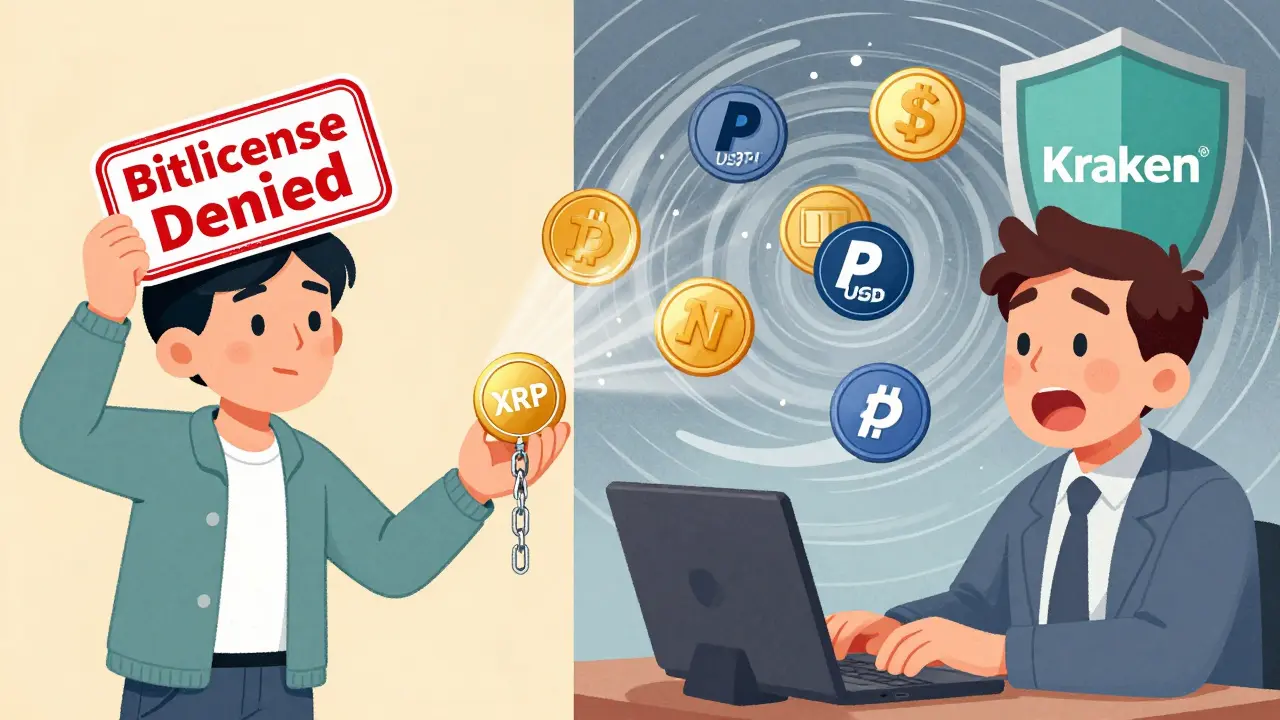
New York residents face another layer: they can’t access most services unless they’re pre-approved under the state’s BitLicense program. Kraken doesn’t currently hold a BitLicense, so New Yorkers are locked out unless they’re in the waiting list for special access. Washington State residents face the same issue.
Even within states that allow full access, there are quirks. Texas and New Hampshire residents can’t hold or trade euros (EUR) on Kraken. That’s because of state-level banking regulations around foreign currency exposure. Canadian residents can’t trade FLOW, EWT, or GRT tokens. Japanese users can’t trade FLOW either, and must jump through extra hoops to trade in JPY.
Margin trading is another big difference. If you’re in the U.S., you can only hold margin positions for 28 days. Outside the U.S., you can hold them for a full year. That’s because U.S. regulators treat crypto margin like high-risk derivatives - and they want to limit exposure.
Australia and Privacy Coins
Australian users can’t trade privacy coins at all. That means no Monero (XMR), no Zcash (ZEC), and no Dash. The reason? AUSTRAC, Australia’s financial intelligence unit, considers these coins high-risk for money laundering. Kraken complied in 2023 and removed them entirely from Australian accounts. If you held any before the ban, you could withdraw them - but you can’t trade or deposit them anymore.
Europe’s Big Stablecoin Shake-Up
One of the biggest changes in 2025 came from Europe. Kraken removed five major stablecoins under the new MiCA regulation: USDT, PayPal USD, TrueUSD, Tether EURt, and TerraClassic USD. The timeline was brutal:
- February 13, 2025: Reduce-only mode (you could only close positions, not open new ones)
- February 27, 2025: Sell-only mode (no deposits, only selling)
- March 17, 2025: Margin positions closed automatically
- March 24, 2025: Spot trading ended
- March 31, 2025: Remaining balances converted to EUR or USD
This wasn’t a surprise to Kraken’s compliance team - but it was a shock to users. Tether (USDT) is the most traded stablecoin in the world. Many European traders relied on it for liquidity. Now, they’re forced to use alternatives like EURT (which Kraken still supports) or move to other platforms. Kraken’s head of asset management admitted the move was painful but necessary to keep their European license.
Why Does Kraken Do This?
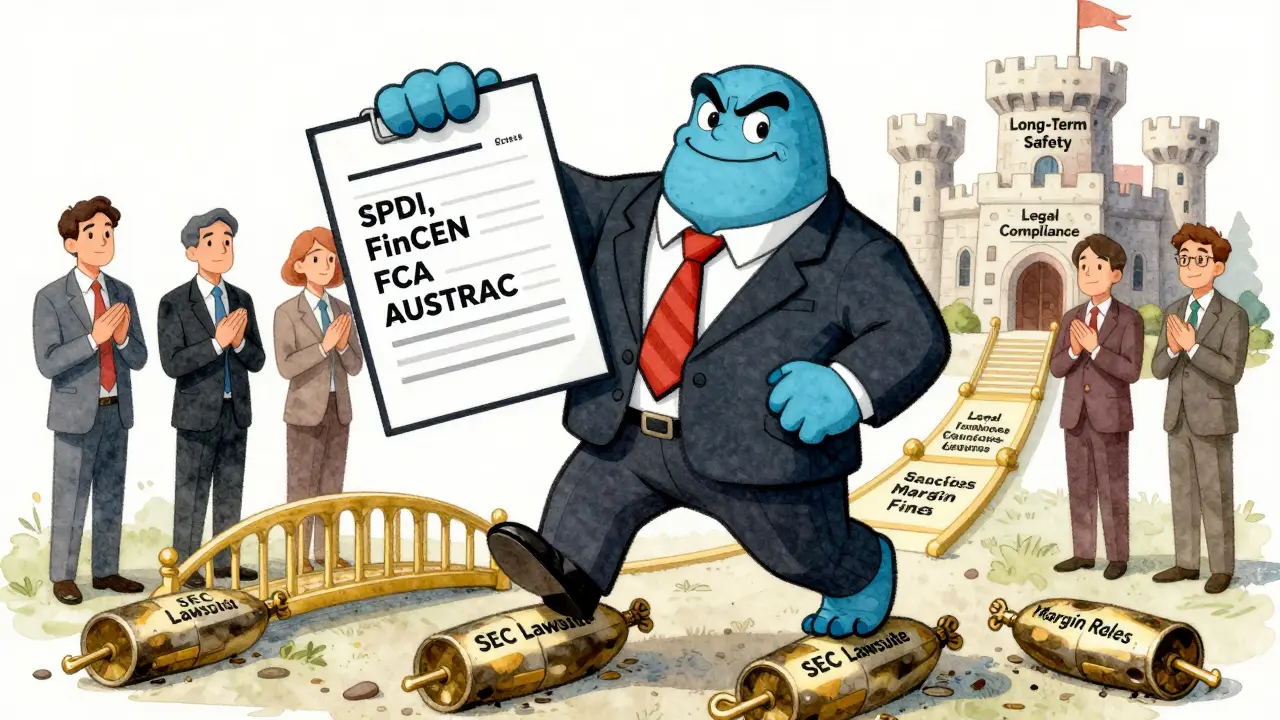
Kraken isn’t trying to make life hard. It’s trying to survive. The exchange holds a Special Purpose Depository Institution (SPDI) charter from Wyoming - the first ever for a crypto firm. That means it’s legally recognized as a bank in one U.S. state. It’s also licensed by FinCEN (U.S.), FCA (UK), AUSTRAC (Australia), FINTRAC (Canada), and FSA (Japan). Losing any of those licenses would mean losing access to global banking systems.
In 2022, Kraken paid a $2.5 million fine from the U.S. Treasury for failing to block transactions from sanctioned Russian addresses. In 2021, it settled with the CFTC over margin trading rules. It survived a 2023 SEC lawsuit - but only after agreeing to tighter controls. Compliance isn’t optional. It’s the cost of doing business at scale.
What Happens If You’re in a Restricted Area?
If you’re in a blocked country and you try to log in, you’ll see a message like: “Your location is not supported.” No warning. No grace period. Your account is locked. You can still withdraw funds - if they’re allowed under local law - but you can’t trade, deposit, or stake.
Even if you used to be a user and moved abroad, Kraken will still check your last known location. If you moved from the U.S. to Germany, but your ID and bank details are still U.S.-based, Kraken may freeze your account until you submit updated proof of residence. It’s not just about your IP - it’s about your paper trail.
What’s Next for Kraken’s Restrictions?
Kraken is watching three big changes in 2026:
- New York and Washington State: Kraken is applying for BitLicense approval. If granted, U.S. users in those states could regain full access by late 2026.
- Staking in the U.S.: ETH2.S (staked ETH) is currently only available for staking - not trading - in the U.S. That could change if the SEC clarifies its stance on staking as a service.
- Europe’s MiCA rollout: More stablecoins may be added to the delisting list. Kraken is already testing compliant alternatives like EURT and USDN. Expect more restrictions, not fewer, as MiCA enforcement tightens.
Industry analysts predict that by 2027, the top five exchanges will all have nearly identical geographic restrictions. Kraken’s early compliance isn’t a weakness - it’s a long-term advantage. Institutional investors, pension funds, and corporate treasuries won’t touch exchanges that don’t follow the rules.
How to Check If You’re Affected
Before you sign up or try to trade, go to Kraken’s official Geographic Restrictions page. It’s updated monthly. You’ll find:
- Full country list with status (blocked, partial, or allowed)
- Token-specific restrictions by region
- State-level U.S. rules
- Upcoming changes with dates
Bookmark it. This page changes more often than most people realize. What’s allowed today might be gone in 30 days.
Alternatives? Maybe - But They’re Riskier
Some users turn to decentralized exchanges (DEXs) like Uniswap or centralized platforms like Binance (outside the U.S.) to bypass restrictions. But here’s the catch: DEXs don’t protect your assets if something goes wrong. Binance has been fined by regulators in Canada, Japan, and the U.K. - and has pulled out of entire markets before.
There’s no perfect exchange. But Kraken is one of the few that’s still operating globally while staying legally clean. If you want to trade crypto long-term without getting shut down, playing by the rules isn’t optional. It’s the only way to keep your money safe.