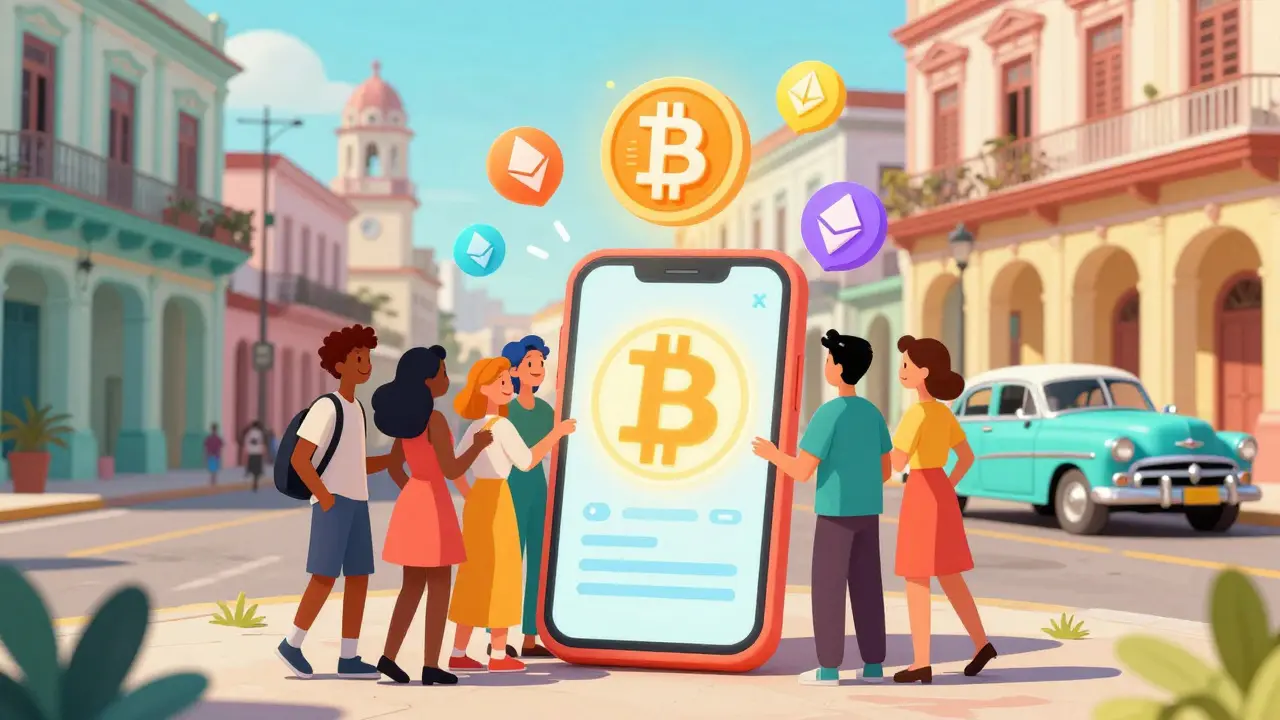
If you've heard that digital assets are forbidden on the island, you're actually hearing a myth. In a surprising twist for a country often associated with strict state control, Cuba is one of the few nations in the world to officially recognize cryptocurrencies as legal payment methods. Instead of a prohibition, the government has pivoted toward a regulated system to help its people survive under some of the toughest economic pressures on earth.
The Big Shift: From Gray Area to Legal Tender
For a long time, using crypto in Cuba was a bit of a gamble. People did it, but there were no rules. That changed in August 2021 when the government released Resolution 215 . This wasn't just a suggestion; it was a formal decree that gave the Central Bank of Cuba is the primary regulatory authority responsible for overseeing digital asset operations and licensing service providers the power to manage the market. Why the sudden change? The government cited "socio-economic interest," which is a polite way of saying they realized the traditional banking system was failing their citizens.
By moving from a legal gray area to a regulated framework, the state acknowledged that people were already using these tools. Rather than fighting an uphill battle to ban something that's essentially invisible to traditional police, they decided to license the players and set the rules of the game.
Why Cuba Needs Crypto (The Sanctions Factor)
To understand why Cuba embraced digital assets, you have to look at the U.S. Embargo . Since 1962, the U.S. has maintained a strict sanctions regime. For the average Cuban, this means a total blackout of the global financial system. Can you imagine not being able to use a credit card, open a PayPal account, or even shop on Amazon? That is the daily reality for millions.
The situation hit a breaking point in 2020 when Western Union closed over 400 locations across the island. Suddenly, the primary lifeline for families receiving money from relatives abroad was severed. Enter Bitcoin and other digital currencies. Because these assets don't rely on a central bank in New York or a corporate headquarters in the U.S., they allow Cubans to bypass the Cuban Assets Control Regulations (CACR) and receive funds directly from family members.

How the Regulatory System Actually Works
It's not a free-for-all. If you want to run a crypto business in Cuba, you can't just open a laptop and start trading. You need a license from the Central Bank. These licenses are usually granted for one year and are based on whether the business serves a legitimate social or economic purpose.
The government is particularly obsessed with Anti-Money Laundering (AML) rules. Any licensed Virtual Asset Service Provider (VASP) must follow strict customer due diligence. They have to report suspicious activities and prove they aren't helping criminals move money. It's a balancing act: the state wants the economic benefit of crypto, but they aren't willing to give up their oversight of where the money is going.
| Feature | Cuba's Approach | The "Ban" Approach (e.g., China) | The "Laissez-Faire" Approach |
|---|---|---|---|
| Legal Status | Legal & Regulated | Prohibited | Unregulated/Gray |
| Primary Goal | Sanctions Evasion/Survival | Financial Control/Stability | Innovation/Profit |
| License Required? | Yes (Central Bank) | N/A (Illegal) | Rarely |
| State Oversight | High (AML focus) | Absolute (Enforcement) | Low |
Who is Using Crypto in Cuba?
You might think everyone is using it, but the numbers are actually quite modest. Estimates suggest between 100,000 and 200,000 people use digital assets-roughly 1% to 2% of the population. While that sounds small, it's a huge number considering the hurdles. Imagine trying to manage a digital wallet with spotty internet and limited access to the latest smartphones.
The most popular assets aren't just Bitcoin . Many Cubans use Ethereum and Avalanche . The goal isn't usually to "HODL" and wait for the price to moon; it's practical. They use it for remittances, buying goods from international sellers who don't accept Cuban currency, and P2P trades to get local cash.

Common Pitfalls and Challenges
Despite the legal green light, it's not all smooth sailing. There are three main roadblocks for the average user:
- Infrastructure: Internet access has improved, but it's still not reliable enough for high-frequency trading.
- Education Gap: Many people understand that crypto "works," but few understand the security risks, like losing a private key or falling for phishing scams.
- Licensing Hurdles: For entrepreneurs, getting that one-year license from the Central Bank can be a bureaucratic nightmare.
Moreover, while the Cuban government is okay with crypto, the U.S. government still views the island through the lens of the embargo. This means that while a Cuban citizen might legally use a wallet, a U.S. company providing the service might still face legal risks if they aren't careful with their compliance.
Looking Ahead: A Model for Other Nations?
Cuba's journey is a case study in pragmatism. They didn't adopt Bitcoin because they love the philosophy of decentralization or the tech behind blockchain. They did it because they had no other choice. When the world's financial pipes are cut off, you find a new way to move water.
As infrastructure improves, we'll likely see these numbers grow. This framework could actually become a blueprint for other countries facing heavy international sanctions. If you can't use the SWIFT system, a regulated crypto ecosystem is the next best thing. The long-term success of this experiment depends on whether the Cuban government can maintain its control without stifling the very utility that makes crypto valuable in the first place.
Is it illegal to own Bitcoin in Cuba?
No, it is not illegal. Since August 2021, the Cuban government has officially recognized cryptocurrencies as legal payment methods through Resolution 215.
Can businesses in Cuba accept crypto payments?
Yes, but they must be licensed. Businesses need a license from the Central Bank of Cuba to legally operate as virtual asset service providers and accept digital currencies.
Why does Cuba allow crypto despite being a socialist state?
It is a pragmatic response to U.S. sanctions. Because the embargo prevents access to traditional banking, PayPal, and Western Union, crypto provides a necessary financial lifeline for citizens.
What is the role of the Central Bank of Cuba in crypto?
The Central Bank acts as the regulator. It issues licenses to service providers, monitors for money laundering, and ensures that crypto use aligns with the country's socio-economic interests.
Which cryptocurrencies are most popular in Cuba?
Bitcoin remains the most well-known, but Ethereum and Avalanche are also widely used for their utility and transaction capabilities.