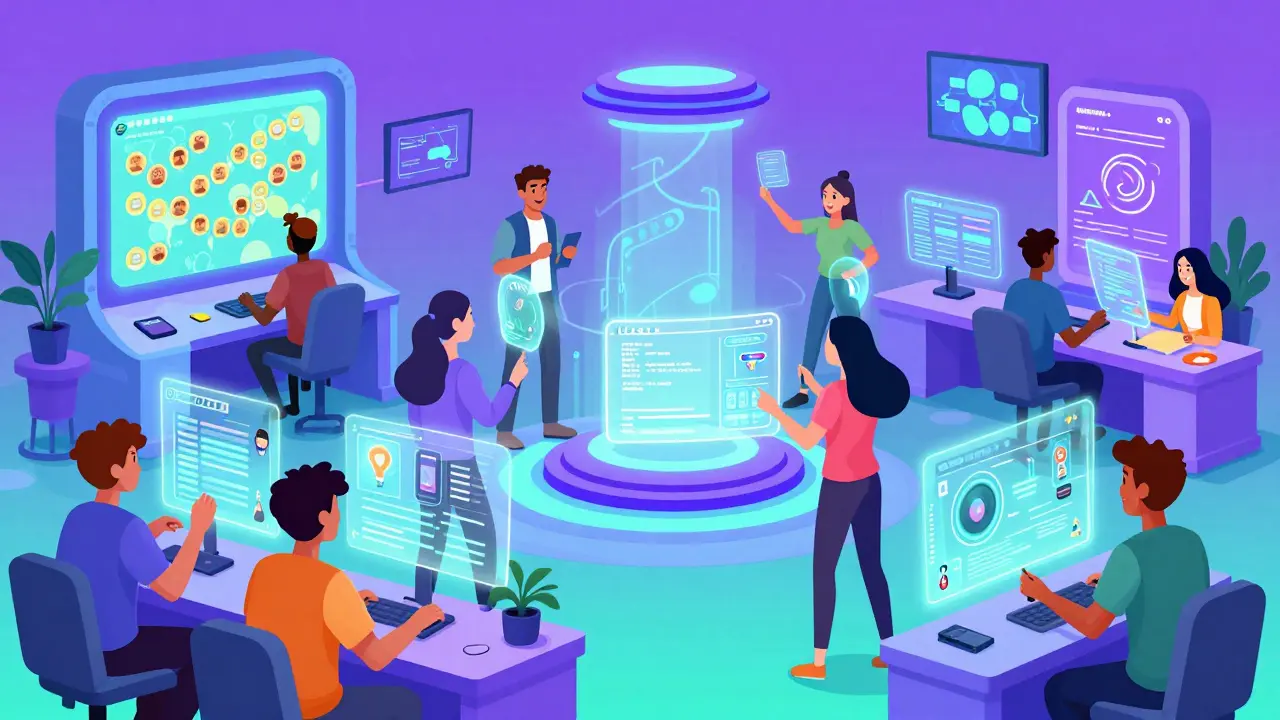
If you've been hunting for a way to get into Web3 gaming without risking a fortune upfront, the DAR Open Network has introduced something that actually rewards your time. Instead of a one-time "lucky dip" airdrop, they've built a sustainable system where you earn tokens by actually playing games. Whether you're a casual gamer or a competitive pro, the (D) token distribution is tied directly to your activity and skill.
The core of this ecosystem is the DAR Open Network is an AI-powered, chain-agnostic infrastructure provider that serves as the foundation for web3 applications with shared technology, assets, and token utility. By being chain-agnostic, they've removed the headache of switching networks constantly, making it a seamless hub for various gaming titles.
How the Play-2-Airdrop System Works
The Web3 Quest System is a structured reward framework where players earn points by completing daily, weekly, and seasonal challenges across multiple games. It isn't just about logging in; it's about progress. The system uses a "Play-2-Airdrop" mechanism, meaning the more you engage with the ecosystem, the larger your slice of the reward pool.
When you play, you'll encounter three primary types of rewards:
- Quest Points: These are your tickets to the monthly airdrops. The more points you stack, the higher your rank in the distribution list.
- Moon Coins: These serve as the primary in-game currency for immediate utility within the games.
- Exclusive Rewards: Rare items or badges that often signal your status within the community.
The first season kicked off on September 1, 2025, with a massive pool of 100,000 D token is the native utility and governance token of the DAR Open Network used for transactions, staking, and in-game features. This set a high bar for subsequent seasons, proving that the network is willing to put real value behind player retention.
Climbing the Ranks: From Casual to Grand Master
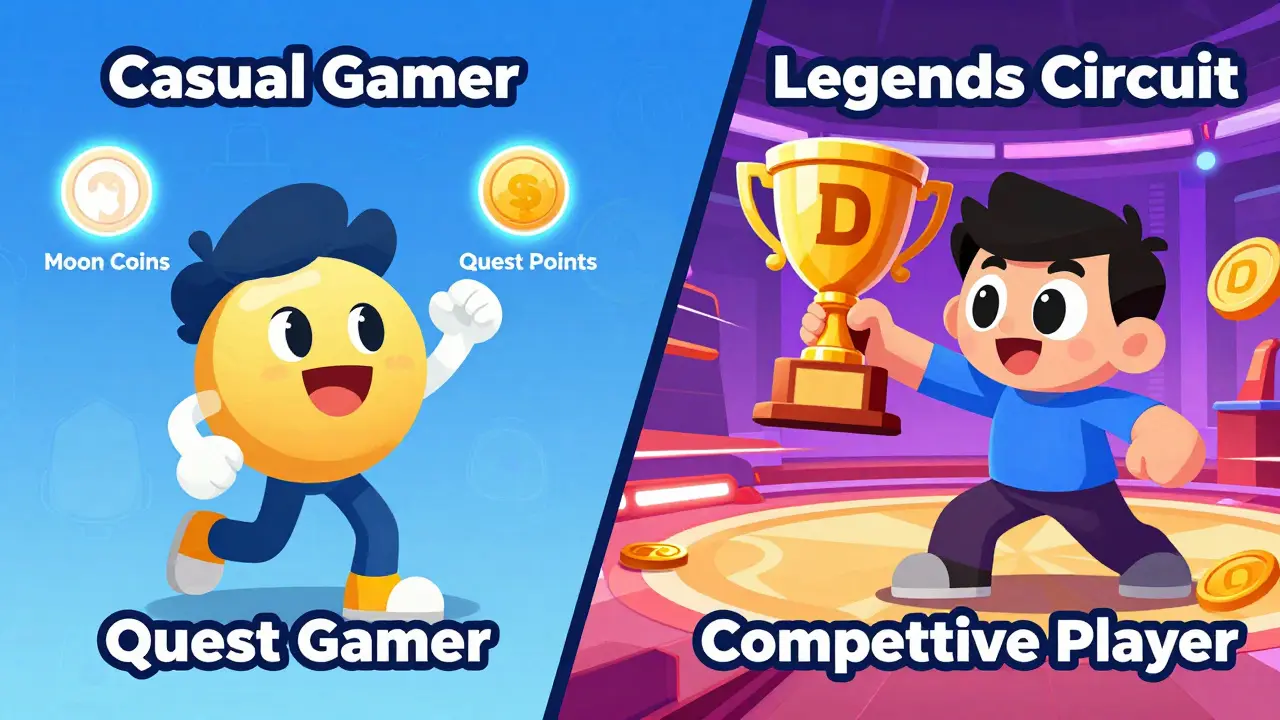
One of the smartest moves the network made was integrating the Legends Circuit is a layered tournament structure in Dalarnia Legends that allows players to advance from daily events to a global final. This prevents the airdrop from being dominated only by the top 1% of players. If you're just playing for fun, daily quests still get you tokens. If you're a shark, the competitive path leads you toward the Grand Masters Final, where the stakes are significantly higher.
| Player Type | Primary Goal | Main Reward Source | Expected Outcome |
|---|---|---|---|
| Casual Gamer | Daily Quests | Quest Points & Moon Coins | Consistent, smaller (D) airdrops |
| Competitive Player | Legends Circuit | Tournament Prizes | High-volume (D) token rewards |
| Ecosystem Explorer | Cross-game tasks | Seasonal Milestones | Diverse asset portfolio |
The Utility of the (D) Token
A token is only as good as what you can do with it. The (D) token isn't just a reward to be dumped on an exchange; it's the fuel for the entire infrastructure. If you're holding (D), you have a key to several different financial and gaming activities.
First, there's the governance aspect. Holding the token gives you a say in how the network evolves. Beyond that, it's used for marketplace transactions-buying and selling assets across the different games in the ecosystem. If you're more interested in the financial side, you can use Bitget Earn is a financial services platform providing staking and lending products for various cryptocurrencies including the (D) token. through staking and lending to generate passive income while you wait for the next gaming season.
For those who prefer active trading, the (D) token often shows volatility that attracts arbitrageurs. With a circulating supply of roughly 640 million tokens, the market remains liquid enough for both small-scale gamers and larger investors to move in and out of positions via spot trading or swap mechanisms.
Strategic Tips for Maximizing Your Airdrops
If you want to squeeze the most value out of the DAR Open Network, don't just stick to one game. The system is designed to reward "bridge-builders"-players who explore multiple titles. Because the infrastructure is chain-agnostic, moving your assets between games is easy, and doing so often triggers specific cross-game rewards.
Here is a quick strategy for new users:
- Focus on Daily Streaks: Quest Points often scale with consistency. Missing a day can hurt your seasonal ranking.
- Refer and Earn: Use the Assist2Earn programs. Bringing friends into the ecosystem usually grants a bonus in (D) tokens.
- Leverage Learn2Earn: Before jumping into high-stakes tournaments, complete the educational modules to get a head start on your token balance.
- Monitor the Seasonal Reset: Each four-week season is a fresh start. If you struggled in one, adjust your strategy for the next reward pool.
Avoid the mistake of ignoring the Moon Coins. While (D) tokens are the big prize, Moon Coins provide the in-game power needed to win the tournaments that eventually lead to more (D) tokens. It's a circular economy: use Moon Coins to win, and win to get (D) tokens.
What's Next for the DAR Ecosystem?
The road ahead focuses on AI integration. The network is moving toward using AI to optimize how rewards are distributed, ensuring that the "grind" feels fair and that botting is minimized. We can also expect the reward pools to grow as more games integrate into the DAR Open Network. As the user base expands, the utility of the token in the marketplace will likely increase, potentially stabilizing the price volatility seen in early 2026.
How do I qualify for the (D) token airdrop?
You qualify by participating in the Web3 Quest System. This involves completing daily, weekly, and seasonal quests across the games within the DAR Open Network. Your rewards are based on the number of Quest Points you accumulate during a four-week season.
What is the difference between Quest Points and Moon Coins?
Quest Points are a tracking mechanism used to determine your share of the (D) token airdrop pool. Moon Coins are an actual in-game currency used for immediate purchases and utility within the games themselves.
Is the DAR Open Network tied to a specific blockchain?
No, it is a chain-agnostic infrastructure. This means it is designed to work across various blockchain networks, reducing technical barriers for players and allowing assets to be shared across different web3 applications.
Where can I trade or stake my (D) tokens?
You can trade (D) tokens via spot trading or use platforms like Bitget Convert and Bitget Swap. For passive income, Bitget Earn provides staking and lending options for (D) token holders.
What happens if I miss a season of the Quest System?
The Quest System operates in four-week cycles. If you miss a season, you miss the specific airdrop pool for that period, but you can start fresh in the next season to begin earning Quest Points again.
Next Steps for Gamers
If you're just starting, your first move should be to connect your wallet to the DAR Open Network portal and browse the available game titles. Don't go all-in on one game immediately; spend the first week exploring three or four different titles to see where your skill set fits best. This diversification is the key to maximizing those early Quest Points.
For those already holding tokens, keep an eye on the seasonal announcements. The reward pool sizes can change based on ecosystem growth, and timing your staking periods around these launches can help you balance risk and reward effectively.