Crypto Security Assessment Tool
How Secure Is Your Crypto Storage?
Answer these questions to assess your security posture and identify critical vulnerabilities.
Security Assessment
Security Assessment Results
Key Vulnerabilities
When you hold cryptocurrency, you don’t actually own a coin sitting in a digital vault. You own a private key-a long string of letters and numbers that proves you’re the only person who can spend that money. Lose it, and your Bitcoin, Ethereum, or any other asset is gone forever. Get it stolen, and someone else can drain your wallet in seconds. So the real question isn’t just can private keys be hacked or recovered-it’s how likely it is, and what you can actually do about it.
Private Keys Can Be Hacked-Here’s How
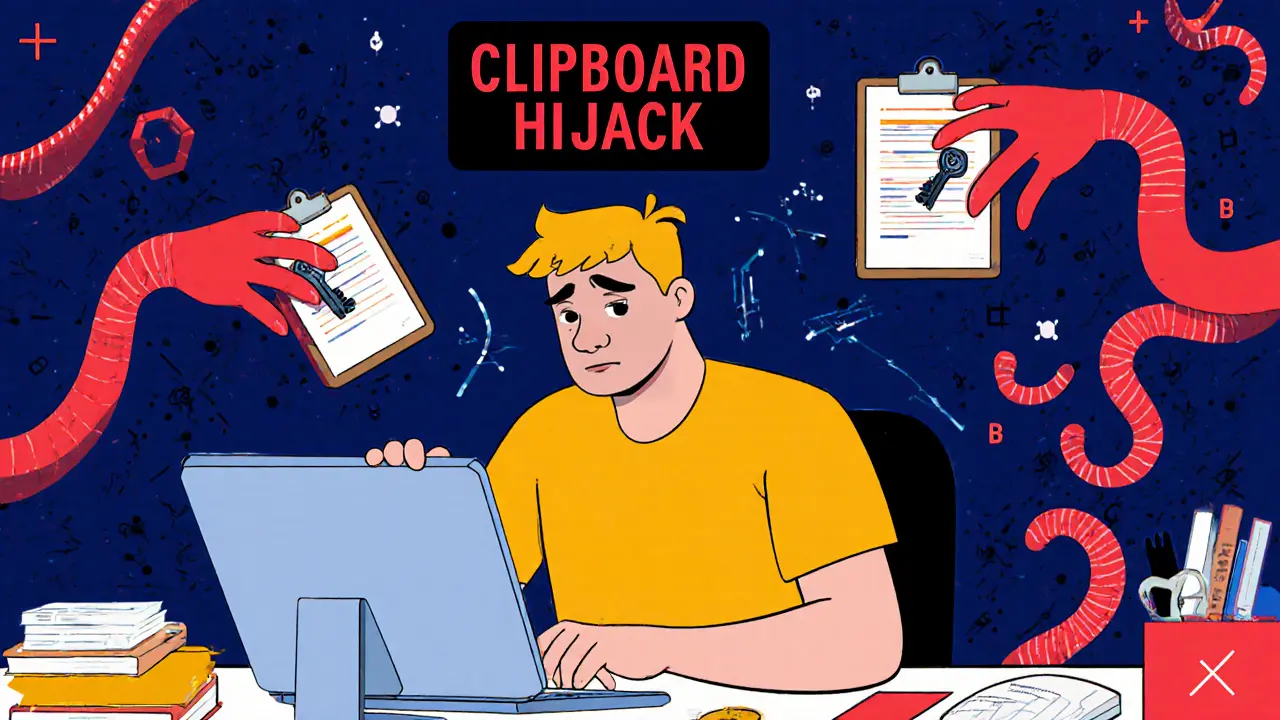
Yes, private keys can be stolen. Not because the math behind them is broken-because it’s not-but because people make mistakes. The private key itself is a 256-bit number, impossible to guess by brute force. But if you copy it into a clipboard, paste it into a phishing site, or store it on a computer connected to the internet, you’ve handed it over on a silver platter. Clipboard hijacking is one of the most common tricks. Malware watches what you copy. You copy your private key to back it up? The malware swaps it for a hacker’s key. You think you’re saving your wallet. You’re actually giving away your funds. A 2024 report from Bitdefender showed over 12,000 confirmed cases of clipboard malware targeting crypto users in just six months. Public Wi-Fi is another weak spot. Connecting to a coffee shop network to check your balance? Someone on that same network can intercept unencrypted traffic. Even if you’re not typing your key, wallet apps sometimes send metadata that reveals your wallet address-and if they’re not properly secured, they can be tricked into signing transactions without your knowledge. Then there’s phishing. Fake wallet websites that look identical to MetaMask, Trust Wallet, or Ledger. You enter your seed phrase thinking you’re logging in. Instead, you’re feeding it to a server in a basement somewhere. These sites are so convincing, even experienced users get caught.Can You Recover a Lost or Hacked Private Key?
Here’s the hard truth: if you lost your private key and don’t have a backup, there’s no way to recover it. Not by a hacker. Not by a government. Not by some fancy AI tool you found on YouTube. The blockchain is designed so that private keys are the only way to access funds. No central authority holds a master key. No reset button exists. If you don’t have the key or the seed phrase, your coins are locked forever. Chainalysis estimates that around $140 billion in Bitcoin is permanently inaccessible because people lost their keys or forgot their recovery phrases. Some companies claim they can recover hacked wallets. Names like Xpress Hacker Recovery or CryptoRescue pop up in search results. They promise to trace stolen funds, freeze transactions, or reverse transfers. Don’t fall for it. These services are almost always scams. They’ll ask for a fee upfront, then disappear. Or worse-they’ll ask for your remaining private key to "help you," and then steal everything. The only legitimate recovery method is the one you set up before anything went wrong: your seed phrase.Seed Phrases Are Your Lifeline
Every modern wallet-whether it’s MetaMask, Ledger, or Trezor-gives you a 12- or 24-word recovery phrase when you first set it up. This isn’t just a backup. It’s a complete copy of your private key, written in plain English. If you lose your phone, your laptop, or your hardware wallet, you can plug those words into any compatible wallet and get full access again. But here’s the catch: if you lose the seed phrase, you lose everything. No exceptions. That’s why storing it properly matters more than anything else. Writing it on a sticky note and leaving it on your desk? That’s asking for trouble. Taking a photo of it and saving it in your cloud gallery? That’s just as dangerous. The safest way? Write it on metal. Use a steel plate designed for crypto backups. Keep it in a fireproof safe. Or split it into two parts and give one to a trusted family member who doesn’t use crypto. Some wallets even support social recovery-where you name 3 friends, and any 2 of them can help you regain access. No single person can steal your funds alone.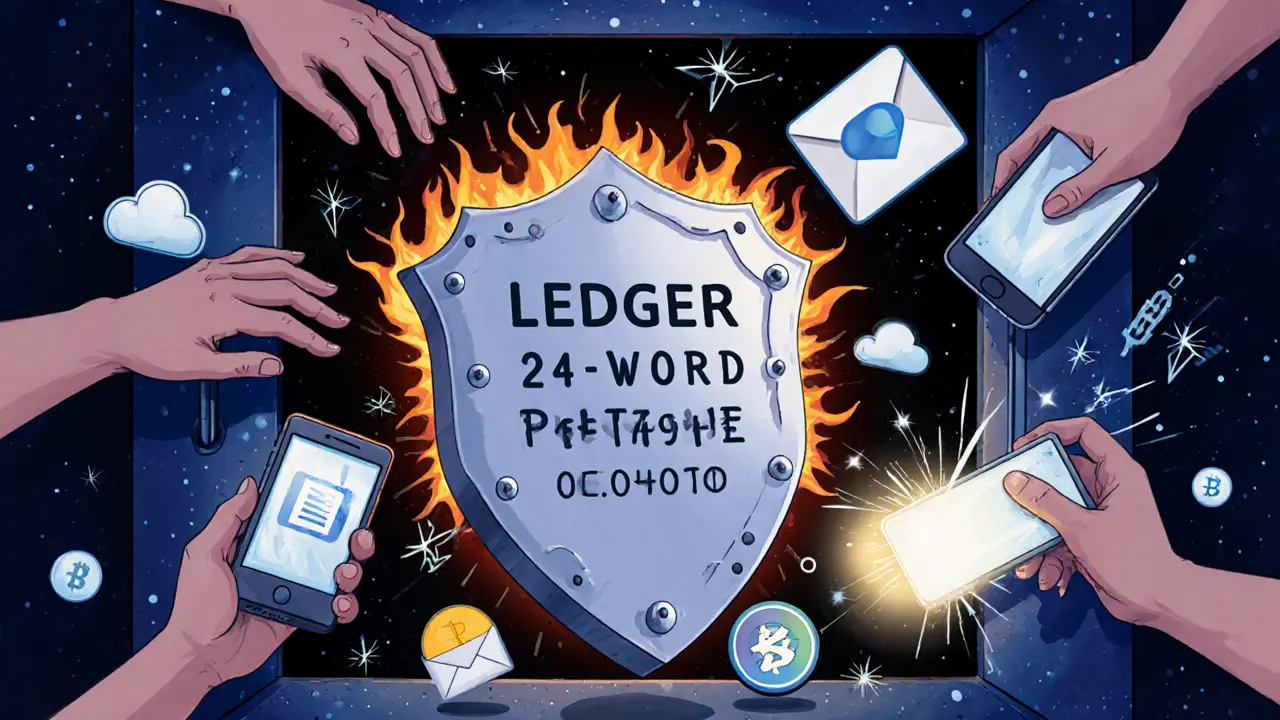
Hardware Wallets: The Best Defense
If you hold more than a few hundred dollars in crypto, you should use a hardware wallet. Devices like Ledger or Trezor store your private key offline, inside a secure chip. Even if your computer gets infected, the key never leaves the device. As of July 2025, Ledger introduced the Recovery Key-a small NFC-enabled card that stores your 24-word phrase inside a PIN-protected secure element. You don’t need to memorize the words. You don’t need to write them down. You just tap the card with your phone or computer to restore access. It’s still offline. It’s still secure. But it’s way easier than handling a piece of paper. This isn’t magic. It’s just better engineering. The private key still can’t be recovered without the PIN. But now, losing the card doesn’t mean losing your money-if you still have the PIN and a backup card.What to Do If You Think Your Wallet Is Hacked
If you suspect your wallet was compromised, act fast:- Stop using the device immediately. Unplug it from the internet.
- Check your transaction history. Did any unknown addresses receive funds?
- Move any remaining assets to a new wallet-using a fresh seed phrase on a clean device.
- Never reuse the old private key or seed phrase.
- Report the incident to the wallet provider if they offer support.
- Scan your computer for malware.
- Change passwords on any linked accounts (email, exchange logins).
- Consider freezing your identity if personal data was exposed.

Best Practices to Never Lose Your Private Key
Here’s what actually works:- Never type your private key or seed phrase into any website-not even one that looks real.
- Never copy it to your clipboard. Ever.
- Never store it in a cloud folder, email, or messaging app.
- Always use a hardware wallet for anything over $500.
- Write your seed phrase on metal, not paper.
- Store backups in separate physical locations.
- Test your recovery process once a year. Try restoring your wallet on a new device. Make sure the words still work.
Why This Matters More Than You Think
Losing a private key isn’t like losing a password. You can reset your email. You can call your bank. But with crypto? If you don’t have the key, you don’t have anything. That’s why the $140 billion in lost Bitcoin isn’t just a statistic-it’s a warning. Every new person buying crypto today needs to understand this: security isn’t optional. It’s the foundation. The technology behind Bitcoin and Ethereum is brilliant. But if you don’t protect your key, none of it matters. The future of crypto isn’t about bigger blockchains or faster transactions. It’s about making recovery simple, secure, and foolproof. Hardware wallets with NFC, social recovery, and metal backups are the next step. But until you take personal responsibility, you’re still playing Russian roulette with your money.Frequently Asked Questions
Can a private key be guessed or brute-forced?
No. A private key is a 256-bit number, meaning there are more possible combinations than stars in the observable universe. Even with the world’s most powerful supercomputer, it would take billions of years to guess one. The only way hackers get private keys is through human error-phishing, malware, or poor storage.
What’s the difference between a private key and a seed phrase?
A private key is the actual cryptographic code that controls your funds. A seed phrase is a human-readable backup of that key, generated when you set up your wallet. You can use the seed phrase to recreate your private key anytime. Think of the seed phrase as the master password to your private key.
Can I recover my crypto if I lost my seed phrase?
No. If you lost your seed phrase and don’t have a backup of your private key, your funds are permanently inaccessible. No service, tool, or government can recover them. This is by design-cryptocurrency is built to be decentralized and trustless. That means no one, not even the creators, can override your control.
Are hardware wallets completely hack-proof?
No system is 100% hack-proof. But hardware wallets are the most secure option available. They keep your private key offline, and even if your computer is infected, the key never leaves the device. The main risk is physical theft-if someone steals your device and knows your PIN, they can access your funds. That’s why PIN protection and backup phrases are critical.
Can I store my seed phrase in a password manager?
Technically yes, but it’s not recommended. Password managers are secure, but they’re connected to the internet. If your password manager gets hacked, your seed phrase is exposed. It’s safer to use physical backups-metal plates or engraved steel-that stay offline and out of reach from remote attackers.
What happens if someone else gets my seed phrase?
They can take all your cryptocurrency. The seed phrase gives full control over your wallet. Once they have it, they can transfer your funds to their own wallet. There’s no way to block them. That’s why you should never share it with anyone-not even family members you trust-unless they’re part of a formal recovery plan.
Is it safe to take a photo of my seed phrase?
No. Photos can be stolen from your phone, cloud backup, or email. Even if you delete the photo, it might still exist in hidden system files or backups. Always use physical, offline storage. Metal plates are the gold standard. If you must use digital storage, encrypt it with a strong password and store it on an air-gapped device-like an old laptop with no internet connection.
Can I recover crypto from a hacked exchange?
If your funds were on an exchange when it got hacked, you’re treated like a creditor-not a wallet owner. Exchanges hold your private keys, so you’re relying on their insurance or recovery efforts. Some exchanges reimburse users; others don’t. That’s why it’s risky to keep large amounts on exchanges. Always move crypto to your own wallet where you control the key.
Do I need to back up my private key if I have a seed phrase?
No. The seed phrase is enough. It’s designed to regenerate your private key. Backing up the private key separately adds no extra security and increases risk-if you store it digitally, you’re just creating another point of failure. Stick to the seed phrase. Keep it safe. Test it once a year.
How often should I test my recovery process?
At least once a year. Buy a cheap, used phone or tablet. Wipe it clean. Install a wallet app. Enter your seed phrase. Check if your balance appears. This confirms your backup still works. It also helps you remember how the process works-so you won’t panic if you ever need to use it in a real emergency.