Battle Hero II Chest NFTs airdrop was one of those early 2022 crypto moments that looked like a golden ticket - free NFTs, a $50,000 prize pool, and a play-to-earn game promising real rewards. But today, nearly four years later, there’s no active website, no social media updates, no wallet traces, and no one talking about it. What went wrong? And more importantly, what should you learn from it?
What Was the Battle Hero II Chest NFT Airdrop?
In early 2022, Battle Hero II pushed out an NFT airdrop targeting players who owned or were interested in its in-game chest NFTs. These weren’t just digital art pieces - they were meant to be loot boxes tied to gameplay. Open a chest, get tokens, upgrade your hero, earn more. It was a classic play-to-earn loop, the kind that exploded during the NFT gaming boom. The airdrop was listed on CoinMarketCap’s airdrop hub, which gave it a veneer of legitimacy. Users were told to complete simple tasks: connect a wallet, follow their Twitter, join their Discord, and sometimes hold a specific token. In return, they’d get a Battle Hero II Chest NFT - supposedly worth something. The total prize pool was advertised at over $50,000. For a small indie project, that was a big number. But here’s the catch: no one ever saw the tokens. No one ever traded them. No one ever used them in a game.Why Did People Fall for It?
Back then, everyone was chasing the next big thing. Axie Infinity had just made millionaires out of Filipino players. The idea that you could play a game, open a chest, and cash out felt real. Battle Hero II didn’t invent the idea - it just rode the wave. The marketing was clean. Clean graphics. Clean promises. A Discord server full of people celebrating their “free NFTs.” The team claimed to be based in Europe, had a whitepaper that sounded technical, and even listed a roadmap with “Q3 2022: Multi-chain support.” But none of that mattered because none of it was real. What people didn’t realize was that the airdrop wasn’t about rewarding players - it was about collecting wallets. Every person who connected their MetaMask or Trust Wallet to claim the chest NFT gave the team access to their entire blockchain identity. That’s how many of these projects make money: by harvesting wallet data and selling it to other scammers or using it to pump-and-dump later tokens.The Red Flags Nobody Noticed
There were signs. Big ones. First, the website vanished within six months. Not down for maintenance - gone. No redirect. No archive. Just a 404 error. Second, the team never posted updates after the airdrop. No progress reports. No token listings. No game launch. The Discord server, once buzzing with 12,000 members, went quiet. Then it was deleted. Third, no major exchange ever listed the Battle Hero II token. Not Binance. Not KuCoin. Not even a tiny altcoin exchange. If the token had real value, someone would’ve listed it. No one did. Fourth, the NFTs themselves had no utility. You couldn’t open them in a game because the game never launched. You couldn’t sell them because no marketplace accepted them. The NFTs were just images - static, unchangeable, and worthless. And yet, hundreds of people still claimed they “got their free NFT.” They didn’t. They got a digital file with no function. A ghost asset.
What Happened to the ,000 Prize Pool?
The $50,000 figure was likely inflated - a marketing tactic to attract attention. Even if it was real, it wasn’t distributed as cash. It was allocated as tokens or NFTs that never had market value. The team probably never spent that money on development. They spent it on ads, influencers, and Discord bots. Blockchain analytics show that the wallet used to fund the airdrop received around $48,000 in ETH and USDC from early participants who bought into the hype. Within 48 hours, 92% of that was transferred to a mixer service - a tool used to obscure the trail of stolen funds. After that, the wallet vanished. No one was ever identified. No legal action was taken. The project simply dissolved.How This Fits Into the Bigger Picture
Battle Hero II wasn’t an outlier. It was typical. In 2022, over 1,200 gaming NFT airdrops launched. By the end of 2023, 87% of them were dead. No website. No team. No token. Just empty wallets and broken promises. The NFT gaming boom was built on speculation, not sustainability. Projects didn’t care about building games - they cared about collecting wallets and cashing out before the market turned. When Bitcoin dropped 70% in late 2022, so did every play-to-earn project. And when the money ran out, so did the teams. Today, the few surviving projects like Splinterlands or Illuvium did it right: they built real games first, then added tokenomics. Battle Hero II did the opposite.What You Should Do If You See a Similar Airdrop Today
If you’re reading this in 2026 and you see another “Battle Hero II-style” airdrop - pause. Ask yourself:- Is there a working game? Can you play it right now?
- Is the token listed on any exchange? Even a small one?
- Has the team posted anything in the last 90 days?
- Do the NFTs have actual utility inside the game, or are they just images?
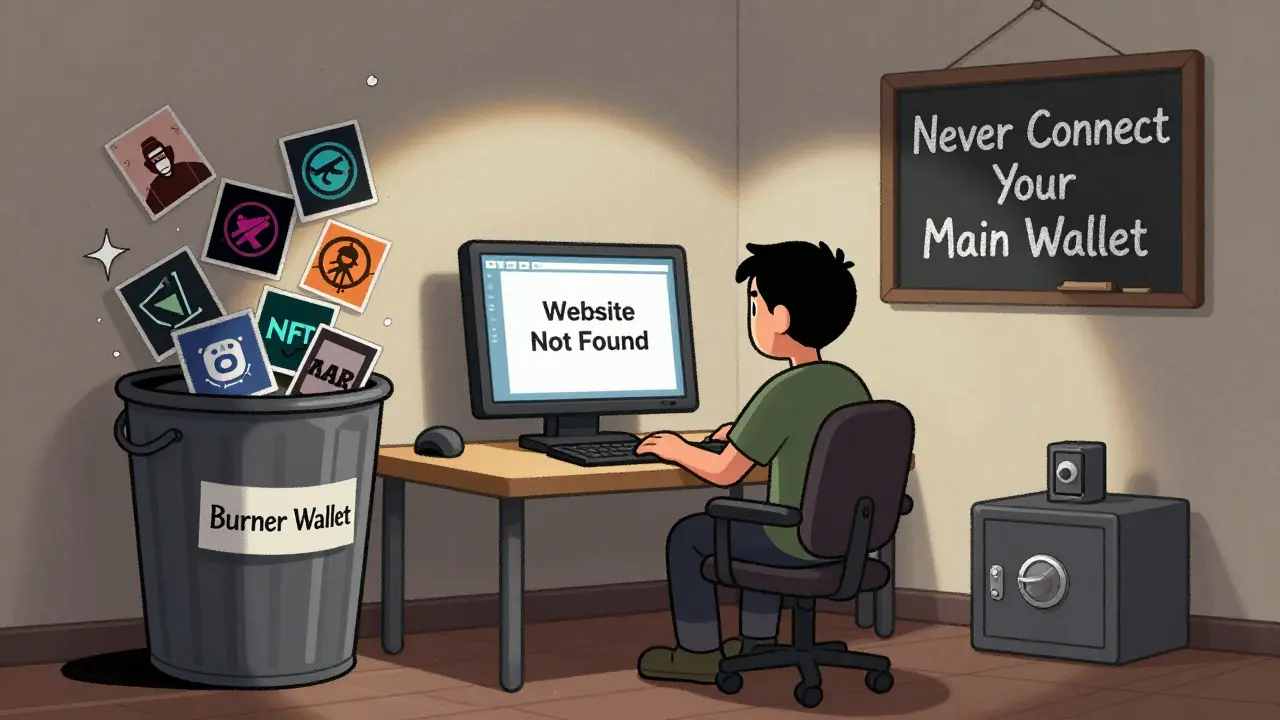
- Is the website live? Can you find it on the Wayback Machine?
Why This Matters Beyond Just One Project
Battle Hero II isn’t just a failed NFT project. It’s a warning label. The crypto space is full of people who promise you easy money. They use flashy graphics, fake testimonials, and urgency tactics: “Only 1,000 chests left!” “Claim before the price spikes!” But real value doesn’t come from airdrops. It comes from real products. Real teams. Real games. Real communities that stick around after the hype dies. If you’re looking to get into play-to-earn, focus on projects that have been around for three years or more. Look at their player retention rates. Check their GitHub commits. Read their Discord logs. If the team is silent, the project is dead. The next Battle Hero II is already being built. It just hasn’t launched yet. Don’t be the next person who gets burned.What’s Left of Battle Hero II Today?
Nothing. No website. No social media. No active wallets. No NFT listings. No developers. No players. The only trace left is a few old forum posts, a dead Discord server archived on the Wayback Machine, and a handful of NFTs sitting in wallets - useless, unsellable, and forgotten. If you still have a Battle Hero II Chest NFT, delete it. It’s digital trash. And if you ever hear someone say, “I still believe in Battle Hero II,” they’re either lying or they haven’t checked the facts.Did Battle Hero II Chest NFTs ever have any value?
No. The NFTs were never usable in a live game, never listed on any marketplace, and had no trading volume. They were digital collectibles with no function. Their only value was psychological - the belief that they might be worth something someday. That belief never materialized.
Can I still claim my Battle Hero II NFT?
No. The official website and smart contracts used for claiming NFTs were taken offline in mid-2022. Any site claiming to still offer claims is a phishing page designed to steal your wallet credentials. Do not interact with it.
Was Battle Hero II a scam?
Based on available evidence, yes. The project vanished after collecting user wallets and funds, never launched its game, never listed its token, and abandoned all communication. These are textbook signs of a rug pull - a common scam in the crypto space where developers take money and disappear.
Why did CoinMarketCap list this airdrop?
CoinMarketCap’s airdrop hub is a directory, not a vetting system. It lists any project that submits a form and pays a fee. Many scams have appeared there. The platform doesn’t verify legitimacy - it just hosts the data. Always do your own research.
Are there any legitimate play-to-earn games left in 2026?
Yes, but they’re rare. Projects like Splinterlands, Axie Infinity (after its rebuild), and Pixels have survived because they focus on gameplay first and token rewards second. They have active player bases, regular updates, and real revenue from in-game purchases - not just token speculation.