
If you're trading on the Base blockchain and haven't heard of Aerodrome Finance, you're missing out on where half the liquidity lives. It’s not just another swap site; it’s the heartbeat of Ethereum’s Layer 2 scaling solution. But is it worth your time and capital? Let's break down what makes this platform tick, how its unique tokenomics work, and whether it beats competitors like Uniswap for your specific needs.
What Exactly Is Aerodrome Finance?
Aerodrome Finance is a decentralized exchange (DEX) and automated market maker (AMM) that serves as the primary liquidity hub on the Base network. Think of it as the engine room for DeFi on Base. Founded by Alexander Cutler and the team behind Velodrome Finance, it launched on August 31, 2023. If you know Velodrome on Optimism, you already understand the DNA here. Aerodrome is essentially Velodrome V2 adapted for Base, bringing proven mechanics to a newer, faster chain.
The platform isn't just about swapping tokens. It uses a sophisticated dual-token system. There's AERO, the standard ERC-20 token used for governance and rewards, and veAERO, an ERC-721 NFT-like token you get by locking up AERO. This setup drives long-term commitment from users, which stabilizes the ecosystem. With a Total Value Locked (TVL) hovering around $1.24 billion recently, Aerodrome holds roughly 50% of all value on Base. That’s massive dominance for a protocol less than three years old.
How the Technology Works Under the Hood
Aerodrome didn’t reinvent the wheel; they upgraded it. The architecture borrows the best bits from Uniswap V3, Curve, and Velodrome V2. Why does this matter to you? Because it means better capital efficiency and lower slippage when you trade.
Here’s the tech stack in plain English:
- Concentrated Liquidity: Unlike older AMMs where liquidity is spread thin across all prices, Aerodrome lets providers focus their funds where trades actually happen. This reduces the amount of capital needed to provide deep liquidity.
- Stable and Volatile Pools: You can trade stablecoin pairs with minimal fees or volatile crypto pairs with higher fee tiers to compensate for risk. The fee structure ranges from 0.01% to 0.3%, which is often cheaper than major competitors.
- Permissionless Gauges: Anyone can create new pools or gauges. You don’t need permission from a central authority to list a new token pair, keeping the platform open and innovative.
This technical foundation allows Aerodrome to generate over $1 million in weekly fees. Those fees aren't just profit for developers; they’re redistributed to liquidity providers and veAERO holders, creating a flywheel effect that keeps people engaged.
Understanding veTokenomics: The Core Differentiator
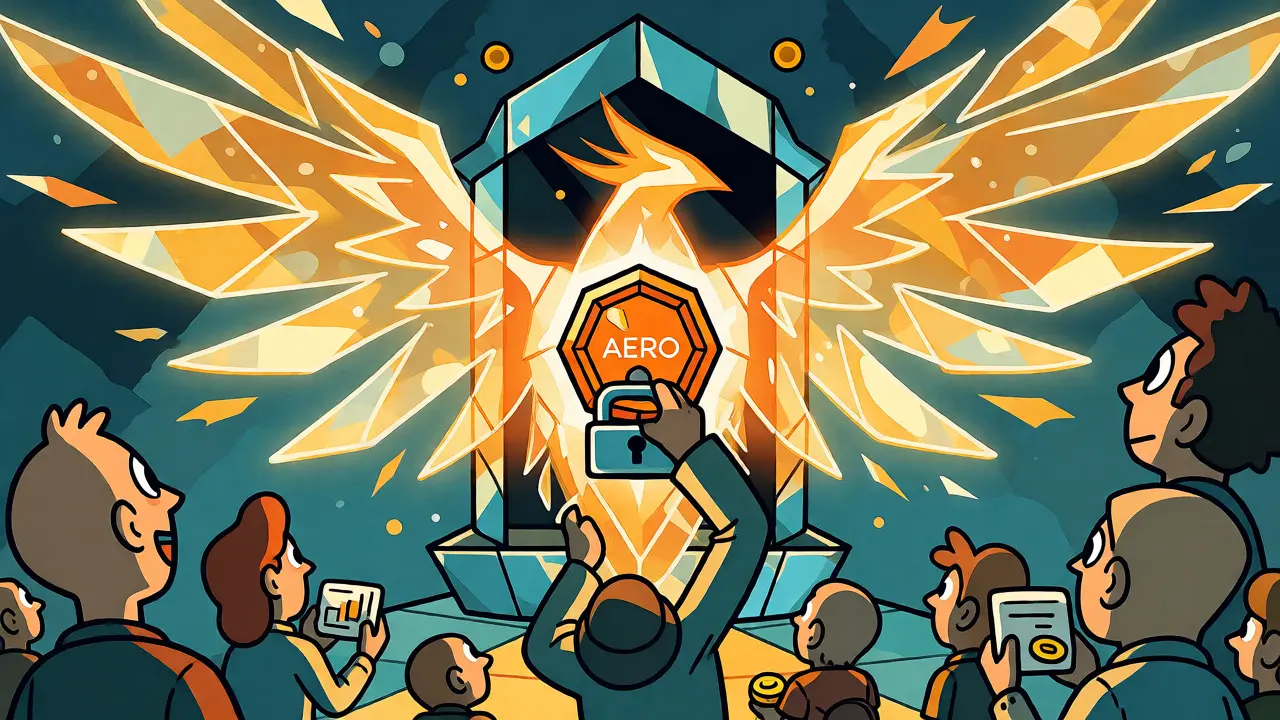
Most exchanges have a governance token that sits idle in your wallet. Aerodrome changes that dynamic through veTokenomics. When you lock your AERO tokens, you receive veAERO. The longer you lock them, the more voting power you get.
Why lock up your tokens? Three main reasons:
- Governance: You vote on which liquidity pools get the most AERO emissions (rewards). This directs liquidity to where it’s most needed.
- Fees: As a veAERO holder, you earn a share of the trading fees generated by the pools you voted for.
- Incentives: By directing emissions, you influence the price action of AERO itself, potentially benefiting your unlocked holdings too.
This system aligns incentives. Instead of dumping tokens after earning rewards, users are encouraged to lock them up to maximize their own returns. It creates a sticky community rather than a mercenary one. However, be warned: understanding this mechanism takes some study. If you’re new to DeFi, the learning curve is steeper here than on a simple swap interface.
Aerodrome vs. Uniswap: Which One Should You Use?
You might wonder why use Aerodrome when Uniswap is everywhere. It comes down to where you want to trade and what kind of returns you seek. Uniswap is the giant, but Aerodrome is the specialist.
| Feature | Aerodrome Finance | Uniswap |
|---|---|---|
| Primary Network | Base (Ethereum L2) | Ethereum, Arbitrum, Polygon, etc. |
| Fee Structure | 0.01% - 0.3% | Flexible tiers (often higher on Mainnet) |
| Liquidity Rewards | High AERO emissions + Fees | Fees only (no native token rewards) |
| TVL (Approx.) | $1.24 Billion | $5.5+ Billion |
| Best For | Yield farming on Base, low-cost swaps | Broad asset access, high-volume ETH trades |
If you’re already using Coinbase Wallet or interacting with Base apps, Aerodrome is almost certainly your best bet due to lower gas costs and higher yield potential. Uniswap remains superior if you need access to obscure tokens not yet listed on Base or if you prefer sticking to Ethereum Mainnet for security reasons.
AERO Token Performance and Market Position
The AERO token has had a wild ride since its launch. Starting at roughly $0.37 in August 2023, it struggled initially, trading below its opening price until early 2024. Then came the surge. By April 2024, it hit $2.00, before correcting down to $0.42 in July. The volatility is real, but so is the growth trajectory.
As of late 2024, AERO reached an all-time high of $2.30. While it closed the year lower, around $1.30, it maintained its position as a top-tier DeFi asset. In March 2025, CoinMarketCap ranked it as the 121st most valuable cryptocurrency. Analysts remain cautiously optimistic. Some forecasts suggest an average trading price of $1.00 for 2025, with potential upside if Base adoption continues to accelerate.
Keep in mind that these predictions depend heavily on market sentiment. Crypto markets are cyclical, and while Aerodrome has strong fundamentals, it’s not immune to broader downturns. Always do your own research before investing significant capital.

User Experience and Community Feedback
Is Aerodrome easy to use? Generally, yes. The interface is clean and intuitive, similar to other modern DEXs. Connecting via MetaMask or Coinbase Wallet is straightforward. Swapping tokens feels fast because Base transactions are cheap and quick compared to Ethereum Mainnet.
However, the complexity lies in the details. If you just want to swap USDC for ETH, you’re fine. If you want to optimize your yield, you need to dive into the gauges, check emission rates, and decide whether to lock your AERO. New users often find the veToken model confusing at first. The documentation is good, but you’ll spend some time reading it to truly understand how to maximize returns.
Community feedback highlights the strong incentive structure as a major plus. Liquidity providers appreciate the consistent AERO rewards. On the flip side, some traders note that while liquidity is deep for major pairs, smaller altcoins might still suffer from slippage compared to centralized exchanges.
Future Outlook and Risks
The future looks bright for Aerodrome, primarily because it’s tied to the success of Base. Coinbase, the company behind Base, is pushing hard for retail adoption. As more users join Base, they naturally flow to the dominant DEX-Aerodrome. Recent integrations and increased TVL trends support this thesis.
But there are risks. Regulatory scrutiny of DeFi protocols could impact operations. Also, competition is fierce. Other Layer 2 chains have their own leading DEXs, and if Base loses momentum, Aerodrome suffers. Technological upgrades are crucial; the team must keep innovating to stay ahead of forks and competitors.
For now, Aerodrome stands as the essential infrastructure for Base DeFi. If you believe in Ethereum’s Layer 2 scaling narrative, Aerodrome is a key piece of the puzzle to watch.
Is Aerodrome Finance safe to use?
Aerodrome Finance uses battle-tested smart contracts inherited from Velodrome V2, which has been audited multiple times. Being on the Base network adds a layer of security backed by Coinbase’s infrastructure. However, as with any DeFi protocol, smart contract risks exist. Users should interact with the official website and verify contract addresses to avoid phishing scams.
How do I buy AERO tokens?
You can buy AERO directly on Aerodrome Finance by swapping ETH or USDC for AERO. Alternatively, many centralized exchanges like Coinbase and Binance list AERO, allowing you to purchase it with fiat currency and withdraw it to the Base network.
What is the difference between AERO and veAERO?
AERO is the liquid ERC-20 token used for trading and governance proposals. veAERO is obtained by locking AERO for a period ranging from one week to four years. veAERO grants voting rights on pool emissions and a share of protocol fees. You cannot trade veAERO freely; it represents locked stake.
Are transaction fees on Aerodrome high?
No, fees are generally low because Aerodrome operates on Base, an Ethereum Layer 2 solution. Swap fees range from 0.01% to 0.3% depending on the pool type. Gas fees for executing transactions are typically a few cents, much lower than on Ethereum Mainnet.
Can I lose money providing liquidity on Aerodrome?
Yes, liquidity providers face impermanent loss, especially in volatile pools. If the price of one token in the pair moves significantly against the other, your portfolio value may decrease compared to simply holding the tokens. However, AERO rewards and trading fees can offset this loss if the volume is high enough.