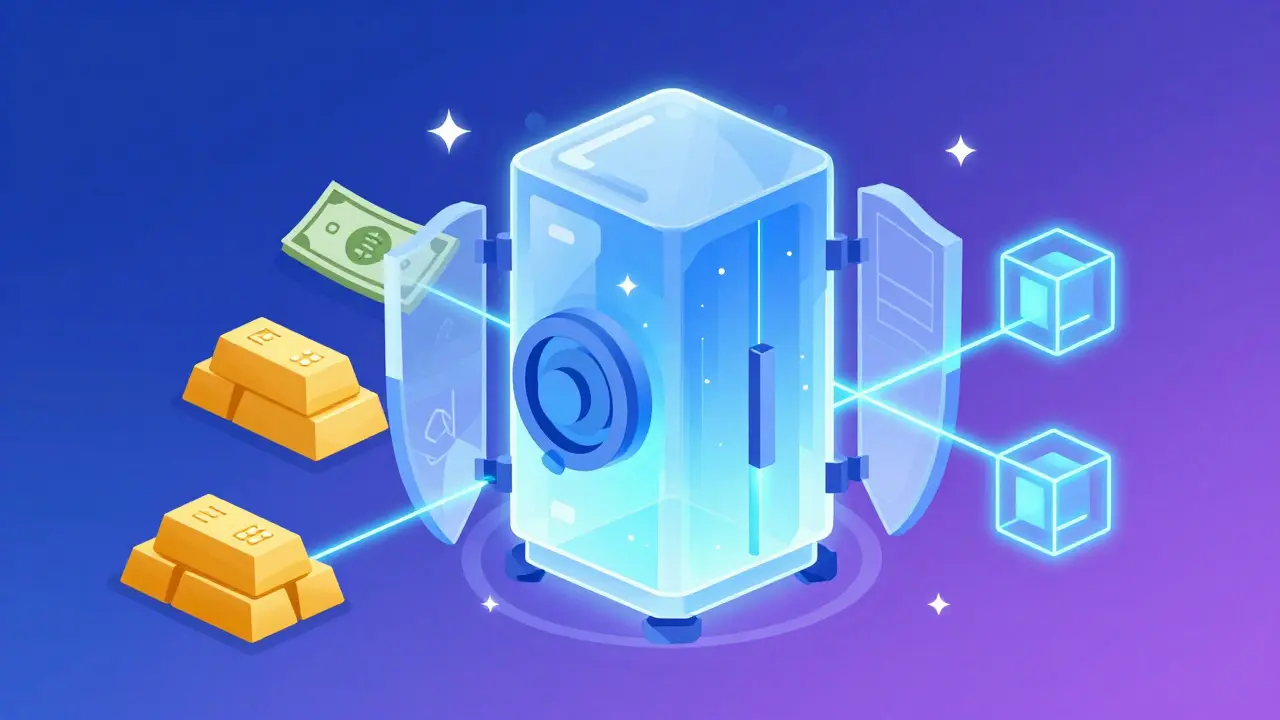
In the crowded world of digital assets, you need tools that do more than just sit in your wallet. That is exactly where RigoBlock is an open-source blockchain protocol designed for secure token management across public blockchains. It operates as a foundational layer for asset holders who want control without the usual complexity. Launched in 2018, this platform has evolved to serve as a bridge between traditional asset management logic and the transparency of decentralized systems. Today, we look at what makes this protocol different from standard tokens and why it remains relevant as of March 2026.
Quick Summary / Key Takeaways
Before we dig deeper, here are the core facts you need about the ecosystem:
- Core Function: Enables users to set up decentralized token pools with custom trading strategies called Smart Pools.
- Multi-Chain Support: Operates on seven EVM-based networks including Ethereum, Arbitrum, and Base.
- Token Utility: The GRG token powers incentives via a Proof-of-Performance algorithm, rewarding operators based on results.
- Governance: Staked GRG grants voting rights over protocol updates and parameter changes.
- Market Context: As of March 2026, it maintains a niche position with specific liquidity characteristics.
What Is the RigoBlock Protocol?
Think of RigoBlock as secure smart vault infrastructure. Most people associate crypto with swapping coins on a decentralized exchange, but managing those assets securely is a different challenge entirely. This protocol provides the technology to create "Smart Pools." These pools allow anyone to deploy discretionary or programmatic trading strategies in seconds.
The beauty lies in the architecture. Instead of handing your keys to a third party, the protocol lets you define rules for how assets move and interact. It guarantees real-time tracking of owned assets while interacting safely with other DeFi applications. You get the benefits of professional fund management-like automated rebalancing or yield harvesting-without surrendering custody of your private keys. This model emphasizes accessibility, lowering barriers for talented developers who want to build distributed asset management platforms.
Understanding the GRG Token
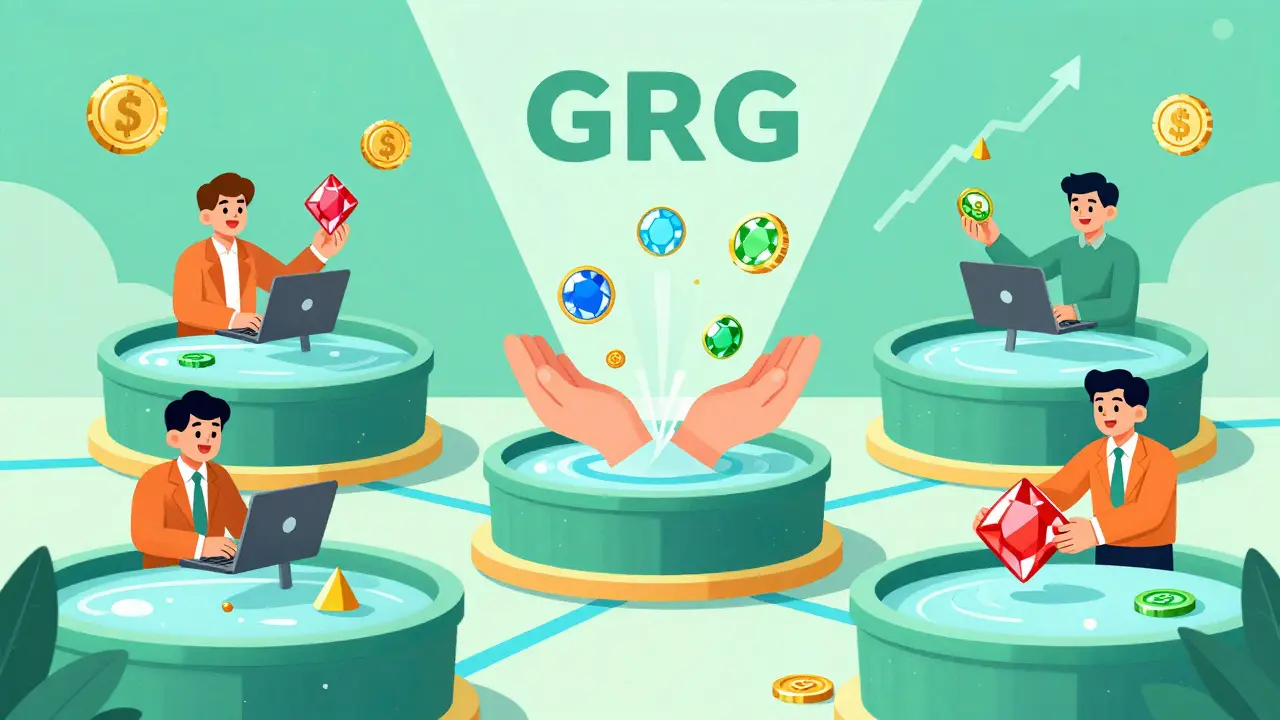
GRG Token is the utility token for the network. Unlike speculative memecoins, this token serves a mechanical purpose within the ecosystem. It is an ERC-20 compliant cryptocurrency deployed on the Ethereum mainnet and bridged to compatible chains. Its primary role is to incentivize behavior.
The system distributes GRG algorithmically rather than through fixed fees. This matters because it shifts the economic model away from charging users directly. Instead, token pool operators earn rewards for providing value. If you run a Smart Pool and it performs well, you earn GRG. This alignment ensures that managers care about the growth of the underlying pool performance, not just taking out fees.
How Proof-of-Performance Works
A critical component of this economy is the Proof-of-Performance algorithm. Imagine you are running a trading strategy. In traditional finance, you might take a 20% performance fee regardless of whether you actually made money. Here, the reward system is revolutionary.
| Mechanism Component | Description | Impact |
|---|---|---|
| Smart Pools Competition | Pools compete annually | Creates efficiency in strategy selection |
| Reward Source | 2% of total GRG supply per year | Limits inflation pressure on tokenomics |
| Staker Participation | Holders help maximize rewards | Passive income opportunity for community |
This table highlights how value flows. The total supply allocated to rewards caps at 2% annually. This cap helps prevent runaway inflation, which often kills smaller projects. Active stakers participate in this process by delegating their voting power to the Smart Pools they trust. When you stake GRG, you aren't just parking coins; you are effectively becoming a shareholder in the protocols managed by those operators.
Multi-Chain Network Strategy
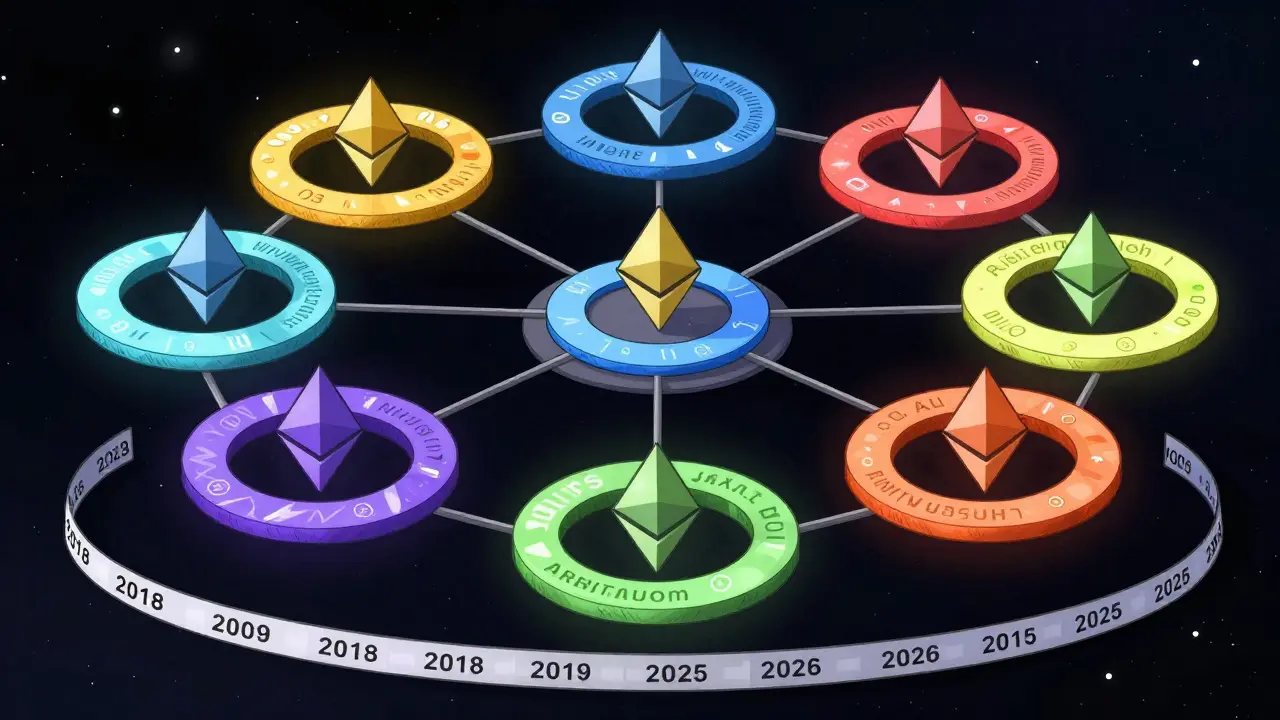
Limiting yourself to one blockchain creates unnecessary friction. RigoBlock solves this by deploying across multiple EVM-compatible networks. This means you can deploy your Smart Pools wherever liquidity exists.
The protocol currently supports seven major networks:
- Ethereum Mainnet
- Arbitrum One
- Optimism
- Polygon
- BNB Smart Chain
- Base
- Additional compatible chains
This flexibility is huge for cost management. If gas fees on Ethereum spike, you can route your asset management activities to Layer 2 solutions like Arbitrum or Base. The modular architecture ensures that developers building on top of RigoBlock inherit these connections automatically.
Current Market Status (March 2026)
Data drives decisions, especially in volatile markets. Looking at the landscape as of late March 2026, RigoBlock sits as a specialized project within the broader DeFi sector. While it isn't a top-tier giant by market capitalization, its presence is distinct due to its operational longevity.
| Market Metric | Value |
|---|---|
| Circulating Supply | 6.6 Million GRG |
| Market Cap | $750.8K |
| Total Value Locked (TVL) | $41.75K |
| Trading Volume (24h) | $2.4 |
| All-Time High | $8.6876 |
Price action shows variations between $0.85 and $0.95 across different exchanges. Liquidity is spread primarily across Decentralized Exchanges like Uniswap V3 and V4 on various chains. Lower volumes relative to the market cap suggest that holding periods might be longer for many participants compared to high-churn trading tokens.
Rankings vary significantly depending on the tracker. CoinGecko ranked it lower by market cap, while CoinMarketCap showed a different positioning. This discrepancy usually comes down to how each platform handles liquidity depth and active listing verification. For an investor, this signals that you are dealing with a mature asset but one that operates in a narrower segment of the industry.
History and Development Timeline
To understand where the project is going, we need to see where it started. The initial coin offering happened between December 2018 and January 2019. At that time, the price was approximately $1.74953 USD per token. They raised a hard cap of $10 million USD, a significant amount for that period.
The protocol has lived since 2018. Surviving the crypto winters of 2019, 2022, and beyond proves resilience. Many projects die early when liquidity dries up. RigoBlock continued to maintain its infrastructure, allowing developers to build on top of it even when hype cycles faded. This longevity gives the team credibility that newer launches lack. You know the core engineering has been battle-tested for years.
Where to Trade and Hold
When you decide to engage with the token, liquidity is key. You won't find GRG on every centralized exchange. The primary activity happens on DEXs. Look for pairs like GRG/ETH or GRG/WETH.
You will find these pairs available on Uniswap V3 and V4 deployments across the supported chains listed earlier. Always verify the contract address before connecting your wallet to avoid scams mimicking the token. Security in DeFi depends heavily on double-checking these details manually.
Frequently Asked Questions
Is RigoBlock a security or a utility token?
RigoBlock classifies the GRG token as a utility token. It powers governance, staking rewards, and protocol access fees. Investors should always consult local regulations regarding their status in their jurisdiction.
Can I create my own Smart Pool?
Yes, the protocol allows users to deploy discretionary or programmatic strategies. Deployment costs are designed to be minimal, enabling rapid setup without intermediaries.
How do I earn passive income with GRG?
By staking your tokens. Actively staked GRG grants voting power and allows you to share in the rewards generated by Smart Pools through delegation.
What chains support the protocol?
It supports Ethereum, Arbitrum, Optimism, Polygon, BNB Smart Chain, Base, and other EVM-compatible networks.
Is there a limit on token inflation?
Rewards are capped at 2% of the total GRG supply per year, helping manage inflation expectations compared to models with unlimited minting.