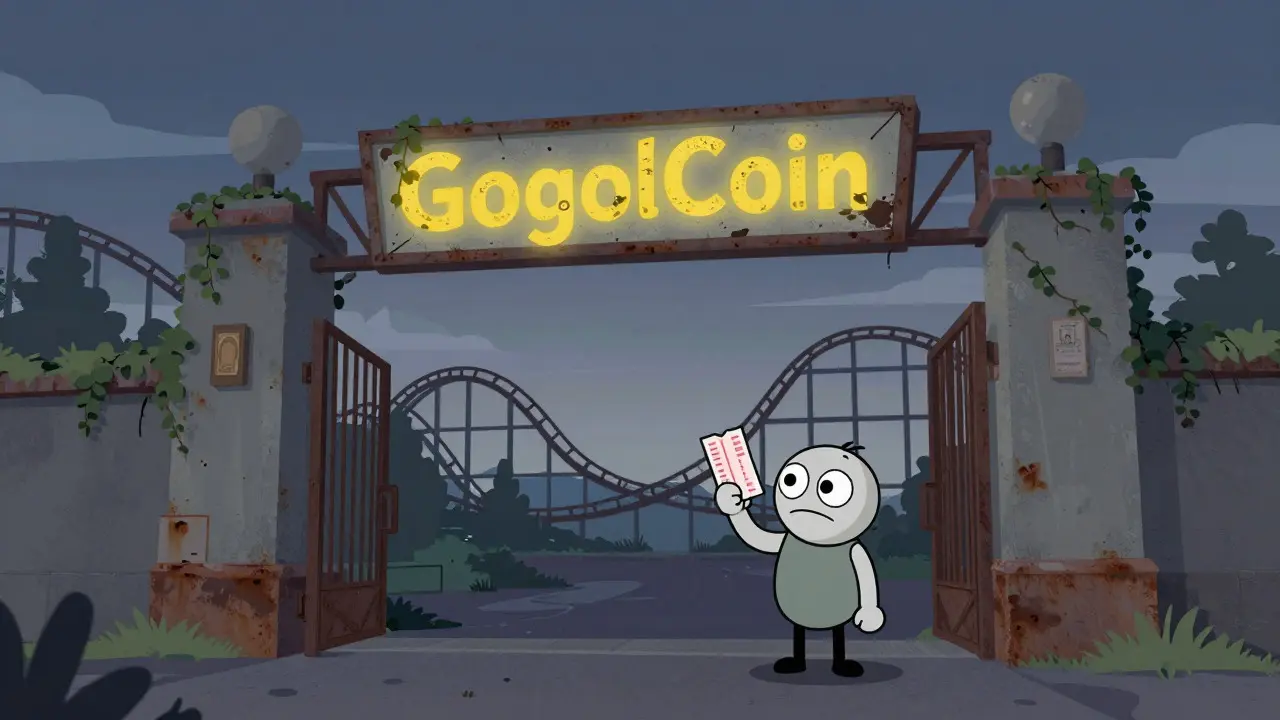
Imagine buying a ticket to a theme park that promised roller coasters, water slides, and live concerts. You hand over your money, but when you arrive, the gates are locked, the rides are rusted shut, and the staff has vanished. That is exactly what holding GogolCoin feels like in mid-2026.
If you stumbled upon GogolCoin (GOL)a cryptocurrency token launched in 2021 on the Ethereum blockchain with ambitious real-world impact goals recently, you might be wondering why it’s still showing up on some exchanges despite having zero actual users. The short answer? It’s a textbook example of what experts call a "zombie token."
The Promise vs. The Reality
Back in 2021, GogolCoin made big waves. Founded by Feras Abu-Hdaib and Soufian Mankou, the project claimed it wasn’t just another meme coin or speculative asset. Its mission statement was lofty: to "impact Lives with Digital Currency." The whitepaper promised an ecosystem that would support agriculture, renewable energy, poverty relief, and even war relief organizations worldwide. It sounded noble. It sounded impactful.
Fast forward to July 2026, and the reality is starkly different. According to data from major tracking platforms like CoinGecko and Binance as of January 2026, GogolCoin has a circulating supply of exactly zero. Yes, you read that right. Out of a total fixed supply of 295,000,000 GOL tokens, not a single one is actively being used for transactions in the way a currency should be.
This creates a bizarre economic paradox. How can a currency impact the physical world if no one can actually spend it? Market analyst James Wang, who wrote extensively on this phenomenon in his 2025 book Crypto Tokens: Utility vs. Speculation, categorizes GOL as a "zombie token." He defines these as projects that have a fixed supply but complete absence of circulation, rendering them functionally useless for any transactional purpose.
Technical Breakdown: What Is GOL Under the Hood?
To understand why GOL persists despite its lack of utility, we need to look at its technical structure. GogolCoin operates as an ERC-20 tokena standard protocol for creating smart contracts on the Ethereum blockchain. This means it lives on the Ethereum network, using the contract address 0x083d41d6dd21ee938f0c055ca4fb12268df0efac.
Technically, the code isn't broken. Blockchain security researcher Dr. Elena Rodriguez verified the contract on Etherscan and noted that it implements all required ERC-20 functions correctly: `balanceOf`, `transfer`, `allowance`, `approve`, and `transferFrom`. The license is MIT, which is standard and open-source friendly. There are no obvious security vulnerabilities in the code itself.
However, code alone doesn't make a community. Here is the critical issue: there is no evidence of integration with the promised "Metagol" platform or any other real-world infrastructure. Dr. Rodriguez’s assessment highlighted that there have been zero transactions to charitable organizations or project-related addresses in the past 12 months. The bridge between the digital token and the physical world promises simply doesn't exist.
| Metric | Value / Status | Implication |
|---|---|---|
| Total Supply | 295,000,000 GOL | Fixed cap; no inflation, but also no new issuance mechanism. |
| Circulating Supply | 0 GOL | No active market utility; cannot be spent or widely traded. |
| All-Time High Price | $32.35 (Jan 8, 2022) | Peak speculation phase; likely manipulated due to low liquidity. |
| Current Price Range | $0.0007 - $0.0019 | High discrepancy across exchanges indicates illiquidity and slippage risk. |
| Market Cap | $0.00 | Effectively defunct as a tradable asset class. |
| Development Activity | None since May 2022 | GitHub commits stopped; team profiles disconnected. |

The Price Illusion: Why Numbers Vary So Much
If you check different exchanges, you’ll see confusing price tags. Coinbase might list GOL at around $0.0008, while LBank shows it near $0.0019. In the early days of 2026, prices fluctuated wildly with tiny volumes. Why does this happen?
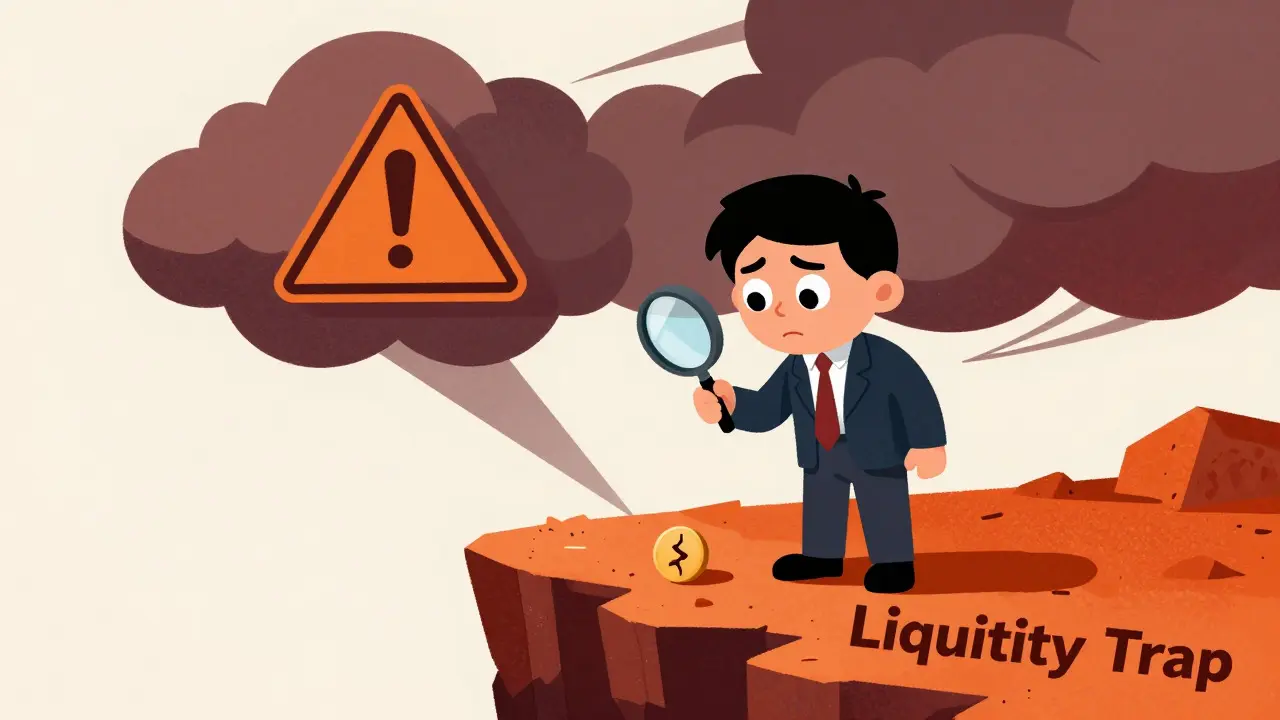
It comes down to liquidity. With a 24-hour trading volume hovering around $150 across all platforms, GOL is essentially a ghost town. When volume is this low, a single small buy order can spike the price artificially, and a small sell order can crash it. This is known as high slippage.
Cryptocurrency educator @CryptoTruths pointed out on Twitter in January 2026 that the all-time high of $32.35 was likely achieved through wash trading or manipulation on illiquid exchanges. Today, the Fully Diluted Valuation (FDV) sits at a mere $201,543, according to CoinGecko. While that sounds like a number, it represents a theoretical value based on tokens that aren't even moving.
Compare this to established Ethereum ecosystem tokens. In January 2026, while the broader crypto market rose by 2.8% and Ethereum-based tokens surged by 12.7%, GogolCoin dropped by nearly 12%. It is significantly underperforming every relevant benchmark.
User Experience: A Dead End
What happens if you try to engage with the project today? The user experience is frustrating and indicative of abandonment.
- Website Status: As of January 2026, the official site (gogolcoin.com) displays a "Site Under Construction" message. Wayback Machine archives confirm this has been the case for months.
- Community Support: Trustpilot reviews average a dismal 1.2 out of 5 stars. Common complaints include six-month waits for customer support responses and unverified claims of partnerships with UN agencies.
- Social Media: The Telegram channel, once boasting 2,300 members in March 2022, has dwindled to fewer than 50 active users. SocialBlade analytics show zero activity in the last six months.
- Reddit Sentiment: On r/CryptoCurrency, posts warning against GOL receive high upvotes. User 'CryptoWatcher2024' noted that team photos appear to be stock images and that links to their "real-world impact" projects lead to dead ends.
The learning curve for potential users is irrelevant because there is nothing to learn-the system is offline. Even attempting to buy the token is risky. Binance documentation explicitly states that GOL cannot be purchased or traded due to zero circulating supply, contradicting smaller exchanges like LATOKEN that still list it for speculative nibbles.
Regulatory Risks and Future Outlook
Is GogolCoin safe? From a regulatory standpoint, it’s sitting in a dangerous gray area. The U.S. Securities and Exchange Commission (SEC) included GogolCoin in its January 2026 warning list for "tokens with unfulfilled utility promises and questionable distribution practices."
This matters because it suggests future scrutiny. If regulators decide to crack down on zombie tokens that misled investors during their 2021 hype cycle, holders could face legal complexities. Currently, the founders' LinkedIn profiles show no connection to the project since 2023, implying they have moved on to other ventures.
Industry analysts are unanimous in their pessimism. CoinDesk’s "Zombie Token Report" from January 2026 assigned GogolCoin less than a 1% probability of ever achieving meaningful circulation. Messari, a leading blockchain research firm, categorized it in their "Abandoned Projects" database with an "F" viability score.
In the broader context of the crypto market, GOL is part of a larger trend. CoinGecko’s 2025 Year-End Report revealed that approximately 18% of all ERC-20 tokens-roughly 14,000 assets-have zero circulating supply. Of those, 92% showed no development activity for over a year. GogolCoin fits this pattern perfectly.
Should You Buy GogolCoin?
Given the facts, the decision is straightforward. GogolCoin lacks utility, community, development, and transparency. The price discrepancies are red flags for liquidity traps, and the regulatory warnings add another layer of risk.
If you are looking for cryptocurrencies that genuinely support social causes, there are established platforms with verifiable track records, active communities, and transparent governance. GogolCoin remains a cautionary tale of what happens when marketing outpaces execution. For now, it serves best as a case study in identifying zombie tokens rather than an investment opportunity.
Is GogolCoin (GOL) a scam?
While not legally classified as a scam yet, GogolCoin exhibits many characteristics of fraudulent projects. These include unverified team identities, dead website links, stock photos for team members, and zero delivery on promised real-world utility. Experts label it a "zombie token" due to its lack of circulation and development since 2022.
Why is the price of GOL different on every exchange?
The price variation is due to extremely low liquidity. With daily trading volumes often under $150, small trades cause massive price swings. This makes the listed prices unreliable and indicates that selling large amounts would result in significant losses due to slippage.
Can I still use GogolCoin for donations or purchases?
No. Despite its original mission to support charity and agriculture, there is no evidence that any organization accepts GOL. The circulating supply is zero, meaning there is no active economy or merchant adoption for the token.