
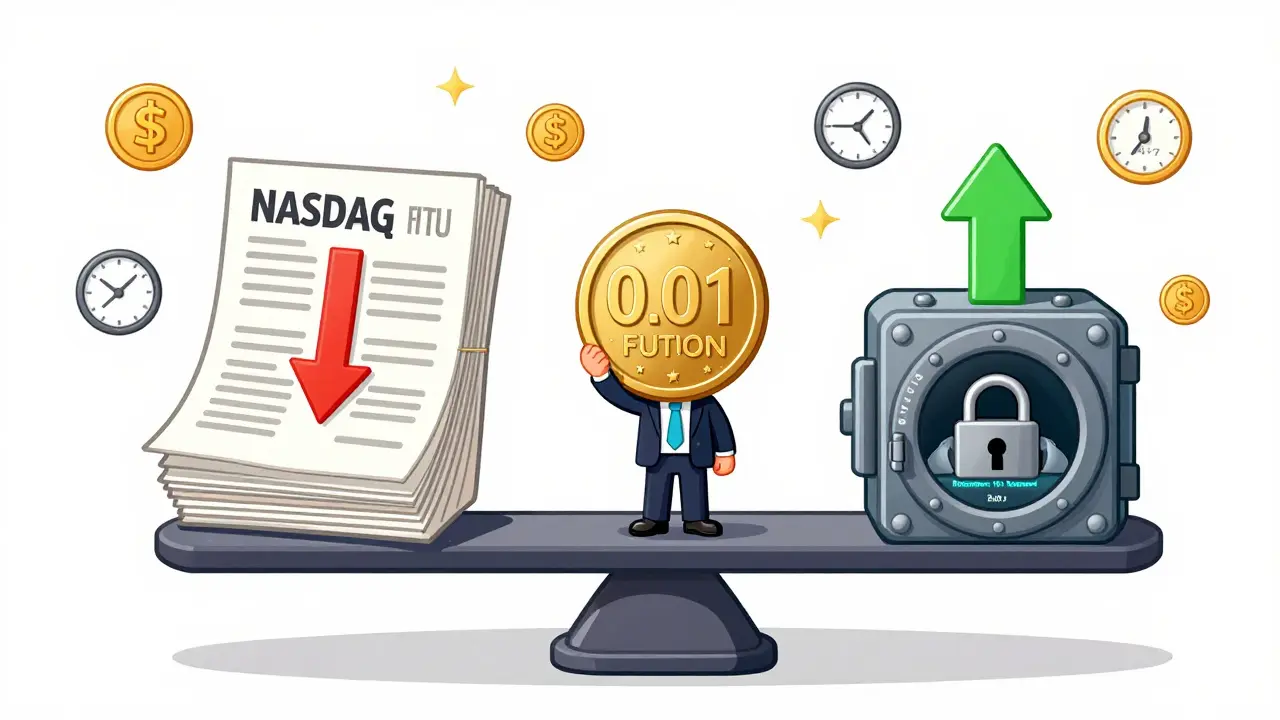
FUTUon isn’t a typical crypto coin. It doesn’t mine, stake, or run on its own blockchain. Instead, it’s a digital representation of actual shares in Futu Holdings Limited (NASDAQ: FUTU), a Chinese fintech company that runs platforms like Moomoo for trading stocks and managing wealth. Think of it like a blockchain-based version of owning a share of Apple or Tesla - but designed specifically for people outside the U.S. who can’t easily buy U.S. stocks through traditional brokers.
How FUTUon Works: Tokenizing Real Stock
FUTUon is created and managed by Ondo Finance, a DeFi platform that specializes in turning real-world assets - like stocks, bonds, and real estate - into blockchain tokens. Here’s the simple breakdown:- Ondo buys actual shares of Futu Holdings on the NASDAQ.
- These shares are held by a regulated U.S. custodian (like a bank or trust company).
- For every one share held, Ondo issues one FUTUon token on the Ethereum and BNB Chain networks.
- Each FUTUon token gives you the same economic benefit as owning one share of FUTU: price movement and dividends.
That means if Futu Holdings stock goes up from $170 to $180, FUTUon should rise too. If the company pays a dividend, Ondo automatically reinvests it into more FUTUon tokens for you - no manual action needed.
This is different from buying FUTU stock directly. With FUTUon, you’re not a shareholder on the company’s official registry. You’re a token holder. That’s why you don’t get voting rights at shareholder meetings. You’re getting exposure to the stock’s performance, not control over the company.
Who Is FUTUon For?
FUTUon targets one main group: non-U.S. investors, especially in Asia.Many people in China, Southeast Asia, and other regions want to invest in U.S. stocks like Futu Holdings. But traditional methods are messy:
- Opening a U.S. brokerage account can take weeks.
- International wire transfers cost $30-$50 and take days.
- Some brokers don’t accept non-U.S. residents at all.
- Trading is limited to U.S. market hours: 9:30 a.m. to 4 p.m. Eastern Time.
FUTUon solves all that. You can buy it 24/7 on crypto exchanges like Binance and MEXC. No bank forms. No wire fees. No time zone restrictions. And you can start with as little as 0.01 FUTUon - around $1.74 at current prices.
That’s a big deal for retail investors who don’t have access to U.S. markets through traditional channels.
Technical Details: Where FUTUon Lives
FUTUon is an ERC-20 token, meaning it runs on the Ethereum network. It’s also available on BNB Chain (formerly Binance Smart Chain) for lower fees.Here are the key technical specs as of November 2025:
- Total supply: 6,763.47 FUTUon tokens
- Circulating supply: 6,763.47 on Ethereum, 1.54 on BNB Chain
- Contract address (Ethereum): 0x5Ce2...6B4e15
- Contract address (BNB Chain): 0x5ac...89a627
- Price range (Oct-Nov 2025): $150.45 to $201.66
- Market cap: ~$1.14 million
These numbers are tiny compared to the real FUTU stock, which has a market cap of over $3 billion. That’s a red flag - FUTUon is extremely illiquid. If you try to sell 100 tokens at once, you might crash the price because there aren’t enough buyers.
Pros and Cons of Holding FUTUon
Pros
- 24/7 trading: Buy or sell anytime, unlike U.S. stock markets.
- Low entry point: Start with less than $2.
- No wire fees: Skip expensive international transfers.
- Dividend reinvestment: Automatic - no paperwork.
- Access for non-U.S. residents: No U.S. bank account needed.
Cons
- No voting rights: You own the economic value, not the ownership stake.
- Very low liquidity: 24-hour trading volume is less than $75,000 - compared to $250 million for the real stock.
- Redemption delays: If you want to cash out and get real FUTU shares, it can take up to 2.7 business days, not the promised 1.
- High minimum redemption: You need at least 10 FUTUon tokens (~$1,700) to redeem for real stock.
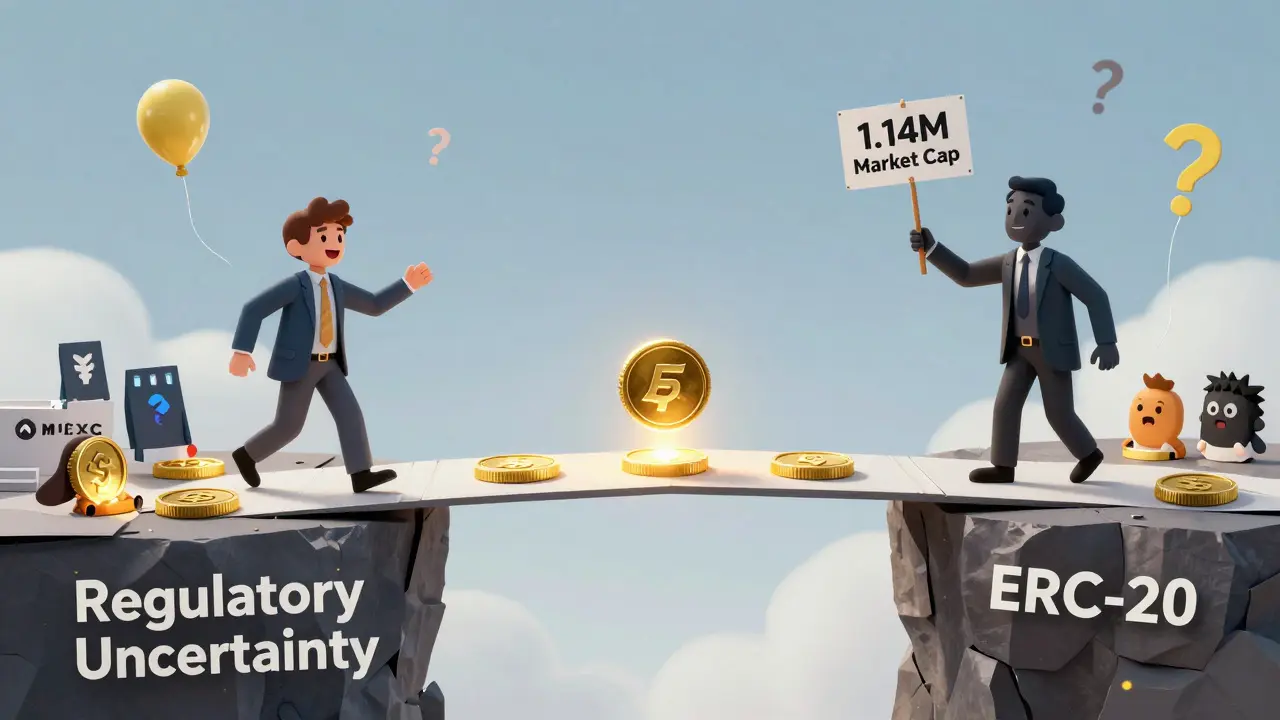
- Regulatory risk: Ondo uses a U.S. securities exemption (Regulation S), but the British Virgin Islands legal structure raises eyebrows. The SEC hasn’t acted yet, but that could change.
- Only on a few exchanges: Not on Coinbase, Kraken, or most major platforms. You’re mostly stuck with Binance and MEXC.
How Does FUTUon Compare to Other Tokenized Stocks?
FUTUon is one of dozens of tokenized stocks on Ondo Finance’s platform. Here’s how it stacks up:| Token | Underlying Asset | Market Cap | 24h Volume | Exchanges | Redemption Minimum |
|---|---|---|---|---|---|
| FUTUon | Futu Holdings (FUTU) | $1.14M | $73,696 | Binance, MEXC | 10 tokens (~$1,700) |
| FBon | Meta (META) | $6.8M | $421,000 | Binance, MEXC, OKX | 5 tokens (~$1,200) |
| BTCON | Bitcoin Reserve Rights | $18.2M | $1.2M | Multiple | 1 token (~$1,100) |
| AAPLon | Apple (AAPL) | $12.5M | $890,000 | Binance, OKX | 1 token (~$180) |
FUTUon is one of the smallest and least liquid. It’s not even in the top 1,000 cryptocurrencies by market cap. Its appeal is niche: serving Asian investors who want exposure to a Chinese fintech stock listed in the U.S.
Is FUTUon Safe?
Safety here is layered.On the crypto side: The smart contracts are verified on Etherscan. No known hacks. That’s good.
On the asset side: Ondo holds the real FUTU shares in custody. That’s regulated. That’s better than most DeFi projects.
But here’s the catch: if Ondo Finance goes under, or if regulators shut it down, your FUTUon tokens might become worthless - or you might be locked out of redeeming them. There’s no FDIC insurance. No government backstop. Just a company in the British Virgin Islands promising to back your tokens with real stock.
Also, the redemption process is slow and has a high minimum. If you’re not a big investor, you’re stuck holding the token. And if the price drops sharply, you can’t easily exit without taking a big loss.
Who Should Avoid FUTUon?
Don’t touch FUTUon if:- You’re a beginner in crypto and don’t understand wallets, gas fees, or ERC-20 tokens.
- You expect to make quick profits - it’s too illiquid and volatile.
- You want voting rights or direct ownership in Futu Holdings.
- You’re looking for a long-term hold - regulatory risk is high.
- You plan to invest more than $5,000 - you’ll face massive slippage when selling.
How to Buy FUTUon
If you still want to try it, here’s how:- Buy ETH or BNB on a platform like Binance or Coinbase.
- Transfer it to a self-custody wallet like MetaMask.
- Connect your wallet to a decentralized exchange (DEX) like PancakeSwap (for BNB Chain) or Uniswap (for Ethereum).
- Swap your ETH or BNB for FUTUon using the contract address.
- Store it in your wallet. You can view your balance on Etherscan or BSCScan.
Gas fees on Ethereum average $1.27 per transaction. On BNB Chain, they’re under $0.10. That’s a big reason why most FUTUon trades happen on BNB Chain.
The Bigger Picture: Tokenized Stocks Are Still Experimental
FUTUon is part of a new trend: turning traditional assets into crypto tokens. The whole market is only $287 million - tiny compared to the $100+ trillion global stock market.It’s a fascinating experiment. For people locked out of U.S. markets, it’s revolutionary. But it’s also fragile. The infrastructure is new. The regulation is shaky. The liquidity is thin.
Right now, FUTUon serves one purpose: giving non-U.S. investors a way to bet on Futu Holdings without jumping through hoops. It’s not a stock. It’s not a coin. It’s a bridge - and bridges can collapse if too many people try to cross at once.
As of January 2026, Ondo Finance plans to expand into more Asian markets and add derivatives. But without more liquidity, bigger exchanges, and clearer regulation, FUTUon will remain a curiosity - not a cornerstone of any portfolio.
Final Take
FUTUon isn’t for everyone. It’s not a get-rich-quick crypto. It’s not even a safe investment. But for a specific group - non-U.S. investors who want exposure to Futu Holdings without traditional brokerage barriers - it’s one of the few options available.Think of it like a high-risk, high-friction ETF that trades on crypto exchanges. The upside? You get direct access to a growing Asian fintech company. The downside? You’re trusting a startup with your money, and you can’t easily get out if things go wrong.
If you’re curious, start small. Buy 0.1 FUTUon. See how it works. Understand the risks. Don’t invest more than you’re willing to lose. And never forget: this isn’t the stock market. This is crypto - and crypto doesn’t care if you’re buying a share of a company. It only cares if someone else will pay you more tomorrow.
Is FUTUon the same as buying Futu Holdings stock directly?
No. FUTUon gives you economic exposure to Futu Holdings stock - meaning you gain or lose money as the stock price moves and you receive dividend payouts. But you don’t own the actual stock, so you can’t vote at shareholder meetings or receive physical shareholder documents. FUTUon is a tokenized version backed by real shares held in custody by Ondo Finance.
Can I redeem FUTUon for real FUTU shares?
Yes, but only if you hold at least 10 FUTUon tokens (worth about $1,700 as of late 2025). You must initiate the redemption through Ondo Finance’s platform, and it takes up to 2.7 business days to process. During periods of high volatility, delays are common. This process is not automatic and requires manual steps.
Where can I buy FUTUon?
FUTUon is listed on Binance and MEXC. It is not available on Coinbase, Kraken, or other major centralized exchanges. You can also trade it on decentralized exchanges like PancakeSwap (on BNB Chain) or Uniswap (on Ethereum), but you’ll need a self-custody wallet and some knowledge of crypto transactions.
Is FUTUon regulated?
Ondo Finance claims compliance under U.S. Regulation S, which allows the sale of securities to non-U.S. investors without registering with the SEC. The legal entity behind FUTUon is registered in the British Virgin Islands. While no enforcement action has been taken as of early 2026, regulatory uncertainty remains high. The SEC has warned about unregistered tokenized securities, and FUTUon’s structure could be challenged in the future.
Why is FUTUon’s trading volume so low?
FUTUon has only 31 known holders and trades on just two major exchanges. Its 24-hour volume is around $75,000, while the real FUTU stock trades over $250 million daily. This massive gap means there’s very little liquidity. Large trades can cause big price swings, and selling large amounts may be impossible without taking a heavy loss. Low volume makes FUTUon risky for anything beyond small, speculative positions.
Does FUTUon pay dividends?
Yes. When Futu Holdings pays a dividend, Ondo Finance receives it and automatically converts it into additional FUTUon tokens, which are distributed to token holders. This happens without any action required on your part. It’s one of the main advantages over traditional brokers that don’t automatically reinvest dividends for international investors.
Can I use FUTUon to trade 24/7?
Yes. Unlike the NASDAQ, which is only open Monday to Friday from 9:30 a.m. to 4 p.m. Eastern Time, FUTUon trades 24 hours a day, seven days a week on supported exchanges. This allows investors in Asia and Europe to trade at any time, even when U.S. markets are closed.