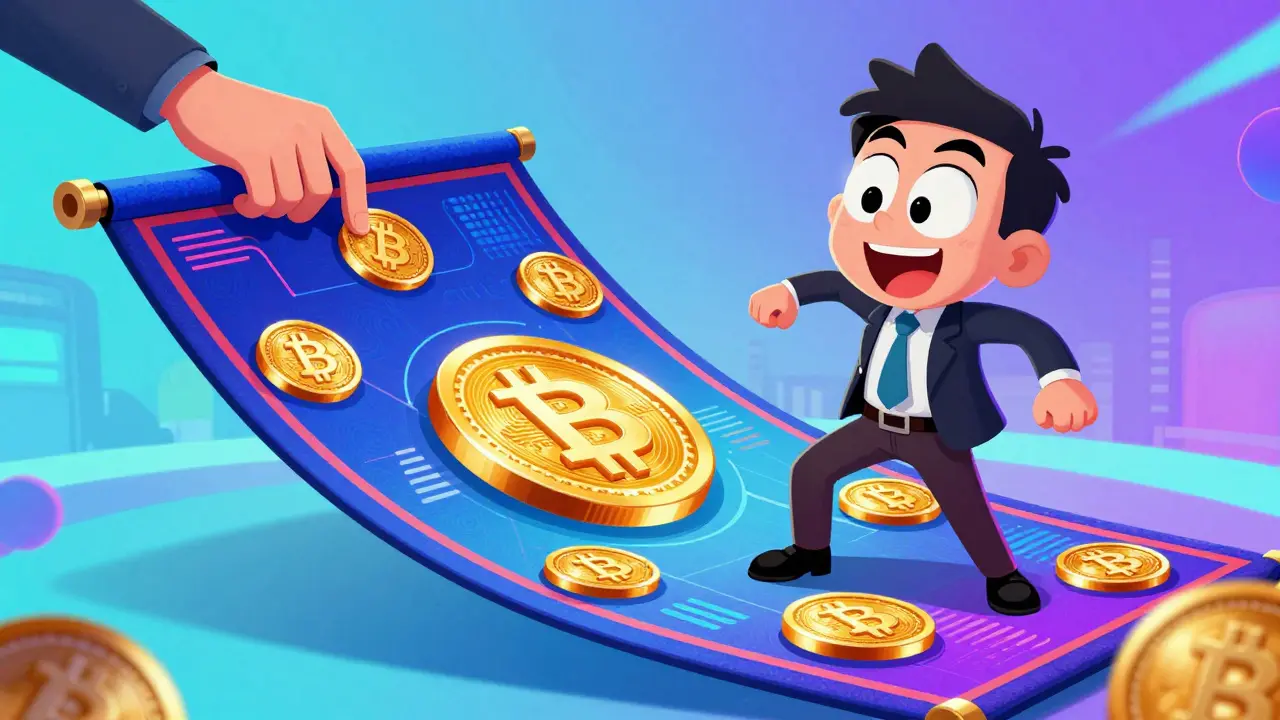
| Key Metric | Typical Value / Detail |
|---|---|
| Primary Target | Retail investors in DeFi projects |
| Common Warning Sign | Anonymous teams & unrealistic APY (10,000%+) |
| Average Duration | ~17.3 days from launch to exit |
| Most Affected Chain | BNB Chain (approx. 48% of incidents) |
How Rug Pulls Actually Work
Not every rug pull is the same. Some happen because of a few lines of malicious code, while others are just psychological games. To protect yourself, you need to understand the two main flavors: hard rug pulls and soft rug pulls.A Hard Rug Pull is a technical trap. The developers bake a "backdoor" into the Smart Contract-the self-executing code that runs the token. For example, they might program a "honeypot," where you can buy the token, but the code literally prevents you from ever selling it. The developers are the only ones who can sell, allowing them to dump their holdings while you're stuck watching the price rise on a screen you can't actually cash out from. The $SQUID token is a famous example of this, where developers made off with over $3 million in days.
A Soft Rug Pull is more about deception than coding. Here, the contract might be fine, but the developers are liars. They use coordinated "shilling" on Twitter and Discord to create artificial demand. They might use wash trading-buying and selling to themselves-to make the token look like it has massive volume. Once enough retail investors jump in and the price hits a peak, the developers simply sell all their tokens and delete their accounts. They didn't "hack" the code; they just played the crowd.
The Technical Mechanics of the Theft
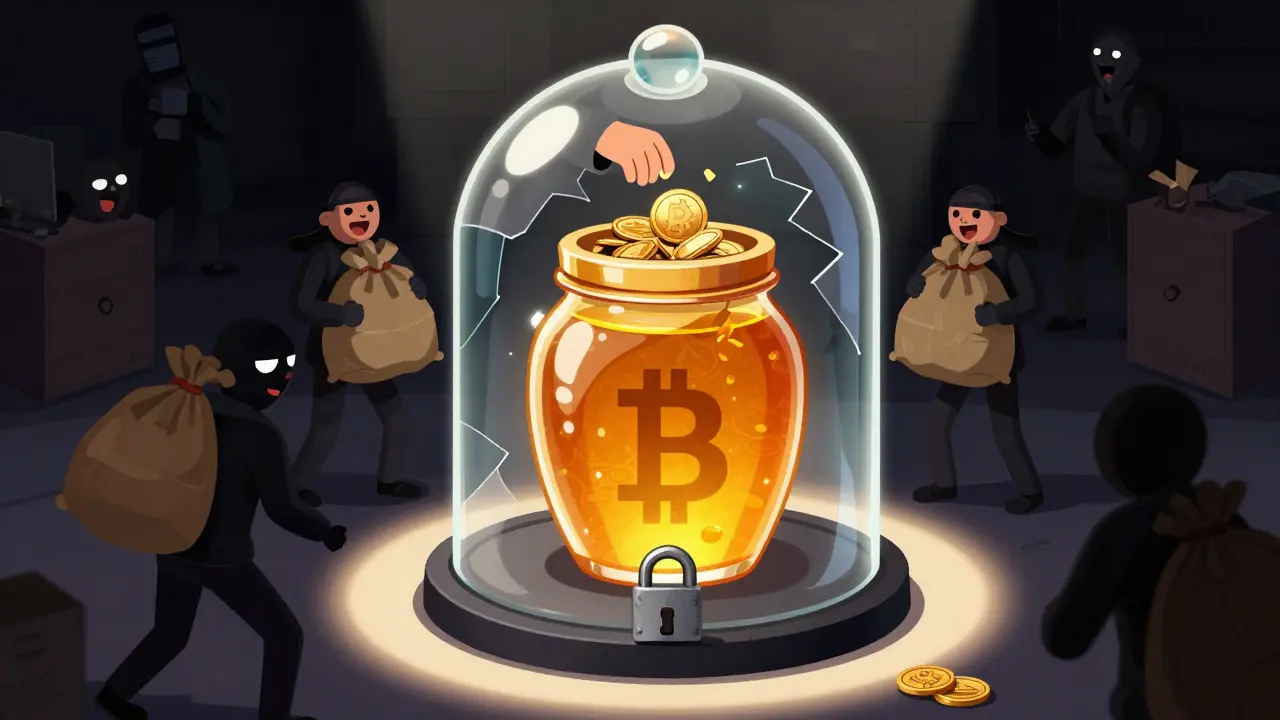
To understand where the money goes, you have to understand Liquidity Pools. In Decentralized Finance (DeFi), tokens are traded in pools on Automated Market Makers (AMM) like Uniswap or PancakeSwap. These pools hold pairs of tokens (like your new token paired with BNB). Scammers use three main technical tricks to drain these pools:- Liquidity Stealing: Developers provide the initial liquidity to start the project. Once the pool grows because other people have added their funds, the developers suddenly withdraw all the liquidity they control, leaving the token with no value and no way for others to trade it.
- Unlimited Minting: Some scammers leave a function in the code that allows them to create billions of new tokens out of thin air. They mint these tokens and dump them into the liquidity pool, sucking out all the stablecoins or BNB in exchange for worthless, newly printed tokens.
- Sell-Order Restrictions: As mentioned with honeypots, the code is modified so that the
transferfunction only works for specific wallet addresses (the developers'), making it impossible for the public to exit their positions.
Rug Pulls vs. Other Crypto Scams
It's easy to confuse a rug pull with a Ponzi scheme or a phishing attack, but the execution is very different. A Ponzi Scheme, like the infamous BitConnect, requires a steady stream of new investors to pay off old ones. It's a slow burn that can last months or years. A rug pull is a sprint. It's a single, coordinated event where the developers exit all at once. Phishing attacks are individual. A hacker tricks you into giving up your seed phrase to steal from your specific wallet. A rug pull, however, is a systemic attack on an entire community. Thousands of people are defrauded simultaneously because they all trusted the same project. Because DeFi allows anyone to list a token without permission, scammers can launch and kill a project in less than three weeks-much faster than the months it takes to run a typical Ponzi scheme.Red Flags: How to Spot a Scam Before It Happens
You don't need to be a master coder to spot a rug pull. Most scams leave a trail of breadcrumbs if you know where to look. If a project has three or more of these red flags, the risk of a rug pull is incredibly high.First, look at the team. Are they "doxxed"? This means their real identities are public and verified via LinkedIn or other professional platforms. If the team is completely anonymous, you're essentially handing your money to a stranger on the internet. While some legitimate projects have anonymous founders, the vast majority of rug pulls (up to 92% according to some data) feature anonymous teams.
Second, check the liquidity lock. If developers can withdraw the liquidity pool at any second, they can rug you at any second. Look for projects that use Time-Locks or third-party locking services like Unicrypt. A project that locks its liquidity for six months or a year is far less likely to be a quick scam. Projects with unlocked liquidity are nearly 12 times more likely to be rug pulled.
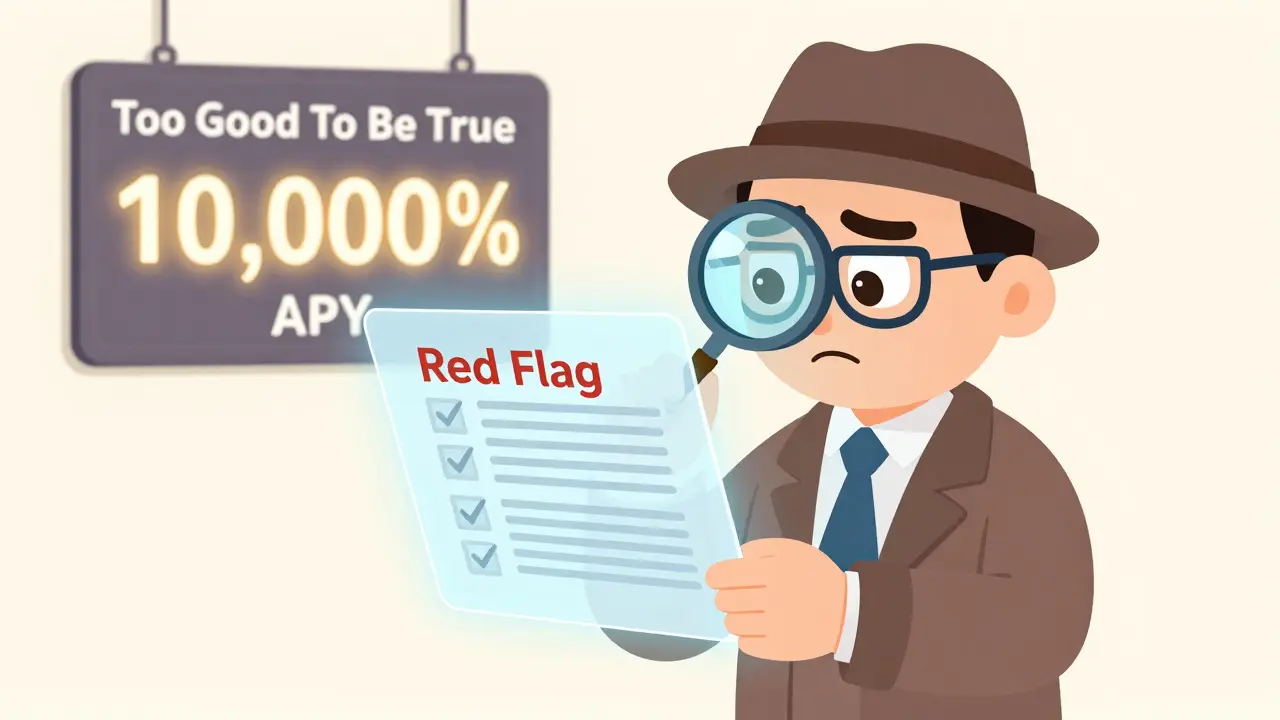
Third, beware of "Too Good to Be True" returns. If a project promises an Annual Percentage Yield (APY) of 10,000% or more, ask yourself where that money is coming from. Real value comes from utility and growth, not magic numbers. These astronomical yields are often used as bait to lure in retail investors quickly.
Step-by-Step Verification Process
Before you put a single cent into a new DeFi project, spend 45 minutes running this checklist. It can be the difference between a great investment and a total loss.- Cross-Reference the Team: Find the founders on LinkedIn. Do they have a history in blockchain? Do they have real connections, or are their profiles brand new with 10 generic followers?
- Verify Liquidity on the Explorer: Use Etherscan or BscScan. Look for the liquidity pool address. Check if the tokens are sent to a lock contract. If the liquidity is sitting in a developer's wallet, run away.
- Search for a Third-Party Audit: Has the code been reviewed by a firm like CertiK or OpenZeppelin? An audit doesn't guarantee safety, but the complete absence of one is a massive red flag.
- Analyze Tokenomics: Check the distribution. If the developers hold more than 15% of the total token supply in a few wallets, they have enough power to crash the price instantly by selling.
- Check the "Vibe" on Socials: Is the Telegram group full of real discussions, or is it just 5,000 bots screaming "TO THE MOON!"? Coordinated shilling is a classic sign of a soft rug pull in progress.
Tools to Keep Your Funds Safe
Luckily, the community has built tools to help us fight back. You don't have to read raw code to stay safe. Tools like RugDoc.io provide real-time monitoring and risk scores for thousands of projects. They check for the technical red flags mentioned earlier, like honeypot code or unlocked liquidity. Another great resource is TokenSniffer. It can automatically scan a contract address and tell you if the token is a honeypot or if the creator has too much control over the minting process. While these tools can sometimes give false positives, it's always better to miss out on a "moonshot" than to lose your entire portfolio to a scammer.Can I get my money back after a rug pull?
In almost all cases, no. Because blockchain transactions are irreversible and DeFi projects often use anonymous developers, there is no central authority to reverse the trade. Your best bet is to report the scam to cybercrime authorities, though recovery is extremely rare.
Are all anonymous teams scams?
Not all, but the risk is significantly higher. Many founders in crypto prefer privacy. However, a doxxed team provides a layer of accountability; they have a real-world reputation and legal identity that can be held responsible if they steal funds.
What is the difference between a rug pull and a price crash?
A price crash happens due to market volatility, bad news, or people simply selling their tokens. In a crash, you can still trade and sell your tokens, even if the price is low. In a rug pull, the developers either steal the liquidity (making it impossible to sell) or dump their massive holdings intentionally to kill the project.
Does a security audit guarantee a project is safe?
No. An audit checks for bugs and vulnerabilities in the code, but it can't predict if the developers will decide to act maliciously. Some scammers even use "proxy contracts" to change the code after the audit is completed. An audit is a great sign, but it's not a 100% guarantee.
Why are rug pulls so common on BNB Chain?
BNB Chain has significantly lower transaction fees (gas) than Ethereum. This makes it much cheaper and faster for scammers to launch hundreds of fake tokens and for retail investors to gamble small amounts of money, creating a perfect environment for high-frequency exit scams.