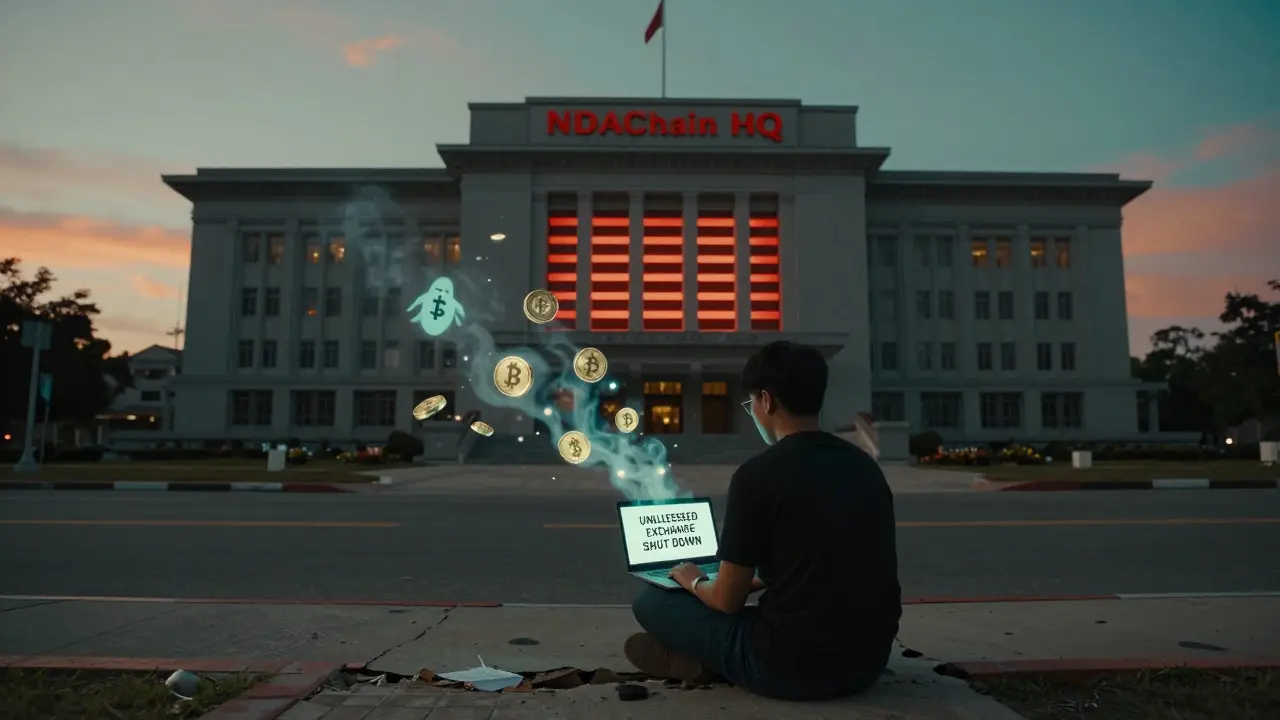
On September 9, 2025, Vietnam quietly changed the game for cryptocurrency. Not with a ban, not with open arms-but with a rule so strict it could crush the very market it tried to save. Directive 05/CT-TTg, formally known as Resolution No. 05/2025/NQ-CP, didn’t just add rules. It rewrote the entire playbook for digital assets in the country. And for the 21 million Vietnamese crypto users, it meant one thing: your old way of doing things is gone.
What Exactly Is Directive 05/CT-TTg?
This isn’t a suggestion. It’s a law. Signed by Deputy Prime Minister Ho Duc Phoc, the resolution created Vietnam’s first-ever legal framework for cryptocurrency exchanges. Before this, crypto operated in a gray zone-legal enough to use, illegal enough to have no protection. Now, it’s fully regulated, but only if you meet impossible standards.
The goal? To stop the chaos. In 2022, 15 unregulated Vietnamese crypto platforms collapsed, wiping out over half a million users’ savings. The government saw the damage. They wanted control. But the solution they chose? A capital requirement of 10 trillion VND-about $379 million. That’s not a barrier. That’s a wall.
The $379 Million Rule That Kills Small Players
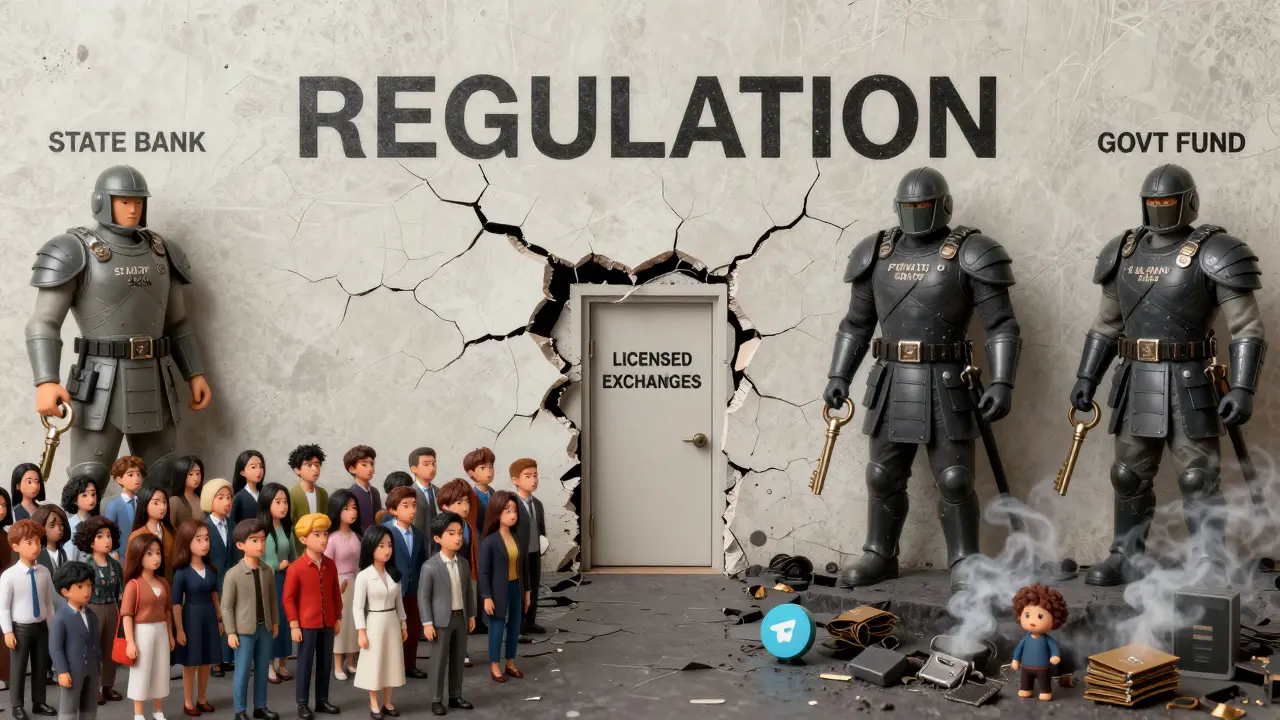
Here’s the brutal truth: if you run a crypto exchange in Vietnam and your capital is under 10 trillion VND, you’re done. No exceptions. No grace period beyond six months after the first license is issued. And that license? Only the government can give it out-and only to those who can prove they have that kind of cash.
Let’s put that number in perspective. Thailand’s requirement is 500 million THB-around $13.7 million. Singapore’s varies, but even their highest tier is under $50 million. Vietnam’s requirement is nearly 28 times higher. And it gets worse. At least 65% of that 10 trillion VND-6.5 trillion VND-must come from institutional investors. That means no crowdfunding. No small investors. No local startups. Only big banks, private equity, and state-linked funds can even play.
One exchange owner in Ho Chi Minh City posted on Reddit: "We’ve had 5,000 users for two years. We made a profit. Our capital? 5 billion VND. That’s $190,000. Now we’re out of business. No appeal. No help. Just shut down."
Only Vietnamese-Controlled Exchanges Allowed
Foreign companies can’t take over. Not even close. The law caps foreign ownership at 49%. That’s not a restriction-it’s a signal. Vietnam doesn’t want global players like Binance or Coinbase to dominate. It wants homegrown control. But here’s the catch: there are no Vietnamese firms with $379 million to spare. Not even close.
Most local exchanges are small. Some run on laptops. Others are run by teams of five people. They don’t have venture capital backing. They don’t have connections to state-owned banks. And now? They’re illegal. The government didn’t just regulate-it erased them.

VND-Only Transactions: Why It Matters
You can’t trade in USDT, USD, or EUR anymore. Every crypto trade in Vietnam must be settled in Vietnamese dong. That means no direct crypto-to-crypto swaps. No dollar-denominated stablecoins. No international liquidity.
This is a huge deal. Stablecoins like USDT made up 63.8% of all crypto transactions in Vietnam before the law. They’re the bridge between fiat and crypto. They let people avoid volatile local currency swings. Now? Those are banned. The resolution explicitly forbids assets backed by fiat currencies or securities. So even if you try to create a "Vietnamese dong-backed token," it’s still illegal.
What does this mean for users? Slower trades. Higher fees. Less access. If you want to buy Bitcoin, you now need to convert VND to crypto, not the other way around. And since most exchanges won’t have the capital to handle high volume, wait times could stretch to 24 hours or more-compared to the global average of 4.3 hours.
The Blockchain Mandate: NDAChain and Compliance
Every licensed exchange must use Vietnam’s new national blockchain: NDAChain. Launched in July 2025, it’s built to track every transaction, enforce KYC, and report to the State Bank of Vietnam in real time. It’s not optional. It’s mandatory.
But NDAChain isn’t open-source. It’s not public. It’s a government-controlled ledger. That means no anonymity. No privacy. Every trade, every wallet, every transfer is logged and monitored. And if you’re not on NDAChain? You’re not legal.
Platforms have to rebuild their entire infrastructure. That costs between 50 and 200 billion VND ($1.9M-$7.6M) per exchange. Most can’t afford it. And even if they could, the software doesn’t exist yet. The first version of NDAChain was released in August 2025. Integration takes months. The six-month grace period? It’s already too short.
Who Wins? Who Loses?
On paper, this looks like a smart move. No more scams. No more sudden collapses. More transparency. More security. But reality is messier.
Who wins? The big players. The state-linked financial institutions. The banks that can raise $379 million. Maybe one or two conglomerates will apply. Maybe three. That’s it. The market will shrink from 21 million users to maybe 5 million-only those who can access the handful of licensed exchanges.
Who loses? Everyone else.
- Small exchanges with loyal user bases-gone.
- Users who relied on low fees (0.15% vs global 0.25%)-now paying more.
- People who used stablecoins to protect savings from VND inflation-now stuck with volatile crypto.
- Developers and startups building DeFi tools-no access to regulated markets.
A survey of 1,500 Vietnamese crypto users found that 68.3% support regulation-but 79.6% think the capital requirement is too high. And 41.2% said they’d move to offshore platforms if local options become too restricted. That’s not compliance. That’s evasion.
The Bigger Picture: Vietnam’s Digital Economy Play
This isn’t just about crypto. It’s part of Vietnam’s bigger push to make digital tech 20% of GDP by 2030. The government sees blockchain as one of 11 priority technologies, alongside AI and semiconductors. They want to be a regional leader.
But here’s the irony: they’re choosing control over growth. Thailand licensed 12 exchanges in 2025. Singapore is attracting global firms. Indonesia bans retail trading but allows institutional futures. Vietnam? It’s building a fortress.
The World Bank warned in its September 2025 report: "The six-month grace period may be insufficient for market adaptation, potentially displacing 18-20 million users." That’s not just a risk. It’s a guarantee.
What Happens Next?
The first licenses won’t be issued until late 2025 or early 2026. The Ministry of Finance says applications will open within 30 days of the resolution’s implementation. But who will apply? Only those with deep pockets and state ties.
Meanwhile, unlicensed platforms are already leaving. Some are moving operations to Cambodia, the Philippines, or Malaysia. Others are going underground-using peer-to-peer apps, Telegram bots, or offshore wallets. The government can monitor NDAChain. But it can’t monitor every Telegram group.
Tax rules are coming too. By November 15, 2025, capital gains will be taxed at 0.1% for trades under 100 million VND, and 0.3% for larger ones. That’s low. But it’s another layer of control.
By 2028, Fitch Solutions predicts Vietnam could become Southeast Asia’s third-largest regulated crypto market-behind Singapore and Thailand. But only if the framework survives. And right now? It looks more like a suicide pact than a strategy.
Final Thoughts: Regulation or Exclusion?
Vietnam didn’t just create a crypto framework. It created a test. Can a country with a massive, passionate crypto user base force it into a box so small that only a few giants can fit?
The answer? Probably not.
Users will adapt. They always do. They’ll find ways around NDAChain. They’ll use decentralized exchanges. They’ll trade on foreign platforms. The government can shut down websites. But they can’t shut down human ingenuity.
Directive 05/CT-TTg isn’t about safety. It’s about control. And control without access? That’s not regulation. That’s isolation.
Is cryptocurrency legal in Vietnam after Directive 05/CT-TTg?
Yes-but only if traded through government-licensed exchanges. Buying, selling, or holding crypto is not illegal, but operating an exchange without a license is. Unlicensed platforms are banned, and users who trade on them risk losing legal protection. The law doesn’t ban crypto itself-it bans unregulated access to it.
Can I still use USDT or other stablecoins in Vietnam?
No. Directive 05/CT-TTg explicitly prohibits any crypto asset backed by fiat currencies, including USDT, USDC, or DAI. All transactions must be settled in Vietnamese dong (VND). This removes the most popular tool Vietnamese users relied on to avoid currency volatility. You can still hold stablecoins, but you can’t trade them on any licensed platform.
What happens to my crypto if my exchange shuts down?
If your exchange is unlicensed and shuts down, you have no legal recourse. The government will not refund your money or help you recover assets. Only trades made through licensed exchanges are protected under the new framework. If you’re on an unlicensed platform, your holdings are at risk with no safety net.
Are foreign crypto exchanges allowed to operate in Vietnam?
No. Foreign exchanges cannot operate legally in Vietnam under this law. Even if they’re licensed elsewhere, they must register with Vietnam’s Ministry of Finance, meet the 10 trillion VND capital requirement, and be majority Vietnamese-owned. No global exchange currently meets these conditions. Most have already stopped serving Vietnamese users.
Will this law reduce crypto scams in Vietnam?
It might, but not as intended. The law targets large-scale fraud by forcing out unregulated platforms. However, it doesn’t stop small scams-like phishing, fake wallets, or Telegram pump-and-dumps. With fewer legal options, users may turn to riskier underground channels. Experts warn the law may reduce large frauds but increase decentralized scams.
How many exchanges will actually get licensed?
Industry analysts predict only 3-5 exchanges will qualify in the first year. The capital requirement is too high, the compliance costs too steep, and the foreign ownership cap too restrictive. Most local platforms can’t raise even 1% of the required amount. The market will shrink dramatically, with only state-linked entities surviving.
What’s the penalty for operating an unlicensed exchange?
Operating without a license can lead to criminal charges under Vietnam’s Law on Digital Technology Industry. Fines can reach up to 100 billion VND ($3.8 million), and executives may face imprisonment. Platforms are being shut down, domain names seized, and bank accounts frozen. The government has already begun enforcement actions against major unlicensed exchanges.
Can I start a new crypto exchange in Vietnam now?
Technically, yes-but only if you have $379 million and can prove 65% of it comes from Vietnamese institutional investors. You must also build a system compliant with NDAChain, integrate with the State Bank of Vietnam’s monitoring network, and pass a rigorous background check. For any normal startup, this is impossible. The law is designed to prevent new entrants, not encourage them.