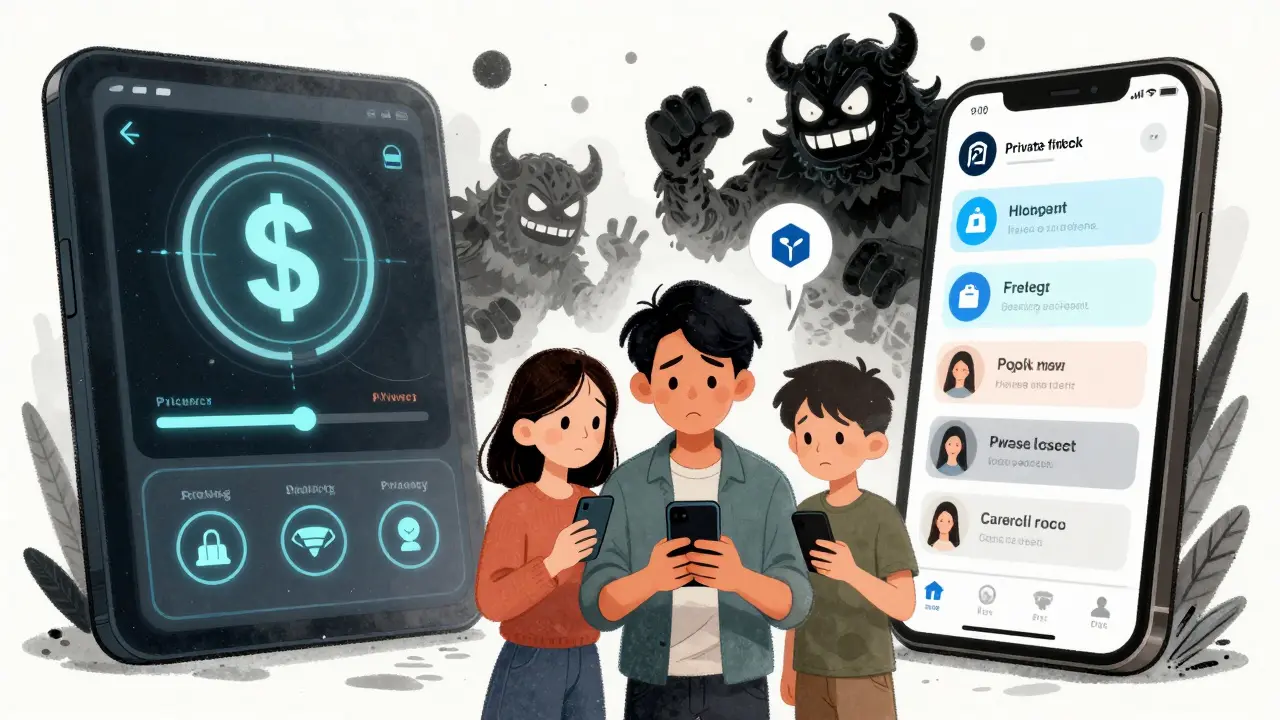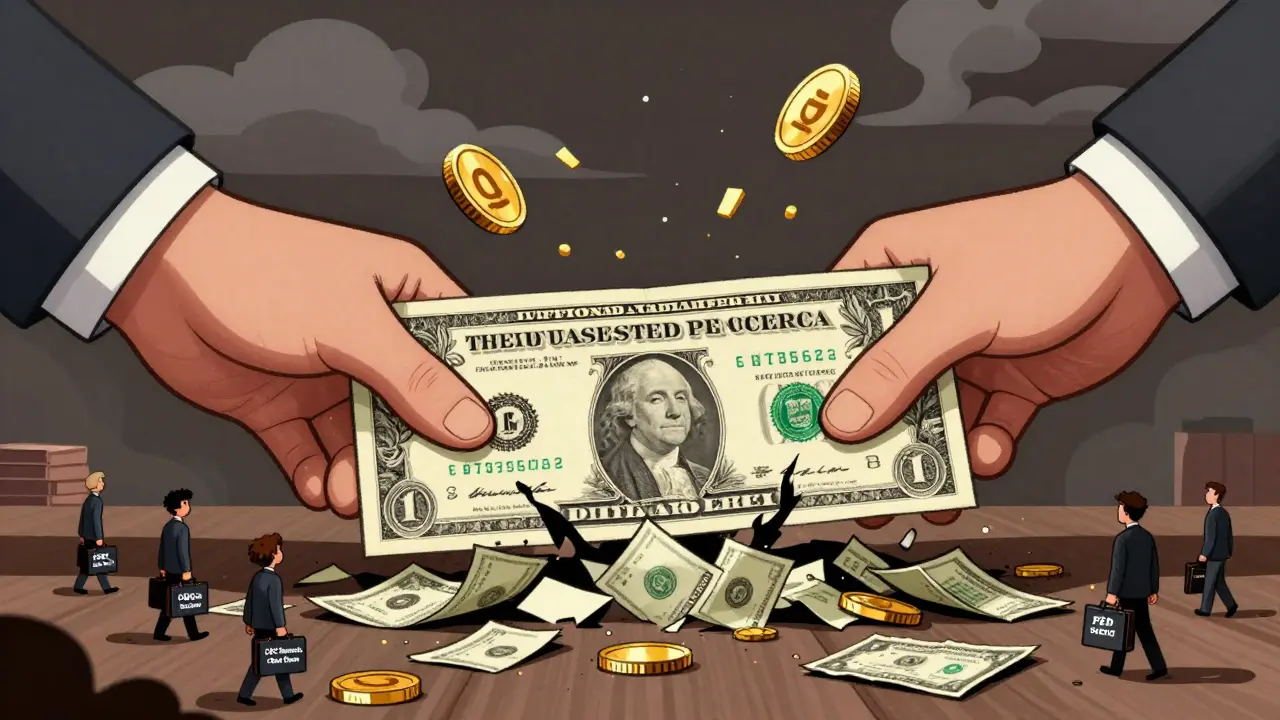
The U.S. government has officially stopped working on a digital dollar. Not delayed. Not paused. Stopped. In early 2025, President Donald Trump signed Executive Order 14178, killing any remaining effort to create a U.S. central bank digital currency (CBDC). This wasn’t a slow fade. It was a clean cut. The Federal Reserve, which had spent years studying how a digital dollar might work, immediately shut down its research teams. Fed Chair Jerome Powell publicly said he would never issue a CBDC while he’s in charge. And that’s that.
What Was the Digital Dollar Supposed to Be?
A digital dollar would’ve been an electronic version of U.S. cash, issued and backed by the Federal Reserve. Not a crypto like Bitcoin. Not a stablecoin like USDC. It would’ve been digital money as real as the bills in your wallet-just without the paper. Think of it like a bank account you can use on your phone, but instead of being tied to a commercial bank, it’s directly tied to the U.S. government. Before the halt, the Treasury Department had built a full interagency team to explore it. That team included the Fed, White House economic advisors, the National Security Council, and even the Office of Science and Technology Policy. They weren’t just talking. They ran simulations, tested payment systems, and studied how a digital dollar could help low-income families, reduce fraud, and speed up tax refunds. The goal was to modernize U.S. payments, not control them.Why Did the U.S. Stop?
The official reason? Concerns over privacy and government overreach. Critics in the new administration argued that a digital dollar could turn every transaction into a surveillance opportunity. Banks already file over 26 million reports on customer activity each year. A CBDC would’ve made that even easier-every dollar spent, saved, or transferred could be tracked in real time. For many Americans, that’s not innovation. It’s a red flag. There’s also political timing. The Biden administration had pushed CBDCs as part of a broader agenda to strengthen public infrastructure. The Trump administration flipped that script. Instead of government-led digital money, they doubled down on private alternatives. Stablecoins like USDT and USDC? Fine. Regulate them. But don’t let the Fed get into the business of issuing digital cash. The decision wasn’t made in a vacuum. Public trust in institutions is low. And when you’re asking people to trust the government with their entire financial life-down to the last cent-it’s not just about technology. It’s about fear. And fear won the argument.Where Is the Rest of the World?
While the U.S. walked away, the rest of the world kept moving. As of early 2025, 134 countries and currency unions are working on CBDCs. That’s up from 114 just two years ago. Fifty-three are running live pilot programs. Eleven have already launched full versions. China’s digital yuan is used by over 260 million people. The European Central Bank is deep into its digital euro pilot, testing how businesses settle large transactions using blockchain. Even smaller economies like Jamaica and Nigeria have rolled out national digital currencies. The Bank for International Settlements says wholesale CBDCs could transform how banks trade with each other-making cross-border payments faster and cheaper. The U.S. is now the only G-20 country that’s completely out. Germany, Japan, Australia, Brazil, India, South Africa-all are building. The U.S. isn’t just falling behind. It’s opting out of a global shift.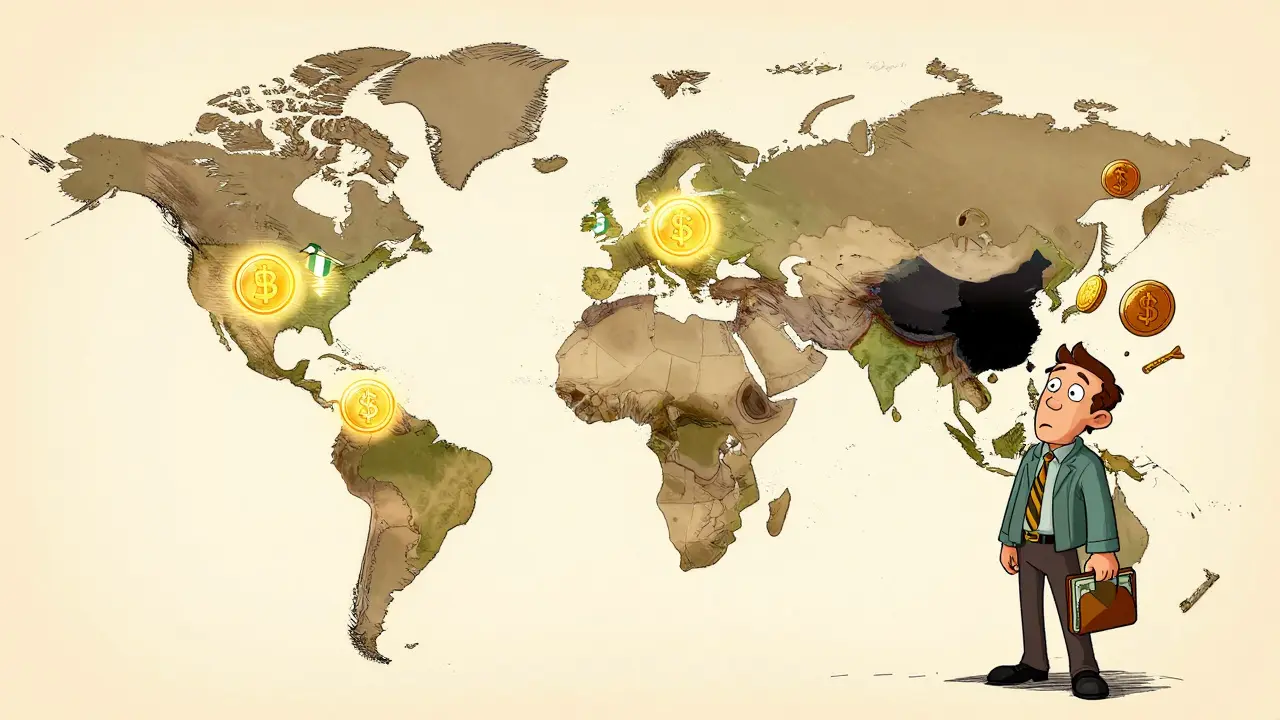
What Does This Mean for Businesses and Investors?
The absence of a U.S. CBDC creates a gap. Financial institutions like State Street say they need a high-credit, sovereign digital asset to scale institutional investment in tokenized assets-like real estate, stocks, or bonds on blockchain. Right now, they’re stuck using private stablecoins. But those aren’t backed by the Fed. They’re backed by companies. And if one of those companies fails? You lose your money. That’s why Fnality International, a consortium led by big banks including State Street, is trying to fill the void. They’re building a private digital dollar network that mimics what a CBDC could’ve done. But it’s not the same. It’s not government-backed. It’s not legal tender. It’s a workaround. For everyday users, the impact is less obvious. You can still pay with cash, cards, or apps like Apple Pay. But for businesses doing international trade, or fintech startups building new financial tools, the lack of a U.S. digital dollar is a bottleneck. It makes the U.S. less competitive in the next wave of finance.What About Privacy and Civil Liberties?
It’s true that CBDCs could enable surveillance. But so can your credit card, your bank statements, and your online shopping history. The difference? A CBDC would’ve been designed with privacy controls from the start. Other countries are building in anonymity limits-like allowing small offline transactions without tracking. The U.S. never got to that stage because the conversation got derailed by fear. The real issue isn’t that CBDCs are dangerous. It’s that we’ve already given up too much privacy without even noticing. The U.S. government already knows where you shop, who you pay, and how much you earn. A digital dollar wouldn’t have changed that. It just would’ve made it more efficient. The halt didn’t solve privacy. It just avoided the conversation.