
Imagine needing to send money to a family member abroad. In most of the world, you use a bank or an app like Venmo. But if you live in a country where owning digital assets is a crime, that simple act becomes a high-stakes gamble. You can’t just buy Bitcoin on Coinbase. You have to find someone you barely trust, meet in a shadowy corner of the internet, or hand over cash for a QR code, all while paying significantly more than the global market rate. This extra cost is what we call the underground crypto market premium.
In 2025 and moving into 2026, this isn't just a theoretical concept for economists. It’s a daily reality for millions of people living under strict financial prohibitions. From the sweeping new laws in China to the absolute bans enforced by the Taliban in Afghanistan, governments are closing doors. As those doors shut, black markets don't disappear-they evolve, becoming more expensive, more dangerous, and technically sophisticated. Understanding these premiums helps us see not just how much people pay, but why they risk it all.
The Economics of Fear: Why Underground Prices Spike
To understand why prices skyrocket in banned zones, you have to look at basic supply and demand, mixed with a heavy dose of fear. In a normal market, if you want Bitcoin, you go to an exchange. There are thousands of buyers and sellers, so the price stays close to the global average. But when a government bans crypto, the legitimate supply dries up overnight.
Here is how the premium forms:
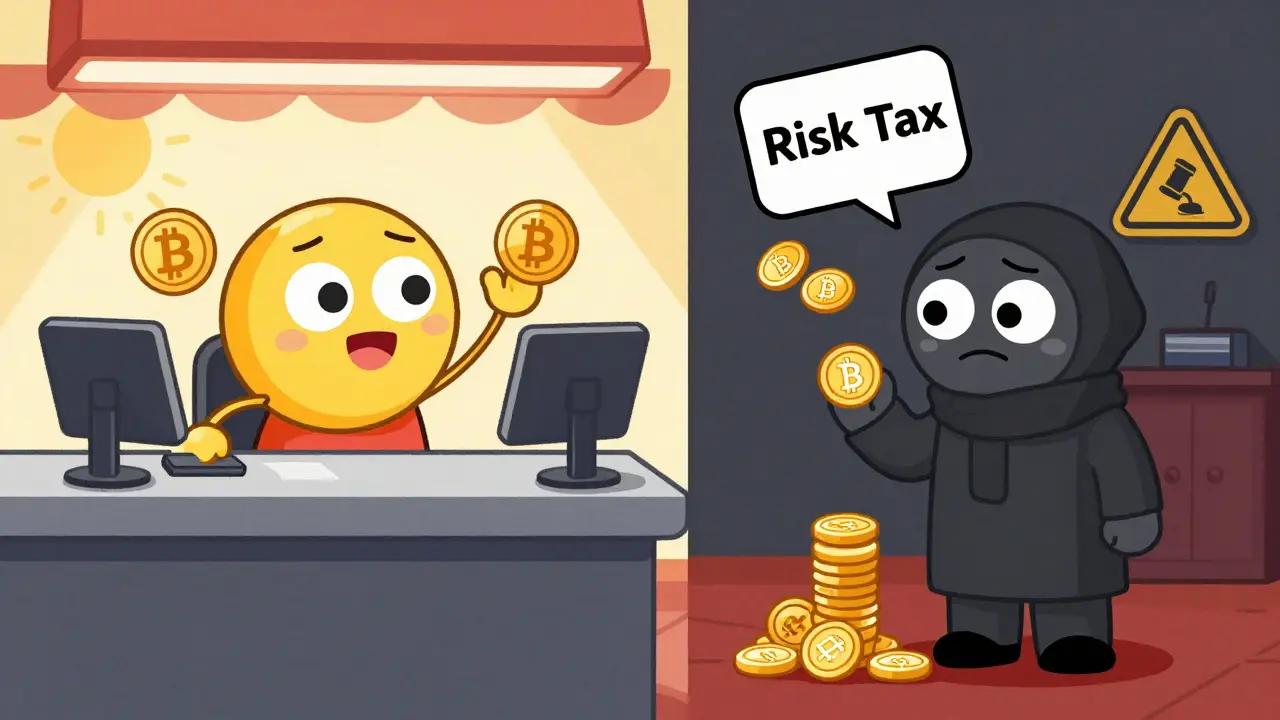
- Risk Compensation: The person selling you crypto underground is taking a massive risk. They could be arrested, fined, or have their assets seized. They aren’t doing this for charity. They build that risk into the price. If the global price of Bitcoin is $100,000, they might charge you $105,000 or even $110,000 just to cover the chance that they lose everything.
- Liquidity Crunch: Underground markets are small. There are fewer buyers and sellers compared to major exchanges like Binance or Kraken. When liquidity is low, prices become volatile. If you need to sell quickly, you might get a bad deal. If you need to buy urgently, you pay a premium.
- Operational Costs: Running a black market operation isn’t free. Sellers use encrypted messaging apps, decentralized exchanges (DEXs), or complex multi-signature wallets to hide their tracks. These tools often require technical expertise or cost money to operate securely. Those costs get passed on to you.
This creates a pricing inefficiency. The "premium" is essentially the tax you pay for privacy and access in a hostile environment. It’s not fixed; it fluctuates based on how aggressive the local police are that week. If rumors spread that a raid is coming, the premium spikes because sellers know their window of opportunity is closing.
China’s Total Ban: The New Reality of 2025
For years, China was known for banning crypto mining and trading, but allowing individuals to hold coins. That changed dramatically on May 30, 2025. Beijing passed sweeping legislation that criminalized personal ownership of cryptocurrencies, including Bitcoin, Ethereum, and altcoins. This wasn’t just a warning; it was a full-scale prohibition designed to push everyone toward the state-backed Central Bank Digital Currency (CBDC), the digital yuan.
This shift created a unique economic pressure cooker. Before 2025, Chinese users could still buy crypto on offshore exchanges using workarounds. Now, holding the asset itself is illegal. This theoretically pushes the underground premium higher than ever before. Why? Because the pool of willing sellers shrinks drastically. Only the most desperate or the most well-connected criminals are likely to engage in these trades.
We don’t have exact public data on the current premium in China because, by definition, these transactions are hidden. However, historical patterns from previous bans suggest that premiums can range from 10% to over 30% above global rates during periods of intense enforcement. The key difference now is the legal stakes. A user caught with a wallet address linked to a transaction isn’t just facing a fine; they face criminal charges. This fear drives the price up further, as sellers demand extra compensation for the heightened legal danger.
Afghanistan and Egypt: Absolute Bans and Enforcement Gaps
While China uses technology and law to crush crypto adoption, other nations rely on ideological and religious grounds. Afghanistan maintains an absolute ban on all cryptocurrency activities under the Taliban regime since 2022. The government declares crypto "haram" (forbidden) under Sharia law and aims to control the fragile national economy through Da Afghanistan Bank (DAB) and the Financial Transactions and Reports Analysis Center of Afghanistan (FinTRACA).
In such environments, the underground premium is driven by scarcity and isolation. With international sanctions and internal restrictions, getting fiat currency out of the country is nearly impossible. Crypto becomes one of the few ways to move value across borders. This makes it incredibly valuable, but also incredibly risky. Sellers in Kabul or Herat who facilitate these trades are operating in a vacuum. They cannot easily replace stolen funds or recover from scams. Consequently, they charge steep premiums to offset the total lack of recourse.
Egypt presents a different case study. Cairo imposed a blanket ban on crypto trading, yet in 2025 alone, authorities arrested 112 individuals for violations. This high arrest number signals two things: first, there is significant demand despite the ban; second, enforcement is active but perhaps overwhelmed. When enforcement is visible but inconsistent, premiums tend to be moderate but volatile. Users might pay a 15-20% premium, betting that the odds of being caught are lower than the cost of compliance elsewhere. However, every news headline about a raid causes the premium to jump temporarily as sellers panic.
The Tech Shift: How DEXs and Privacy Coins Fuel the Black Market
You can’t talk about underground markets without talking about the tools that make them possible. In the early days of crypto, black markets relied heavily on centralized platforms that eventually got shut down. Today, the landscape has shifted toward decentralization and privacy.
Decentralized Exchanges (DEXs) are platforms that allow peer-to-peer trading of cryptocurrencies without a central intermediary. Unlike traditional exchanges, DEXs don’t require Know Your Customer (KYC) verification. This makes them attractive to users in banned jurisdictions who want to avoid leaving a paper trail. However, DEXs often suffer from lower liquidity, which contributes to wider bid-ask spreads and effectively higher costs for the user.
Then there are privacy-focused cryptocurrencies. Coins like Monero and XMR are digital currencies designed to obscure transaction details, providing enhanced anonymity for users. In banned jurisdictions, Monero often commands a higher premium than Bitcoin. Why? Because it’s harder to trace. If you’re buying Bitcoin underground, you still leave a footprint on the blockchain that sophisticated forensic firms can follow. Monero hides that footprint. For users trying to evade state surveillance, that privacy feature is worth paying extra for.
Cross-border transfers also play a role. Users in banned countries often use peer-to-peer (P2P) networks to connect with traders in neighboring, less restrictive countries. This adds another layer of complexity and cost. You’re not just paying the seller; you’re paying for the logistical nightmare of moving value across a border illegally. This friction ensures that underground premiums remain structurally higher than in regulated markets.
Emerging Markets: When Compliance Drives People Underground
It’s not just about outright bans. Sometimes, strict regulation achieves the same result. In emerging markets, the line between "legal" and "underground" is blurring due to aggressive compliance requirements.
Consider India. The Financial Intelligence Unit (FIU) imposed fines totaling $9.5 million on non-compliant crypto platforms in 2024, a 32% increase from the previous year. While crypto isn’t banned in India, the cost of compliance is rising. Small operators and individual traders who can’t navigate the complex tax and reporting rules may choose to go underground rather than deal with the bureaucracy. This creates a secondary market where premiums emerge not from criminality, but from avoidance.
South Africa suspended licenses of 12 crypto firms in 2025 for failing Anti-Money Laundering (AML) checks. The Philippines blacklisted 20 unlicensed exchanges, freezing $150 million in suspected illicit funds. These actions send a clear message: if you want to trade legally, you must follow strict rules. For many users, especially those with informal incomes or limited banking access, these rules are insurmountable barriers. They turn to underground channels, accepting the higher prices and risks because the legal path is closed to them.
| Jurisdiction | Regulatory Status (2025-2026) | Enforcement Action | Theoretical Premium Driver |
|---|---|---|---|
| China | Total Ban (Ownership Illegal) | Criminalization of holdings | Extreme legal risk, reduced supply |
| Afghanistan | Absolute Ban (Religious/Economic) | Arrests, fund confiscation | Scarcity, isolation, lack of recourse |
| Egypt | Blanket Trading Ban | 112 arrests in 2025 | Active enforcement, moderate volatility |
| India | Strict Regulation/Fines | $9.5M in fines (2024) | Compliance costs, bureaucratic barriers |
| Nigeria | Restrictive/Crime Focus | $38M seized (2024) | Cybercrime linkage, security risks |
The Human Cost: Scams, Seizures, and Silence
Behind every percentage point of premium is a human story of risk. When you trade in an underground market, you lose consumer protections. There is no customer support. There is no chargeback process. If the seller sends you fake tokens or disappears after receiving your cash, you have nowhere to go.
This vulnerability is exploited by scammers who target users in banned jurisdictions. They know these users can’t report crimes to the police without incriminating themselves. This asymmetry of power allows fraudsters to operate with impunity, further distorting prices. Users often pay premiums not just for access, but for perceived reliability. Finding a "trusted" seller in a black market is rare and expensive.
Moreover, the psychological toll is significant. Living in constant fear of asset seizure or arrest changes how people interact with money. It stifles innovation and keeps wealth trapped in inefficient, opaque systems. While some argue that crypto provides freedom in oppressive regimes, the reality of underground premiums shows that this freedom comes at a steep financial and personal cost.
Global Trends: The Patchwork of Prohibition
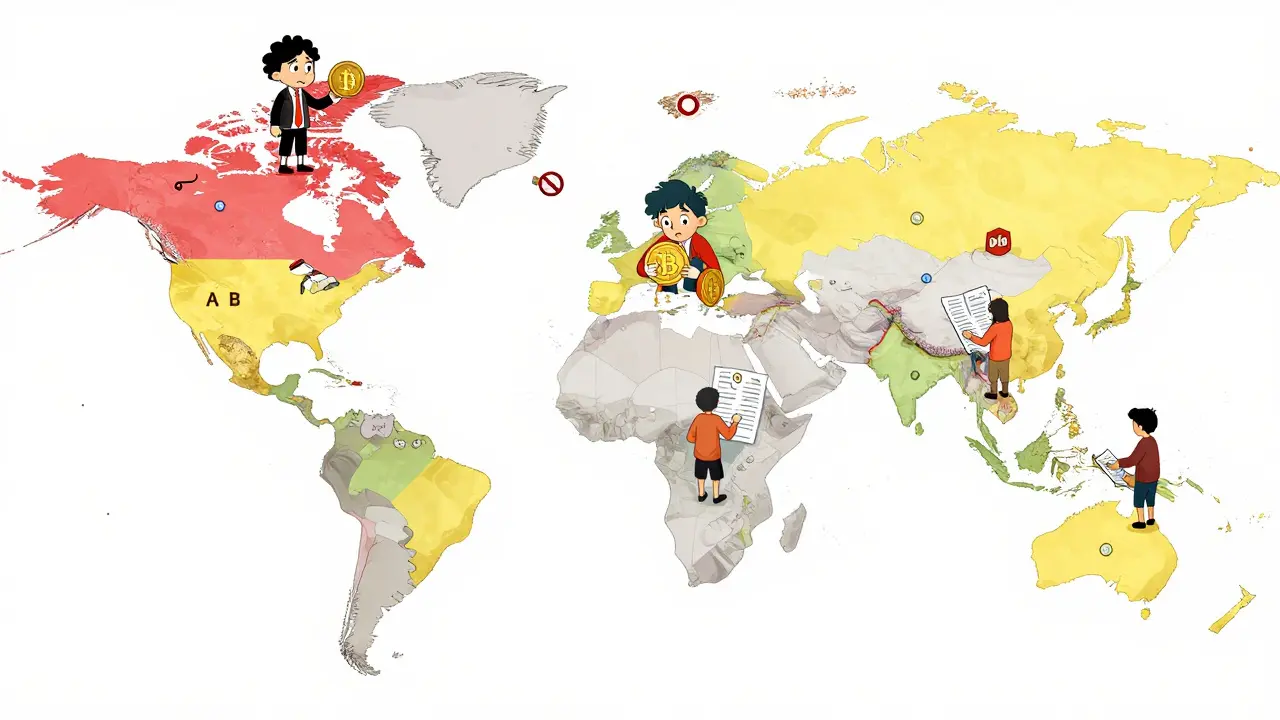
As of mid-2025, the Financial Action Task Force (FATF) noted that 99 jurisdictions had passed or were passing crypto-related legislation. This creates a fragmented global landscape. In some places, crypto is embraced; in others, it’s hunted. This patchwork encourages cross-border arbitrage, where traders exploit differences in regulation. However, it also fuels underground markets in banned zones, as determined users find ways to bypass local laws using international connections.
The rise of decentralized finance (DeFi) and privacy technologies means that total prohibition is becoming harder to enforce. Governments are responding with stricter surveillance and harsher penalties, which only drives premiums higher. It’s a cat-and-mouse game where the players-ordinary citizens trying to save their savings or send remittances-pay the price.
What exactly is a crypto market premium?
A crypto market premium is the difference between the price of a cryptocurrency in a specific local market and its global average price. In banned jurisdictions, this premium is usually positive, meaning locals pay more than the rest of the world due to restricted supply and higher risks.
Why do premiums exist in countries where crypto is banned?
Premiums exist because sellers face significant risks, including arrest and asset seizure. They charge extra to compensate for these dangers. Additionally, reduced liquidity and the cost of using privacy-enhancing technologies contribute to higher prices.
How does China's 2025 ban affect underground crypto prices?
China's 2025 ban criminalizes personal ownership of crypto, making it the most restrictive policy globally. This drastically reduces the number of willing sellers, increasing scarcity and driving up premiums. The high legal stakes mean sellers demand higher compensation for the increased risk of criminal prosecution.
Are privacy coins like Monero more expensive in banned countries?
Yes, privacy coins often command higher premiums in banned jurisdictions. Because they offer enhanced anonymity and are harder to trace, they are more valuable to users trying to evade surveillance. This higher demand for privacy features translates into a price premium compared to transparent cryptocurrencies like Bitcoin.
Can strict regulations in legal markets create underground premiums?
Yes. In countries like India or South Africa, where regulations are strict but not total bans, high compliance costs and aggressive fines can push some users to underground markets. These users avoid the legal system to save time or money, creating a secondary market with its own pricing dynamics and risks.
What are the risks of trading in underground crypto markets?
Risks include legal consequences such as arrest and fines, financial loss from scams or theft, and lack of consumer protection. Since these transactions are illegal, victims cannot seek help from law enforcement or financial regulators, leaving them vulnerable to exploitation.