Kalata (KALA) Airdrop: What’s Real, What’s Rumor, and How to Stay Safe in 2025
No official Kalata (KALA) airdrop exists in 2025. Learn how to spot fake airdrop scams, what real airdrops look like, and how to protect your crypto wallet from fraud.
When people talk about the KALA airdrop, a token distribution event tied to a blockchain project that gives away free tokens to users who meet specific criteria. Also known as KALA token airdrop, it’s one of the most talked-about free crypto opportunities in 2025—but not all of it is real. Many websites and social posts are pretending to be official KALA airdrops just to steal your wallet keys. The real KALA airdrop, if it exists, won’t ask you to send crypto, connect your wallet to unknown sites, or enter private keys. It won’t even ask for your email unless it’s from a verified domain like kala.network or a known partner.
What makes KALA different from other 2025 airdrops? It’s tied to a specific blockchain ecosystem—likely one built on Ethereum or a Layer 2 chain—that rewards early users, testers, or community contributors. Unlike fake drops like BAKECOIN or TacoCat Token, which are just marketing gimmicks, a real KALA airdrop would have public documentation, a clear timeline, and a team with verifiable history. You’ll find clues in the project’s GitHub, official Discord, or blockchain explorer. If the team is anonymous, the contract isn’t audited, and the token has no utility beyond speculation, it’s probably a trap.
Related entities like crypto airdrop 2025, a broad category of token distributions happening this year across DeFi, NFT, and infrastructure projects are flooding the space. But only a few have real value. The KALA airdrop, if legitimate, would likely require actions like holding a specific token, participating in a testnet, or completing a task on their official platform. It won’t be posted on Telegram bots or Twitter giveaways. And it won’t promise instant riches. Real airdrops are slow, quiet, and require patience. Think of them like a loyalty reward—not a lottery.
Look at what’s already out there. Projects like B2M airdrop and Cannumo (CANU) airdrop in 2025 followed clear, documented steps. They listed eligible wallets, published timelines, and used official channels. Scams copy those names and make them look real. If you see "KALA airdrop 2025" on a site with no history, no team photos, and a domain that looks random—like kala-airdrop[.]xyz—close it. Real projects don’t hide behind fake websites.
So what’s next? If you’re serious about KALA, check the official project’s website. Look for airdrop section under "Community" or "Tokenomics." Follow their verified Twitter or Discord. Don’t trust links from ads. And never, ever share your seed phrase. The best airdrops don’t need you to do anything risky—they just need you to be active in the right places. Below, you’ll find real guides, scam alerts, and step-by-step breakdowns from people who’ve been through this before. No hype. No fluff. Just what works.
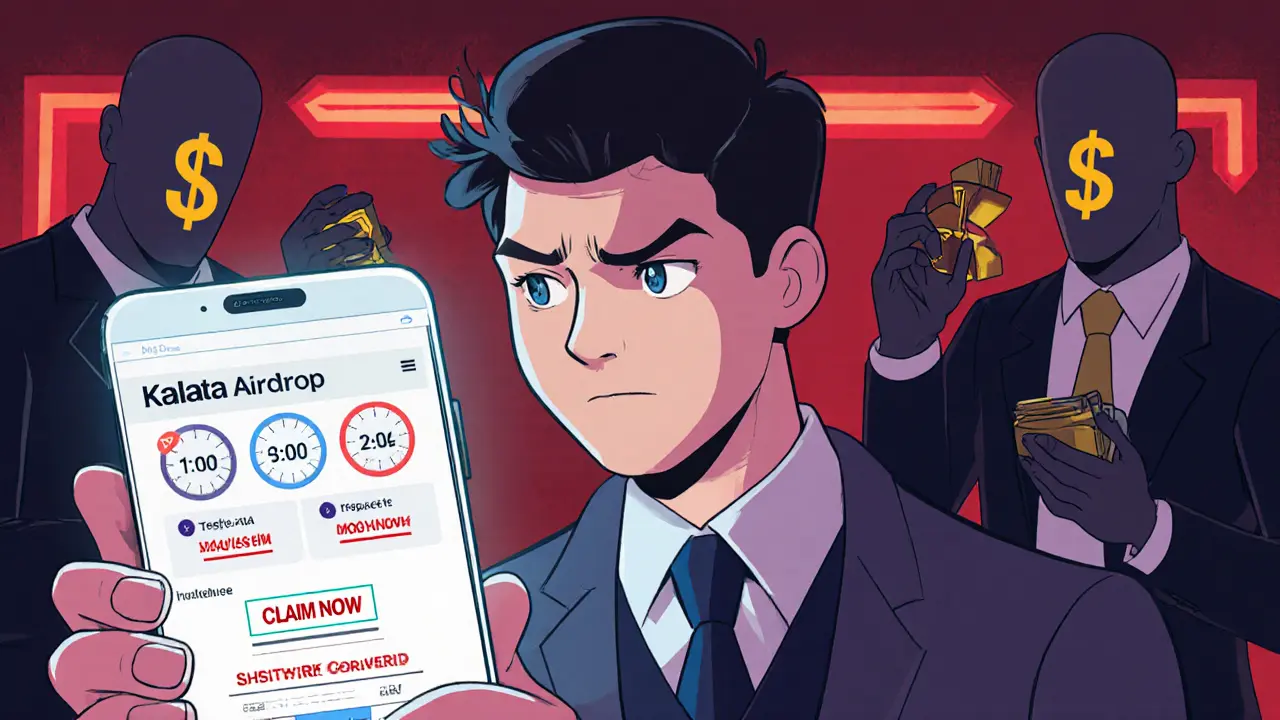
No official Kalata (KALA) airdrop exists in 2025. Learn how to spot fake airdrop scams, what real airdrops look like, and how to protect your crypto wallet from fraud.