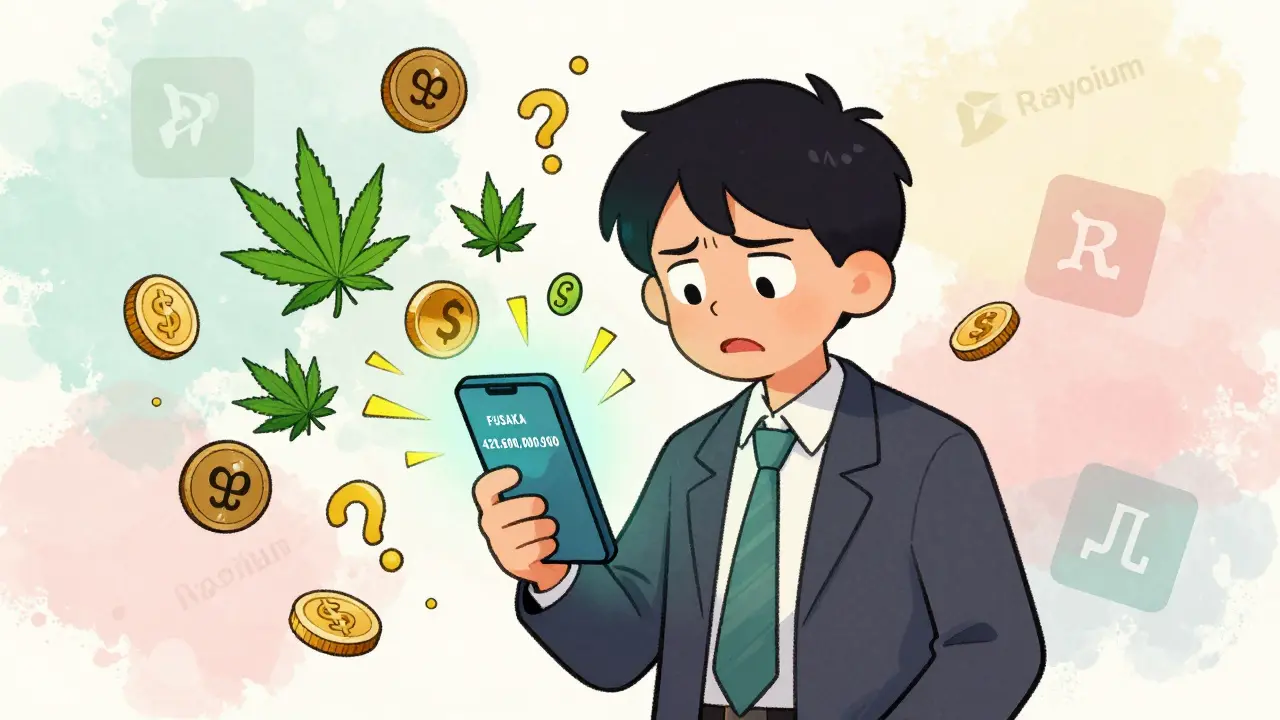
FUSAKA price: What it is, where to track it, and why most listings are fake
When you search for FUSAKA, a token that appears on low-tier exchanges with no clear team, website, or utility. Also known as FUSAKA coin, it’s often listed with a price tag—but that price is usually meaningless. Unlike real projects with transparent tokenomics, FUSAKA has no public roadmap, no audited smart contracts, and no evidence of active development. It’s a classic example of a token created to exploit search traffic, not to deliver value.
What you’re seeing as "FUSAKA price" is almost always a fabricated number on a sketchy exchange that doesn’t require KYC. These platforms pump fake tokens to attract buyers, then vanish—or let the price crash after a few hours. Real crypto value comes from adoption, utility, and community. FUSAKA has none of that. It’s not listed on Binance, Coinbase, or Kraken. No reputable analyst tracks it. No on-chain data shows meaningful movement. Even the name doesn’t match any known project in the blockchain space. This isn’t an overlooked gem—it’s a trap.
Scammers rely on people typing "FUSAKA price" into Google, hoping they’ll click on a fake listing and buy in. They know you’re looking for a quick gain. But here’s the truth: if a token doesn’t have a website, a whitepaper, or a team you can verify, its price is just a number on a screen. It’s not an investment—it’s a lottery ticket with zero odds. The same pattern shows up in other fake tokens like CRO Trump AI, XAIGAME, and Just Elizabeth Cat—all listed in the posts below. These aren’t coins. They’re digital ghosts.
What you’ll find in the articles ahead are real stories about tokens that looked promising but turned out to be scams, exchanges that disappeared overnight, and how to spot the same red flags before you lose money. You’ll learn how to check if a token is real using on-chain tools, how to avoid fake airdrops, and why the most dangerous crypto risks aren’t market crashes—they’re fake projects designed to look like opportunities. The FUSAKA price might show up on a dozen sites, but the only thing you should track is how to protect yourself from the next one.