
SMAK Token Value Calculator
The SMAK airdrop promised $20,000 worth of tokens, but the value has plummeted 94% since launch. Calculate what your investment would be worth today.
Value Analysis
⚠️ Important Note: The SMAK token is effectively worthless today. This calculator is for educational purposes only.
Key Lessons
This calculator shows why the SMAK airdrop failed. Airdrops don't create value without real utility and adoption. The token had no practical use beyond speculation, leading to the collapse.
Remember: Airdrops are marketing tools, not investment opportunities. Without real product usage and community engagement, tokens lose value quickly.
Back in September 2021, a small cryptocurrency project called Smartlink ran an airdrop on CoinMarketCap that promised to hand out $20,000 worth of its native token, SMAK. Thousands signed up. Some even held onto the tokens, hoping they’d become the next big thing. Today, SMAK trades at around $0.00012 - down over 94% from its peak just a year after the airdrop. The 24-hour trading volume? $0. Zero. That’s not a typo.
What Was the SMAK X CoinMarketCap Airdrop?
The SMAK airdrop was a straightforward campaign: sign up on CoinMarketCap between September 13 and September 23, 2021, and get a free slice of SMAK tokens. No purchase needed. No KYC. Just follow the steps on CoinMarketCap’s airdrop page. It was one of the first major airdrops hosted directly on the platform, which at the time was already the go-to source for crypto data. Millions of users visited CoinMarketCap daily. Smartlink knew this was a rare chance to get in front of real people. The project claimed it was a "token of gratitude" to its community. But the real goal was clear: visibility. Smartlink was new, unproven, and competing in a crowded space. They needed traction. And CoinMarketCap’s platform gave them instant credibility. The tokens were distributed on the Tezos blockchain - a choice that made technical sense. Tezos offered low fees, fast confirmations, and built-in governance. For a decentralized escrow platform like Smartlink, that mattered. The idea was simple: users could lock funds in smart contracts to safely buy and sell goods or services online without trusting a middleman. Whether you were buying a used laptop from a stranger or paying a freelance designer, Smartlink wanted to be the middleman you didn’t need.How the Smartlink Ecosystem Was Supposed to Work
Smartlink wasn’t just a token. It was a full ecosystem built around trustless transactions. The SMAK token had three main roles:- Fee exemption: Holders didn’t pay escrow service fees.
- Escrow rewards: Users who locked funds in Smartlink’s system earned SMAK as a reward.
- Governance: Token holders could vote on platform upgrades and changes.
- Smartlink Escrow: For C2C, B2C, and B2B deals.
- Smartlink Payment Processing: A decentralized payment gateway accepting multiple cryptocurrencies.
- Smartlink Marketplace: A place to list and sell digital or physical goods.
Why the Airdrop Didn’t Lead to Adoption
Airdrops are great for grabbing attention. But they’re terrible at building lasting communities - unless the product actually solves a problem people care about. The SMAK airdrop worked exactly as planned: it got people to claim tokens. But then what? Most recipients didn’t even know what Smartlink did. They didn’t use the escrow service. They didn’t list items on the marketplace. They didn’t vote on governance proposals. They just held the tokens, hoping for a quick flip. That’s the classic airdrop trap: you attract speculators, not users. Even worse, the project never clearly explained how to use its platform. There were no tutorials. No onboarding flows. No customer support channels that worked. The website was sparse. The documentation was thin. By the time someone figured out how to connect their wallet to the escrow service, they’d already lost interest. Meanwhile, competitors like Aragon, Nexus Mutual, and even simple escrow bots on Ethereum were gaining traction. Smartlink didn’t differentiate itself enough. Tezos was a good choice, but no one cared. The market didn’t care about the blockchain - it cared about whether the service worked better than what already existed.
Token Performance: A Slow Collapse
Here’s the brutal truth: SMAK’s price tells the whole story. - Post-airdrop (late 2021): Price peaked around $0.0024. - September 2024: Down to $0.0024 - still flatlining. - December 2025: $0.000113 to $0.000137. That’s a 94.6% drop from its peak. And it’s still falling. Over the last seven days, it dropped 47%. Over the last month? 60%. This isn’t a correction. This is a death spiral. Trading volume? $0. That means no one is buying or selling. No liquidity. No market. Even Gate.io, the only exchange that still lists SMAK, shows almost no activity. If you tried to sell your SMAK tokens right now, you’d struggle to find a buyer. And then there’s the supply issue. CoinMarketCap says 305 million SMAK are in circulation. But other trackers say 0. Which one’s right? No one knows. That kind of confusion kills trust. If you can’t verify how many tokens exist, how can you trust the project?What Went Wrong? The Real Reasons
The SMAK airdrop didn’t fail because of bad timing. It failed because of bad execution - and worse, bad priorities. 1. Marketing over product: They spent money on CoinMarketCap exposure, not on user experience. They focused on getting tokens into wallets, not getting people to use the platform. 2. No real utility: Holding SMAK didn’t give you anything useful unless you were already using the escrow system. And no one was using it. 3. No community building: There were no Discord servers with active support. No AMAs. No content explaining how to use the product. Just a website and a token. 4. Ignoring the basics: If you’re building a decentralized escrow tool, you need to make it dead simple. But the interface was clunky. The instructions were vague. And there was no incentive to stick around after claiming the airdrop. 5. Wrong blockchain for the audience: Tezos is great for developers, but most everyday users don’t know what it is. They use Ethereum, Solana, or even Bitcoin. Smartlink picked a niche chain and then wondered why no one showed up.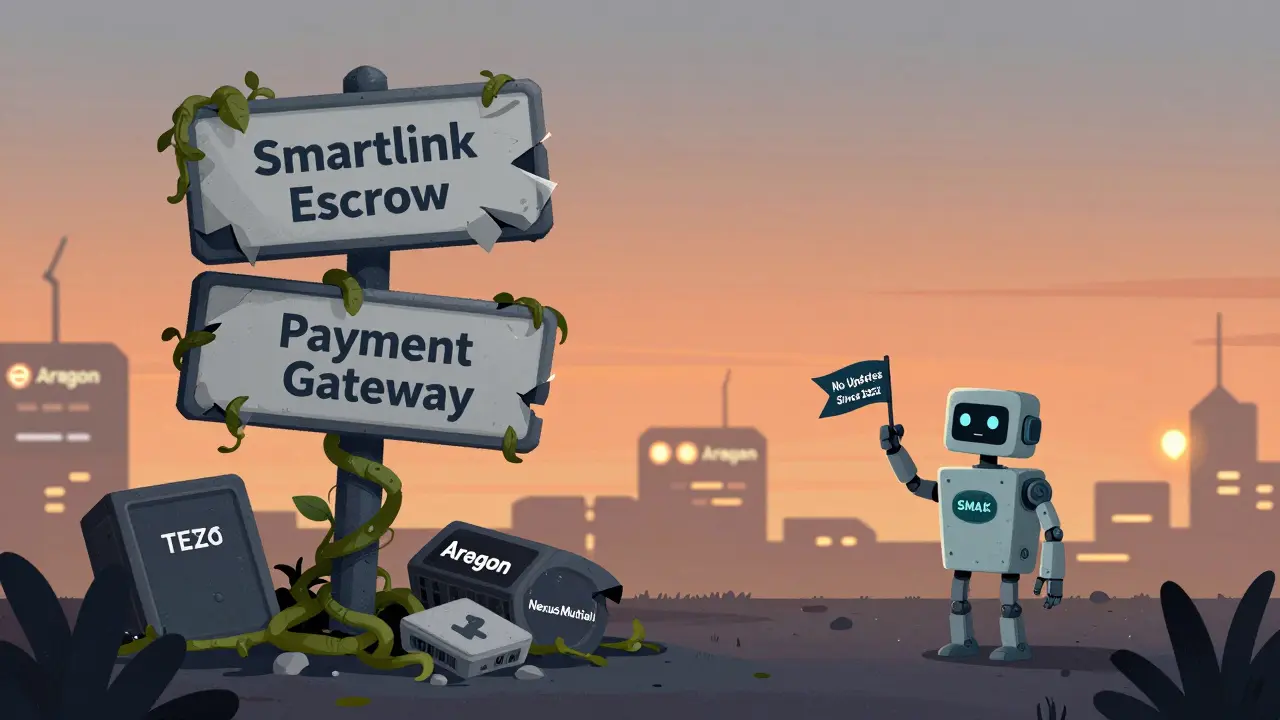
Is There Any Hope for SMAK?
Technically? Maybe. The code still works. The escrow contracts are still live on Tezos. The idea of trustless transactions isn’t dead. But the project is effectively dead. No team updates. No new features. No marketing. No exchange listings beyond Gate.io. The last social media post from the official account was in 2022. If you still hold SMAK tokens, you’re holding digital ghost money. It’s not worthless - technically, you could still send it. But no one will take it. No one will buy it. And no one will use it. The airdrop gave you free tokens. But it didn’t give you a future.What You Can Learn From SMAK’s Failure
The SMAK airdrop is a textbook case of how not to launch a crypto project. - Airdrops aren’t magic. They don’t create value. They just distribute tokens. If your product sucks, people will forget about it the second they cash out. - Utility matters more than hype. People don’t care about blockchain tech. They care about solving problems. Smartlink had a real problem to solve - but never made it easy to use. - Community isn’t a Discord server. It’s people who use your product daily. If they’re not using it, you don’t have a community. You have a mailing list. - Choose your blockchain wisely. Don’t pick a chain because it’s cheap. Pick it because your users are already there. If you’re running an airdrop today, ask yourself: Are you trying to build a product - or just collect email addresses? SMAK did the latter. And now it’s a footnote in crypto history.Frequently Asked Questions
Was the SMAK airdrop real?
Yes, the SMAK airdrop on CoinMarketCap was real and ran from September 13 to September 23, 2021. It distributed $20,000 worth of SMAK tokens to users who completed the steps on CoinMarketCap’s platform. The campaign was promoted through Smartlink’s official channels and YouTube videos released days before the airdrop began.
Can I still claim SMAK tokens from the airdrop?
No. The airdrop window closed permanently on September 23, 2021. CoinMarketCap no longer lists the campaign as active, and Smartlink has not reopened or extended the distribution. Any website claiming to offer SMAK airdrops today is likely a scam.
Where can I trade SMAK tokens today?
As of 2025, SMAK is only listed on Gate.io, and even there, trading volume is effectively zero. Most major exchanges like Binance, Coinbase, and Kraken dropped SMAK due to lack of liquidity. If you own SMAK, selling it will be extremely difficult - and you’ll likely get far less than you paid, if anything at all.
Why did SMAK’s price crash so hard?
SMAK crashed because there was no real usage of the platform. The airdrop brought in speculators, not users. Once the initial hype faded, no one was buying or selling goods through Smartlink’s escrow service. Without demand for the token’s utility, its value collapsed. The lack of updates, community engagement, and exchange support made the situation worse.
Is Smartlink still active?
There is no evidence that Smartlink is still active. The official website hasn’t been updated since 2022. Social media accounts are silent. No new team members have been announced. No product updates have been released. The project appears abandoned, though the smart contracts on the Tezos blockchain still exist.