The SEC’s crypto enforcement fines in 2024 didn’t just go up - they exploded. A 3,018% increase in penalties compared to the previous year isn’t a typo. It’s the result of a deliberate, high-stakes campaign by the Securities and Exchange Commission to force crypto companies into compliance - or pay the price. This wasn’t a slow creep toward regulation. It was a hammer drop.
One Case Carried the Whole Year
Most of that $4.98 billion in penalties didn’t come from dozens of small fines. It came from one case: the SEC’s victory against a major crypto platform accused of selling unregistered securities through token sales. That single judgment handed down $4.5 billion in disgorgement, interest, and civil penalties. That’s more than the total fines the SEC collected from all crypto cases in 2023. The rest of the year’s enforcement actions - 33 in total - added up to less than $500 million. But that one case? It redefined what’s possible under U.S. securities law.Why the Surge? It Wasn’t About Volume
You might think more enforcement actions meant more fines. But the opposite happened. The SEC brought 33 crypto cases in 2024 - down 30% from 2023. That’s the fewest since 2021. So how did penalties jump nearly 3,000%? The SEC stopped chasing small players. They went after the big ones - the platforms with billions in assets, the teams that raised money from retail investors without registering as securities issuers. The agency focused on three things: unregistered token sales (62% of cases), market manipulation, and failure to register as a broker-dealer. These aren’t technicalities. They’re core violations of the Howey Test - the legal standard the SEC uses to decide if a token is a security. If you’re selling a token and promising profits based on someone else’s effort, you’re selling a security. And if you don’t register, you’re breaking the law.Who Paid the Most - And Why
The biggest fine wasn’t against a decentralized exchange or a DeFi protocol. It was against a centralized platform that marketed its tokens as investment opportunities. Investors were told they’d earn passive income from staking or lending. The SEC called it a classic pyramid scheme disguised as blockchain innovation. The platform didn’t just ignore registration rules - they actively hid their structure from regulators. Other major settlements included a $120 million penalty against a DeFi lending platform for operating without broker-dealer registration. Another $85 million came from a crypto exchange that allowed U.S. users to trade unregistered tokens. These weren’t minor slips. They were systemic failures. What’s striking is how many companies settled before trial. Nearly half of all crypto enforcement actions in 2024 ended in consent orders. Why? Because the SEC had built a paper trail so strong - from internal emails to marketing materials - that fighting became pointless. Most companies chose to pay and move on.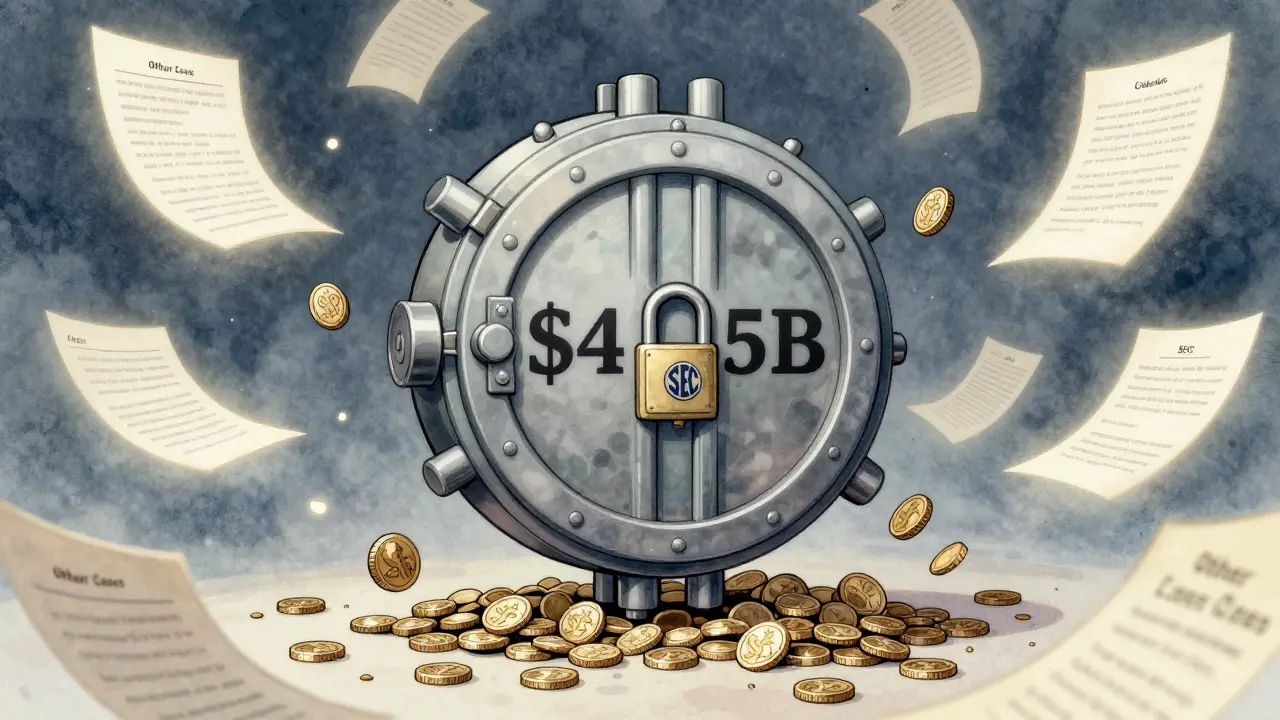
The Hidden Strategy: Timing and Pressure
Half of all crypto enforcement actions in 2024 happened in September and October. That’s no accident. Chair Gary Gensler’s term was ending. The next president would likely appoint a new SEC chair with different views. The agency knew they had a narrow window to set precedents. They moved fast, filed lawsuits, and secured asset freezes in 31 cases - locking up funds before they could be moved offshore. They also expanded their team. The Crypto Assets and Cyber Unit grew by 20%, hiring forensic accountants, blockchain analysts, and former crypto executives who knew how these platforms operated. Whistleblower tips jumped 25% - over 180 leads in one year. That’s the kind of intel you can’t buy. It comes from insiders who’ve seen the fraud firsthand.What Happened to the Money?
The SEC collected $8.2 billion in total penalties across all sectors in 2024 - the highest ever. But only $345 million went back to harmed investors. That’s down from $930 million in 2023. Most of the money went to the U.S. Treasury. That’s a problem. Investors want their cash back, not a government deposit. The SEC says they’re working on better recovery systems, but so far, the system favors punishment over restitution.
What This Means for Crypto Companies in 2025
The message is clear: if you’re running a crypto business in the U.S., you need to know if your tokens are securities. If they are, register. If you’re unsure, consult a lawyer - don’t rely on a Reddit thread or a Telegram group. The SEC isn’t going away. Even if Gensler leaves, the legal framework he helped enforce won’t vanish overnight. New leadership might slow the pace, but the rules won’t change. The Howey Test still applies. Token sales still need registration. Platforms still need to be licensed. The only thing that might shift is how aggressively the SEC pursues small projects. The big players? They’re now on notice.What You Should Do Now
If you’re a crypto founder: audit your token structure. Are you promising returns? Are you relying on third-party efforts to drive value? If yes, you’re likely selling a security. Talk to a securities lawyer - not a crypto influencer. The cost of legal advice now is a fraction of what you’ll pay in fines later. If you’re an investor: stop assuming that just because a token is on a big exchange, it’s legal. The SEC has said multiple times that exchanges don’t vet for compliance. Just because it’s listed doesn’t mean it’s registered. If you’re a developer: understand that code doesn’t exempt you from securities law. A smart contract doesn’t make a token a utility. The SEC looks at the economic reality - not the marketing slogan.Is This the End of Crypto Innovation in the U.S.?
Some say the SEC is killing innovation. But the truth is more nuanced. Innovation didn’t die. It moved. Projects that want to play by U.S. rules are building compliant token models - security tokens with clear disclosures, investor protections, and registration. Others are relocating to Europe, Singapore, or the Middle East, where regulatory clarity is growing. The U.S. isn’t shutting crypto out. It’s demanding accountability. And for the first time, the industry has no excuse to ignore it.Why did SEC crypto fines jump 3,018% in 2024?
The spike came from one massive $4.5 billion judgment against a crypto platform for selling unregistered securities. That single case accounted for nearly 90% of the total penalty increase. The rest came from smaller settlements, but the scale of that one case distorted the overall numbers.
Did the SEC file more crypto cases in 2024?
No. The SEC filed 33 crypto enforcement actions in 2024 - a 30% drop from 2023. They shifted from volume to impact, focusing on high-value targets instead of chasing dozens of small projects. This made each case more expensive - and more consequential.
What’s the Howey Test, and why does it matter for crypto?
The Howey Test is a legal standard from a 1946 Supreme Court case that determines if something is an investment contract - meaning a security. For crypto, it asks: Did someone invest money? In a common enterprise? With the expectation of profit from others’ efforts? If yes, it’s a security. Most crypto tokens fail this test unless they’re designed as utility tokens with no profit promise.
Can crypto companies still raise money in the U.S.?
Yes - but only if they follow the rules. Companies can raise funds through Reg D, Reg A+, or Reg CF exemptions. Some are issuing security tokens with proper disclosures and investor limits. It’s harder, slower, and more expensive - but it’s legal. The SEC isn’t banning fundraising. They’re banning fraud and unregistered sales.
What’s next for SEC crypto enforcement in 2025?
Enforcement will likely slow under new leadership, but the legal framework stays. The SEC’s focus will shift from punishment to education and compliance. They’ve already recommended consumer education programs and are expected to push for clearer rules on stablecoins, DeFi, and NFTs. The big cases are done. Now, the industry must adapt.