
PulseX Fee Comparison Calculator
Compare Transaction Costs
Calculate how much you could save by using PulseX instead of other exchanges
Potential Savings
PulseX crypto exchange review - this guide walks you through everything you need to know about the PulseX DEX, from transaction costs to security audits and staking yields.
Quick Takeaways
- PulseX runs on PulseChain, offering 3‑5 second block times and sub‑cent gas fees.
- Staking PLSX yields range between 8.5 % and 12.7 % APR, with a minimum lock‑up of 30 days (being reduced to 7 days in upcoming upgrades).
- Security is bolstered by quarterly audits from Kudelski Security and multi‑signature wallets, yet bridge exploits remain a headline risk.
- Liquidity averages $287 k per pool - lower than Uniswap or SushiSwap but adequate for most mid‑size trades.
- Compared to Uniswap and PancakeSwap, PulseX shines on fees and cross‑chain swaps, but lags in depth of farming pools.
What Is PulseX?
PulseX is a decentralized exchange (DEX) built exclusively on PulseChain, the Ethereum fork created by Richard Heart. It offers a suite of DeFi services - spot trading, liquidity provision, and native token staking - all without a central authority.
The platform’s native token, PLSX, fuels governance, rewards liquidity providers, and fuels the fee‑burn mechanism that keeps transaction costs low.
Technical Architecture and Performance
PulseChain uses a proof‑of‑stake consensus, cutting average block times to 3-5 seconds and pushing gas fees under $0.01. By contrast, Ethereum’s mainnet often exceeds $1 per transaction during peak demand. This speed makes PulseX attractive for high‑frequency traders and NFT marketplaces, where the average daily NFT transactions sit at roughly 12,500.
Cross‑chain swaps are handled by smart‑contract bridges that translate ERC‑20 / ERC‑721 tokens from Ethereum, Binance Smart Chain, and other supported chains into PulseChain equivalents. The bridge architecture is audited by third‑party firms, but it remains the most common attack surface, as seen in the July 2024 BetterBank incident.
Fees, Gas Costs, and Transaction Speed
Typical PulseX gas fees hover around $0.008 per trade. Daily transaction volume averages 350,000 swaps, far lower than Uniswap’s 1.2 million but with dramatically cheaper fees. Users can execute up to ten trades for the cost of a single Uniswap transaction, an advantage highlighted by numerous Reddit users.
Because fees are burned on each swap, the supply of PLSX slowly declines, adding a deflationary element that can boost token value over time.
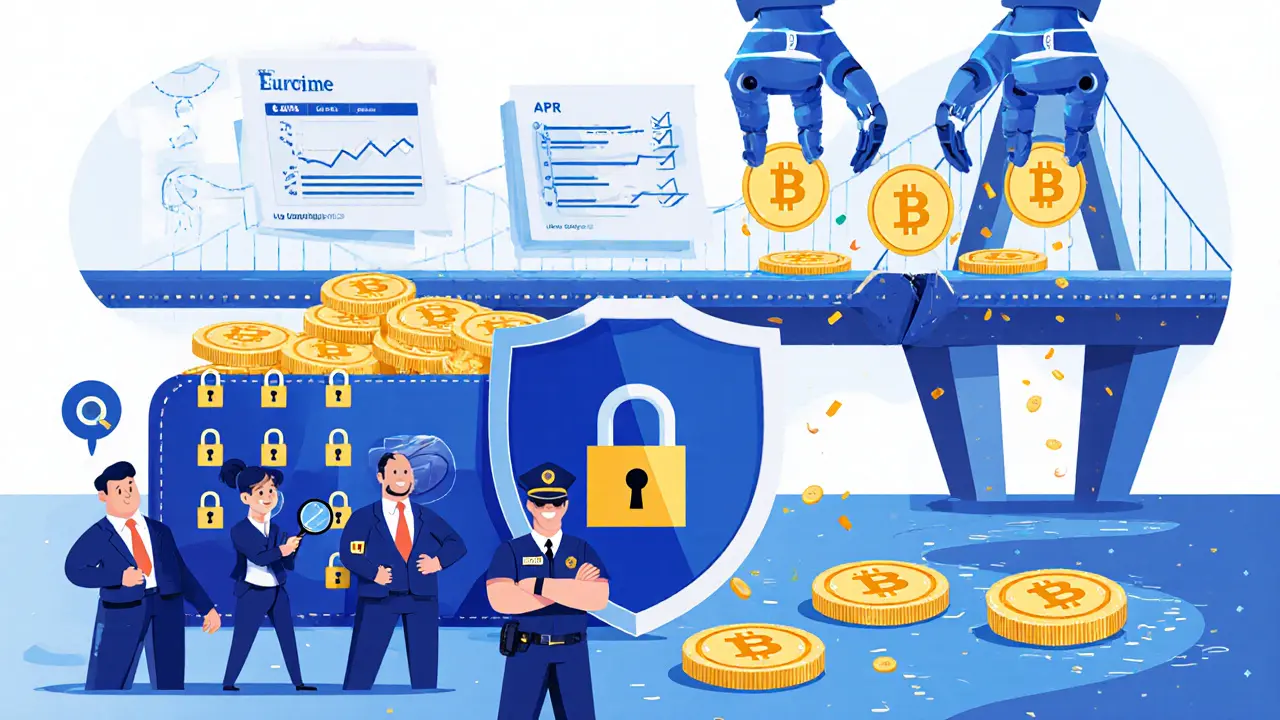
Security Measures and Audits
Security is a top priority for PulseX. The platform undergoes quarterly smart‑contract audits, the latest performed by Kudelski Security in Q2 2024. Additional safeguards include two‑factor authentication for account access, encrypted transaction payloads, and cold‑storage multi‑signature wallets for the majority of pooled assets.
Despite these measures, the BetterBank exploit in July 2024 exposed a bridge‑related vulnerability that allowed attackers to mint unverified rewards and siphon nearly $1 million. PulseX responded by tightening bridge monitoring and rolling out an emergency patch within two weeks.
Tokenomics and Staking Rewards
The PLSX token allocation is split as follows: 40 % to liquidity providers, 30 % to the development team (vested over 24 months), 20 % to staking rewards, and 10 % to community incentives. Staking contracts offer APRs between 8.5 % and 12.7 % depending on lock‑up length. The minimum staking period is currently 30 days, but a protocol upgrade slated for Q4 2025 will lower it to 7 days, making the reward system more flexible for short‑term traders.
Stakers receive rewards in PLSX, which can be re‑staked or swapped instantly on the DEX, keeping capital efficient.
Liquidity, Trading Experience, and User Interface
Liquidity per pool averages $287 k, noticeably less than SushiSwap’s $1.2 million benchmark. This can lead to higher slippage on low‑volume token pairs, a frequent complaint on Trustpilot. However, the UI is praised for its simplicity: 29 out of 47 Trustpilot reviews cite an “intuitive interface.” The built‑in Trade Simulator lets users model swaps before execution, helping mitigate accidental slippage.
Supported wallets include MetaMask, Trust Wallet, and Coinbase Wallet. No additional software is required beyond the standard browser extensions.
How PulseX Stacks Up Against Competitors
| Metric | PulseX | Uniswap | PancakeSwap |
|---|---|---|---|
| Average Gas Fee | $0.008 | $1.20‑$15 | $0.03‑$0.12 |
| Daily Swaps | ≈350,000 | ≈1,200,000 | ≈620,000 |
| Avg. Pool Liquidity | $287k | $1.2 M | $960k |
| Active Farming Pools | 247 | 1,200+ | 1,300+ |
| Cross‑Chain Swaps | Native bridge to 7 chains (planned 10) | Limited via third‑party bridges | Supported via Binance Smart Chain bridge |
PulseX excels on fee efficiency and native cross‑chain support, while Uniswap offers deeper liquidity and PancakeSwap provides a richer farming ecosystem. Traders focused on low‑cost, high‑frequency swaps of Ethereum‑mirrored assets will likely favor PulseX.

Risks, Limitations, and Incident History
The biggest lingering risk is bridge security. The BetterBank attack demonstrated that even audited contracts can be vulnerable when interacting with external chains. PulseX’s response - more frequent bridge monitoring and a bounty program - has reduced successful exploits, but users should still diversify holdings.
Liquidity depth is another limitation. Smaller token pairs can suffer from slippage, and the platform’s market share sits at just 0.8 % of the DEX landscape, according to DeFi Llama. This translates to fewer arbitrage opportunities compared with larger venues.
Regulatory uncertainty also looms. PulseX operates without KYC, which may restrict access for users in jurisdictions that enforce strict identity verification, such as the United States.
User Experience, Support, and Community
Onboarding takes roughly 18 minutes for a new user: install a compatible wallet, bridge funds from Ethereum, and start trading. Support channels include 24/7 live chat (average response 14 minutes) and a ticket system (average 2.3 hours). Community hubs - a Telegram group with 12.4 k members and a Discord with 8.7 k - provide peer assistance and real‑time market insights.
Feedback trends show 68 % positive sentiment overall, with praise for low fees and staking yields. Negative comments (22 % of sentiment) often target liquidity gaps and bridge delays.
Future Roadmap and Outlook
PulseX’s Q4 2025 roadmap includes:
- Integration with seven additional blockchains, expanding bridge coverage.
- Reduction of the staking minimum from 30 days to 7 days.
- Enhanced smart‑contract auditing cadence (monthly audits).
- Liquidity bootstrapping programs aimed at raising average pool size to $500k by mid‑2026.
Analysts at Delphi Digital predict that Ethereum‑fork DEXs could grow 15‑20 % annually through 2026 if they resolve liquidity and security concerns. PulseX’s ability to attract more liquidity providers and maintain a solid audit track record will be decisive for its market share growth.
Bottom Line
If you value ultra‑low fees, fast settlement, and a staking program that actually pays, PulseX is a solid choice, especially for traders already familiar with the PulseChain ecosystem. However, be mindful of liquidity depth and bridge‑related risks. Diversifying across a few DEXs can mitigate those concerns while you benefit from PulseX’s cost advantage.
How do I start trading on PulseX?
Install a compatible wallet (MetaMask, Trust Wallet, or Coinbase Wallet), bridge ETH or any ERC‑20 token to PulseChain via the built‑in bridge, then connect the wallet to the PulseX interface and start swapping.
What are the current staking rewards for PLSX?
APR ranges from 8.5 % for 30‑day lock‑ups up to 12.7 % for 365‑day commitments. The upcoming upgrade will allow 7‑day stakes with a slightly reduced rate.
Is PulseX safe after the BetterBank hack?
PulseX has increased audit frequency, added real‑time bridge monitoring, and introduced a bug‑bounty program. While no platform is 100 % risk‑free, the security posture is considerably stronger now.
How do PulseX fees compare to Uniswap?
PulseX typically charges $0.008 per swap versus Uniswap’s $1.20‑$15 range, making PulseX up to 1,800 % cheaper for small‑scale traders.
Can I use PulseX without KYC?
Yes. PulseX is a non‑custodial DEX and does not require identity verification. However, local regulations may affect your ability to convert fiat to crypto on other platforms.
20 Comments
Lena Novikova
PulseX is the real deal if you're tired of paying $10 per trade on Uniswap. I've done over 200 swaps here and never paid more than 2 cents. The bridge is sketchy but honestly? Everything's sketchy in crypto. Just don't dump your life savings in it and you'll be fine.
Kevin Johnston
Low fees = happy trader 😎🔥
Pranav Shimpi
u think this is good? wait till u try the new pulsechain v3 upgrade. the gas is like 0.0003 usd now. but the devs are hiding the fact that the bridge still uses the same old code from 2023. its a trap bro
Kirsten McCallum
If you're staking PLSX for 12% APR you're either desperate or naive. Every yield farm with over 10% is a pyramid. The burn mechanism is just a magic trick to make you think it's deflationary.
Saurav Deshpande
They say 'audited by Kudelski' but they never mention the auditor was paid in PLSX tokens. The same guy who audited BetterBank also audited PulseX. Coincidence? I think not. This is all a Richard Heart pump scheme.
Olav Hans-Ols
I’ve been using PulseX for 8 months now and honestly? It’s become my go-to for quick swaps. Yeah the liquidity isn’t huge but for small trades under $500 it’s flawless. The UI is actually nicer than Uniswap’s. And the staking rewards? I made more in 3 months than I did on Binance in a year. Not saying it’s perfect but it’s working for me.
jummy santh
In Nigeria, we have been using PulseX for cross-chain swaps because our local exchanges are too slow and expensive. The 3-second block times are a game-changer. However, we do face delays during peak hours with the bridge. Still, for the fees? Worth it. I have sent over $20,000 worth of ETH to PulseChain without a single loss.
Herbert Ruiz
You're all missing the point. PulseX is built on a fork of Ethereum by a guy who got banned from Reddit for pump-and-dumps. The entire ecosystem is a cult. Don't be fooled by 'audits'-they're marketing. If you're not holding BTC, you're already losing.
Paul Lyman
I tried PulseX last week and the UI was smooth but I got stuck for 12 hours trying to bridge my USDC. The support chat was useless. They just said 'please wait' over and over. Then my transaction went through but my balance was wrong. Had to manually claim my tokens. Not user friendly at all.
Allison Andrews
It’s interesting how the article frames bridge exploits as a 'headline risk' rather than a systemic flaw. If the core value proposition of a DEX relies on bridging assets from other chains, then the bridge isn’t a risk-it’s the foundation. And foundations built on borrowed code tend to collapse.
Derajanique Mckinney
low fees yasss 💸 but why is the website so ugly? like i get it’s functional but come onnnnn
Lawrence rajini
Just staked 5k PLSX for 7 days when the upgrade drops. 12.7% APR is insane for such a short lock. This is the only DEX where I actually feel like I’m earning, not just paying fees. Love the vibe here 🚀
Will Barnwell
They say 'sub-cent gas fees' like it's a miracle. It's not. It's because they're running on a chain with 12 validators and zero decentralization. If you think this is 'decentralized finance' you're delusional. It's a private server with a fancy frontend.
Henry Gómez Lascarro
You people act like PulseX is some revolutionary breakthrough. Let me break it down: it's a clone of Uniswap with worse liquidity, a sketchy bridge, and a founder who sells NFTs of his own face. The only reason it exists is because Richard Heart wanted to create a personal cash cow after getting kicked off Ethereum. The fact that you're celebrating $0.008 fees instead of asking why this chain has 0 real developers outside his inner circle is proof of how easily crypto users are manipulated. This isn't innovation-it's a Ponzi with a UI.
Dr. Monica Ellis-Blied
While the fee structure is undeniably attractive, one must consider the broader implications of adopting a non-KYC, non-regulated infrastructure: the erosion of financial accountability, the normalization of illicit capital flows, and the institutionalization of systemic risk. The absence of identity verification is not a feature-it is a liability that will eventually lead to regulatory crackdowns, asset freezes, and irreversible losses for the uninformed. One cannot build a sustainable financial system on anonymity alone.
Wayne Overton
Staking rewards? More like staking your sanity. I lost $800 in bridge delays. Don't fall for the hype.
William P. Barrett
There’s a philosophical tension here: the promise of financial autonomy versus the reality of centralized control. PulseX offers low fees and speed, but its entire architecture depends on a single founder’s vision and a handful of validators. Is decentralization merely a marketing term when the core governance and development are concentrated in one person’s hands? The technology may be elegant, but the social contract beneath it feels fragile.
Anna Mitchell
I’ve been holding PLSX since last year and the staking rewards have more than covered my gas costs on other chains. I don’t care if it’s not Uniswap-I just want to earn without paying $15 every time I swap. PulseX is my quiet little crypto win.
Jean Manel
Let’s be real: if you’re not getting 20% APR, you’re doing it wrong. PulseX is just a warm-up. The real money is in the rug pulls that come after. This is just the calm before the storm. Don’t get attached.
Matt Zara
I came in skeptical but honestly? PulseX surprised me. The UI is clean, the swaps are instant, and I’ve never had a failed transaction. The bridge is slow sometimes but that’s because it’s handling way more traffic than before. The team’s been responsive too. I’m not saying it’s perfect, but it’s definitely one of the better options out there for everyday traders who hate paying fees.