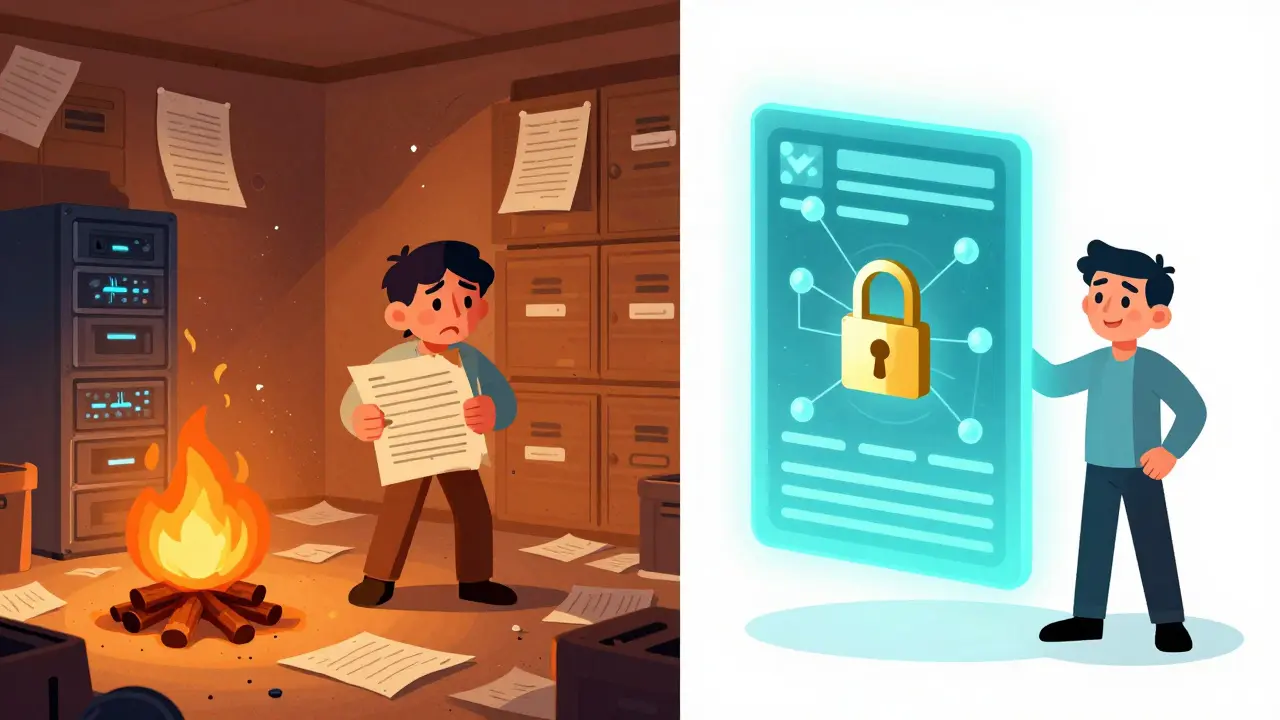
Imagine handing over your keys to a new home, only to find out months later that the person you bought it from didn't actually own it. For decades, this nightmare scenario has been a genuine risk because traditional property records are fragile. They exist on paper that can burn, or on centralized servers that can be hacked. The 2010 Haiti earthquake is a stark reminder of this vulnerability; when sixty years of land-registry archives were destroyed, over a million people were left unhoused and without proof of ownership.
This is where property titles on blockchain, often called blocktitle systems, come into play. These systems move land ownership records from dusty filing cabinets and vulnerable databases onto a distributed ledger. By doing so, they create an unchangeable, transparent history of who owns what. It’s not just about technology for technology's sake; it’s about solving a fundamental human need: secure ownership.
What Exactly Is a Blocktitle System?
To understand why this matters, you first need to grasp how these systems work. A blocktitle system is a digital land registry that uses distributed ledger technology to verify, transfer, and record property ownership. Unlike traditional registries managed by a single government agency, a blocktitle system relies on a network of computers (nodes) that all hold a copy of the ledger.
When a property transaction happens, the agreement isn’t just filed away. It is executed on the blockchain. Network nodes authenticate the transfer using cryptographic rules. Once approved, the new ownership status becomes a "block" linked permanently to the previous one. This creates a chain of title that is fully traceable back to the original owner. You don’t need to trust a middleman; you trust the math and the consensus of the network.
The concept traces its roots back to Satoshi Nakamoto’s 2008 Bitcoin whitepaper, but practical applications for real estate started emerging around 2015. Hernando de Soto’s 2001 book, The Mystery of Capital, highlighted how poor property rights in developing nations stifled economic growth. Blockchain offers a technical solution to those systemic issues by making records accessible and secure globally.
Why Traditional Title Systems Are Failing
You might wonder if we really need such a drastic change. The answer lies in the flaws of current systems. Traditional paper-based registries are physical objects. They can be lost, stolen, or destroyed by natural disasters. Even modernized digital registries have a critical weakness: they are centralized. If the host server is compromised, hackers can alter records, delete liens, or forge deeds.
Blockchain immutability solves this. Once a title is recorded on the blockchain, it cannot be altered without changing every subsequent block and gaining majority control of the network-a feat that is computationally nearly impossible. This makes blockchain what Nasdaq analysts call "the ultimate defense against property title fraud." Every change in ownership is visible to authorized participants, eliminating the shadows where fraud typically hides.
Key Benefits for Buyers, Sellers, and Governments
The shift to blockchain brings tangible advantages that go beyond just security. Here is what changes for everyone involved:
- Speed: Traditional title searches can take days or weeks. In Georgia’s National Agency of Public Registry pilot, property transfers went from taking days to completing in minutes. Ghana’s pilot reported a 70% reduction in verification time.
- Cost Reduction: Blockchain eliminates many intermediaries. Smart contracts-self-executing code on the blockchain-can handle escrow services automatically when conditions are met. This removes fees associated with third-party custodians.
- Transparency: All parties see the same data simultaneously. There is no more waiting for documents to be couriered between lawyers, banks, and registrars.
- Fraud Prevention: With cryptographic hashing (like SHA-256), any attempt to tamper with a record is immediately detected by the network.
For governments, especially in developing economies, this means a more robust tax base and reduced corruption. For buyers, it means peace of mind knowing their investment is legally protected by an immutable record.
How Tokenization Changes Real Estate Investment
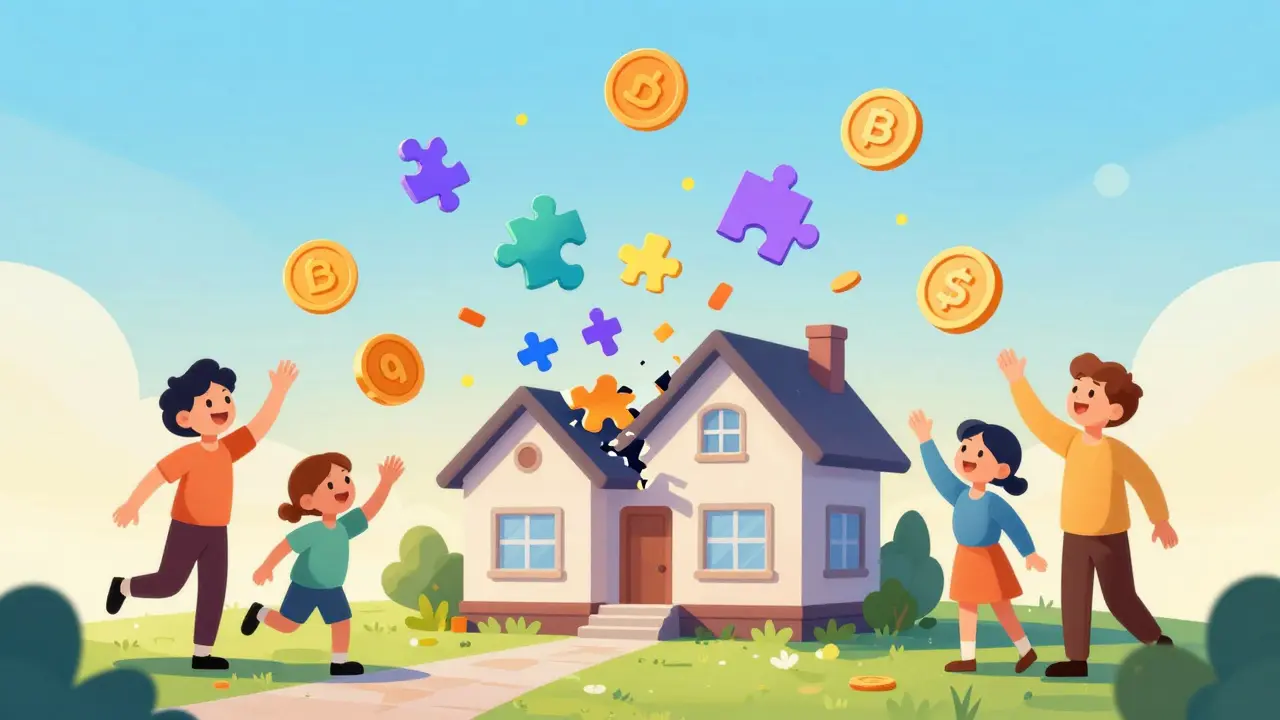
One of the most exciting developments in this space is real estate tokenization. This process converts ownership rights of a physical property into digital tokens stored on the blockchain. J.P. Morgan notes that this allows for fractional ownership. Instead of needing hundreds of thousands of dollars to buy a commercial building, investors can buy tokens representing small shares of that asset.
This democratizes real estate investing. As Yi, a payments specialist at J.P. Morgan, pointed out, many people avoid real estate due to high upfront capital requirements. Tokenization lowers that barrier. It also increases liquidity; selling a fraction of a property is much faster than finding a buyer for the whole building. However, this requires clear legal frameworks to ensure these tokens are recognized as valid financial instruments.
Real-World Pilots and Current Adoption
This isn't just theory. Several countries are actively testing these systems. As of 2023, Georgia, Sweden, and Ghana led the way.
| Country | Agency/Partner | Key Outcome | Challenge Noted |
|---|---|---|---|
| Georgia | National Agency of Public Registry | Transfer times reduced from days to minutes | Integration with legacy systems |
| Sweden | Lantmäteriet (Swedish Land Registry) | Transactions completed in <2 weeks (vs 3-4 months) | Digital literacy for elderly owners |
| Ghana | Land Administration Project | Resolved longstanding boundary disputes | Initial skepticism from rural landowners |
In Sweden, participating agents reported 92% satisfaction with the transparency of the system. However, challenges remain. In Ghana, rural landowners were initially skeptical but became supportive after seeing disputes resolved. In Vermont, USA, the 2016 Blockchain Land Records Act provided early legal recognition, though full adoption remains slow due to institutional inertia.
Barriers to Widespread Implementation
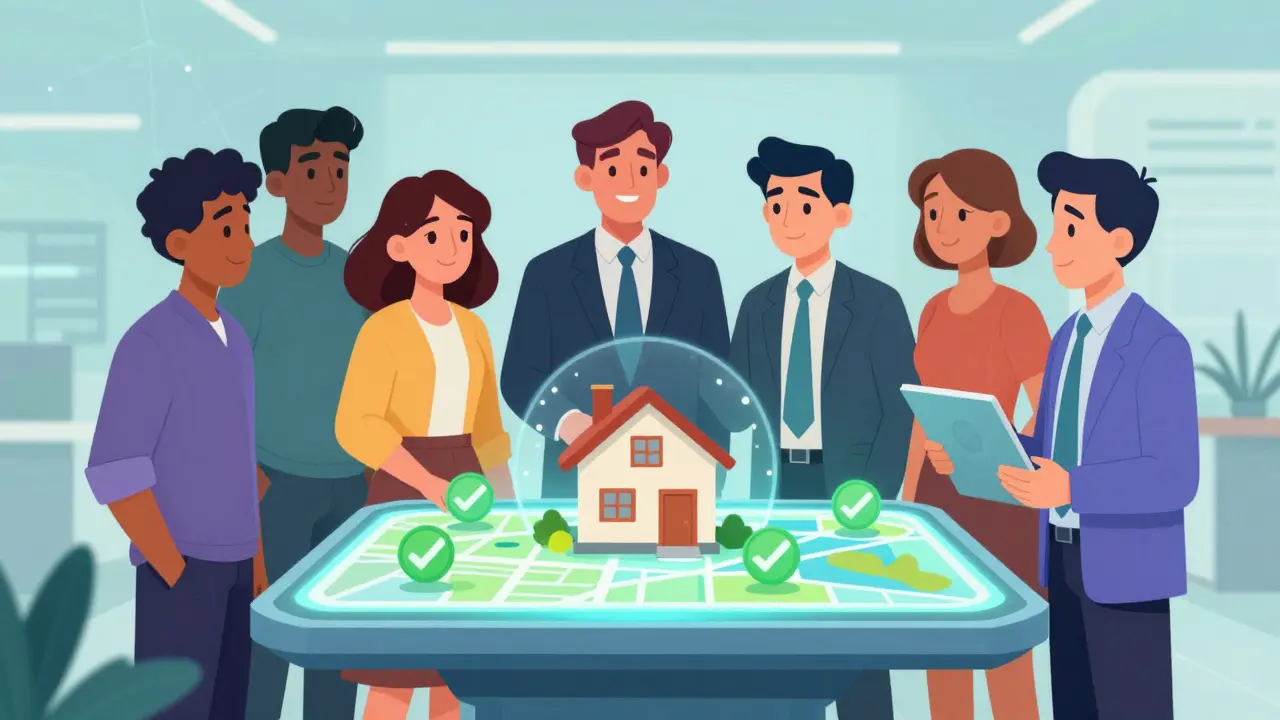
If blockchain is so superior, why hasn't it replaced every land registry yet? The hurdles are significant. First, there is the "garbage in, garbage out" problem. Blockchain secures the record, but it doesn't fix errors in the initial digitization. If a historical title deed was forged before being uploaded, that error becomes permanent on the blockchain.
Second, legal recognition varies wildly. While 47 countries had introduced blockchain legislation by 2025, only 19 explicitly recognize blockchain records as legally valid for property titles. Third, there is resistance from established industries. Title insurance companies, lawyers, and notaries whose roles diminish with automation may push back against rapid change.
Finally, user experience matters. A 2022 survey in Sweden found that 37% of participants struggled to understand the verification process. For non-technical users, the interface must be seamless. If buying a house requires understanding cryptographic hashes, the system will fail.
The Future Landscape: 2026 and Beyond
We are currently in a transitional phase. The global property technology market was valued at $18.5 billion in 2023 and is projected to reach $34.2 billion by 2027. Blockchain-based title management represents about 8.7% of this market ($1.6 billion). Deloitte predicts that by 2030, 35% of commercial real estate transactions will use blockchain, while residential adoption will hit 22%.
Future developments include integrating Internet of Things (IoT) sensors for automatic boundary verification and AI for anomaly detection in title chains. The International Organization for Standardization (ISO/TC 268) launched a standardized blockchain title protocol in October 2025 to ensure different national systems can talk to each other. Complete replacement of traditional systems is unlikely before 2040, but hybrid models-where blockchain acts as the source of truth alongside traditional legal structures-are already emerging.
Is blockchain property title legally binding everywhere?
No, legal recognition varies significantly by jurisdiction. As of 2025, only 19 countries explicitly recognize blockchain records as legally valid for property titles. Countries like Georgia and Sweden have advanced pilots, but most regions still require traditional notarization and registration alongside blockchain records. Always check local laws before relying solely on a digital title.
Can blockchain prevent all types of property fraud?
Blockchain prevents digital tampering and forgery of records once they are on the ledger. However, it cannot prevent fraud that occurs during the initial verification of identity or the accuracy of the original title document. If false information is entered into the system ("garbage in"), the blockchain will securely store that incorrect information ("garbage out"). Robust identity verification protocols are essential.
What is real estate tokenization?
Tokenization is the process of converting ownership rights in a physical property into digital tokens on a blockchain. This allows for fractional ownership, meaning multiple people can own small shares of a single property. It lowers the entry barrier for investors and increases liquidity, as tokens can be traded more easily than physical real estate.
How long does it take to transfer a title on blockchain?
In pilot programs, blockchain transfers have taken minutes. For example, Georgia reported reducing processing times from days to minutes. Sweden saw transaction times drop from three to four months to less than two weeks. Traditional systems often involve manual checks and courier delays, which blockchain eliminates through automated smart contracts and instant verification.
Are my private details safe on a public blockchain?
Most government-led blockchain land registries use permissioned (private) blockchains, not public ones like Bitcoin. This means only authorized entities (government agencies, lawyers, buyers/sellers) can view specific transaction details. Your personal address and identity are protected by privacy layers, while the integrity of the ownership record is maintained cryptographically.