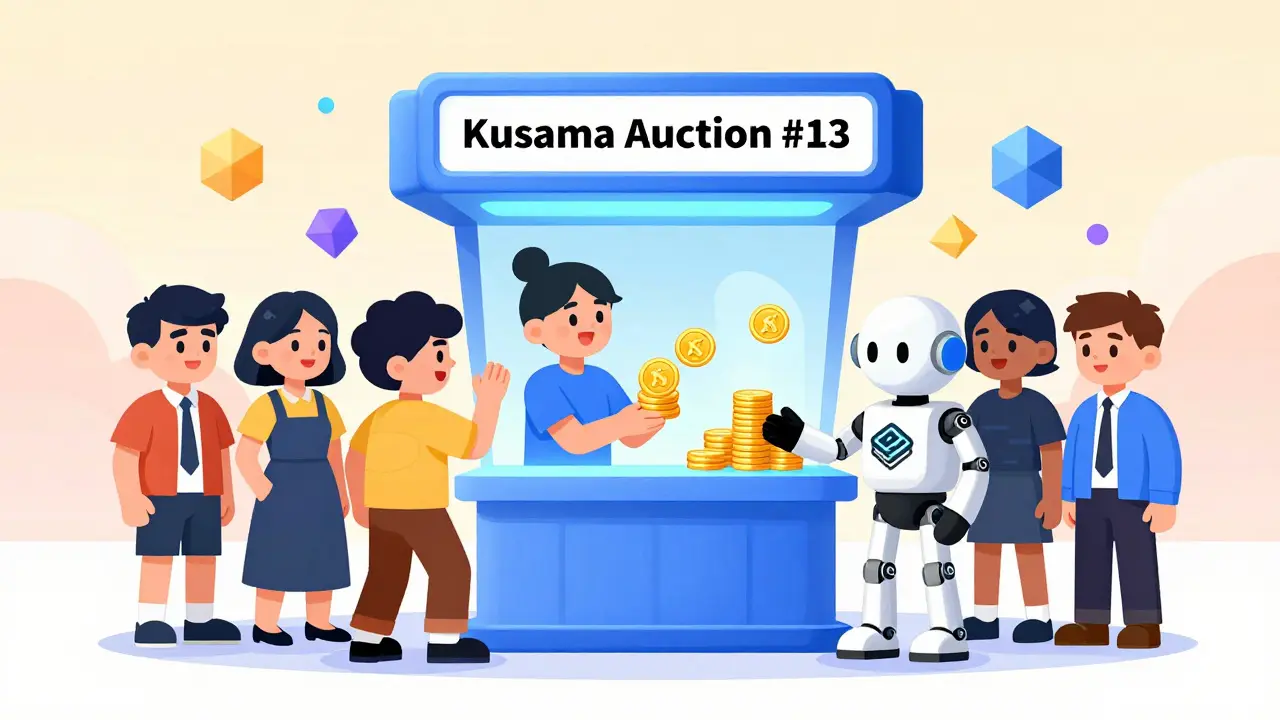
Did you lock up KSM for the Kusama Auction #13 back in late 2021? If so, you might be wondering where your NUUM tokens are. The Bit.Country project, now operating under the banner of MNet (Metaverse.Network), executed a complex distribution plan that involved two different networks and two different tokens. It wasn't a simple "click and claim" scenario. Instead, it was a structured reward system tied to the success of their parachain lease on the Kusama network.
The confusion often stems from the dual-token setup. You didn't just get NUUM directly. You received NEER tokens on the Pioneer network first, which served as the testing ground for the main MNet Continuum chain on Polkadot. Understanding this bridge is crucial if you want to know how much value you actually hold today.
How the MNet Airdrop Actually Worked
To understand what you earned, we have to look at the mechanics of the crowdloan process. Bit.Country won the right to use a slot on the Kusama blockchain through Auction #13. This victory allowed them to launch the MNet Pioneer network. Participants who contributed KSM (Kusama) tokens were rewarded with NEER tokens, not NUUM directly at that stage.
The math behind the reward was straightforward but generous for the time. For every 1 KSM you locked up, you received approximately 72+ NEER tokens. This rate applied to the total amount raised, which hit an impressive 209,494 KSM. At the time, that contribution was worth over $3.1 million. The project maintained a 100% lead in block count throughout the entire leasing period, ensuring they secured the slot without interruption.
| Component | Detail |
|---|---|
| Auction ID | Kusama Auction #13 |
| Reward Token | NEER (Pioneer Network) |
| Reward Rate | ~72 NEER per 1 KSM |
| Total Raised | 209,494 KSM |
| Referral Bonus | 5% Total (2.5% each way) |
If you referred friends, the incentives got even better. The program offered a 5% referral bonus split equally between you and the person you referred. This meant both parties got an extra 2.5% on top of their standard rewards. The first 1,000 participants also received special consideration, though the exact nature of this perk varied based on early community announcements.
The Vesting Schedule: When Did You Get Your Tokens?
You didn't get all your NEER tokens at once. The team implemented a vesting schedule to ensure long-term commitment. Here is how the release worked:
- Immediate Release: 30% of your total reward was unlocked immediately at the Token Generation Event (TGE).
- Linear Vesting: The remaining 70% was released linearly over 12 months.
This means if you contributed during the initial phase, you would have seen the bulk of your rewards distributed by early 2024. By May 2026, any vested NEER tokens should have been fully accessible in your wallet, provided you claimed them during the active windows. Missing the claim window could result in lost funds, as these tokens don't automatically appear in exchanges; they require manual claiming via the official MNet dashboard or associated dApps.
From NEER to NUUM: The Bridge Between Networks
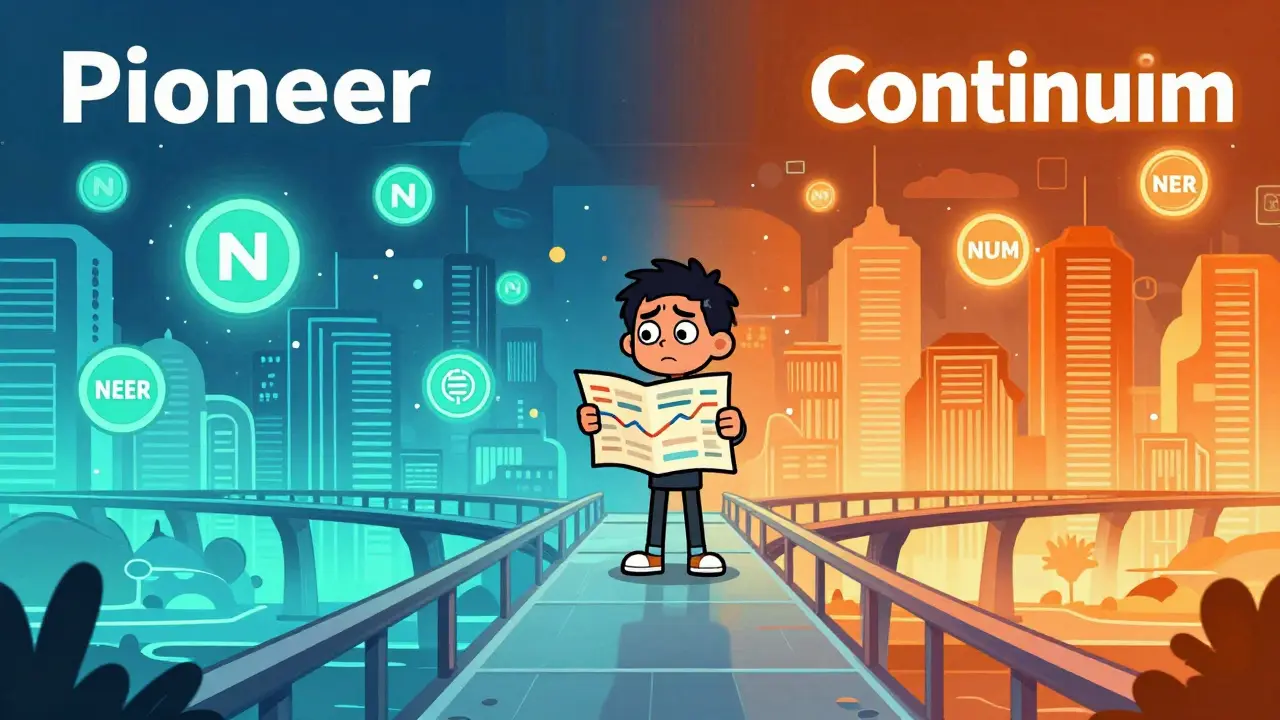
This is where things get tricky. NEER is the native token of the MNet Pioneer network on Kusama. NUUM is the native token of MNet Continuum on Polkadot. They are distinct assets, though they share the same underlying ecosystem vision.
Bit.Country designed Pioneer as a "canary network." It allows developers to test features like WASM smart contracts and Ethereum Virtual Machine (EVM) compatibility before deploying them to the more stable Polkadot environment. While there is no direct 1:1 swap between NEER and NUUM, holding NEER demonstrated your participation in the ecosystem's growth. Many users held NEER as a speculative asset, hoping that the success of the main NUUM chain would drive value across the board.
The transition from Pioneer to Continuum marked a significant upgrade. MNet Continuum secured Leased Core ID 34 on Polkadot. This move signaled a shift from experimental testing to production-ready infrastructure. However, it also meant that the liquidity and utility focused heavily on NUUM rather than NEER.
Current Status of NUUM and NEER in 2026
Let's talk numbers. As of May 2026, the market reality for these tokens is quite different from the hype of 2021-2022.
NUUM Token Performance: NUUM has experienced significant volatility. It reached an all-time high of $0.6046 in March 2024. Since then, it has corrected sharply. Currently, NUUM trades around $0.001958. That represents a drop of nearly 99.7% from its peak. The fully diluted valuation sits at approximately $1.95 million, with a circulating supply of roughly 132.43 million tokens out of a maximum cap of 1 billion.
NEER Token Performance: NEER faces even tighter constraints. It trades exclusively on the Gate.io exchange. Liquidity is low, with daily volumes often hovering around $18,400. The price action mirrors NUUM's struggles, reflecting broader challenges in the metaverse sector. The all-time low for NUUM was recorded in April 2025 at $0.0009996, showing a modest recovery since then, but still far below historical highs.
This price action highlights a critical point: while the technology stack-supporting 3D worlds, NFTs, and play-to-earn mechanics-is robust, market adoption has lagged. The promise of creating personalized metaverses in 12 seconds remains technically viable, but user retention and economic sustainability within those worlds have proven difficult to maintain.
Technical Infrastructure: What Makes MNet Unique?
Despite the price drops, the technical foundation of MNet is worth noting. Unlike many projects that rely solely on one type of smart contract, MNet supports both WASM and EVM-compatible contracts. This dual support lowers the barrier for developers. Ethereum developers can deploy familiar Solidity code, while Rust developers can leverage WASM for higher performance.
The platform operates as a Metaverse-as-a-Service (MaaS) provider. Key features include:
- Land Economies: Users can buy, sell, and develop virtual land parcels.
- NFT Marketplaces: Integrated trading for digital assets created within specific "Bit Countries" (user-generated communities).
- Social Integration: Direct linking to Telegram, WeChat, Twitter, and Facebook groups to tokenize existing social capital.
- Bit Avatar: A persistent identity layer across different metaverse instances.
This architecture aims to democratize blockchain access. You don't need to be a coder to launch a community economy. You just need to define the rules and mint the assets. This simplicity was a major selling point during the funding rounds, which raised over $40 million across five stages.
Common Mistakes and Pitfalls
If you are trying to locate your airdrop rewards, avoid these common errors:
- Confusing Wallet Addresses: Ensure you are checking the correct network. NEER lives on Kusama; NUUM lives on Polkadot. Using a generic multi-chain wallet without selecting the right network tab will show zero balance.
- Ignoring Contract Migrations: NUUM underwent a contract migration. Older wallet interfaces might not recognize the new token address. Always update your wallet's token list using the official addresses provided by MNet.
- Assuming Auto-Swaps: There is no automatic conversion from NEER to NUUM. If you want NUUM, you must trade NEER on supported exchanges or wait for future cross-chain bridge announcements, which remain limited.
- Missing Claim Deadlines: Vesting schedules have hard stops. If you didn't claim your vested NEER within the designated windows, those tokens may be permanently inaccessible.
Liquidity is another major concern. With NUUM trading only on a few platforms and NEER restricted to Gate.io, moving large amounts can cause slippage. Be cautious when attempting to exit positions quickly.
What Does This Mean for Future Investors?
The story of the NUUM/NEER airdrop is a case study in the lifecycle of a Web3 project. High initial funding and successful auction wins create excitement. Technical delivery follows, with real products launching on live networks. But market sentiment shifts rapidly. The 99% drop from ATH to current levels shows that utility alone doesn't guarantee price appreciation.
For those holding NEER, the strategy is largely passive. Watch for announcements regarding deeper integration between Pioneer and Continuum. Any official bridge or swap mechanism could unlock trapped value. For NUUM holders, the focus should be on ecosystem usage. Are people actually building economies on Bit.Country? Are NFTs being traded? These metrics matter more than price charts in the long run.
The project continues to operate actively. MNet Continuum remains leased on Polkadot until October 2025, with potential extensions pending further auctions. Development updates suggest ongoing work on interoperability and developer tools. However, the lack of broad exchange listings limits accessibility for new investors.
Where can I claim my NEER tokens from the MNet airdrop?
You must claim NEER tokens via the official MNet Pioneer dashboard on the Kusama network. Access requires connecting a compatible wallet (like Polkadot.js) to the Pioneer endpoint. Ensure you claim within the vesting windows; otherwise, unclaimed tokens may expire.
Is there a direct swap between NEER and NUUM?
No, there is currently no official 1:1 swap mechanism. NEER is the native token of the Kusama-based Pioneer network, while NUUM is native to the Polkadot-based Continuum network. You must trade NEER on supported exchanges like Gate.io and potentially purchase NUUM separately, depending on availability.
Why did NUUM lose so much value since its all-time high?
NUUM dropped ~99.7% from its March 2024 peak due to broader market corrections in the metaverse sector, low liquidity, and limited exchange listings. While the technology works, user adoption and economic activity within the created metaverses have not scaled enough to sustain high valuations.
What is the difference between MNet Pioneer and MNet Continuum?
MNet Pioneer runs on the Kusama network and uses NEER tokens. It serves as a testing ground for innovations. MNet Continuum runs on the Polkadot network and uses NUUM tokens. It is the production-ready version intended for mainstream adoption and stable operations.
How do I update my wallet after the NUUM contract migration?
Visit the official MNet website or trusted crypto data aggregators to find the new NUUM contract address on Polkadot. Add this new address manually to your wallet's custom token list. Old addresses may no longer display balances correctly.