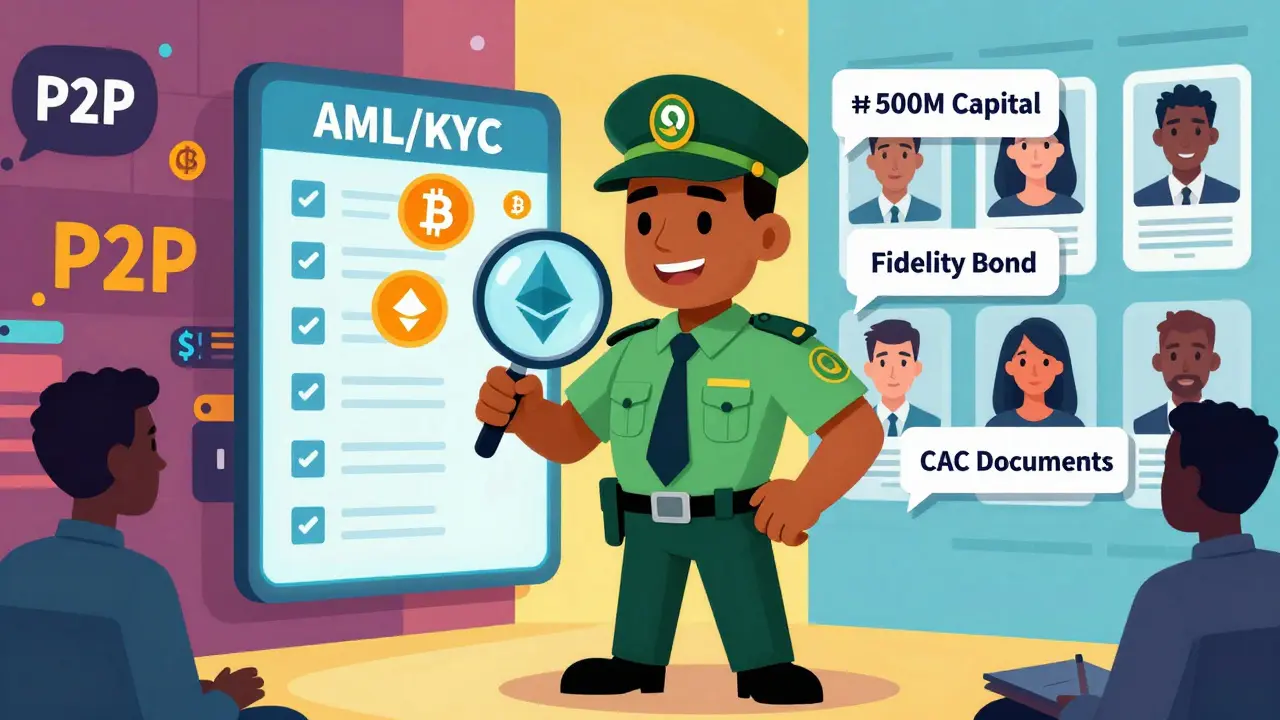
If you're running or planning to launch a cryptocurrency exchange in Nigeria, the rules have changed - and they’re not just stricter, they’re now legally binding. Since the Investments and Securities Act 2025 came into force, the Nigerian Securities and Exchange Commission (SEC) has full authority over every crypto exchange operating in the country. No more gray area. No more unofficial P2P trading as a loophole. If you’re serving Nigerian users, you’re under SEC regulation - whether you’re based in Lagos, London, or Los Angeles.
Who Needs a License?
Any company that lets people buy, sell, or trade cryptocurrencies on a platform must register as a Digital Asset Exchange (DAX). This includes platforms that accept Nigerian Naira, allow Naira deposits, or even just market themselves to Nigerian users through social media, websites, or emails. It doesn’t matter if your server is in Singapore or your team is in Dubai - if Nigerians are using your service, you need SEC approval. Foreign exchanges that don’t have a Nigerian office but actively target Nigerian customers - like running Facebook ads in Yoruba or having a .ng domain - are also required to apply. The SEC isn’t waiting for you to show up. They’re watching your traffic, your ads, and your transaction patterns.Minimum Capital and Financial Requirements
You can’t just open a website and call it an exchange. The SEC demands real financial backing. The minimum paid-up capital is ₦500 million (about $325,000 USD). This isn’t a suggestion. It’s non-negotiable. And it’s not just cash in a bank account - the SEC accepts bank balances, fixed assets like property or equipment, or investments in listed securities. But here’s the catch: every dollar must be traceable. The SEC will dig into your funding sources. If you got the money from a friend’s crypto windfall or an anonymous wallet, you’re out. On top of that, you need a fidelity bond. Think of it as insurance against fraud or theft. The bond must cover at least 25% of your paid-up capital, meaning a minimum of ₦125 million. This bond is held by a licensed insurer and can be claimed by users if your exchange fails to return their funds. It’s not a cost - it’s a guarantee.Corporate Paperwork: No Shortcuts
The SEC doesn’t accept vague business plans. You need real, legally registered corporate documents:- Certificate of Incorporation from the Corporate Affairs Commission (CAC)
- Memorandum and Articles of Association (MEMART) that clearly state your business includes cryptocurrency trading - no generic phrases like "digital services"
- CAC Forms: CAC 1.1 (registration), Form 7 (directors), and any others the SEC requests
- Audited financial statements - even if you’re a startup, you need a statement of affairs signed by an approved auditor
Compliance: AML, KYC, and Monitoring
You can’t ignore money laundering rules. The SEC enforces strict Anti-Money Laundering (AML) and Combating the Financing of Terrorism (CFT) controls. Every user must go through Know Your Customer (KYC) checks. That means:- Government-issued ID (NIN, driver’s license, international passport)
- Proof of address (utility bill, bank statement)
- Live facial verification
What You Can’t Do
The SEC has banned certain practices outright:- No insider trading: You can’t let employees, officers, or even your cousin trade on the platform using inside information. No exceptions.
- No financial help: You can’t loan money to users to buy crypto. No margin trading. No credit lines. No "invest with us and we’ll fund your trade" schemes.
- No listing without approval: You can’t just add a new token because it’s trending. Every digital asset - Bitcoin, Ethereum, Dogecoin, or some new meme coin - needs prior SEC approval before it goes live on your exchange. This is a gatekeeping rule. The SEC will review the token’s whitepaper, team, liquidity, and potential for fraud.
- No anonymous trading: Wallets without verified identities are blocked. Period.
The Two Licensed Exchanges (So Far)
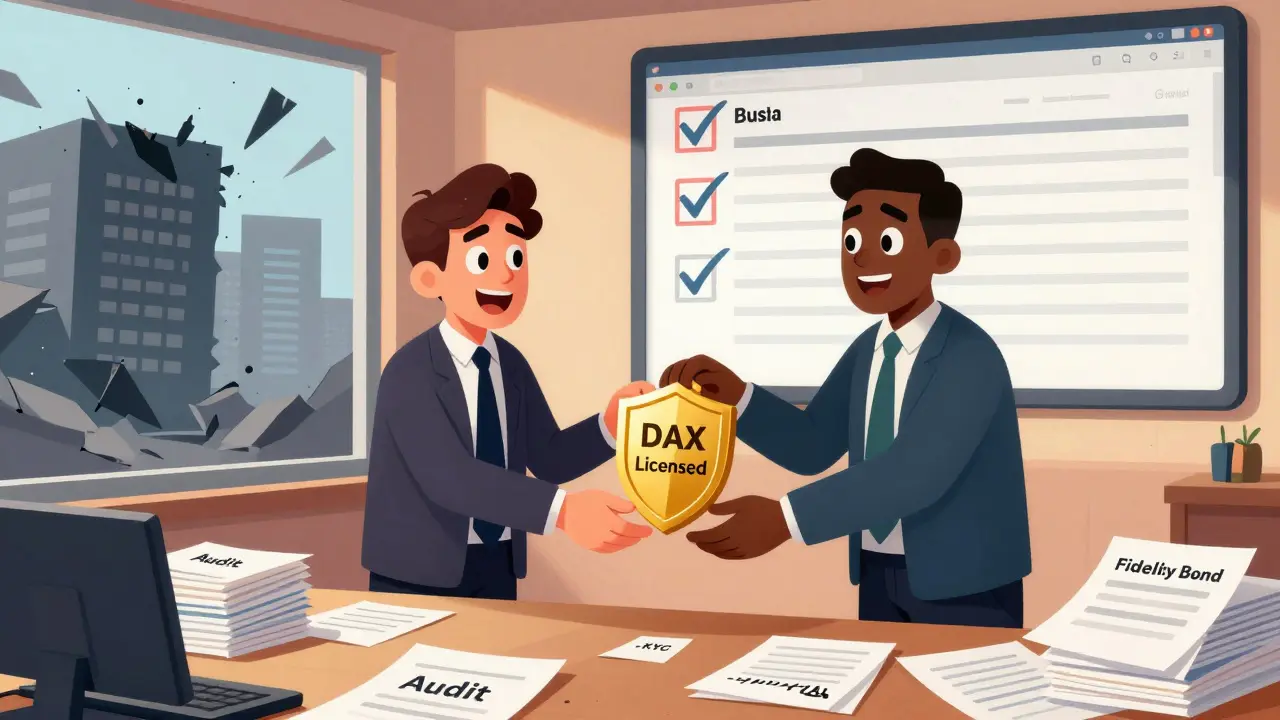
Since the Accelerated Regulatory Incubation Programme (ARIP) launched in June 2024, only two Nigerian crypto startups have received provisional licenses: Quidax and Busha. They’re not just examples - they’re the only legal ones right now. And the SEC is clear: more are coming, but not many. In December 2024, SEC officials said they’d "move a lot quickly" in 2025. That doesn’t mean hundreds. It means a handful - maybe 5 to 10 - before year-end. The process is still slow. Applications take 4 to 6 months. Documentation errors cause delays. The SEC is not in a rush to approve. They’re in a rush to filter out the bad actors.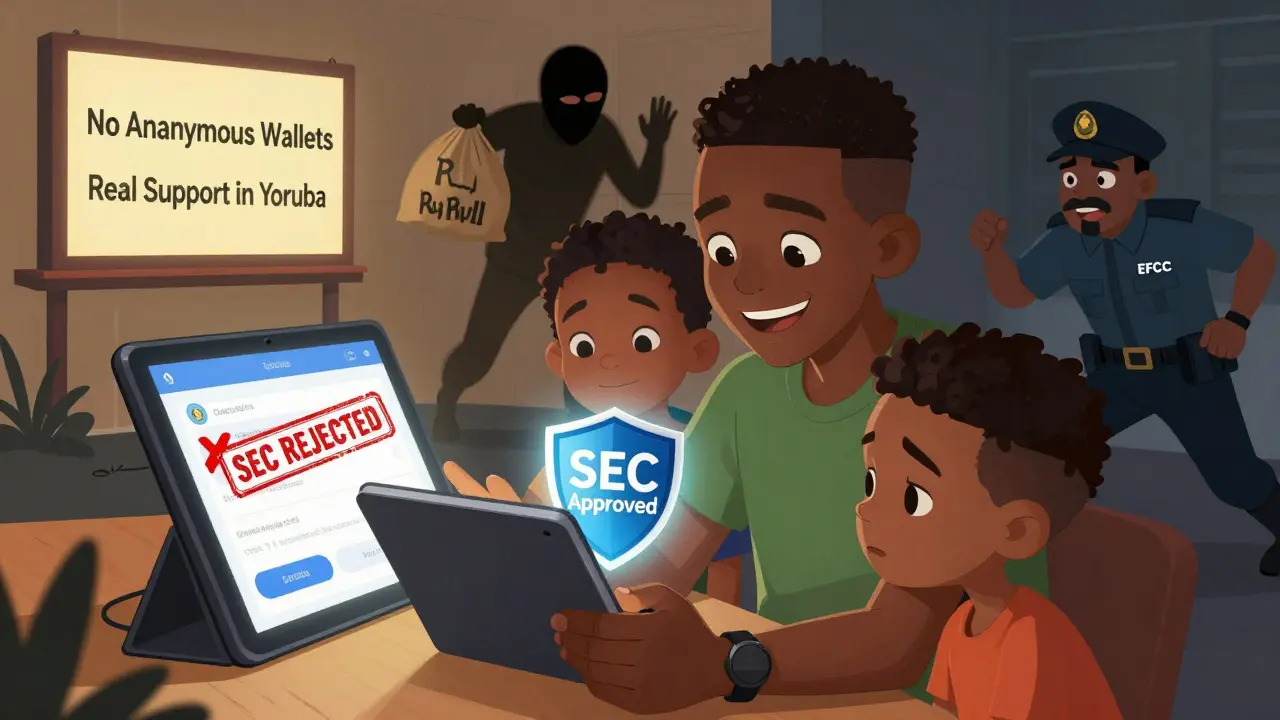
Why This Matters for Nigerian Users
Nigeria has one of the highest crypto adoption rates in Africa. Nearly 30% of adults have used crypto, mostly to bypass inflation and currency controls. But surveys show nearly half of Nigerians avoid crypto because they don’t trust the platforms. Scams are common. Rug pulls. Fake exchanges. Phishing attacks. The SEC’s rules are designed to fix that. Licensed exchanges must have:- 24/7 customer support with Nigerian language options
- Clear terms of service in English and major local languages
- Insurance coverage for user funds
- Regular third-party security audits
What’s Next in 2026?
The SEC is already working on two major updates:- Crypto taxation: They’re testing how to track and tax crypto gains. If you profit from trading, you’ll likely owe taxes. The SEC is working with the Federal Inland Revenue Service (FIRS) to make this happen.
- Expanded licensing: They’re considering licenses for custody services, staking platforms, and tokenized securities. This could open the door for Nigerian investors to access regulated ETFs backed by crypto assets.
Bottom Line
The Nigerian SEC isn’t trying to kill crypto. It’s trying to clean it up. The old wild west days of unregulated exchanges are over. If you’re serious about operating in Nigeria, you need to play by their rules - or get out. The license isn’t a burden. It’s a badge. It tells users you’re real. It tells banks you’re safe. It tells investors you’re not a scam. And in Nigeria’s crypto market - where trust is scarcer than Bitcoin - that’s worth more than any profit margin.Can a foreign crypto exchange operate in Nigeria without a SEC license?
No. Any exchange that targets Nigerian users - through ads, websites in Nigerian languages, or direct emails - must obtain a Digital Asset Exchange (DAX) license from the Nigerian SEC. Even if the company is based overseas, the SEC has jurisdiction over any platform serving Nigerian residents. Failure to comply can result in website blocking, bank account freezes, and legal action.
How long does it take to get a SEC crypto exchange license?
The process typically takes 4 to 6 months if all documents are complete and accurate. The SEC reviews corporate paperwork, capital verification, AML/KYC systems, and technology infrastructure. Delays happen when applicants submit incomplete forms, use unapproved auditors, or fail to provide clear evidence of fund sources. The Accelerated Regulatory Incubation Programme (ARIP) helps streamline this, but it’s not a fast-track - it’s a quality filter.
What happens if I operate without a license?
Operating without a license is illegal under the Investments and Securities Act 2025. Penalties include immediate shutdown of your platform, freezing of bank accounts linked to your business, fines up to ₦100 million, and criminal prosecution. The SEC also works with the Nigerian Police and EFCC to track down operators of fraudulent exchanges, especially those linked to rug pulls or Ponzi schemes.
Do I need to store user funds in Nigeria?
No, you don’t need to store funds locally, but you must prove you have secure, audited custody systems. The SEC requires third-party audits of your cold wallet infrastructure and insurance coverage for user assets. You must also show how you prevent unauthorized access, hacking, or internal theft. The location of your servers doesn’t matter - the security of your systems does.
Can I list any cryptocurrency on my exchange?
No. Every digital asset must be pre-approved by the SEC before listing. The commission reviews each token’s whitepaper, team background, liquidity, and potential for fraud. Meme coins and tokens with anonymous teams are almost always rejected. The SEC’s goal is to prevent rug pulls and pump-and-dump schemes, not to ban innovation - but they will block risky assets.
Are staking and lending services allowed under the new rules?
Currently, staking and lending services are not explicitly permitted under the DAX license. The SEC is evaluating these activities separately and may introduce new license categories in 2026. Until then, offering staking rewards or interest on crypto deposits is considered unregulated and could lead to enforcement action. Operators should avoid these services until formal guidance is issued.