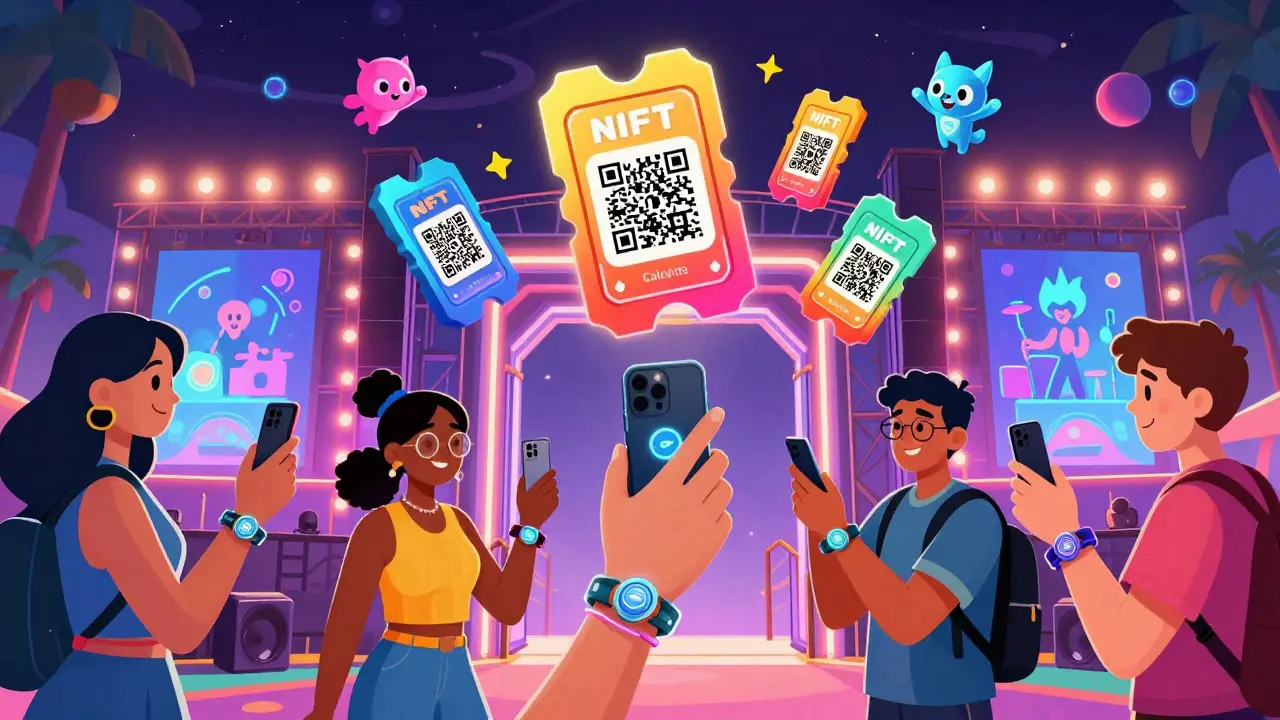
Imagine buying a concert ticket and knowing it can’t be fake. Not because you checked the barcode, but because the ticket itself is a one-of-a-kind digital asset locked on a blockchain. That’s what NFT ticketing does today - and it’s changing how events are sold, attended, and remembered.
Traditional ticketing has long struggled with fraud, scalping, and lost revenue. A ticket bought for $50 ends up resold for $500 on a third-party site, and the artist sees none of it. The event organizer loses control. Attendees worry they’re getting scammed. NFT ticketing solves these problems by turning each ticket into a unique, verifiable, and programmable digital token.
How NFT Tickets Work
An NFT ticket isn’t just a QR code on your phone. It’s a blockchain-based asset - like a digital collectible - that proves you own entry to an event. Each ticket is minted as a unique token, assigned to your crypto wallet, and recorded permanently on a public ledger. No two tickets are the same. Even if someone copies the QR code, the underlying NFT can’t be duplicated.
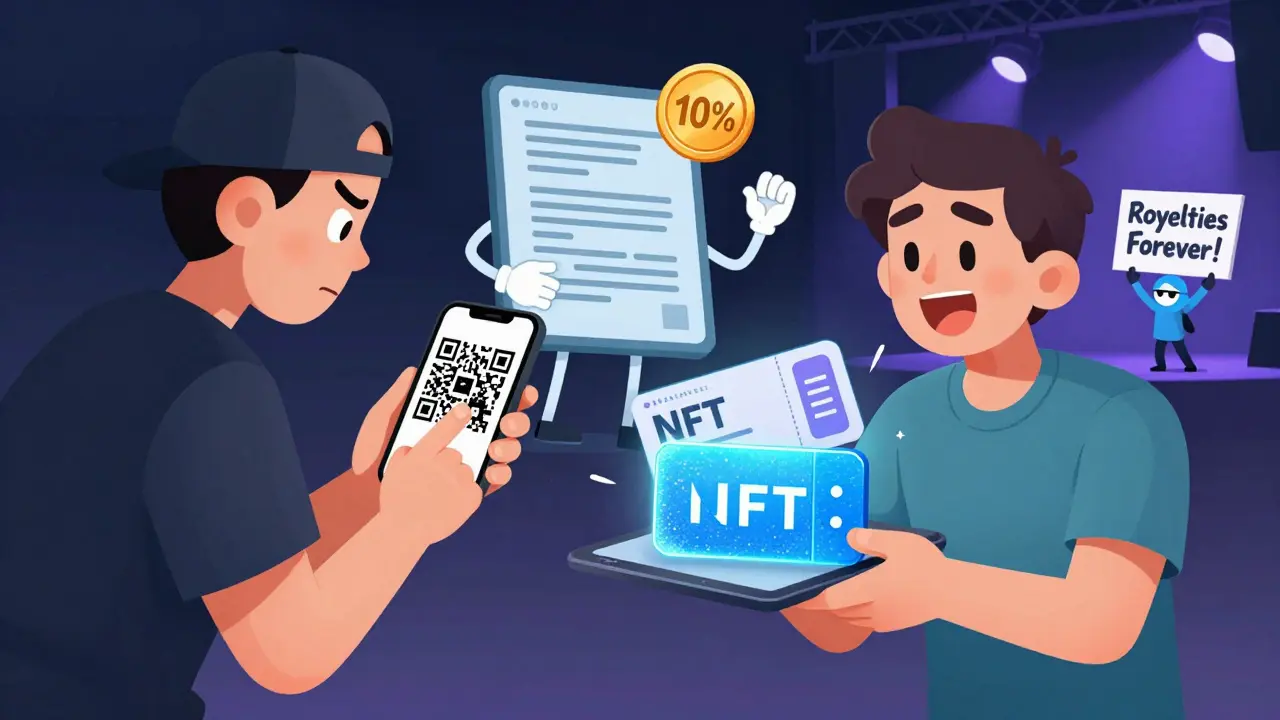
Smart contracts handle everything behind the scenes. When you buy a ticket, the contract records your wallet address as the owner. If you resell it, the contract automatically sends a percentage - say, 10% - back to the original issuer, like the band or festival organizer. That’s royalty revenue, built in. No middlemen. No hidden fees. Just transparent, automated payouts.
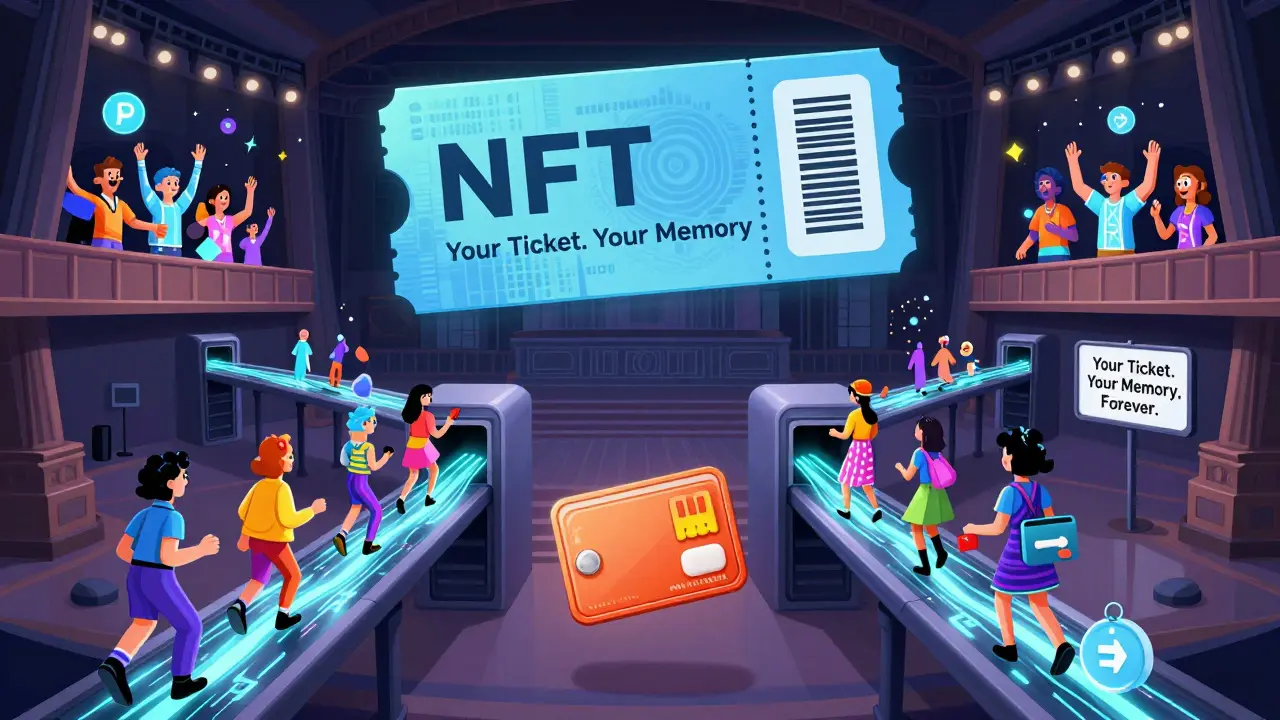
Check-in is seamless. Instead of scanning paper tickets or waiting in line for a mobile pass, your wallet connects to a gate reader. NFC chips in wristbands or smartphones verify your NFT instantly. No app download. No login. Just tap and go.
Top NFT Ticketing Platforms in 2026
Not all NFT ticketing platforms are built the same. Some focus on security. Others on collectibility. Here are the key players making waves in 2026.
SeatLabNFT is a newer platform built on the NEAR Protocol, designed for high-energy events like music festivals and esports tournaments. It combines NFT tickets with NFC verification and a rewards token called $SEAT. Holders get exclusive airdrops - limited-edition digital merch, backstage access passes, or early-bird ticket options - that can be resold or traded. This turns a simple ticket into a collectible experience.
WICKET is the go-to solution in Italy, built on the GET Protocol. It was created to tackle the country’s notorious ticket scalping problem, where resellers mark up prices by over 1,000%. WICKET uses dynamic QR codes that refresh every few minutes, making screenshots useless. It also limits resale prices to 110% of the original, blocking speculative flipping.
Oveit is a hybrid platform that bridges traditional ticketing and Web3. It supports NFT tickets, QR codes, smart wristbands, and NFC devices all in one system. Major venues use it for multi-gate entry, real-time attendance tracking, and instant access control. Unlike some platforms, Oveit doesn’t force users into crypto - you can pay with a credit card and still receive an NFT ticket.
TicketMint is focused on artists and creators who want to build fan communities. It lets organizers mint NFT tickets that double as collectibles - think limited-run concert tickets with embedded audio clips, behind-the-scenes videos, or signed digital artwork. Fans keep these tickets as digital memorabilia, and artists earn royalties every time they’re resold.
SquadUP + Sidechain offers a unique hybrid model. You buy a regular ticket through SquadUP, then convert it into an NFT using Sidechain’s tool. This lets organizers keep their existing sales channels while adding blockchain benefits. It’s ideal for events testing NFTs without fully committing.
Why NFT Tickets Beat Traditional Ones
Let’s be clear: NFT tickets aren’t better for every event. But for certain situations, they’re the only smart choice.
- No counterfeits - Each ticket is cryptographically unique. Scammers can’t print fake copies.
- Anti-scalping - Smart contracts can cap resale prices or require approval from the event organizer.
- Creator royalties - Artists and venues earn 5-15% every time a ticket changes hands, forever.
- Collectible value - Your ticket becomes a digital keepsake. Think of it like a signed vinyl - but digital and verifiable.
- Seamless entry - No more fumbling for your phone. Just tap your wallet or NFC wristband.
At a recent New Zealand music festival, 87% of attendees with NFT tickets reported zero issues at entry. Traditional ticket holders had a 22% rate of check-in delays - mostly due to lost tickets or app glitches.
The Downsides You Can’t Ignore
NFT ticketing isn’t magic. It has real friction points.
- Wallet setup - If your grandma doesn’t know what a crypto wallet is, she won’t get in. Platforms are improving, but onboarding still isn’t foolproof.
- Higher fees - Minting an NFT ticket can cost $1-$4.50. Add gas fees and payment processing, and you’re looking at 5-8% total fees. Traditional platforms charge 2-4%.
- Network downtime - If the blockchain slows down during a high-demand sale, tickets won’t mint. That’s happened at major events.
- Limited adoption - Most fans still prefer PayPal or Apple Pay. NFT ticketing works best when the audience already uses crypto.
One major European festival saw a 30% drop in ticket sales after switching entirely to NFTs. Attendees cited wallet complexity as the main reason. They later added credit card options and saw sales bounce back.
Who Benefits Most?
NFT ticketing isn’t for every concert hall or high school play. It shines where value, exclusivity, and community matter most:
- Music artists - Turn tickets into fan loyalty tools. Offer exclusive NFTs to early buyers.
- Festivals - Reduce scalping on high-demand acts. Reward repeat attendees with tiered NFT perks.
- Esports tournaments - NFT tickets can unlock in-game items, merch drops, or VIP streams.
- Private events - Think corporate retreats or invite-only summits. NFTs ensure only authorized guests enter.
For mass-market events - like a movie premiere or a regional theater show - traditional tickets still win. Simplicity matters more than blockchain.
What’s Next for NFT Ticketing?
In 2026, the biggest improvements are coming in three areas:
- Mobile apps - Platforms are finally releasing polished apps that handle wallet setup, ticket storage, and check-in in one place.
- Hybrid payments - You can now pay with Visa, crypto, or Apple Pay - and still get an NFT ticket. No more forcing people into crypto.
- Metaverse integration - Some NFT tickets now grant access to virtual after-parties or 3D concert replays. Your ticket isn’t just for one night - it’s a key to ongoing experiences.
Interoperability is the next frontier. Right now, an NFT ticket on NEAR can’t be used on Ethereum. But new cross-chain bridges are being tested. In 2027, you might hold one wallet with tickets from festivals across different blockchains.
Should You Use NFT Ticketing?
Ask yourself:
- Is your event high-value, limited-capacity, or prone to scalping?
- Do you want to build a loyal fan base, not just sell seats?
- Are your attendees tech-savvy, or can you educate them?
- Can you absorb the upfront cost and complexity?
If you answered yes to the first two, NFT ticketing could be your edge. If you’re running a local fair or a low-cost community event, stick with traditional systems.
The future of ticketing isn’t just digital. It’s programmable. NFTs aren’t replacing tickets - they’re upgrading them into something smarter, fairer, and more valuable.
Can I buy an NFT ticket without a crypto wallet?
Yes. Platforms like Oveit and TicketMint now let you pay with credit cards, Apple Pay, or PayPal - and still receive an NFT ticket. The wallet is created for you automatically. You don’t need to understand crypto to use it.
Are NFT tickets more secure than QR codes?
Far more. A QR code can be copied, shared, or forged. An NFT ticket is tied to your unique wallet address and recorded on a blockchain. Even if someone screenshots your ticket, they can’t use it - the system checks the actual token, not the image.
Do I own the NFT ticket forever?
Yes. Once minted to your wallet, the ticket is yours to keep, sell, or give away. Even after the event, it remains in your wallet as a digital collectible. Some artists even release anniversary editions or unlock bonus content years later.
Can I resell my NFT ticket for any price?
Not always. Many platforms use smart contracts to limit resale prices - for example, capping them at 110% of the original. This stops scalpers from inflating prices. Some allow free resale, but the original organizer still earns a royalty - usually 5-15%.
What happens if the blockchain crashes?
Blockchain networks like NEAR, Ethereum, and Polygon are designed for high uptime. They’re not like websites that go down during traffic spikes. If a network slows, ticket minting might delay - but your existing tickets remain safe. Your wallet and ticket data are stored across thousands of nodes worldwide. You won’t lose access.
Are NFT tickets only for music events?
No. NFT tickets are used for conferences, sports games, theater, esports, art exhibitions, and even private corporate events. Any event where exclusivity, security, or fan engagement matters can benefit.
Do I need to pay gas fees every time I resell my ticket?
Yes - but many platforms now cover gas fees for sellers. For example, SeatLabNFT uses NEAR’s low-cost network and absorbs transaction fees for ticket resales. Others offer fee-free resale windows. Always check the platform’s policy before buying.