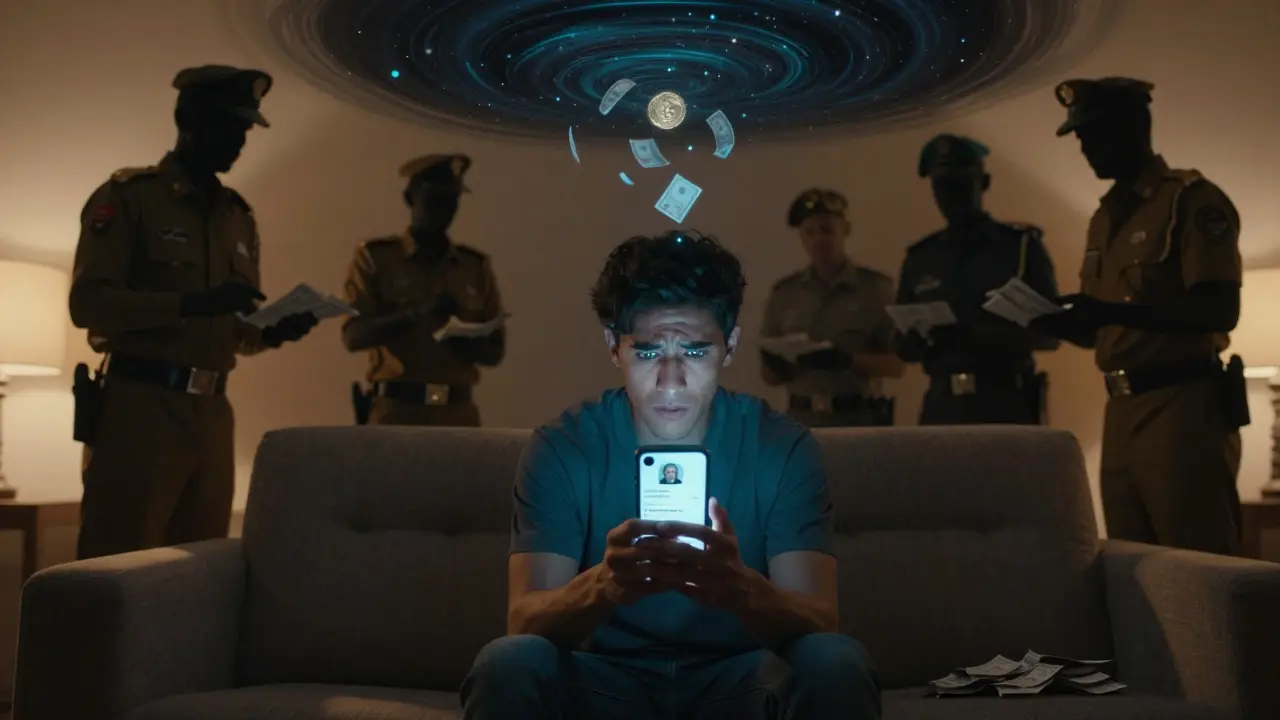
Over $10 billion vanished from American bank accounts in 2024-not through hacking, not through market crashes, but through carefully crafted lies told by strangers on dating apps and text messages. These weren’t random con artists. They were part of a massive, organized criminal network based in Myanmar, operating with the protection of armed militias and turning human suffering into profit. The U.S. Treasury called it the most dangerous crypto fraud operation in the world. And it’s still growing.
How the Scams Work: Love, Trust, and Lost Savings
The scam starts like a love story. A person gets a message on Tinder, Bumble, or WhatsApp. The sender is charming, attentive, maybe even a little vulnerable. They share stories about their life, their struggles, their dreams. After weeks of texting, they start talking about investments. "I found this crypto platform that pays 20% a week," they say. "It’s not on Coinbase or Binance-it’s private. Only a few people know about it. Want to join?" Victims are told to send money to a wallet address. They’re shown fake dashboards with rising numbers. Some are even sent fake bank statements. They believe they’re making smart moves. Then, one day, the messages stop. The profile disappears. The money is gone. And the person they thought they knew? Never existed. The FBI confirmed that in 2024, crypto scams targeting Americans jumped 66% from the year before. Nearly two-thirds of that increase came from operations in Myanmar. The victims aren’t just tech-savvy investors. They’re retirees, single parents, teachers, veterans. The scammers don’t care who you are. They care that you’re lonely, hopeful, or desperate for a better future.The Heart of the Operation: Shwe Kokko
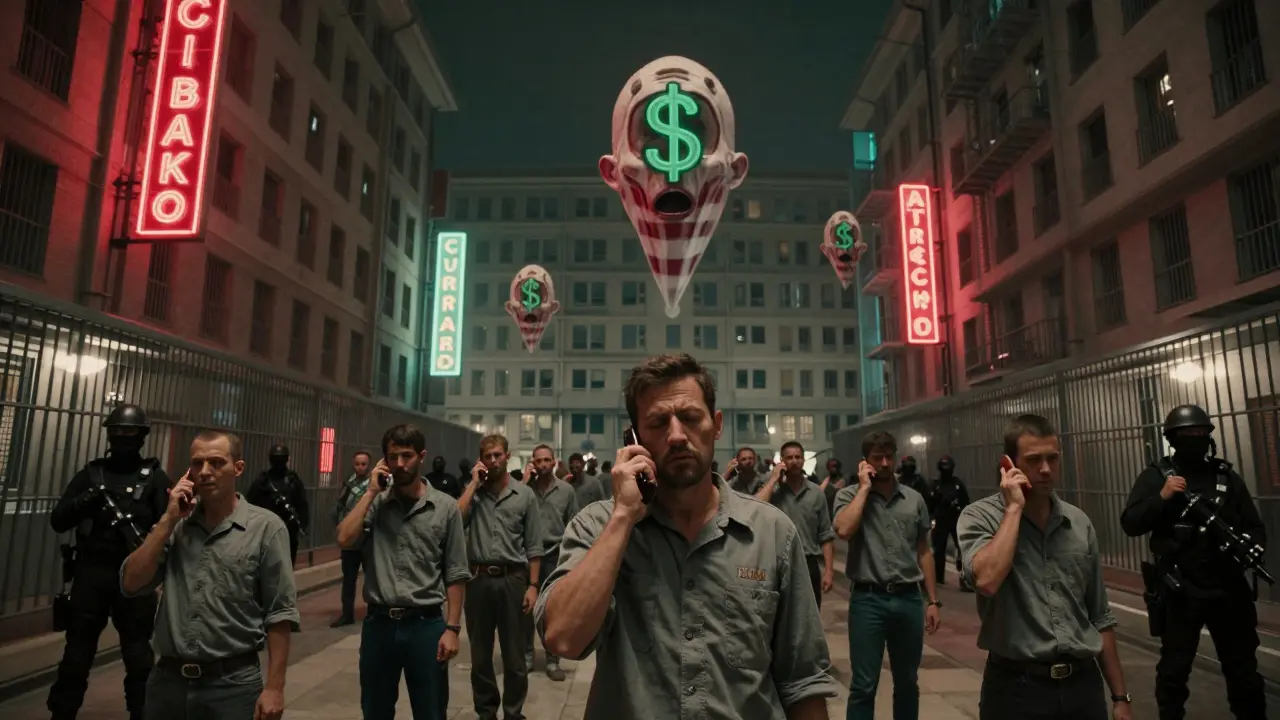
All of this is centered in one place: Shwe Kokko, a small border town in eastern Myanmar, right next to Thailand. It’s not a city. It’s a fortress. Dozens of high-rise compounds, each housing hundreds of workers, sit under the watch of armed guards. These aren’t offices. They’re prisons. People are lured here with fake job ads: "Customer service rep needed! $3,000/month! Free housing!" Many come from Vietnam, Cambodia, the Philippines, even China. They arrive excited. Within hours, their passports are taken. Their phones are confiscated. They’re forced to work 16-hour days, calling victims in the U.S., Canada, Australia, and the UK. If they refuse, they’re beaten. Some are sold into forced prostitution. Others are held until their families pay a ransom. The U.S. Treasury says these compounds are run by nine main companies, including Chit Linn Myaing Co. and Yatai International Holdings Group. These aren’t shell companies. They’re real businesses with bank accounts, office leases, and even Toyota dealerships-all fronts for money laundering. The money from scams flows through them, gets mixed with fake sales revenue, and exits into the global financial system.The U.S. Response: Sanctions That Actually Mattered
On September 9, 2025, the U.S. Treasury’s Office of Foreign Assets Control (OFAC) dropped a bomb. They sanctioned 19 individuals and organizations linked to these scams-nine in Myanmar, ten in Cambodia. For the first time, the government didn’t just freeze accounts. They targeted the entire business model. The sanctions hit:- Individuals like She Zhijang and Tin Win, who built the scam empires
- Companies like Shwe Myint Thaung Yinn Industry and Manufacturing Co. that own the compounds
- Even the Toyota dealerships used to launder money
- E.O. 13851: For transnational crime
- E.O. 13694: For cyberattacks
- E.O. 13818: For human rights abuses
- E.O. 14014: For destabilizing Myanmar
Why Myanmar? The Perfect Storm
You might wonder: Why here? Why not Russia? Why not Nigeria? Because Myanmar is broken. After the 2021 military coup, the country collapsed into chaos. The government lost control of large areas. Armed groups like the Karen National Army (KNA) took over. They didn’t care about laws. They cared about cash. And crypto scams? Perfect. No paperwork. No traceable paper trails. Just digital money flowing out while victims scream into the void. The KNA doesn’t just allow these scams-they tax them. They provide security. They help move money. In return, they get a cut. That makes Myanmar different from other hotspots. In Cambodia, scams are run by gangs. In Myanmar, they’re run like a state within a state. And the location? Brilliant. Shwe Kokko is near Thailand, where crypto exchanges are easy to access. Workers are smuggled in from neighboring countries. Victims are in the U.S. and Europe. The whole system is designed to be invisible.Who Are the Real Victims?
Most people think the victims are just the Americans who lost their savings. But that’s only half the story. The workers inside the compounds are victims too. They’re not criminals. They’re slaves. Many are young people with no education, no options. They were promised jobs. Instead, they got chains. Some have been held for years. Some have died. The U.S. government now recognizes this. That’s why they used human rights sanctions. It’s not just about money. It’s about justice. For the American who lost their life savings. For the Cambodian woman forced to make 500 scam calls a day. For the teenager who was sold to a brothel after refusing to work.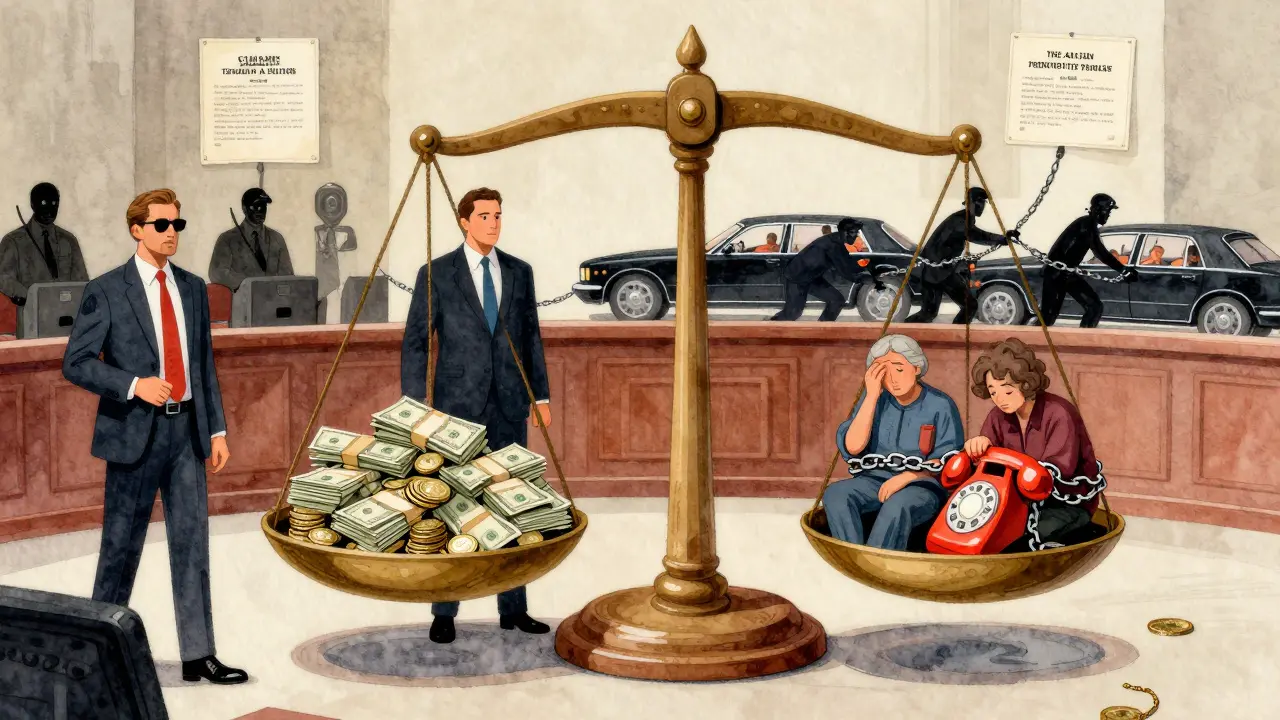
What’s Next? The Fight Isn’t Over
The sanctions are a start. But they won’t shut this down overnight. These networks are already adapting. Some are moving deeper into Myanmar. Others are shifting operations to Laos or the Philippines. The scammers are learning to use decentralized exchanges and privacy coins like Monero to avoid detection. They’re using AI to generate fake profiles and voice clones to sound more convincing. The real solution? International cooperation. Thailand needs to crack down on border crossings. Cambodia needs to stop turning a blind eye. The Philippines needs to arrest recruiters. And the U.S. needs to keep pressuring banks to cut off their money flows. Community banks in the U.S. are already pushing for new rules to flag suspicious crypto transfers. The Independent Community Bankers of America says this is a national security issue. And they’re right. When $10 billion disappears from ordinary people’s accounts, it’s not just fraud. It’s economic warfare.How to Protect Yourself
If you’re reading this, you’re not a target. Yet. But you could be. Here’s what you need to know:- No one you meet online should ever ask you to invest in crypto. Not your "soulmate." Not your "business partner." Not your "long-lost cousin."
- If someone pushes you to move money quickly, it’s a scam.
- Check wallet addresses. If they’re not on a major exchange, walk away.
- Use two-factor authentication on all your accounts. Scammers steal passwords through fake login pages.
- Report suspicious messages to the FBI’s IC3 (Internet Crime Complaint Center). Even if you didn’t lose money.
Why This Matters Beyond Your Wallet
This isn’t just about losing money. It’s about what happens when crime becomes a state function. When armed groups profit from lies. When technology is used to enslave people. When the global financial system is exploited because no one has the will to stop it. The $10 billion lost in 2024 didn’t just vanish. It funded weapons, paid for guards, bought luxury cars for warlords. It kept a broken country running-not through trade or industry, but through cruelty. We can’t ignore this. Not as investors. Not as citizens. Not as humans. The U.S. government took a stand. Now the rest of the world has to follow.Are crypto scams only happening in Myanmar?
No, but Myanmar is the largest and most organized hub. Scams also operate in Cambodia, Laos, the Philippines, and Nigeria. But none match the scale, structure, or brutality of the networks in Shwe Kokko. Myanmar’s combination of armed group protection, weak governance, and proximity to financial hubs makes it uniquely dangerous.
Can I get my money back if I was scammed?
Almost never. Cryptocurrency transactions are irreversible. Once sent, the money is gone. The U.S. Treasury’s sanctions target the scammers’ infrastructure, not the stolen funds. Your best bet is reporting the scam to the FBI’s IC3 so they can track patterns and help shut down future operations.
Are the workers in these scam centers criminals?
No. They’re victims. Most are lured with false job offers, then trapped through violence, debt bondage, or threats to their families. The U.S. government treats them as human trafficking survivors, not criminals. Many are held for years without pay or freedom.
How do these scams make money from romance?
Scammers build emotional trust over weeks or months. They pretend to be in love, share fake personal stories, and then introduce a "guaranteed" crypto investment. Victims are told to send money to a private platform that doesn’t exist. The fake returns keep them investing more. When they try to withdraw, they’re told to pay fees or taxes. The cycle continues until they’re broke.
Why didn’t the police stop this sooner?
Because the scammers operate in areas outside Myanmar’s government control. The Karen National Army, a rebel group, runs these compounds. Local police have no authority there. Plus, crypto transactions are anonymous and cross borders instantly. Law enforcement needs international cooperation, which takes years to build. The 2025 sanctions were the first major coordinated action.
Is cryptocurrency itself to blame for these scams?
No. Cryptocurrency is a tool. So is cash. So is the internet. The problem isn’t the technology-it’s the criminals using it. Legitimate crypto users and businesses are harmed by these scams, too. The real issue is the lack of regulation in conflict zones and the failure to hold enablers accountable.