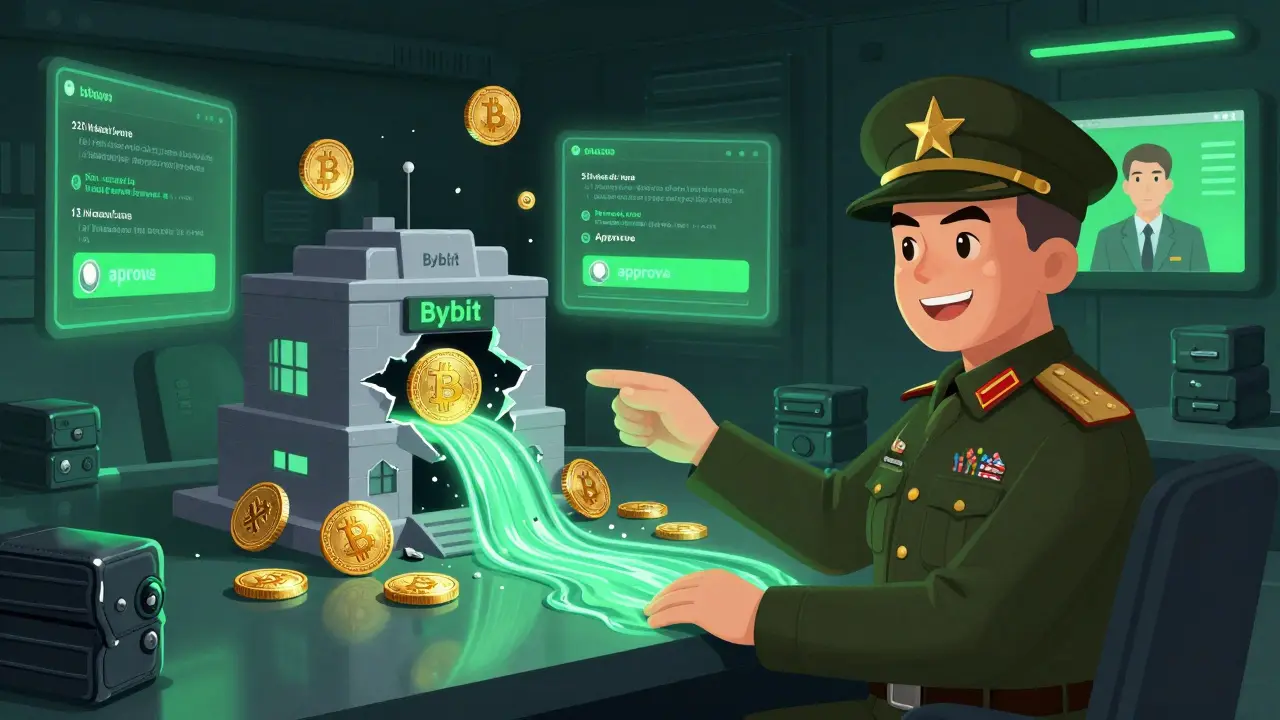
On February 21, 2025, one of the biggest heists in digital history happened - not in a vault, not in a bank, but inside a cryptocurrency exchange. The Lazarus Group, a cyber unit tied directly to North Korea’s military intelligence, stole $1.5 billion from Bybit. That’s more than the GDP of some small countries. And it wasn’t luck. It was precision. This wasn’t some lone hacker with a phishing link. This was a state-backed operation, designed to fund nuclear weapons while slipping past global sanctions. If you think your crypto is safe because you use a ‘secure’ exchange, you need to understand how Lazarus breaks in - and why most defenses are already too late.
How Lazarus Group Turns Crypto Exchanges Into Cash Machines
Lazarus Group doesn’t brute-force their way in. They don’t flood systems with bots or guess passwords. They go after people. Specifically, the people who manage the keys. In the Bybit attack, they started with a simple spear-phishing email. Not a generic ‘your account is locked’ message. A targeted one, pretending to be from HR or internal IT, sent to a few engineers who handled wallet sign-offs. Once they got access to one account, they moved laterally through internal systems, looking for access to the multi-signature wallets that hold cold storage - the offline Bitcoin and Ethereum keys meant to be untouchable. Here’s where it gets scary: they didn’t steal the keys. They tricked the people who used them. When Bybit’s CEO, Ben Zhou, tried to approve a routine transfer from the Ethereum cold wallet to a hot wallet, he saw a normal transaction screen. The amount. The destination. The confirmation button. All clean. But behind the scenes, Lazarus had already modified the frontend code of the Safe Wallet interface. The transaction looked right - but the actual destination address was changed. The CEO clicked ‘approve’. The system signed it. 401,000 ETH - worth $1.46 billion - vanished into hacker-controlled wallets. This wasn’t a glitch. It was a surgical strike. They exploited trust in the interface. They didn’t hack the blockchain. They hacked the human’s screen.The Five Biggest Heists in 2025 Alone
The Bybit theft was just the headline. Between June and September 2025, Lazarus hit five major exchanges in under four months:- $100 million from Atomic Wallet
- $37.3 million from CoinsPaid
- $60 million from Alphapo
- $41 million from Stake.com
- And over $54 million suspected from CoinEx
The Tools Lazarus Uses - Beyond Phishing
Forget the old idea that hackers just send bad emails. Lazarus has a full toolkit. Their sub-team, TraderTraitor, builds fake cryptocurrency trading apps. These apps look real. They have clean UIs, real-time charts, even live support chat. But once installed, they quietly connect to command servers. The malware inside - called MANUSCRYPT - doesn’t just steal passwords. It watches for when you open your wallet app. It logs your keystrokes. It grabs seed phrases from clipboard history. It even takes screenshots of login screens. They’ve also perfected social engineering. Instead of spamming emails, they now target security researchers on LinkedIn. They build relationships over weeks - asking for advice, sharing articles, even offering mock interviews. Then, they send a ‘training document’ - a PDF that looks like a security checklist. Open it, and your device is compromised. And it works. Why? Because most companies train users to spot bad emails. No one trains them to question a LinkedIn connection who seems genuinely helpful.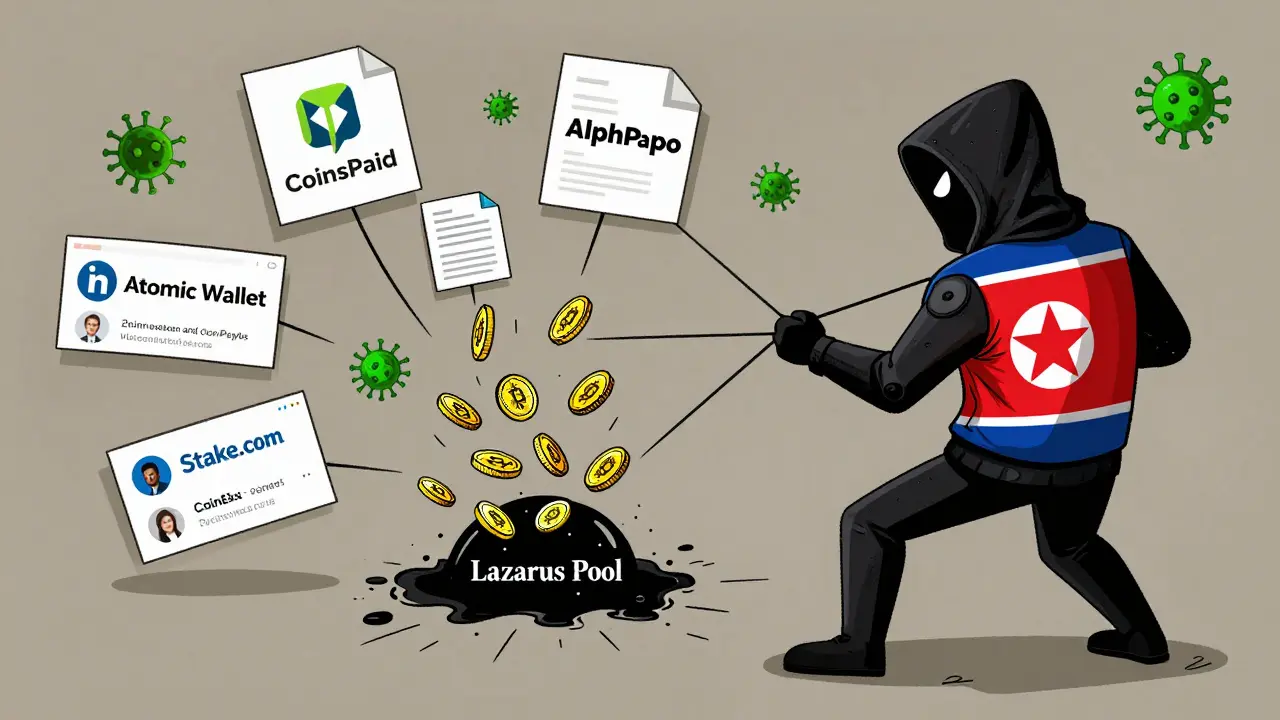
Why Cold Wallets Aren’t Safe Anymore
Crypto folks used to say: ‘If it’s not on the internet, it’s safe.’ Cold wallets - hardware devices or paper keys stored offline - were the gold standard. But Lazarus doesn’t need to touch them directly. They wait for the moment when cold storage is moved. Every time an exchange transfers funds from cold to hot wallets - for withdrawals, liquidity, or internal balancing - that’s a vulnerability window. That’s when they strike. They don’t break into the cold wallet. They manipulate the process that moves money out of it. The multi-signature system, meant to require 3-5 approvals before a transfer, was supposed to be unbreakable. But Lazarus didn’t crack the keys. They tricked one of the signers into approving a fake transaction. The other signers saw the same screen. They approved too. All five approvals were given - because every screen showed the same lie. This is the core weakness: security is only as strong as the weakest interface. If the software you use to approve transactions can be altered without your knowledge, then no amount of hardware security matters.What Exchanges Are Doing - And Why It’s Not Enough
After the Bybit heist, many exchanges scrambled. Some added extra verification steps. Others hired blockchain forensics teams. Bybit itself recovered over $40 million by working with analysts to freeze and trace funds. They even restored user balances to 100% - a rare move in crypto. But here’s the truth: none of this stops Lazarus. They adapt faster. Exchanges now require two-factor authentication (2FA). Lazarus bypasses it by stealing session cookies. They use browser exploits to hijack logged-in sessions without needing passwords. Some platforms added biometric checks. Lazarus responded by creating deepfake voice recordings to trick voice-verification systems. The real problem? Most security upgrades are reactive. They fix what was broken last month. Lazarus is already planning next month’s attack.
The Bigger Picture: Crypto as North Korea’s Lifeline
This isn’t about greed. It’s about survival. North Korea is under some of the harshest sanctions in history. No banking access. No foreign investment. No oil imports. But they still build missiles. They still test nukes. How? Cryptocurrency theft. According to the Center for Strategic and International Studies, Lazarus has stolen over $3 billion since 2017. That’s not just funding for weapons - it’s funding for entire nuclear programs. Bitcoin and Ethereum are their cash. Stablecoins like Dai let them move value without triggering traditional financial red flags. Law enforcement can’t arrest someone in Pyongyang. No extradition. No cooperation. Even if you trace a wallet to a server in Malaysia or Nigeria, the real operators are thousands of miles away, behind layers of proxies and encrypted tunnels. And here’s the kicker: cryptocurrency’s anonymity isn’t a bug - it’s a feature for them. The more decentralized the system, the harder it is to shut down.What You Can Do - And What You Can’t
If you’re a regular user, your best defense is simple:- Never use exchange wallets for long-term storage. Move funds to your own hardware wallet.
- Use a dedicated device for crypto - no browsing, no downloads, no social media.
- Enable transaction alerts on your wallet. If you see an unknown transfer, freeze everything.
- Never approve a transaction you didn’t initiate - even if it looks legit.
The Future Is Darker
Lazarus isn’t slowing down. With sanctions tightening, their attacks will grow more aggressive. They’re already experimenting with stealing from DeFi protocols - where there’s no central company to blame, no customer support, no recovery team. The next target? A decentralized exchange like Uniswap or Curve. No CEO. No support team. Just code. And code can be manipulated from the inside. We’re not just fighting hackers anymore. We’re fighting a nation-state with unlimited resources, zero fear of consequences, and a single goal: turn crypto into cash for bombs. The crypto world thought it was immune to old-world threats. It wasn’t. It’s the new battlefield. And Lazarus is winning.Is Lazarus Group still active in 2026?
Yes. Lazarus Group is more active than ever in 2026. After the $1.5 billion Bybit heist in February 2025, they launched at least three new attacks targeting DeFi platforms and NFT marketplaces. Their operational tempo has increased by 40% compared to 2024, according to Chainalysis and Elliptic. They’ve shifted focus toward automated wallet compromise tools and are testing AI-driven social engineering bots on LinkedIn and GitHub.
Can blockchain analysis track Lazarus Group transactions?
Yes - but only partially. Analysts can trace individual transactions, especially when stolen funds are converted into Bitcoin or mixed through decentralized exchanges. However, Lazarus uses sophisticated fund blending techniques, combining assets from multiple heists into the same wallets. This creates ‘noise’ that makes it nearly impossible to isolate one attack from another. Even with advanced tools like Chainalysis Reactor, only about 15% of stolen funds are ever recovered.
Did any exchanges recover stolen funds from Lazarus?
Yes - but rarely. Bybit recovered over $40 million by collaborating with blockchain forensics firms and freezing addresses linked to the theft. KuCoin also recovered $12 million from a 2025 attack by working with the U.S. Treasury’s OFAC. But these are exceptions. Most exchanges don’t have the resources or legal authority to freeze wallets on other chains. Recovery depends on the attacker’s mistakes - like using an exchange that cooperates with authorities.
Are hardware wallets safe from Lazarus?
Hardware wallets are safer than software wallets - but not immune. Lazarus doesn’t attack the device directly. Instead, they infect the computer or phone you use to connect to it. Once your device is compromised, they can display fake confirmation screens when you sign a transaction. You think you’re sending 1 ETH to a friend. You’re actually sending it to a Lazarus wallet. Always verify addresses on the hardware device’s screen, not your computer.
Why hasn’t the U.S. or UN stopped Lazarus Group?
Because they operate from North Korea - a country with no extradition treaties, no internet cooperation, and no diplomatic pressure that works. The U.S. has sanctioned over 100 Lazarus-linked addresses, but sanctions don’t stop a nation-state that’s already isolated. There’s no physical location to raid. No bank to freeze. No CEO to arrest. The group’s infrastructure is distributed across servers in Russia, Vietnam, and Africa - all beyond the reach of Western law enforcement.
What’s the difference between Lazarus Group and regular crypto hackers?
Regular hackers want money - fast. Lazarus wants money that funds a nuclear program. They’re patient, well-funded, and organized like a military unit. They spend months researching targets. They use custom malware developed by state engineers. They don’t care about getting caught - because they never will. Their attacks are strategic, not opportunistic. They’ve been doing this since 2017, and they’re getting better.