
DEX Access Risk Calculator
Recommendations
When a country bans cryptocurrency, it doesn’t mean you can’t trade crypto. It just means you have to work around the system. In places like China, Algeria, Bangladesh, and Egypt, owning or trading Bitcoin and Ethereum is illegal. But people still do it-every day. Not because they’re reckless, but because they have no other choice. Maybe they’re trying to send money to family abroad. Maybe their local currency is collapsing. Maybe they just want control over their own money. Whatever the reason, DEX access from banned jurisdictions is real, growing, and increasingly sophisticated.
Why DEXs Are the Only Option in Banned Countries
Centralized exchanges like Binance or Coinbase require KYC. They ask for your ID, your address, your phone number. If you’re in a country where crypto is banned, that’s a death sentence. Get caught, and you could face fines, asset seizures, or even jail time. Decentralized exchanges (DEXs) like Uniswap, PancakeSwap, and SushiSwap don’t ask for any of that. They run on smart contracts. You connect your wallet. You swap tokens. No middleman. No records. That’s why they’re the go-to tool in places where crypto is outlawed.It’s not about legality-it’s about feasibility. Governments can shut down websites. They can block IPs. They can arrest people who run crypto businesses. But they can’t shut down a blockchain. Ethereum, Polygon, and BNB Chain keep running, no matter what any government says. DEXs live on those chains. As long as the network exists, the exchange exists.
How People Actually Get Started
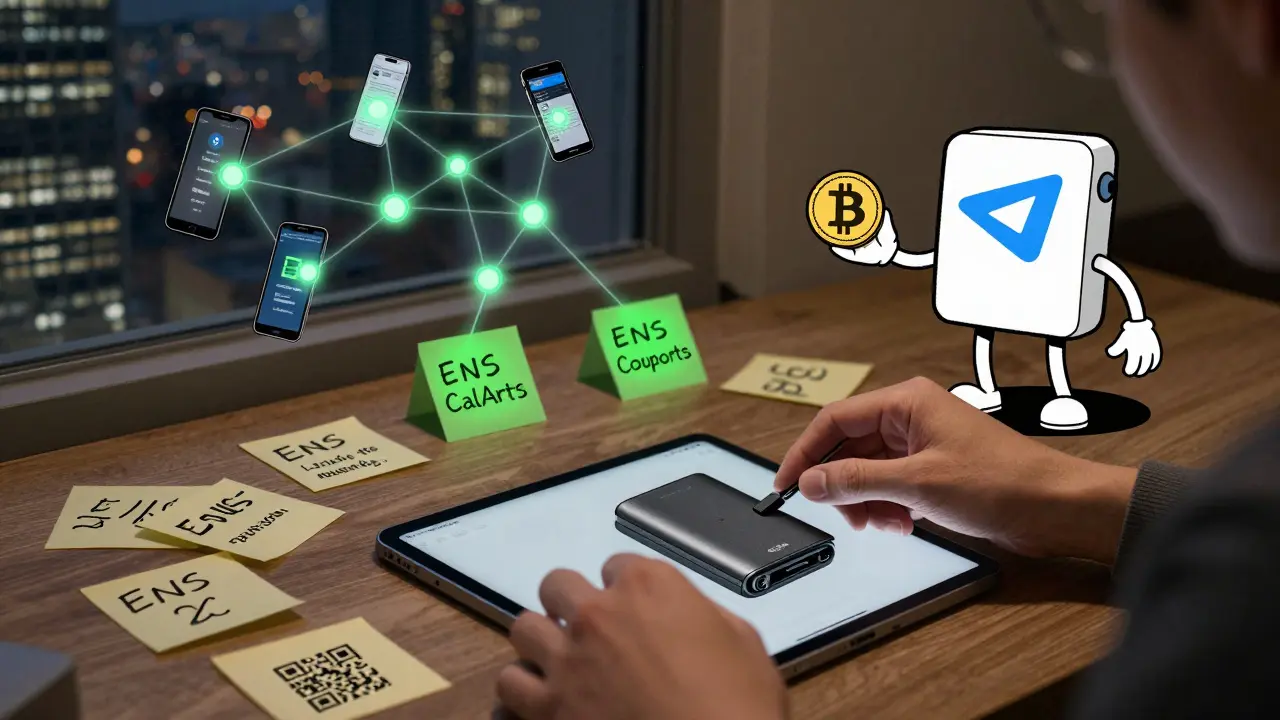
Getting into a DEX from a banned country isn’t as simple as opening a browser. There’s a process. A real, messy, technical process.First, you need to bypass internet blocks. In China, the Great Firewall actively blocks known DEX domains. In Algeria, the government filters traffic to crypto-related sites. Most users turn to VPNs. NordVPN and ExpressVPN are the most reliable, with success rates above 85% in blocked regions. But even that’s not enough. Many users now use Tor, Brave Browser’s private mode, or decentralized domain systems like ENS (Ethereum Name Service) to access DEXs through contract addresses instead of URLs.
Next, you need crypto to trade. But if you can’t buy it on a local exchange, where do you get it? Peer-to-peer (P2P) networks. People in Bangladesh use local payment apps like bKash to pay cash to someone in India, who then sends USDT to their wallet. In Algeria, Telegram bots like @CryptoDZ connect buyers with sellers who send crypto via direct wallet transfers. The average starting amount? Around $187-enough to cover gas fees after several failed attempts.
Then comes wallet setup. MetaMask and Trust Wallet are the most common, but hardware wallets like Ledger Nano X are growing fast. Why? Because they’re air-gapped. No internet connection. No remote hacking. You sign transactions offline. In China, 58% of active DEX users now use hardware wallets. It’s slow. It’s clunky. But it’s safer.
The Hidden Costs and Risks
Accessing DEXs from banned jurisdictions isn’t free. Not in money. Not in time. Not in risk.Transaction times are 15-25% slower because of VPN routing. Gas fees spike because you’re often trying to get through congested networks. Slippage is higher-up to 17% more than in open markets-because liquidity is thin. You might swap USDT for ETH, then ETH for WBTC, then WBTC for stablecoin again just to find a usable pair. Each hop adds cost. Each hop adds risk.
Security is a nightmare. Fake DEX sites are everywhere. In Algeria, 31% of users encountered a cloned Uniswap interface in early 2025. They entered their seed phrase. Their wallet was drained. No recovery. No recourse. Community-run lists like the BannedCrypto subreddit’s “Verified Mirror List” help-but you have to check every link manually. No shortcuts.
And then there’s detection. Even if you use a VPN and a hardware wallet, your transaction patterns can still be traced. TRM Labs found that 31% of DEX transactions from banned countries could still be linked to their origin through IP analysis and timing patterns. That’s not 100%. But it’s enough to get you flagged.
Real Stories from Real Users
In Shanghai, a user named u/ShanghaiTrader posted a detailed log of his daily routine: buy USDT via Hong Kong P2P → transfer to Ledger Nano X → connect via Brave + Tor → swap on Uniswap. It takes 37 minutes. In a country where crypto is illegal, that’s a full-time job.In Algiers, users created a peer-to-peer wireless network called the “Algeria DEX Mesh.” No internet needed. Just Bluetooth and Wi-Fi Direct between phones. 28,000 people are using it. It’s slow. It’s local. But it’s unblockable.
In Dhaka, some users hide transaction data inside photos. Steganography. They send a picture of a cat to a friend, and hidden in the pixels is a transaction hash. It’s not common. Only 44% of users try it. But for those who do, it’s the only way to avoid surveillance.
And in Nigeria, where the central bank banned banks from handling crypto, 89% of users say DEXs are their only way to send remittances home. Without them, families starve.
Why Governments Can’t Stop It
China spends $2.3 billion a year trying to block crypto. They’ve trained AI to detect encrypted DEX traffic. They’ve arrested traders. They’ve shut down mining farms. And yet, DEX usage in China grew 19% in 2024. Why? Because the tools keep evolving. The people keep adapting.Regulators think they’re targeting platforms. But they’re not. They’re targeting websites. DEXs don’t have headquarters. No CEO. No office. No server you can seize. The code is on the blockchain. The users are everywhere.
Even more telling: 7 out of 10 countries that ban crypto still run blockchain sandboxes. They’re testing CBDCs. They’re experimenting with private chains. They know the technology isn’t going away. They just don’t want their citizens to use it freely.

What Works-And What Doesn’t
Here’s what actually helps in banned countries:- Hardware wallets - Ledger, Trezor. Offline signing = less exposure.
- Decentralized domains - ENS addresses like uniswap.eth bypass domain blocks.
- Community mirrors - Telegram groups and subreddits that update DEX URLs daily.
- Layer-2 networks - Polygon and Arbitrum have lower fees and are harder to block than Ethereum mainnet.
- Steganography and mesh networks - For the most desperate, these are lifelines.
What doesn’t work:
- Using the same VPN every day. Regulators track patterns.
- Reusing wallet addresses. Linking transactions = exposure.
- Trusting random links. Fake DEXs are everywhere.
- Expecting quick trades. Everything takes longer. Always.
The Bigger Picture
This isn’t just about crypto. It’s about financial sovereignty. When your government controls your bank, your currency, your access to the world economy-you lose power. DEXs give it back. Even if it’s risky. Even if it’s slow. Even if it’s illegal.By 2027, experts predict that countries with total crypto bans will collapse under the weight of their own enforcement. The cost of monitoring millions of users outweighs the benefit. The technology is too resilient. The demand is too strong.
For now, the people who use DEXs in banned countries aren’t criminals. They’re survivors. They’re engineers. They’re parents, students, entrepreneurs. They’re using code to bypass control. And they’re winning.
Can you get arrested for using a DEX in a banned country?
Yes, technically. In countries like Algeria and Bangladesh, owning or trading crypto is a criminal offense. Penalties range from fines to prison time. But enforcement is inconsistent. Most arrests target large-scale operators, not individual users. Still, the risk is real. Using hardware wallets, avoiding KYC, and minimizing digital footprints reduces exposure.
What’s the easiest DEX to use from a banned country?
PancakeSwap on BNB Chain is often the easiest. It has lower gas fees than Ethereum, and its interface is simple. Many banned users start here because it’s less likely to be blocked outright. But you still need a VPN, a wallet, and a way to get initial crypto. No DEX is truly “easy” in a banned jurisdiction-it’s always a workaround.
Do you need a VPN to use a DEX in a banned country?
Almost always. Governments block known DEX websites and IP addresses. Without a VPN, you’ll get a connection error. Some users switch between multiple VPNs or use Tor for extra anonymity. Free VPNs are risky-they often log data. Paid services like NordVPN and ExpressVPN are more reliable and trusted by the community.
How do you buy crypto if you can’t use exchanges?
You use peer-to-peer (P2P) networks. People trade cash for crypto via Telegram, WhatsApp, or local apps. In Bangladesh, users pay bKash or Nagad. In Nigeria, they use bank transfers or mobile money. You find traders through community forums. Always verify the person. Always use escrow. Never send money first.
Are DEXs safer than centralized exchanges in banned countries?
Yes, but only if used correctly. CEXs require your identity and can freeze your funds. DEXs don’t. But DEXs put full responsibility on you. If you lose your seed phrase, your money is gone. If you visit a fake site, your wallet gets drained. So while DEXs offer more freedom, they demand more skill. Use hardware wallets, verify contracts, and never share your private keys.
Is DEX access legal in any way in banned countries?
No. If a country bans crypto, using a DEX is illegal. But legality doesn’t always mean enforceability. Many governments lack the resources to track every user. Some even tolerate it quietly because they can’t stop it. That doesn’t make it safe-it just means enforcement is patchy.