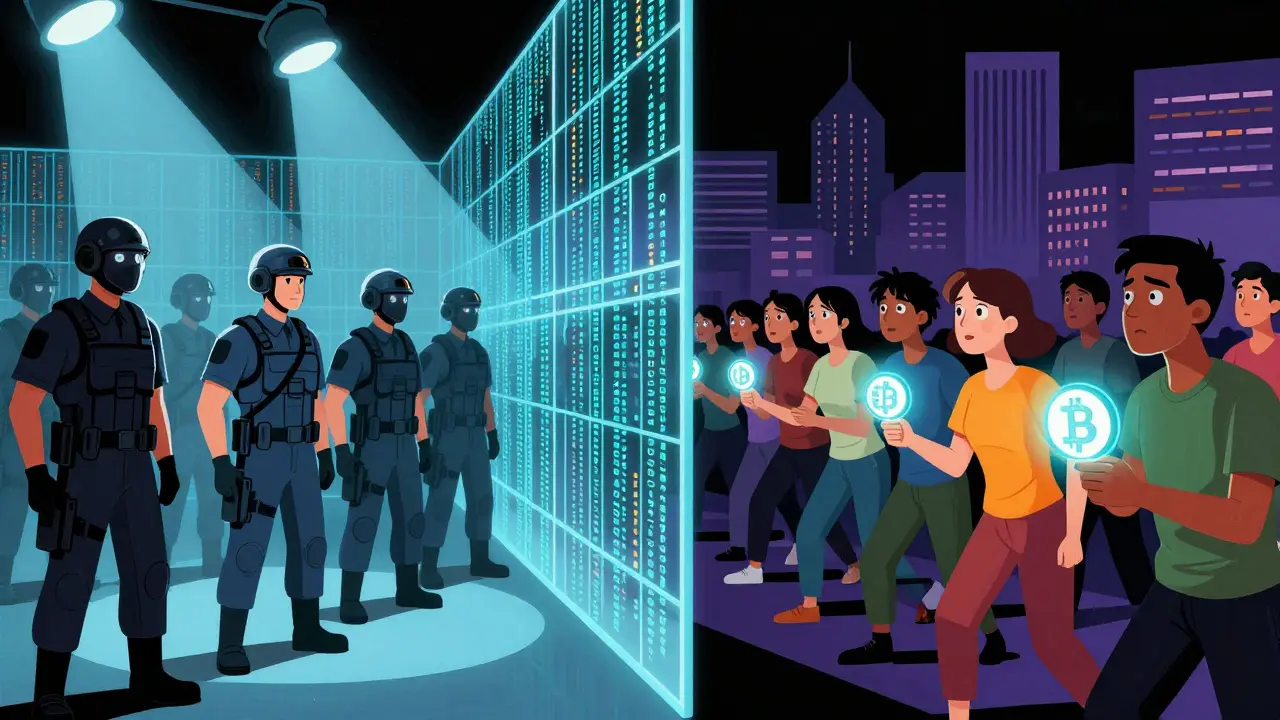
The Global Arms Race Between Users and Regulators
For years, financial borders were drawn clearly on maps, enforced by governments and monitored by banks. But the landscape changed when digital assets arrived. Today, the dynamic between citizens in restricted regions and global regulators looks like a high-stakes game of cat and mouse. The Office of Foreign Assets Control (OFAC) has designated hundreds of crypto-related entities, yet access remains fluid. As of 2025, there are over 1,200 tracked wallet addresses linked to sanctioned activities. Despite this surveillance, the demand for liquidity in places like Iran, Russia, and North Korea drives innovation on the other side of the firewall.
This isn't just about bypassing rules; it's about economic survival and adaptation. When traditional banking channels close, citizens turn to blockchain technology as a lifeline. The result is a complex underground economy where decentralized networks replace centralized intermediaries. The scale is significant-$6.9 billion in illicit transactions involving sanctioned entities occurred over a 24-month period ending recently. Understanding this ecosystem reveals how deeply ingrained cryptocurrency has become in sanctioned economies, turning a theoretical risk into a daily operational reality for both governments and traders.
The Regulatory Wall: How Enforcement Evolved by 2026
To understand the methods of access, one must first grasp the pressure exerted by enforcement agencies. The United States Department of the Treasury expanded its scope significantly in early 2025, marking a shift from targeting only individuals to sanctioning entire protocols. The OFAC is the agency responsible for administering and enforcing economic trade sanctions led the charge, with 18% annual growth in crypto-related sanctions designations. In 2024 alone, 23% of all new sanctions targeted the crypto sector.
North Korea currently stands out, accounting for 38% of these actions due to state-sponsored hacking operations that convert stolen funds into Bitcoin is a decentralized digital currency created in 2009 that operates independently of central banks. Meanwhile, Iran and Russia have seen aggressive crackdowns on domestic exchanges. The ShapeShift case in 2025 serves as a warning for compliance failures; the Swiss exchange paid $750,000 after OFAC found it facilitated transactions for users in Cuba, Iran, Sudan, and Syria without proper checks. These cases signal to regulated exchanges that any association with sanctioned IP addresses or wallets results in heavy financial penalties.
International cooperation plays a massive role here. It isn't just U.S. agencies acting alone. Partnerships between the Secret Service, German law enforcement, and Finnish authorities demonstrate a coordinated approach. The seizure of the Garantex domain and freezing of $26 million in March 2025 showed that cross-border collaboration can dismantle specific operations temporarily. However, these successes often push activity further underground rather than stopping it completely. The rewards program also intensified, offering up to $5 million for information leading to the arrest of key figures like Garantex executive Aleksandr Mira Serda. This financial bait incentivizes intelligence sharing across borders.
Technical Workarounds: Decentralization as a Tool
Citizens facing strict sanctions rely heavily on the lack of intermediaries in public blockchains. Unlike a bank account that requires permission, Ethereum is a decentralized platform that supports smart contracts and represents the second-largest cryptocurrency allows direct transfers without asking for clearance. For users in sanctioned nations, this creates a baseline utility. Bitcoin accounts for 65% of identified transactions, followed by Ethereum at 18%. These networks don't ask for ID, making them the primary rails for moving value away from local currency controls.
A major evolution in 2025 was the rise of successor platforms. When a major exchange gets sanctioned, the operators don't always vanish. Garantex, after being hit hard by the U.S. government, simply morphed. The customer base moved to a platform called Grinex, supported by entities like Exved and MKAN Coin operating from Dubai. This continuity shows how organizations structure their tech to survive enforcement. They operate in parallel jurisdictions where oversight is looser or non-existent.
Stablecoins offer another layer of complexity. Initially, USDT (Tether) was the go-to standard, but its centralized nature became a vulnerability. On July 2, 2025, Tether executed its largest-ever freeze, locking 42 addresses linked to the Iranian exchange Nobitex. This event sent shockwaves through the community. Users realized that relying on a single token issuer meant they could lose everything overnight if those issuers decided to comply with Western sanctions.
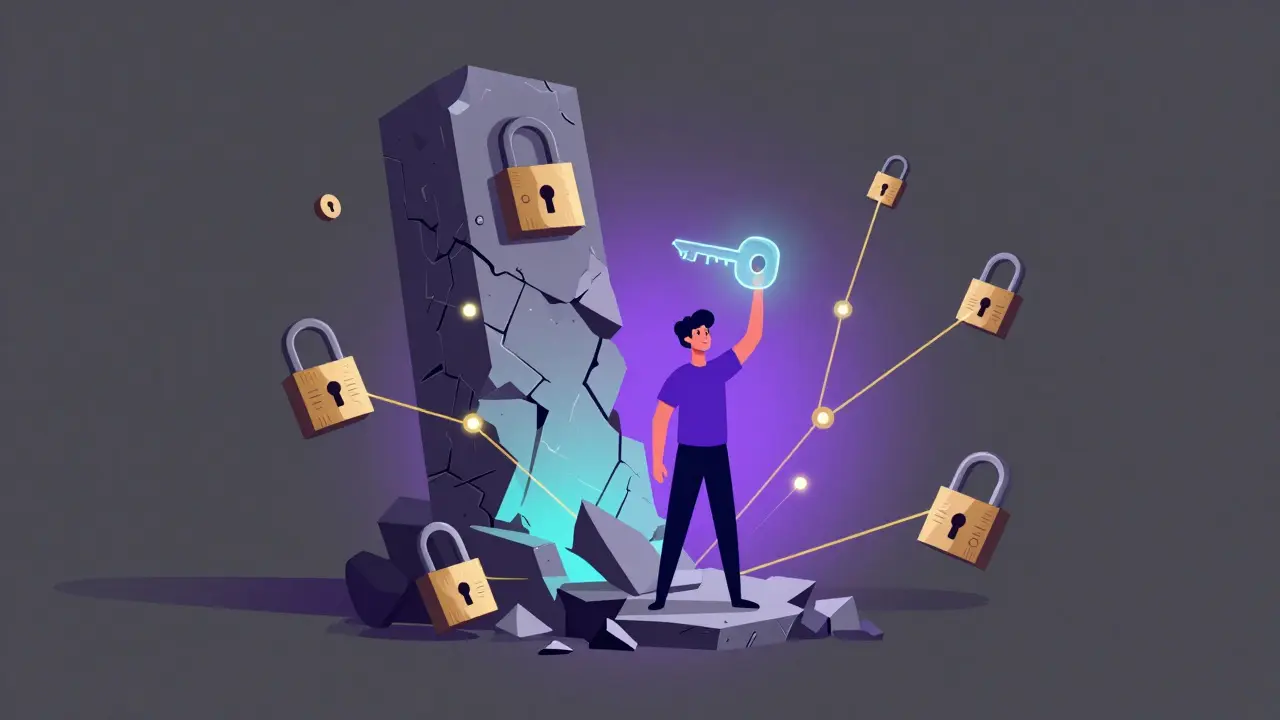
The Pivot to Decentralized Liquidity
Facing the Tether freezes, the market adapted almost instantly. The response wasn't panic; it was a strategic migration toward Decentralized Finance is financial systems built on blockchain technology that aim to remove intermediaries (DeFi). Following the freeze, Iranian users began swapping their holdings into DAI stablecoins via the Polygon network. This move provided several advantages. DAI is algorithmically governed and less likely to be unilaterally frozen by a corporate entity. The Polygon network offered low fees and fast settlement, crucial for users trying to exit quickly before new regulations kick in.
| Method | Risk Level | Liquidity | Anonymity |
|---|---|---|---|
| Centralized Exchange (CEX) | High (Freeze Risk) | Very High | Low (KYC Required) |
| P2P Markets | Medium (Scam Risk) | Medium | Medium (IP Tracking) |
| DeFi Protocols | Low (Technical Complexity) | High | High (On-Chain Privacy) |
| Crypto ATMs | High (Surveillance) | Low | Low (Camera Monitoring) |
This shift illustrates a fundamental truth: censorship resistance works, but users pay for it through technical literacy. Navigating wallets and bridges requires more skill than pressing 'buy' on Binance. Consequently, a support industry emerged to help regular users navigate these tools. Influencers and guides in sanctioned countries teach how to bridge assets safely. TRM Labs data indicates an 11% drop in crypto inflows to Iran in early 2025, suggesting some users left the market entirely rather than learn the new complex tools required to stay safe.
Peer-to-Peer Networks: The Human Firewall
While blockchains handle the value transfer, the actual conversion to fiat currency often happens off-chain. Peer-to-peer (P2P) trading acts as the bridge between the digital world and groceries or rent. In countries where credit cards are blocked globally, users meet physically or arrange trust-based trades. These markets are robust but fraught with danger. Counterfeit goods, scams, and physical arrests remain common. Local governments often target these meetings aggressively because they leave traceable footprints.
In Iran, for instance, the Law on Taxation of Speculation and Profiteering enacted in August 2025 officially recognized crypto trading for tax purposes. While this sounds like regulation, it effectively brings the activity into the open. The government treats it alongside gold and real estate, imposing capital gains tax. This paradox forces users to decide: declare and pay taxes under a strict regime, or hide in the shadows where they might get arrested for money laundering. Most choose the latter, hiding their wealth in foreign digital wallets that the state cannot easily track or confiscate.
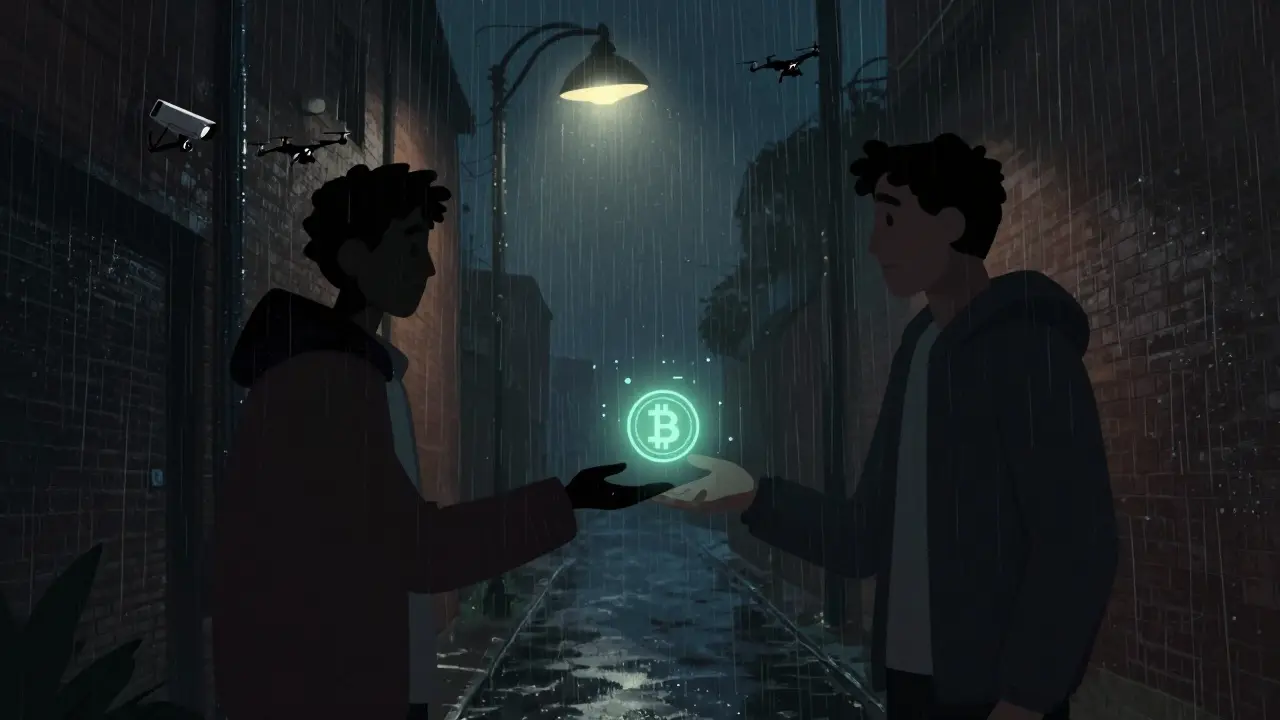
Enforcement Blind Spots and Future Trajectories
The effectiveness of sanctions depends entirely on the choke points available. DeFi protocols represent the biggest blind spot. In January 2025, OFAC issued its first-ever sanction against a DeFi protocol itself, freezing $150 million in assets associated with Tornado Cash-style services. This was unprecedented because protocols are code, not companies with boards of directors to punish. It forced developers to migrate servers to permissive jurisdictions and updated smart contract logic to filter out blacklisted addresses automatically.
However, the sheer volume of transactions makes total shutdown impossible. The mixers and privacy tools continue to evolve. There is an ongoing development race where enforcement lists update monthly, and wallet software updates hourly to avoid detection. This creates a volatile environment where a wallet address that is safe today could be flagged tomorrow. Users in sanctioned nations must constantly verify the compliance status of the tokens they hold, creating a fragile dependency on external monitoring tools.
Sophisticated players are also leveraging crypto-friendly jurisdictions. The UAE, Singapore, and El Salvador offer regulatory havens that attract displaced businesses. Dubai's VARA authority oversees over 1,000 crypto firms, creating a hub where legitimate business and sanctioned operations can blend. For citizens inside sanctioned countries, accessing these hubs provides a veneer of legitimacy. By routing funds through a compliant broker in Dubai, transactions might pass unnoticed until they hit a final Western bank account.
The Cost of Access
Despite the ingenuity of these workarounds, the cost of participation rises. Fees increase due to higher transaction costs on congested chains during peak enforcement periods. The psychological toll is immense; the fear of asset freezing looms over every transaction. Furthermore, the legal risk extends beyond the individual. Banks and payment processors dealing with crypto-related remittances face secondary sanctions. This means the path from crypto back to cash is narrowing.
Transparency International Russia published a report in September 2025 exposing the infrastructure supporting these exchanges. They documented how sanctioned entities evolved into decentralized money laundering systems. The takeaway is clear: the system adapts faster than the law. Every enforcement action closes a door but opens a window. As long as the underlying blockchain networks remain open and accessible, finding a route into them will be inevitable, though increasingly difficult.
Are citizens in sanctioned countries at risk of asset freezing?
Yes, there is significant risk. In July 2025, Tether froze dozens of addresses linked to Iran. If users hold assets on centralized platforms or even certain token types like USDT, their funds can be locked instantly without recourse. Moving to decentralized alternatives like Bitcoin or DAI reduces this risk.
What role does OFAC play in crypto sanctions?
OFAC enforces U.S. foreign policy and trade sanctions. They designate specific individuals, entities, and even wallet addresses as prohibited. Any interaction with these addresses can lead to penalties for the participants. Their enforcement grew by 18% annually leading up to 2025.
How do DeFi protocols differ from exchanges regarding sanctions?
Decentralized Finance (DeFi) relies on code rather than a central operator. While OFAC tried to sanction Tornado Cash in 2025, enforcing bans on autonomous code is harder than banning a company. However, front-end websites can still be shut down, blocking easy access.
Is trading crypto legal in sanctioned nations like Iran?
Legal status varies. In August 2025, Iran passed a law taxing crypto speculation, implying recognition but heavy regulation. Users who trade outside of these frameworks risk criminal charges related to money laundering or forex violations.
Can stablecoins be trusted in sanctioned zones?
Fiat-backed stablecoins like USDT carry high risk as issuers comply with U.S. laws. Users in these regions often prefer decentralized stablecoins like DAI, which lack a single controller who can freeze funds based on political pressure.