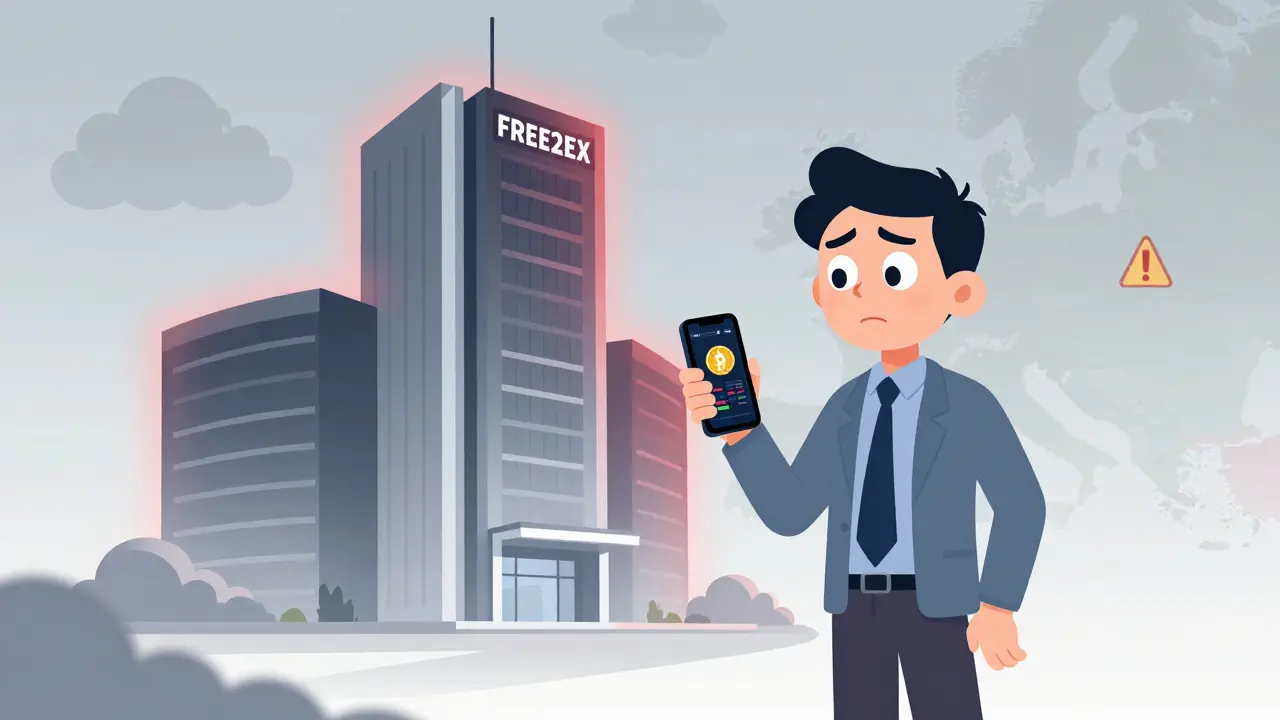
Imagine you find a crypto exchange that promises easy access to the markets you need, specifically if you are based in Eastern Europe. You see support for local currencies like the Belarusian Ruble (BYN) or Russian Ruble (RUB). It sounds convenient, right? But then you look closer and realize the platform operates out of Minsk, Belarus-a jurisdiction that has become increasingly hostile to cryptocurrency operations since late 2022. This is the reality of FREE2EX, a platform that sits at a dangerous intersection of niche market utility and severe regulatory risk.
In this review, we are going to peel back the layers of FREE2EX. We will look at who owns it, how safe your money actually is, what the fees really cost you, and why major financial institutions have largely abandoned the region where this exchange operates. If you are considering depositing funds here, you need to understand the specific risks involved before you click "buy."
The Regulatory Red Flag: Why Location Matters
When choosing a crypto exchange, the physical location of its headquarters is not just a detail-it is often the most important factor for your safety. FREE2EX was launched on April 1, 2020, by a legal entity called PIKSEL INTERNET, OOO, registered in Minsk, Belarus. At the time of launch, Belarus had a relatively friendly stance toward IT and blockchain development, positioning itself as a tech hub.
However, the landscape changed dramatically. In December 2022, President Alexander Lukashenko issued a decree that severely restricted cryptocurrency activities. According to reports from Belsat.eu in October 2025, cryptocurrencies in Belarus became "more difficult and dangerous to use" after this decree. The government effectively banned cryptocurrency exchanges from operating with Belarusian financial institutions. This means that while FREE2EX claims to operate under European regulatory frameworks, its actual legal footing is shaky at best.
Why does this matter to you? Because if something goes wrong-whether it's a hack, a freeze on withdrawals, or a legal dispute-you have very little recourse. Unlike exchanges regulated by bodies like the UK's Financial Conduct Authority (FCA) or the US Securities and Exchange Commission (SEC), FREE2EX operates in a high-risk environment. The Block’s 2023 Regulatory Report categorized Belarus as having "high-risk regulatory environments for cryptocurrency operations." When an exchange operates in a sanctioned or restrictive jurisdiction, your assets are exposed to political instability and sudden regulatory crackdowns.
| Feature | FREE2EX | Binance / Coinbase |
|---|---|---|
| Jurisdiction | Minsk, Belarus (High Risk) | Cayman Islands, USA, etc. (Regulated) |
| Fiat Support | USD, EUR, RUB, BYN | USD, EUR, GBP, AUD (No RUB/BYN) |
| Proof of Reserves | Claims annual audit (Unverified) | Regular, public proof-of-reserves |
| Trading Volume | Not publicly verifiable | Billions daily (Publicly tracked) |
| Insurance | $1M fund (Details unverified) | Lloyd's of London / Major Insurers |
Security Claims vs. Reality
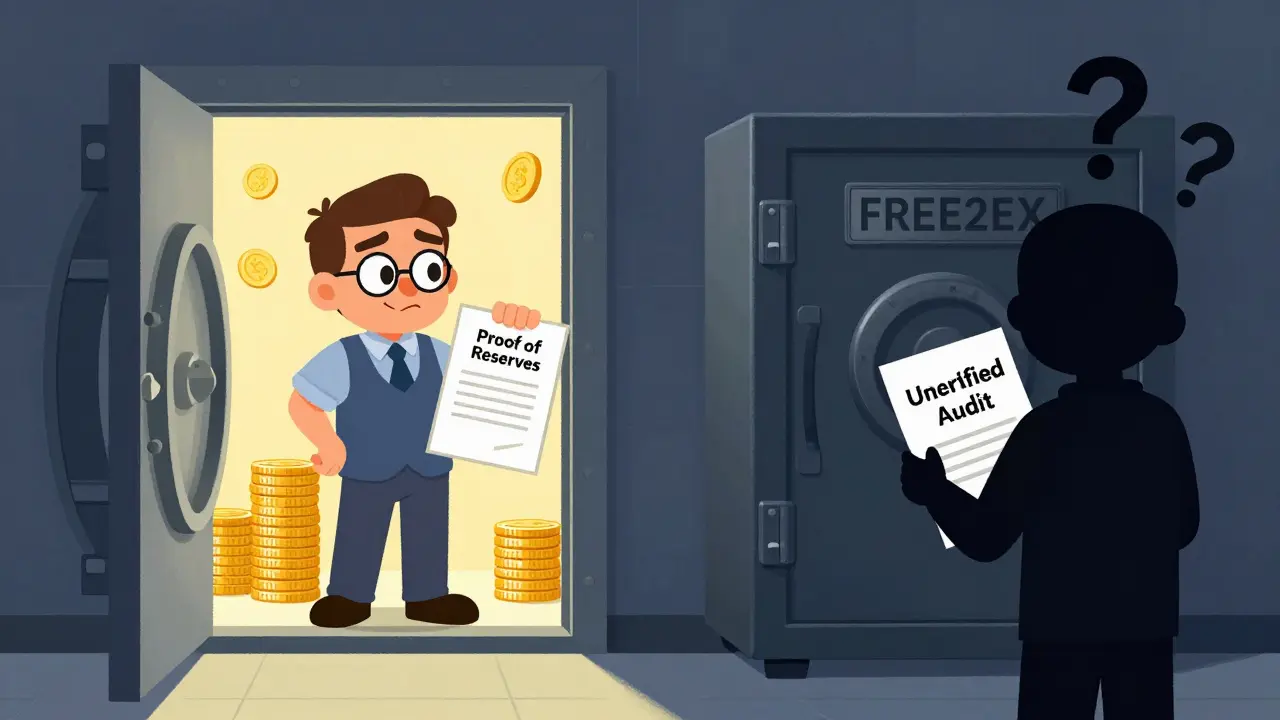
Every crypto exchange will tell you they are secure. FREE2EX is no different. Their website states they use Cisco security products for hardware protection and implement SSL 3 and TLS 1.2 protocols with 2048-bit encryption keys. They also claim to use multi-signature cold wallets for storing client funds. On paper, these are standard industry practices.
But there is a big difference between claiming security and proving it. Established exchanges like Kraken or Coinbase publish quarterly proof-of-reserves reports verified by independent accounting firms. These reports show that they actually hold the assets they say they do. FREE2EX claims to undergo "annual technical and financial audits" by one of the Big Four accounting firms, but they never name which firm or provide the actual report. Without transparency, this claim is meaningless.
Furthermore, the platform mentions an alleged $1 million insurance fund for customer assets against cyber attacks. However, PR Newswire reports from August 2025 note that there are no verifiable details about the insurer or the policy terms. Compare this to Kraken, which partners with Lloyd's of London, a globally recognized insurer. If FREE2EX suffers a massive breach, can they actually pay out? Given their lack of transparency, the answer is uncertain.
Another missing piece is a bug bounty program. Top exchanges allocate millions of dollars annually to reward white-hat hackers for finding vulnerabilities. Immunefi’s 2023 Yearly Report showed top exchanges paid out $6.2 million in bounties. FREE2EX has no known bug bounty program. This suggests they may not be proactively testing their security defenses.
Fees and Trading Costs: What Will It Cost You?
Let’s talk about money. Trading fees can eat into your profits quickly, especially if you are making frequent trades. FREE2EX charges a uniform trading fee of 0.25% across all pairs. This is deducted from the purchased asset during transactions. For comparison, Binance charges a standard fee of 0.1%. So, FREE2EX is more expensive for basic spot trading.
The real kicker, however, is the fiat deposit and withdrawal fees. If you use a Visa or MasterCard to deposit funds, you will pay a 3% fee. Withdrawals via card cost 2.2%. While Coinbase charges around 3.49% for USD debit card deposits, the combination of higher trading fees and significant withdrawal costs makes FREE2EX less competitive than many alternatives.
Minimum withdrawal amounts are also strict: 2 USD, 2 EUR, 150 RUB, or 5 BYN. This might seem low, but if you are trading smaller amounts, these fees can add up. Plus, users have reported issues with these transactions. A Reddit user noted in March 2024 that withdrawing BYN to a Belarusian bank took 72 hours and included unclear charges. Slow processing times and hidden fees are red flags for any exchange.
User Experience and Platform Features
If you ignore the regulatory concerns for a moment, how does the platform actually work? FREE2EX supports over 300 cryptocurrencies for spot trading, including Bitcoin (BTC), Ethereum (ETH), Litecoin (LTC), and Tether (USDT). They also offer leverage trading, which allows you to borrow funds to increase your position size. While this can amplify gains, it also significantly increases risk, especially for beginners.
The platform has mobile applications available on both Google Play and the Apple App Store. As of August 2025, the app has received updates featuring a "new exchange UI" described as intuitive and streamlined. The KYC (Know Your Customer) process is reportedly fast, with registration taking just minutes. Wikibit notes that 90% of clients only need to pass the second level of a four-tier verification process.
However, the user experience is marred by limited support options. There is no live chat or phone support; you are relegated to email support at [email protected]. In the fast-moving world of crypto, waiting days for an email response can be disastrous if you encounter a transaction error. Additionally, there is no official Discord server, Telegram channel, or developer forum, meaning community resources are scarce.
Is FREE2EX Right for You?
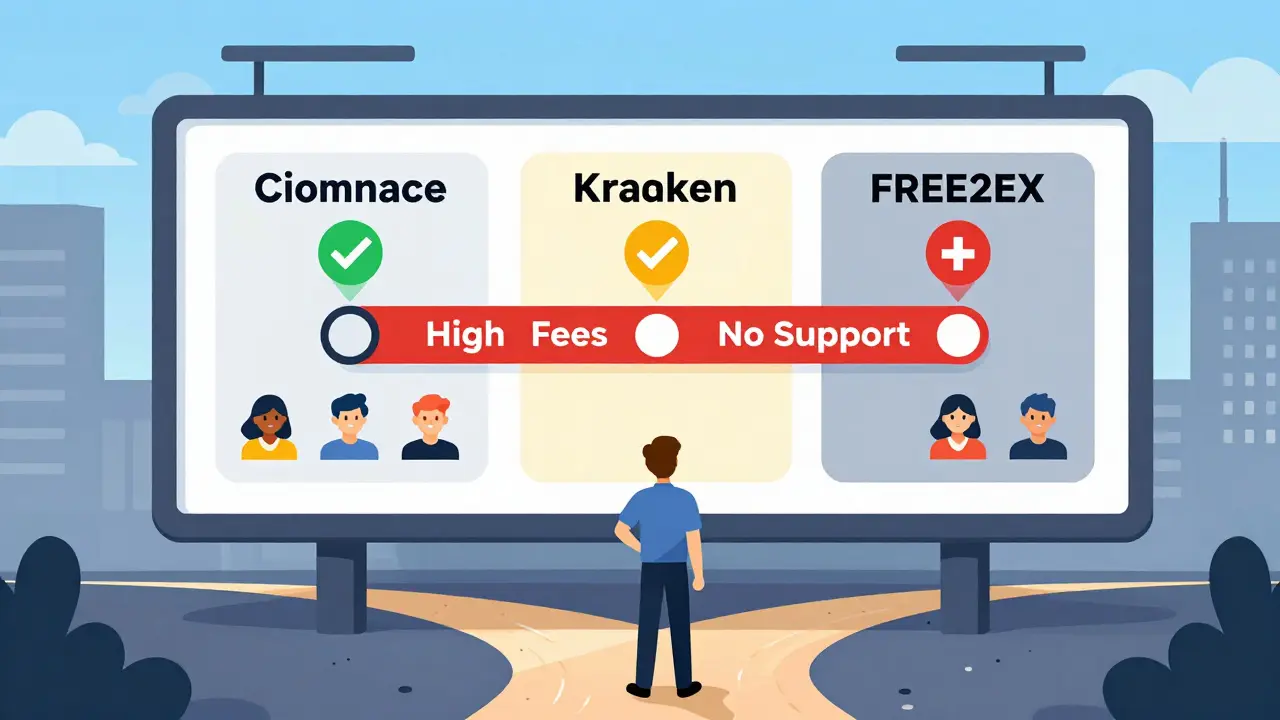
So, who should use FREE2EX? Honestly, very few people. The platform seems designed primarily for users in Belarus and Russia who need to trade using local fiat currencies like BYN or RUB, which most global exchanges have discontinued due to sanctions. If you fall into this niche and cannot access other platforms, FREE2EX might be one of your few options. But even then, you must proceed with extreme caution.
For anyone outside of this specific geographic constraint, there are far better, safer, and more transparent options. Exchanges like Coinbase, Kraken, and Binance offer robust security, clear regulatory compliance, lower fees, and extensive customer support. They also provide proof-of-reserves and have established track records.
The risks associated with FREE2EX-regulatory uncertainty, lack of transparency, potential for frozen assets, and limited recourse in case of fraud-are simply too high for most traders. In the crypto world, trust is earned through transparency and consistency. FREE2EX lacks both.
Alternatives to Consider
If you are looking for a reliable crypto exchange, consider these alternatives based on your needs:
- For Beginners: Coinbase offers a user-friendly interface, strong regulatory compliance in the US and Europe, and excellent customer support.
- For Advanced Traders: Binance provides a wide range of trading pairs, low fees, and advanced tools like leverage and futures trading.
- For Security Focus: Kraken is known for its strong security record, transparent proof-of-reserves, and responsive support team.
- For European Users: Bitstamp or Coinfloor offer compliant services within the EU, supporting EUR deposits and withdrawals.
These platforms may not support RUB or BYN directly, but they offer safer environments for your capital. If you need to convert local currency, consider using peer-to-peer (P2P) platforms or reputable fiat gateways that comply with international regulations.
Is FREE2EX licensed to operate?
FREE2EX claims to operate under a license for 'trading platform operator and organizer ICO' activities in Belarus. However, following the December 2022 decree by President Lukashenko, the regulatory status of such licenses is ambiguous and likely non-compliant with current Belarusian restrictions on cryptocurrency exchanges interacting with financial institutions.
Can I trust FREE2EX with my money?
Trusting FREE2EX carries significant risk. The exchange lacks transparent proof-of-reserves, has unverified insurance claims, and operates in a high-risk jurisdiction. User complaints about withdrawal difficulties and lack of support further undermine confidence. It is generally safer to use regulated exchanges with proven track records.
What are the fees for trading on FREE2EX?
FREE2EX charges a 0.25% trading fee on all pairs. Deposits via Visa/MasterCard incur a 3% fee, and withdrawals cost 2.2%. Minimum withdrawal amounts are 2 USD, 2 EUR, 150 RUB, or 5 BYN. These fees are higher than many major competitors like Binance.
Does FREE2EX support Bitcoin and Ethereum?
Yes, FREE2EX supports over 300 cryptocurrencies, including major assets like Bitcoin (BTC), Ethereum (ETH), Litecoin (LTC), Bitcoin Cash (BCH), and Tether (USDT). Both spot and leverage trading are available for these assets.
How does FREE2EX compare to Binance or Coinbase?
Unlike Binance or Coinbase, FREE2EX does not provide public proof-of-reserves, has higher trading fees, and operates in a high-risk regulatory environment. Major exchanges offer better security transparency, lower fees, and wider fiat support (excluding RUB/BYN). FREE2EX is primarily useful only for users needing direct RUB or BYN pairs, despite the associated risks.