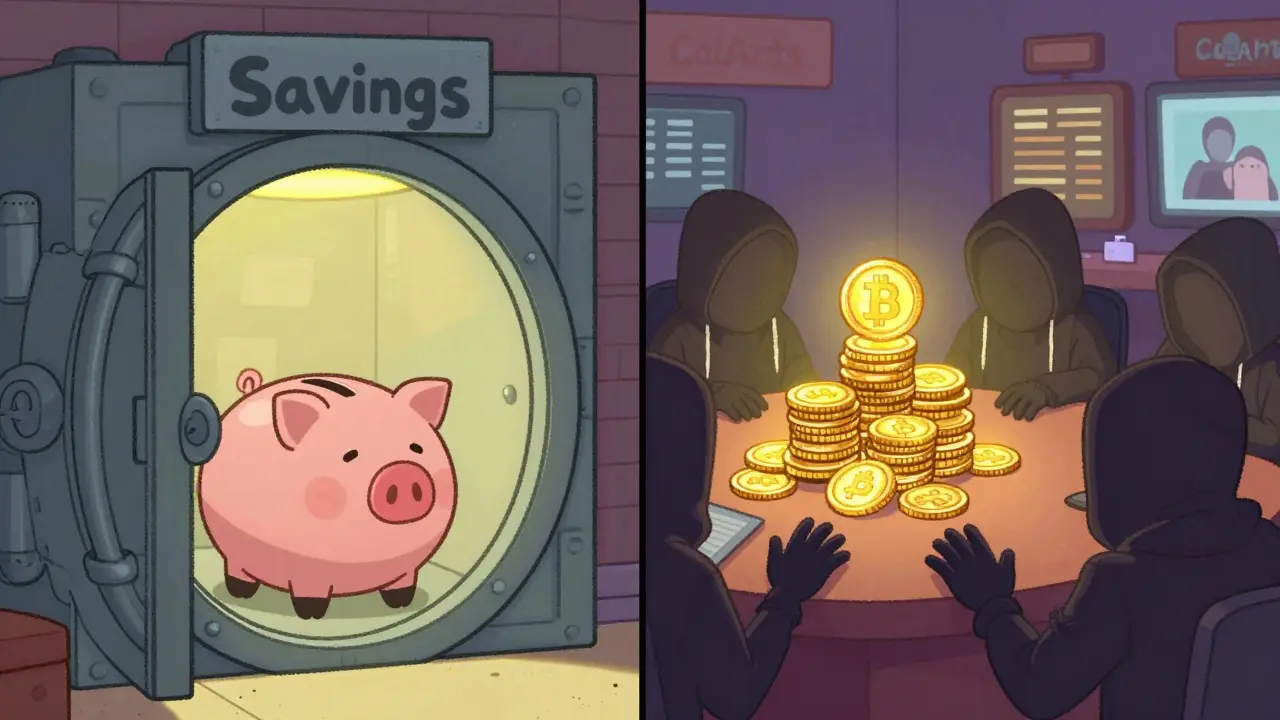
You trust your bank with your life savings because you know the system has checks and balances. You might not realize that keeping money on a cryptocurrency exchange is less like a bank account and more like leaving cash on a counter in a busy market. The difference? There is no FDIC insurance for most of it, and if someone steals your keys, there is no customer service line that can reverse the transaction.
The threat landscape has shifted dramatically. In the first half of 2025 alone, criminals stole $1.93 billion in crypto-related crimes, a jump of nearly 40% from the previous year. By mid-2025, illicit activity volumes were projected to exceed $51 billion globally. This isn't just bad luck; it's sophisticated engineering. Attackers are using AI-powered voice cloning to mimic support agents and exploiting weak API connections to drain accounts in seconds. If you hold digital assets, understanding exchange security is not optional-it is the only thing standing between you and total loss.
The Cold Storage Reality: Where Is Your Money?
The first question you need to ask any platform is simple: where are my coins? Most people assume their balance sits in a hot wallet connected to the internet, ready for instant transfer. That is a dangerous assumption. Modern, reputable exchanges use a split-storage model. They keep a small percentage of funds (usually 2-5%) in "hot wallets" for immediate withdrawals and trading liquidity. The vast majority-typically 95% to 98%-is stored in cold storage, which is offline hardware wallets or air-gapped systems disconnected from the internet.
Why does this matter? If an exchange gets hacked, attackers can only steal what is online. If 98% of your assets are offline, they are physically inaccessible to remote hackers. Leading platforms now use Hardware Security Modules (HSMs) like the Thales nShield series, which meet FIPS 140-2 Level 3 certification standards. These aren't just USB drives; they are tamper-resistant vaults that destroy cryptographic keys if someone tries to pry them open. When choosing an exchange, look for public proof of reserves that explicitly states their cold storage ratio. If they don't publish this data, assume the worst.
Centralized vs. Decentralized: Who Holds the Keys?
Your security posture changes completely depending on whether you use a Centralized Exchange (CEX) or a Decentralized Exchange (DEX). Understanding this distinction is critical for managing risk.
| Feature | Centralized Exchange (CEX) | Decentralized Exchange (DEX) |
|---|---|---|
| Custody | Platform holds your private keys | You hold your private keys (Non-custodial) |
| Insurance | Often available (e.g., Coinbase covers up to $500M/customer) | None. Smart contract bugs mean total loss. |
| Hack Risk | Platform-level breach affects all users | User-level error or smart contract exploit |
| KYC Requirement | Mandatory identity verification | Usually anonymous |
| Recovery Option | Possible via customer support (if compliant) | Impossible. Lost keys = lost funds. |
Centralized exchanges like Coinbase and Kraken offer a safety net. Coinbase, for instance, maintains insurance funds covering significant amounts per customer, though this usually applies to online custody breaches, not market crashes or individual user scams. However, you are trusting a third party. If the exchange goes bankrupt (like FTX did in 2022), your funds may be frozen or lost in legal proceedings.
Decentralized exchanges like Uniswap put you in full control. You connect your own wallet, and trades happen directly on the blockchain. There is no company to hack in the traditional sense. But there is also no insurance. If you interact with a malicious smart contract or approve a phishing token, your funds are gone instantly. The $600 million Poly Network hack in 2021 showed how vulnerable these protocols can be. For beginners, CEXes offer easier recovery paths; for experts, DEXes offer sovereignty but demand perfect discipline.
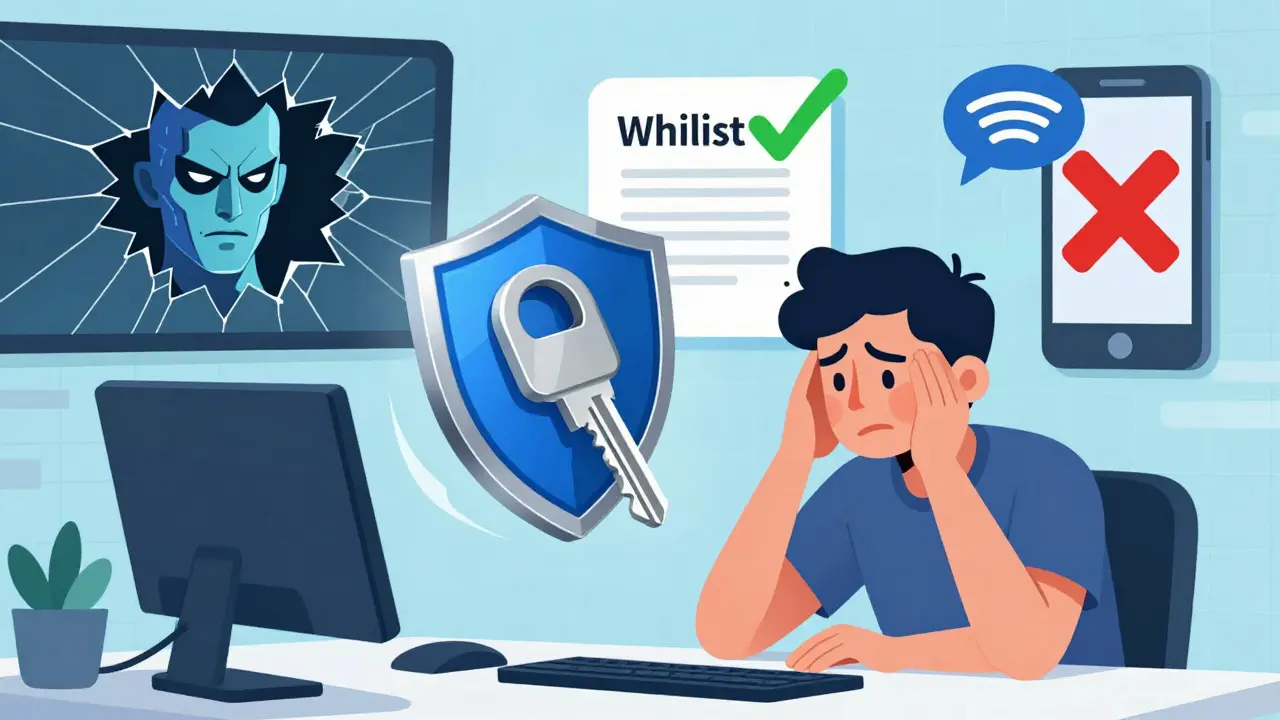
Account Fortification: Beyond Passwords
A strong password is table stakes. It’s not enough. The single biggest vulnerability in user accounts remains compromised credentials. Here is how you actually lock down your profile:
- Enable Biometric 2FA: Stop using SMS-based two-factor authentication. SIM-swapping attacks allow criminals to hijack your phone number and bypass SMS codes. According to Q2 2025 breach analyses, SMS 2FA had a 78% failure rate against targeted attacks. Switch to WebAuthn/FIDO2 standards using a hardware key like YubiKey or a biometric authenticator app. This achieves a 99.98% protection rate against account takeovers.
- Withdrawal Whitelists: This is your best defense against a hacked account. Add specific wallet addresses to your withdrawal whitelist. Even if a hacker gets your password and 2FA code, they cannot move funds to an address you haven't pre-approved. Note that many exchanges enforce a 24-48 hour waiting period when you add a new address, giving you time to spot unauthorized changes.
- IP Restrictions: Limit login access to your home IP address or country. If a login attempt comes from a different location, the system blocks it. One user on Reddit reported preventing a $47,000 theft simply because this alert triggered during a brute-force attack.
Setting up these features takes about 45 minutes. It feels tedious, but it’s cheaper than losing everything. The most common mistake users make is disabling these features for convenience. Arkose Labs found that 41% of users disable withdrawal whitelists within 30 days. Don’t be one of them.
Recognizing Social Engineering Attacks
Technology fails less often than humans do. In 2025, the rise of AI-driven social engineering became the dominant threat vector. Criminals aren't just guessing passwords; they are impersonating support staff with terrifying accuracy.
Consider the deepfake scams targeting Ledger Live users in August 2025. Fraudsters used voice-cloning technology to mimic official support agents, achieving 92% accuracy. They contacted victims via Telegram, claiming there was a "security update" needed. The victim would call back a number provided by the scammer, hear a convincing replica of a support agent, and then share their seed phrase or install malware that hijacked their clipboard. Between August 1 and 15, 2025, these tactics resulted in $8.3 million in stolen funds.
Here is the golden rule: No legitimate exchange will ever ask for your seed phrase, private key, or password. Ever. Support teams do not initiate contact via Telegram, WhatsApp, or Discord. If someone messages you offering help, it is a scam. Verify every communication through the official website’s verified channels only.
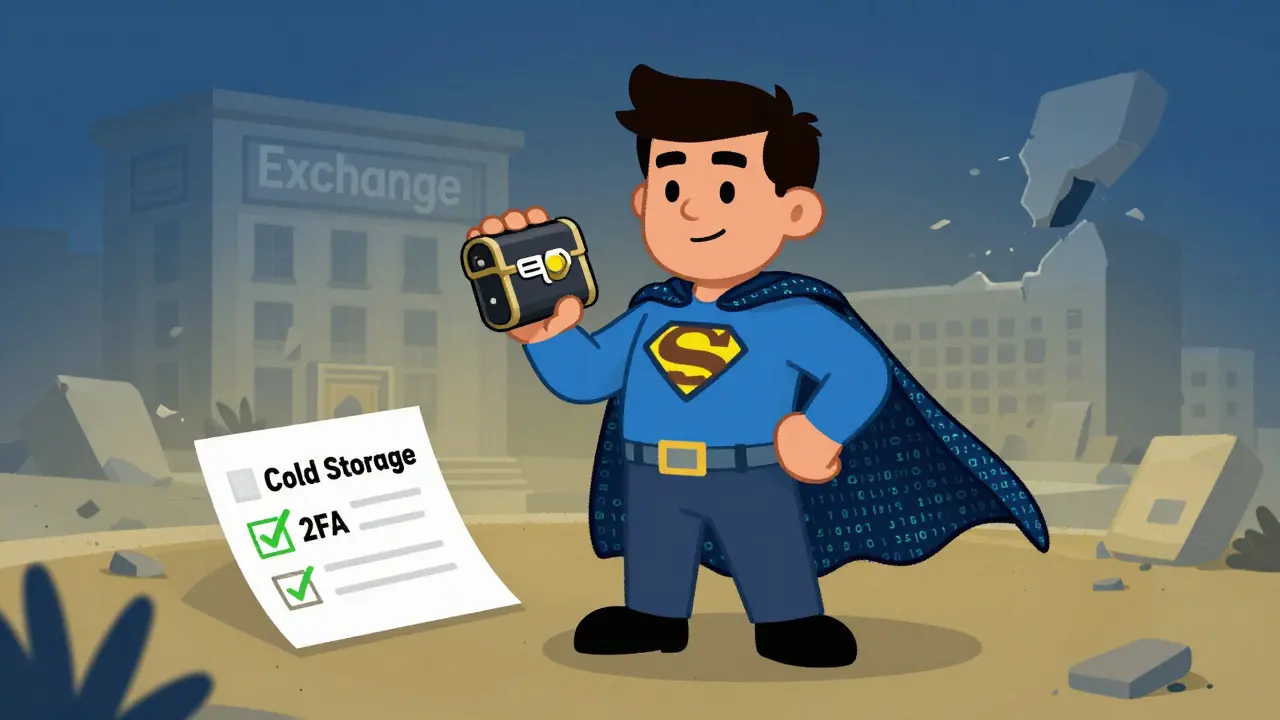
Regulatory Safety Nets and Compliance
Regulation is often viewed as a buzzkill, but in terms of security, it’s a shield. Governments are stepping in to force exchanges to adopt higher standards. The SEC’s Crypto Task Force, active since 2023, has issued dozens of enforcement actions against platforms with inadequate controls. New York’s Cybersecurity Regulation 2.0, implemented in July 2025, requires real-time transaction monitoring for large-volume exchanges.
Look for exchanges that comply with KYC (Know Your Customer) and AML (Anti-Money Laundering) laws. While privacy advocates dislike ID verification, data shows that strict KYC compliance reduces account takeovers by 63%. Platforms like Coinbase and Kraken undergo regular audits and hold certifications like SOC 2 Type II and ISO 27001. These aren't just badges; they prove that independent auditors have checked their security infrastructure. Avoid unregulated offshore exchanges that promise high yields with no questions asked-they are often Ponzi schemes waiting to collapse.
Practical Checklist for Immediate Action
If you want to secure your funds today, follow this step-by-step process. Do not rush it.
- Audit Your Exchanges: List every platform you use. Check their latest security incident reports. If they haven’t published a Proof of Reserves audit in the last 6 months, consider moving your funds.
- Upgrade 2FA: Disable SMS verification. Install a TOTP app (like Google Authenticator or Authy) or buy a hardware security key. Enable biometric login if available.
- Set Withdrawal Limits: Configure daily and monthly withdrawal limits lower than your total balance. This caps potential losses if an account is breached.
- Whitelist Addresses: Add your personal cold wallet address (like a Ledger or Trezor) to the exchange’s whitelist. Wait for the cooling-off period to pass before testing a small withdrawal.
- Enable Anti-Phishing Codes: Many exchanges let you set a unique code that appears in all official emails. If you receive an email without this code, you know it’s fake immediately.
- Move Long-Term Holdings Off-Exchange: Exchanges are for trading, not saving. Keep only what you intend to trade in the next few weeks on the exchange. Move the rest to a self-custodied hardware wallet.
Security is not a product you buy; it’s a habit you build. The threats evolve every day, with MEV bots and AI scams getting smarter. But by controlling your environment-using cold storage, enforcing strict 2FA, and verifying every interaction-you remove yourself from the path of least resistance for criminals. Stay paranoid, stay safe.
Is it safer to keep crypto on an exchange or in a personal wallet?
For long-term holding, a personal hardware wallet (self-custody) is significantly safer because you control the private keys, eliminating the risk of an exchange hack or bankruptcy. However, exchanges are safer for short-term trading due to ease of use and insurance protections against platform-level breaches. The best practice is a hybrid approach: keep trading capital on a reputable, insured exchange and store long-term investments in cold storage.
What should I do if I suspect my exchange account has been compromised?
Act immediately. First, change your password and revoke all active sessions. Second, enable 2FA if it wasn't already on. Third, check your withdrawal whitelist and remove any unknown addresses. Fourth, contact the exchange's support team via their official website (never via links in suspicious emails) to freeze your account if necessary. Finally, move any remaining funds to a new, secure wallet address that you have whitelisted.
Do centralized exchanges really insure my funds?
Most major exchanges like Coinbase and Kraken carry insurance policies, but these typically cover only funds held in hot wallets (online) and only in the event of a platform hack. They generally do not cover losses from user error, phishing, market volatility, or funds stored in cold storage. Always read the fine print of the insurance policy, as coverage limits and exclusions vary widely.
How effective are hardware security keys compared to app-based 2FA?
Hardware security keys (like YubiKey) are far more effective. App-based 2FA (TOTP) can be bypassed through SIM-swapping or malware that captures codes. Hardware keys use public-key cryptography and require physical presence to authorize a login, making them resistant to phishing and remote attacks. They provide the highest level of account security available to consumers.
What is a withdrawal whitelist and why is it important?
A withdrawal whitelist is a feature that restricts fund transfers to only pre-approved cryptocurrency addresses. Even if a hacker gains full access to your account credentials and 2FA, they cannot move your money to their own wallet because it is not on your list. This adds a critical layer of defense, buying you time to detect and stop unauthorized activity.